Ion Exchange Soft Water Equipment: Complete System Guide 2026
Looking for reliable ion exchange soft water equipment for your facility? This comprehensive guide covers everything from working principles and technical specifications to equipment selection and maintenance. Whether you need a system for boiler feed water treatment, industrial process water, or commercial applications, understanding ion exchange water softener technology is essential for making the right investment. CHIWATEC has been designing and manufacturing ion exchange water softening systems for industrial clients worldwide.
Last Updated: January 2026 | Industry-Verified Data | Technical Specifications Information
Why This Guide Matters for Your Water Softening Project
Hard water containing calcium and magnesium ions causes scaling in pipes, boilers, and industrial equipment, leading to reduced efficiency, increased energy consumption, and premature equipment failure. Ion exchange soft water equipment is the most widely adopted solution for hardness removal, with the global water softener market valued at approximately USD 8.2 billion in 2024 and projected to reach USD 13.6 billion by 2034, growing at a CAGR of 5.2%. Proper selection and operation of ion exchange systems directly impacts operating costs and equipment longevity.
Key Industry Trends (2026 Update)
- Smart Regeneration Control: Modern ion exchange softeners use IoT-enabled controllers that optimize regeneration cycles based on actual water usage, reducing salt consumption by 25-35%
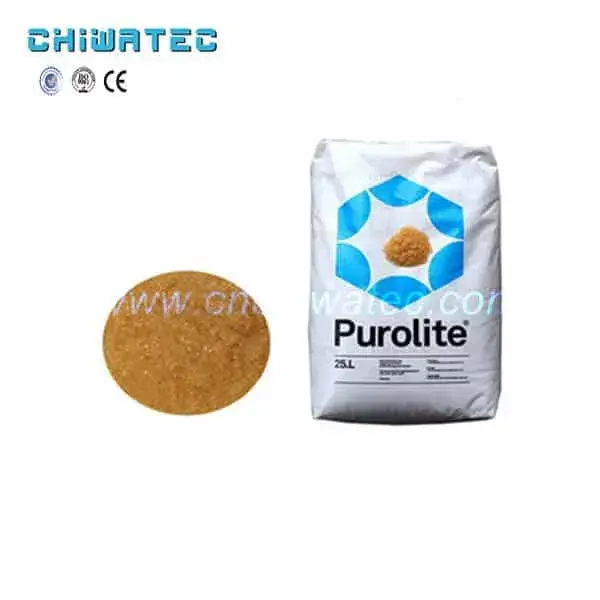
- High-Capacity Resins: New-generation macroporous cation exchange resins offer 30% higher exchange capacity and 40% longer service life compared to 2020 standards
- Hybrid Systems: Combined ion exchange + reverse osmosis systems now dominate industrial water treatment, achieving 99.8% TDS removal with minimal chemical waste
- Energy-Efficient Designs: Low-pressure drop valve systems and optimized brine recovery reduce pumping energy by 20% in new installations
1. What Is Ion Exchange Soft Water Equipment?
Definition and Core Technology
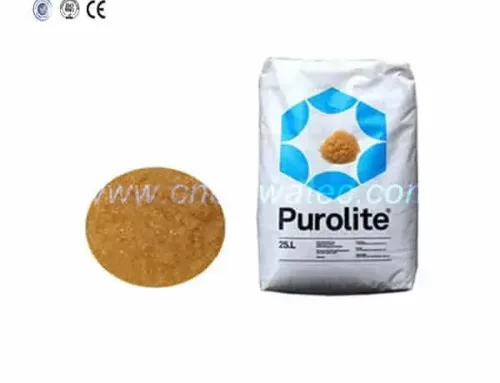
Ion exchange soft water equipment uses specialized ion exchange resins to remove hardness ions (calcium Ca2+ and magnesium Mg2+) from water by exchanging them with sodium ions (Na+). The water passes through a bed of cation exchange resin beads, where hardness ions are captured and sodium ions are released into the water, effectively softening it. This process is highly efficient, achieving effluent hardness levels below 0.03 mmol/L.
Applications Across Industries
Ion exchange water softening systems are essential in numerous applications including medium and low pressure boiler feed water treatment, cooling tower makeup water, textile processing, food and beverage production, pharmaceutical manufacturing, and commercial building water systems. The technology is particularly critical for boiler operations, where even minor scaling can reduce thermal efficiency by 10-15%.
Learn More: Ion Exchange Method in Water Softening: Principles and Technology
2. How Does Ion Exchange Water Softening Work?
The Ion Exchange Process Step by Step
The ion exchange water softener operates through a continuous cycle of service and regeneration:
- Service Cycle: Hard water flows downward through the resin bed. Calcium and magnesium ions bind to the resin beads, while sodium ions are released into the effluent water
- Resin Exhaustion: Over time, all available sodium ions on the resin are replaced by hardness ions, and the resin reaches its exchange capacity
- Backwash: Water flows upward through the resin bed to remove suspended solids and loosen the resin bed
- Regeneration: A concentrated brine solution (sodium chloride) flows through the resin, displacing accumulated hardness ions and restoring the resin to sodium form
- Rinse: Excess brine and displaced hardness ions are flushed from the system before returning to service
Key Chemical Reactions
The ion exchange process follows these chemical equations:
Service: 2R-Na + Ca2+ → R2-Ca + 2Na+
Regeneration: R2-Ca + 2NaCl → 2R-Na + CaCl2
3. What Are the Key Features of Modern Ion Exchange Soft Water Equipment?
Automation and Control Systems
Modern ion exchange soft water equipment features fully automatic operation through program-controlled regeneration. Advanced systems use time-initiated, flow-initiated, or sensor-based regeneration triggers that optimize salt and water usage based on actual demand. The automation covers the entire cycle from backwashing and brine injection to slow rinse and fast rinse, requiring minimal operator intervention.
Design Advantages
- High Efficiency: Optimized resin bed design ensures maximum contact time and exchange efficiency
- Compact Footprint: Modern valve systems and tank configurations reduce space requirements by 30% compared to traditional designs
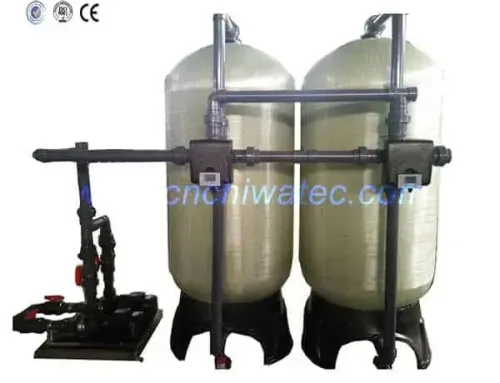
- Corrosion-Resistant Construction: FRP tanks, PVC piping, and corrosion-proof valve bodies ensure long service life in demanding environments
- Low Maintenance: Fully automated systems with self-cleaning features require only periodic salt refilling and annual resin inspection
4. What Are the Technical Parameters of Ion Exchange Water Softening Equipment?
Standard Performance Specifications
Ion exchange water softening equipment is designed to meet specific performance parameters:
- Raw Water Hardness: 3-12 mmol/L (standard range, can be designed for higher)
- Residual Hardness After Treatment: ≤0.03 mmol/L
- Working Pressure: 0.2-0.6 MPa (standard), up to 0.8 MPa for high-pressure systems
- Working Temperature: 2-50 degrees C (standard cation resins)
- Tank Pressure Rating: ≤0.8 MPa (standard design)
- Control Power Supply: 220V, 50Hz (single phase)
- Power Consumption: typically 10-50W during operation, higher during regeneration
Custom Design Capabilities
CHIWATEC engineering team can design systems for non-standard parameters including higher inlet hardness, elevated temperatures, or specific effluent quality requirements. Each system is tailored to the client’s water analysis and application needs.
5. What Types of Ion Exchange Soft Water Equipment Are Available?
Configuration Options
- Single-Tank Systems: Intermittent operation with regeneration downtime, suitable for applications where temporary softened water interruption is acceptable
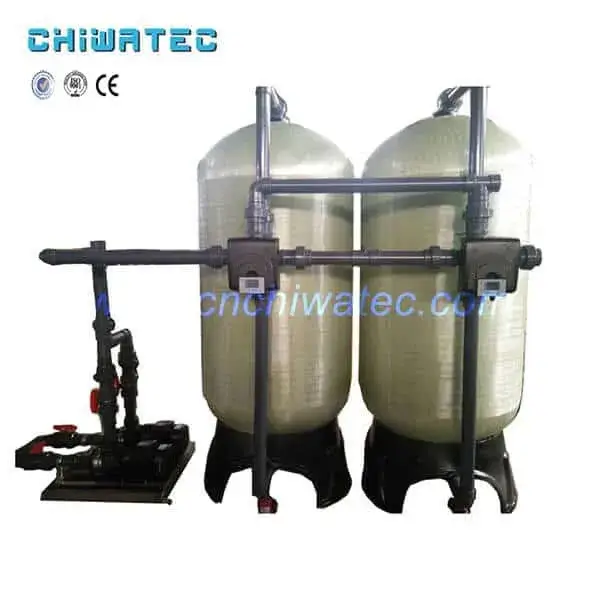
- Duplex (Twin-Tank) Systems: Continuous operation – one tank in service while the other regenerates, ideal for 24/7 operations
- Multi-Column Systems: For high-flow applications requiring parallel or series operation
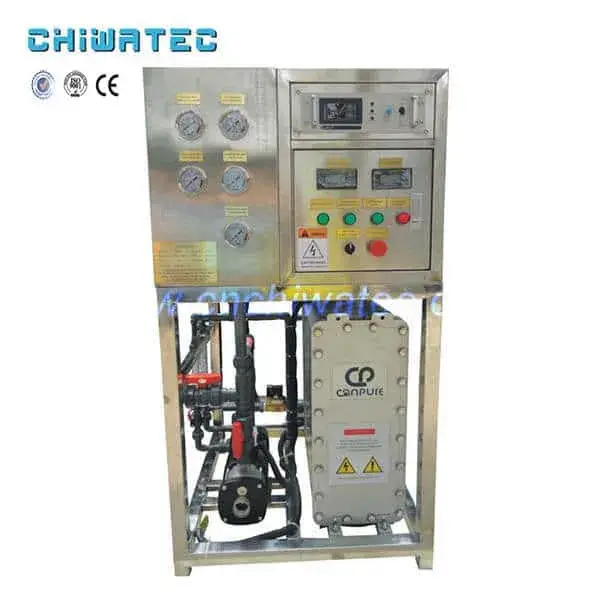
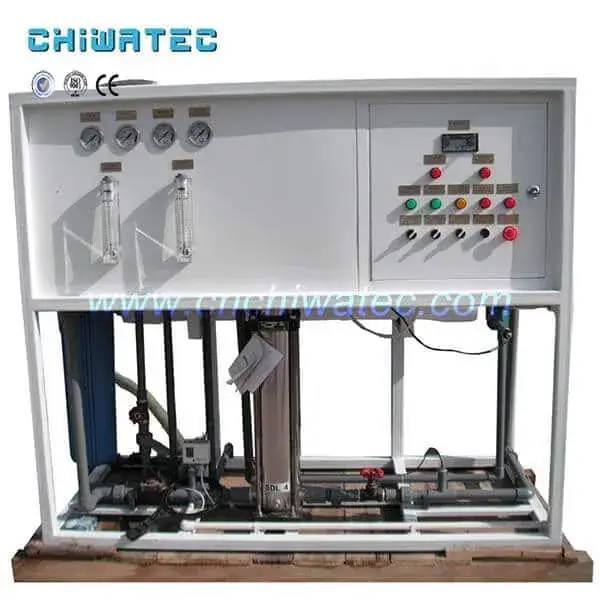
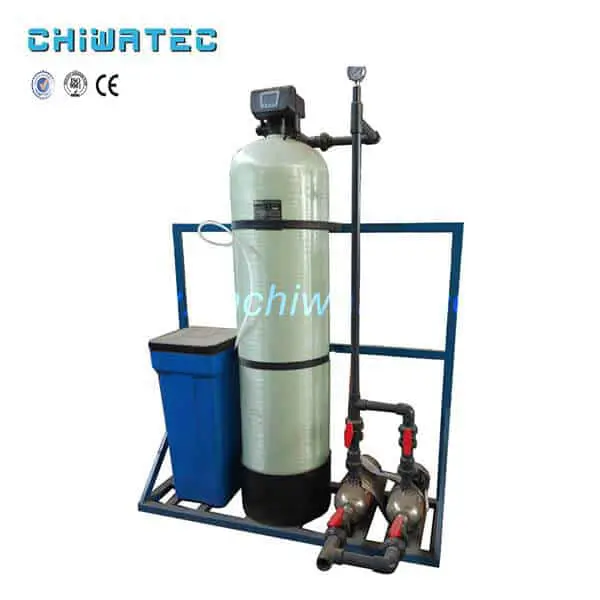
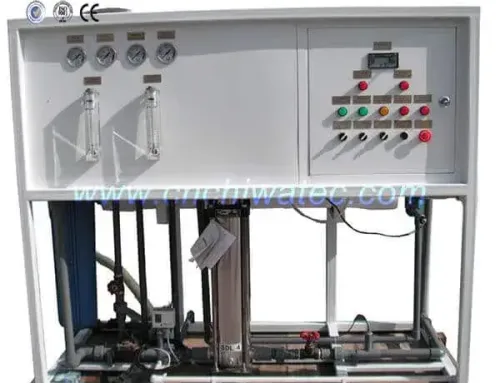
- Packaged Skid-Mounted Units: Pre-assembled, pre-piped systems for rapid installation and commissioning
Material and Tank Options
- FRP (Fiberglass Reinforced Plastic): Lightweight, corrosion-free, most common for standard applications
- Stainless Steel: For high-temperature or high-purity applications
- Carbon Steel with Rubber Lining: For large industrial systems requiring high pressure ratings
6. How to Select the Right Ion Exchange Soft Water Equipment?
Key Selection Criteria
- Water Quality Analysis: Complete testing of raw water hardness, iron content, pH, TDS, and suspended solids
- Flow Rate Requirements: Peak and average flow rates determine vessel size and configuration
- Water Quality Goals: Required effluent hardness determines acceptable leakage levels
- Regeneration Frequency: Higher frequency means more salt and water consumption, affecting operating costs
- Space and Installation: Available footprint, floor loading capacity, and drain access
Installation and Commissioning
CHIWATEC provides complete one-stop service for ion exchange soft water equipment, including site assessment, system design, equipment manufacturing, installation supervision, startup commissioning, operator training, and ongoing technical support.
7. How Does Ion Exchange Compare to Other Water Softening Technologies?
Technology Comparison
- Ion Exchange: Best hardness removal (≤0.03 mmol/L), most common for industrial/boiler applications, requires salt for regeneration
- Reverse Osmosis: Removes 95-98% of all dissolved solids including hardness, ideal for high-purity requirements, higher capital cost
- Template-Assisted Crystallization (TAC): Condition hardness without removal, no chemicals, limited to low-flow residential applications
- Electromagnetic/Physical Treatment: No proven scientific basis for hardness removal, not recommended for critical applications
Why Ion Exchange Remains the Gold Standard
For industrial and commercial applications requiring reliable, consistent soft water, ion exchange soft water equipment remains the preferred technology due to its proven track record, predictable performance, and ability to achieve extremely low residual hardness levels essential for boiler protection.
Related: Water Softening Techniques: Types, Methods, and Benefits
8. What Are the Maintenance Requirements for Ion Exchange Water Softeners?
Routine Maintenance Schedule
- Weekly: Check salt level in brine tank, verify regeneration cycle completion, inspect for leaks
- Monthly: Test effluent hardness, clean brine tank, inspect control valve operation
- Quarterly: Sanitize resin bed with chlorine or hydrogen peroxide, replace pre-filters if installed
- Annually: Complete resin analysis, replace worn valve seals, service brine system
- Every 3-5 Years: Replace resin bed (depending on feed water quality and chlorine exposure)
Common Issues and Troubleshooting
- Hard Water Breakthrough: Usually from exhausted resin, insufficient regeneration, or bypass valve left open
- High Salt Consumption: Incorrect brine setting, leaking brine valve, or excessive regeneration frequency
- Low Water Pressure: Clogged inlet screen, resin fouling, or valve restriction
- Resin Fouling: Iron, manganese, or organic buildup requires specialized cleaning or resin replacement
9. What Are the Operating Costs of Ion Exchange Soft Water Equipment?
Cost Breakdown
Operating costs for ion exchange water softening equipment include:
- Salt (NaCl): 0.15-0.50 USD per 1,000 gallons treated, depending on raw water hardness
- Water for Regeneration: 50-150 gallons per cubic foot of resin per regeneration cycle
- Electricity: Minimal – typically 10-50W for control systems
- Resin Replacement: 0.02-0.05 USD per 1,000 gallons (amortized over 3-5 year resin life)
- Maintenance: 100-500 USD annually for routine service and parts
Total operating costs typically range from 0.20 to 0.80 USD per 1,000 gallons treated, making ion exchange one of the most cost-effective water softening methods for industrial applications.
10. What Standards Apply to Ion Exchange Water Treatment Equipment?
Regulatory and Industry Standards
- ASTM D5196: Standard guide for application of ion exchange materials
- NSF/ANSI 44: Residential cation exchange water softener standards
- AWT (Association of Water Technologies): Guidelines for boiler water treatment
- GB/T 18300-2011: Chinese national standard for automatic ion exchange water softeners
- ASME Boiler and Pressure Vessel Code: Pressure vessel design and fabrication
Related: Technical Specifications and Installation Guide for Water Softeners
Conclusion
Ion exchange soft water equipment remains the most reliable and cost-effective solution for hardness removal in industrial, commercial, and institutional applications. With modern automation, high-efficiency resins, and smart control systems, today’s ion exchange water softeners deliver consistent performance with minimal operator intervention while reducing salt and water consumption. As water quality regulations tighten and energy efficiency becomes increasingly important, investing in properly designed ion exchange soft water equipment delivers long-term operational and economic benefits.
Contact CHIWATEC today at [email protected] or +86 18292684865 (WhatsApp) to discuss your water softening requirements. Our team of water treatment engineers is ready to design a customized ion exchange solution for your specific application.
Frequently Asked Questions
Q1: What is the difference between a water softener and an ion exchange system?
All conventional water softeners use ion exchange technology, but not all ion exchange systems are water softeners. A water softener specifically uses sodium-form cation exchange resin to remove calcium and magnesium hardness ions. Ion exchange systems can also include deionization (mixed-bed), nitrate removal, or heavy metal removal systems using specialized resin types.
Q2: How often should the resin in ion exchange soft water equipment be replaced?
Under normal operating conditions with proper pretreatment, cation exchange resin typically lasts 3-5 years for industrial applications and 5-8 years for residential systems. Factors that reduce resin life include chlorine or oxidant exposure, iron fouling, high temperature operation, and physical abrasion from backwashing. Regular resin analysis helps determine when replacement is needed.
Q3: Can ion exchange soft water equipment remove iron and manganese?
Standard cation exchange resin can remove dissolved ferrous iron (Fe2+) and manganese (Mn2+) along with hardness. However, if the water contains ferric iron (Fe3+) or iron bacteria, these will foul the resin and require specialized cleaning or a dedicated iron removal pretreatment system. For water with iron above 0.3 ppm, a separate iron removal filter before the softener is recommended.
Q4: What size ion exchange soft water equipment do I need?
The correct system size depends on three factors: flow rate (GPM or m3/hour), raw water hardness (mg/L as CaCO3), and required regeneration frequency. A properly sized system should regenerate no more than once every 2-3 days for optimal salt efficiency. CHIWATEC engineers perform detailed sizing calculations based on your water analysis and usage patterns to recommend the optimal system configuration.
Q5: Is softened water safe for drinking?
Yes, softened water is safe for drinking for most people. The ion exchange process adds approximately 8-15 mg/L of sodium per 100 mg/L of hardness removed. For individuals on strict low-sodium diets (less than 500 mg/day), the additional sodium from softened water is typically negligible compared to dietary sodium intake. Alternatively, a separate drinking water tap can be installed before the softener or a reverse osmosis system can be used for drinking water.
Related Resources and Further Reading
Do you have a water treatment project we can help with
* Designing,machining,installing,commissioning, customize and one-stop service
 English
  Spanish
  Portuguese