Benefits of Water Softening Equipment: 7 Key Advantages for Home and Industry 2026
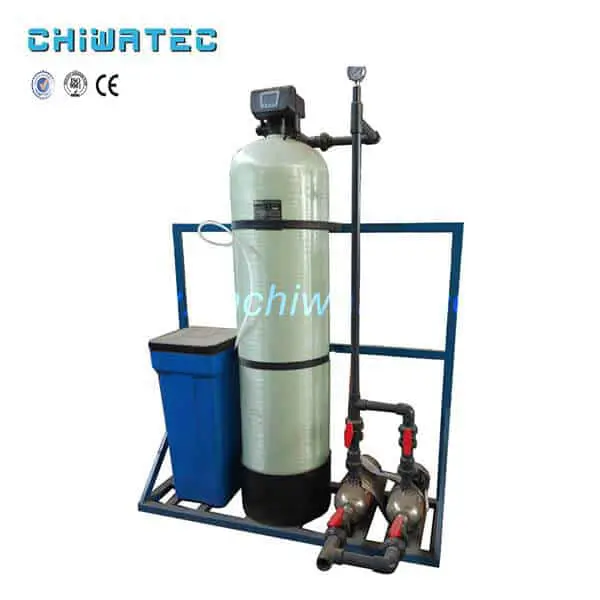
Hard water containing dissolved calcium and magnesium minerals causes scale buildup in pipes, reduces appliance efficiency, dries out skin and hair, and increases detergent consumption. Installing a water softener transforms your water supply by removing these hardness ions through ion exchange. The benefits of water softening equipment extend far beyond simple water quality improvement — they deliver measurable cost savings, health advantages, and equipment protection across residential, commercial, and industrial applications. CHIWATEC manufactures high-performance water softening systems designed to maximize these benefits for homes, hotels, laundries, boiler plants, and manufacturing facilities worldwide.
Benefits of Water Softening Equipment: Skin and Hair Health Improvement
One of the most immediately noticeable benefits of water softening equipment is the improvement in skin and hair condition. Hard water minerals (calcium and magnesium) react with soap to form a sticky residue — soap scum — that clogs pores, dries out skin, and leaves hair dull and brittle. After water softening:
- Soap lathers more easily and rinses completely clean without residue
- Skin feels smoother and requires less moisturizer
- Hair becomes softer, shinier, and more manageable
- Skin conditions such as eczema and psoriasis often show improvement due to reduced mineral irritation
- A 2018 study in the Journal of Investigative Dermatology linked hard water exposure to increased eczema risk in infants, confirming the dermatological benefits of softened water
Benefit 2: Significant Detergent and Soap Savings
Hard water requires up to 50-80% more detergent, soap, and shampoo to achieve the same cleaning results as soft water. This is because calcium and magnesium ions bind with surfactant molecules, reducing their effectiveness. With softened water:
| Application | Detergent Savings with Soft Water |
|---|---|
| Laundry | 50-80% reduction in detergent usage |
| Dishwashing | 53% reduction in dish soap and detergent |
| Bathing and showering | 50-60% reduction in shampoo and body wash |
| Industrial cleaning (CIP) | 40-60% reduction in cleaning chemicals |
For a family of four, this translates to annual savings of $150-400 on laundry and cleaning products alone. For commercial laundries and hotels, the savings are substantially higher — typically $2,000-10,000 per year depending on facility size.
Benefit 3: Appliance and Equipment Lifespan Extension
Scale buildup from hard water is the leading cause of premature failure in water-using appliances and equipment. A 1 mm layer of scale increases energy consumption by 7-10% in water heaters, while severe scaling can cause complete system blockage. Softened water protects:
- Water heaters and boilers: Scale-free operation maintains original thermal efficiency; extends life by 30-50%
- Dishwashers and washing machines: Reduced mechanical wear; lifetime extended by 25-40%
- Coffee machines and steam appliances: No scale blockage; manufacturer warranties may require softened water
- Industrial heat exchangers: Eliminates hard scale deposition; maintains heat transfer coefficient above 90% of design value
- Reverse osmosis membranes: Softened feed water prevents calcium scale on membrane surfaces, reducing cleaning frequency by 60-80%
The U.S. Water Quality Association estimates that water softening reduces appliance repair and replacement costs by 25-50% over the equipment’s service life.
Benefit 4: Energy Savings from Scale Prevention
Scale acts as a thermal insulator — just 1.5 mm of scale buildup causes a 15% increase in energy consumption for heating water. For industrial boilers, the impact is even more dramatic: a 3 mm scale layer can increase fuel consumption by 20-25%. The benefits of water softening equipment for energy efficiency include:
- Electric water heaters: 15-25% reduction in electricity consumption
- Gas boilers: 10-20% reduction in fuel consumption
- Commercial dishwashers: 10-15% reduction in energy per cycle
- District heating systems: 5-15% overall system efficiency improvement
For a typical household using an electric water heater, this represents annual savings of $80-200 on energy bills. For industrial facilities with large boilers, annual energy savings can reach $10,000-100,000 depending on system size and operating hours.
Benefit 5: Extended Plumbing System Life
Hard water gradually deposits calcium carbonate scale inside pipes, reducing internal diameter and restricting water flow. Over 10-15 years, hard water can reduce pipe flow capacity by 25-50% in hot water lines. The cumulative effect includes increased pumping energy, reduced water pressure at fixtures, and eventual pipe replacement costs. Softened water eliminates this scaling, preserving the original pipe diameter and flow characteristics. Additionally, softened water prevents pinhole leaks in copper pipes caused by aggressive water chemistry, extending plumbing system life by 15-20 years in many cases. For commercial and industrial facilities, this alone can save tens of thousands of dollars in pipe replacement costs over the building’s lifetime.
Benefit 6: Cleaner Dishes, Glassware, and Fixtures
Hard water leaves mineral spots, film, and cloudiness on dishes, glassware, and bathroom fixtures that require repeated wiping and polishing. Softened water eliminates these issues:
- Glassware dries spotless and crystal-clear without hand drying
- Dishes emerge from dishwashers clean without mineral film
- Bathroom tiles, shower doors, and faucets stay cleaner with less scrubbing
- Toilet bowls resist mineral staining, reducing cleaning frequency by 50%
- Kitchen cleaning time is reduced by approximately 50% according to user surveys
Benefit 7: Industrial Process Efficiency and Product Quality
In industrial settings, the benefits of water softening equipment directly impact production quality, process efficiency, and regulatory compliance. Key industrial advantages include:
- Boiler feed water: Soft water reduces boiler blowdown from 8-12% to 3-5% of feed flow, saving energy, chemical treatment, and water
- Food and beverage: Consistent water quality prevents taste variations and scale contamination in products
- Textile and dyeing: Soft water improves dye uptake by 10-20% and prevents hard water spots on finished fabrics
- Pharmaceutical and cosmetic manufacturing: Softened water meets USP purified water pretreatment requirements and prevents equipment scaling
- Cooling towers: Softened makeup water increases cycles of concentration from 3-5 to 8-12, reducing water consumption by 40-60%
Frequently Asked Questions (FAQ)
Does softened water have health benefits?
While softened water replaces hardness minerals with sodium (approximately 8-20 mg/L per 100 mg/L of hardness removed), the added sodium is well within dietary guidelines for most people. The primary health-related benefit is reduced soap residue on skin, which can improve conditions like eczema and dry skin. For those on low-sodium diets, potassium chloride can be used instead of sodium chloride for regeneration.
How much does a water softening system cost to operate?
Annual operating costs for a residential water softener typically range from $80-200, including salt ($60-150), electricity ($10-20), and water for regeneration ($10-30). These costs are offset by detergent, energy, and appliance savings that typically total $300-600 per year.
Can softened water be used for drinking and cooking?
Yes, softened water is safe for drinking and cooking. Many households prefer the taste of softened water. For drinking water specifically, a separate reverse osmosis tap can be installed to remove the minimal sodium added during softening.
How long does it take to see the benefits of a water softener?
Skin and hair benefits are noticeable within 1-2 weeks as soap residue is gradually washed away. Appliance and plumbing benefits accumulate over months and years — scale dissolves from existing deposits, and no new scale forms.
Conclusion & Call to Action
The benefits of water softening equipment span skin health, detergent savings, appliance protection, energy efficiency, plumbing preservation, and industrial process improvement. Whether for home, hotel, laundry facility, or industrial boiler plant, investing in water softening delivers measurable financial returns and quality-of-life improvements that far exceed the system’s purchase and operating costs. CHIWATEC offers a complete range of water softening systems for residential, commercial, and industrial applications, from 0.5 to 100+ m³/h capacity. Contact our team for a free water hardness test and system recommendation. Email us at [email protected] or [email protected] to learn how water softening can benefit your specific application.
Related Resources and Further Reading
- Softened Water Treatment Equipment 2026: Complete Guide to Water Softener Systems and Benefits
- Softened Water Applications: Complete Guide to Where and Why to Use Soft Water
- Household Softened Water Treatment Equipment: 2026 Complete Guide to Home Water Softening Systems
- Water Softening Equipment Working Process: Step-by-Step Ion Exchange and Regeneration 2026
- Water Softening Systems and Equipment — View Our Complete Product Line
Do you have a water treatment project we can help with
* Designing,machining,installing,commissioning, customize and one-stop service
 English
  Spanish
  Portuguese