

Boiler Softened Water Solutions: Complete Guide 2026
Protecting your boiler system starts with proper water treatment. This comprehensive guide covers everything about boiler softened water solutions, from scale prevention to ion exchange technology. Whether you operate industrial steam boilers or commercial heating systems, understanding water softener systems is essential for efficiency and safety.
Last Updated: January 2026 | Industry-Verified Data | ASME Compliance Standards
Why Boiler Softened Water Matters in 2026
Boiler softened water is critical for preventing scale formation, corrosion, and efficiency losses in industrial and commercial boiler systems. Untreated feed water containing calcium and magnesium ions leads to costly downtime, increased fuel consumption, and potential safety hazards.
Key Industry Trends (2026 Update)
- Energy Efficiency: Modern softener systems reduce boiler fuel consumption by 8-12% through scale prevention
- Automation: IoT-enabled controllers provide real-time hardness monitoring and predictive regeneration
- Resin Technology: New high-capacity resins achieve 45,000 grains/ft3 exchange capacity (15% improvement)
- Water Conservation: Counter-current regeneration reduces salt and water usage by 30-40%
- Market Growth: Global industrial water softener market projected to reach $4.2B by 2028 (CAGR 6.8%)
1. The Hidden Dangers of Hard Water in Boiler Systems
Scale Formation: The Primary Threat
When untreated water enters a boiler system, calcium and magnesium ions precipitate as temperature increases, forming hard scale deposits on heat transfer surfaces:
Four Critical Hazards of Scale:
- Uneven Heating and Metal Damage: Scale acts as an insulator (thermal conductivity 0.5-2.0 W/mK vs. steel 45-50 W/mK), causing localized overheating and metal fatigue
- Reduced Thermal Efficiency: Just 1mm of scale increases fuel consumption by 5-8%; 3mm can cause 20%+ efficiency loss
- Metal Corrosion: Scale creates concentration cells and traps corrosive substances against metal surfaces
- Steam Quality Deterioration: Impurities carry over with steam, damaging turbines, heat exchangers, and end-use processes
Economic Impact of Scale
Industry data shows scale thickness directly impacts operating costs:
- 0.5 mm scale: 2-3% fuel penalty ($8,000-12,000/year for 10 TPH boiler)
- 1.0 mm scale: 5-8% fuel penalty ($20,000-32,000/year)
- 2.0 mm scale: 12-15% fuel penalty ($48,000-60,000/year)
- 3.0 mm scale: 20%+ fuel penalty ($80,000+/year)
Regulatory Compliance
National mandatory standards (Industrial Boiler Water Quality Standards GB/T 1576-2018) specify strict hardness limits for boiler feed water. Boiler softened water equipment is not optional – it is a compliance requirement for safe operation.
2. How Ion Exchange Water Softening Works
Fundamental Principle
Water softener systems use cation exchange resin to remove calcium (Ca2+) and magnesium (Mg2+) ions from feed water, replacing them with sodium (Na+) ions that do not form scale:
Ion Exchange Reaction:
2R-Na + Ca2+ = R2-Ca + 2Na+
Where R represents the resin matrix with sulfonic acid functional groups.
Resin Types and Specifications
001×7 Strong Acid Cation Resin (Standard)
- Matrix: Polystyrene cross-linked with 7% DVB (divinylbenzene)
- Functional Group: Sulfonic acid (-SO3H)
- Exchange Capacity: 45,000-48,000 grains/ft3 (2.0-2.2 eq/L)
- Operating Temperature: Up to 120C
- pH Range: 0-14 (stable across full range)
High-Capacity Premium Resins (2026)
- Exchange Capacity: 50,000-55,000 grains/ft3
- Improved kinetics for high-flow applications
- Enhanced fouling resistance for challenging water sources
- Service life: 8-12 years with proper maintenance
Softening Cycle Steps
- Service (Softening): Hard water flows through resin bed; Ca2+/Mg2+ exchanged for Na+
- Backwash: Upward flow expands resin bed, removes trapped particles (10-15 minutes)
- Brine Draw (Regeneration): Concentrated NaCl solution (8-12%) restores resin capacity
- Slow Rinse: Displaces brine through resin bed for efficient salt usage
- Fast Rinse: Removes residual hardness and salt from resin (5-10 minutes)
- Brine Tank Refill: Prepares for next regeneration cycle
3. Selecting the Right Boiler Softened Water System
Product Selection Criteria
Choosing the appropriate water softener system requires matching system capacity and features to your specific boiler requirements:
Capacity Sizing
- Calculate Daily Hardness Load: Flow rate (GPM) x Hardness (grains/gallon) x 1440 minutes
- Size for 2-3 Day Capacity: Prevents excessive regeneration frequency
- Include Safety Factor: Add 20% buffer for peak demand periods
Control System Options
Manual Control (Budget Option)
- Lower initial cost
- Requires operator intervention for regeneration
- Suitable for small boilers with intermittent operation
Time-Clock Automatic
- Regenerates on fixed schedule (e.g., every 3 days at 2 AM)
- Simple operation, reliable
- May waste water/salt if capacity not fully exhausted
Flow-Meter Automatic (Demand-Initiated)
- Regenerates based on actual water usage
- Optimizes salt and water efficiency
- Preferred for 24/7 continuous operation
Dual-Tank Continuous Softening
- One tank in service while other regenerates
- Uninterrupted softened water supply
- Essential for critical processes and large boilers
Multi-Stage Pretreatment Configuration
For optimal boiler feed water quality, consider multi-stage treatment:
- Stage 1 – Multimedia Filtration: Removes sediment, rust, colloids, suspended matter (turbidity less than 5 NTU)
- Stage 2 – Activated Carbon: Removes chlorine, organics, odors, pesticides (protects resin from oxidation)
- Stage 3 – Water Softener: Removes hardness to less than or equal 0.03 mmol/L
- Optional Stage 4 – Reverse Osmosis: For high-pressure boilers requiring demineralized water
4. Application Scope and Industries
Primary Applications
Boiler softened water solutions serve diverse industries with steam and hot water generation needs:
Industrial Boilers
- Steam boilers (fire-tube, water-tube)
- Hot water boilers for process heating
- Heat recovery steam generators (HRSG)
- Thermal oil heaters
Commercial Buildings
- HVAC heating systems
- Hot water supply for hotels, hospitals, schools
- Laundry facilities
- Commercial kitchens
Process Industries
- Food and beverage processing
- Pharmaceutical manufacturing
- Textile dyeing and finishing
- Chemical processing
- Paper and pulp mills
Other Applications
- Evaporative condensers
- Cooling towers (scale prevention)
- Heat exchangers
- Direct combustion engines (jacket water)
- Residential water treatment
Effluent Quality Standards
Properly functioning softeners achieve:
- Total Hardness: less than or equal 0.03 mmol/L (meets GB/T 1576-2018)
- Calcium Hardness: less than 0.5 mg/L as CaCO3
- Magnesium Hardness: less than 0.5 mg/L as CaCO3
- Sodium Increase: +46 mg/L per 1 mmol/L hardness removed
5. Key Features of Modern Water Softener Systems
Automation and Control
Modern boiler softened water equipment features advanced automation for reliable, hands-free operation:
Programmable Logic Control
- Microprocessor-based controllers with LCD displays
- Real-time monitoring of flow, hardness, and regeneration status
- Remote connectivity via WiFi/Ethernet for SCADA integration
- Alarm notifications for low salt, resin fouling, or valve malfunctions
Smart Features (2026)
- Adaptive regeneration based on historical usage patterns
- Cloud-based monitoring and predictive maintenance alerts
- Mobile app control and status notifications
- Integration with building management systems (BMS)
Efficiency Advantages
High Efficiency Design
- Optimized resin bed depth and distribution system
- Full utilization of resin exchange capacity (more than 90%)
- Counter-current regeneration for 30% salt savings
Water Conservation
- Water production rate: more than 98% (only 2% loss to backwash and rinse)
- High-efficiency nozzles reduce backwash water by 25%
- Brine reclaim systems recycle rinse water
Energy Savings
- Siphon principle eliminates need for salt pumps
- Low-pressure drop design (less than 0.2 bar at rated flow)
- Variable frequency drives on large systems
Construction and Materials
Valve Bodies
- Lead-free brass (NSF/ANSI 61 certified)
- High-strength engineering plastic (reinforced PPO)
- FLECK or Autotrol multi-port control valves (industry standard)
Resin Tanks
- Fiberglass-reinforced plastic (FRP) – corrosion resistant
- Stainless steel (304/316) for high-pressure applications
- Steel lined with PE/PP for large industrial systems
- UV-stabilized for outdoor installation
Adjustability
- Regeneration frequency: User-defined (daily to weekly)
- Brine concentration: Adjustable (6-12% NaCl)
- Backwash and rinse times: Programmable
- Hardness setting: Compensates for raw water variations
6. Technical Specifications and Operating Parameters
Standard Operating Conditions
Pressure and Flow
- Inlet Water Pressure: 0.18-0.6 MPa (26-87 psi), min 0.25 MPa recommended
- Working Pressure: 0.2-0.6 MPa, max tank pressure less than or equal 0.8 MPa
- Pressure Drop: less than 0.2 bar at rated flow
Temperature
- Working Temperature: 2-50C (36-122F), optimal: 10-35C
- Source Water Temperature: 1-55C
Water Quality Requirements
- Source Water Hardness: less than 8 mmol/L (higher requires pretreatment)
- Effluent Hardness: less than or equal 0.03 mmol/L (meets GB/T 1576-2018)
- Turbidity (Inlet): less than 5 NTU (multimedia filter recommended)
- Free Chlorine: less than 0.1 ppm (carbon filter protects resin)
- Iron Content: less than 0.3 ppm (higher levels cause resin fouling)
Regeneration Specifications
Regeneration Agent
- Type: NaCl (Sodium Chloride) – Industrial or food grade
- Purity: more than 99.5% (avoid additives and anti-caking agents)
- Form: Pellet or high-purity solar salt preferred
Regeneration Method
- Co-current: Brine flows same direction as service flow (simpler, traditional)
- Counter-current: Brine flows opposite to service flow (30% more efficient, lower effluent TDS)
Control Modes
- Time-based: Regenerates on fixed schedule (e.g., every 72 hours)
- Flow-based: Regenerates after set volume treated (demand-initiated)
- Hybrid: Combines time and flow with hardness monitoring
Electrical Requirements
- Power Supply: 220V plus or minus 10% / 50Hz (or 110V / 60Hz for export models)
- Power Consumption: 15-40W (standby), 50-100W (during regeneration)
- Control Valve: 24V DC solenoid (low voltage safety)
- Battery Backup: Optional 9V battery for time retention during power outages
7. Maintenance and Troubleshooting
Routine Maintenance Schedule
Daily/Weekly Checks
- Verify softened water hardness (test strips or titration kit)
- Check salt tank level; maintain more than 25% full
- Inspect for leaks at valve and pipe connections
- Confirm controller display shows correct time and settings
Monthly Tasks
- Clean brine tank and salt grid (remove salt bridges and mush)
- Inspect resin bed for fouling (color change, pressure drop increase)
- Verify regeneration cycle completion and duration
- Test effluent hardness after regeneration
Annual Maintenance
- Resin bed inspection and cleaning (resin cleaner product)
- Valve and seal inspection; replace worn components
- Calibrate flow meter and hardness sensors
- Full system sanitization (if bacterial growth suspected)
Common Troubleshooting Issues
Hard Water at Outlet
- Resin exhausted prematurely – Check salt level and brine draw
- Bypass valve open – Verify valve position
- Inlet/outlet pipes reversed – Check plumbing
- Resin fouling (iron, organics) – Clean or replace resin
High Salt Consumption
- Incorrect hardness setting – Recalibrate controller
- Excessive brine tank water – Check brine valve and float
- Frequent regeneration – Adjust capacity or flow meter setting
Low Water Pressure
- Resin bed compacted – Check for iron fouling or biological growth
- Inlet filter clogged – Clean or replace pre-filter
- Valve malfunction – Inspect control valve operation
Resin Replacement Indicators
- Capacity decline more than 30% despite proper regeneration
- Effluent hardness consistently more than 0.05 mmol/L
- Visible resin degradation (broken beads, color change to dark brown)
- Service life exceeded (8-12 years typical)
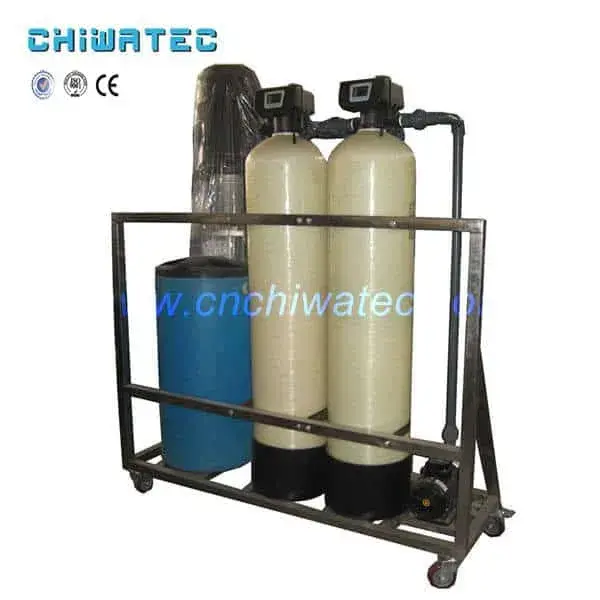
Conclusion: Investing in Boiler Protection
Boiler softened water solutions are essential for protecting your investment in steam and hot water systems. By removing hardness ions through ion exchange, water softener systems prevent scale formation, improve thermal efficiency, and extend equipment life.
Key Decision Factors for 2026
- Proper Sizing: Calculate based on boiler capacity, feed water hardness, and daily usage
- Automation Level: Flow-meter control optimizes salt and water usage
- Pretreatment: Multimedia and carbon filtration protect resin from fouling
- Compliance: Ensure effluent meets GB/T 1576-2018 or ASME standards
- ROI: Typical payback period is 12-24 months through fuel savings and reduced maintenance
For personalized boiler softened water system design and installation, our team provides comprehensive engineering support from water analysis through commissioning and ongoing optimization.
Frequently Asked Questions (FAQ)
Q: How often does a water softener need to regenerate?
A: Regeneration frequency depends on water hardness, daily usage, and resin capacity. Typical systems regenerate every 2-7 days. Flow-meter controlled units regenerate only when capacity is exhausted, optimizing salt and water usage.
Q: How much salt does a boiler water softener use?
A: Salt consumption averages 6-10 lbs per regeneration for residential units, 50-200 lbs for industrial systems. Counter-current regeneration reduces salt usage by 30% compared to co-current. Annual consumption: 0.5-2 tons depending on capacity.
Q: Can softened water be used for drinking?
A: Softened water is safe to drink but contains elevated sodium (46 mg/L increase per 1 mmol/L hardness removed). Those on sodium-restricted diets should consider a separate drinking water tap with RO or bypass the softener for kitchen cold water.
Q: What is the difference between water softening and demineralization?
A: Water softening only removes calcium and magnesium (hardness ions) via ion exchange. Demineralization (DI/RO) removes ALL dissolved salts and minerals. Softened water retains TDS; demineralized water has less than 10 uS/cm conductivity. High-pressure boilers (more than 600 psi) typically require demineralization.
Q: How long does ion exchange resin last?
A: Quality 001×7 resin lasts 8-12 years with proper maintenance. Factors affecting lifespan: chlorine exposure (less than 0.1 ppm), iron fouling (less than 0.3 ppm), operating temperature (less than 50C), and mechanical attrition from backwashing.
Q: Why is my softener using too much salt?
A: Common causes: incorrect hardness setting, salt bridge in brine tank, leaking brine valve, or excessive regeneration frequency. Check controller settings, break up salt bridges, and verify brine draw duration (typically 60-90 minutes).
Q: Can water softeners remove iron?
A: Standard softeners remove up to 0.3-0.5 ppm ferrous iron (clear water iron). Higher iron levels require specialized iron-filtering resin or pretreatment (oxidation + filtration). Manganese greensand or Birm filters handle higher iron concentrations.
Related Resources and Further Reading
- The Role of Specialized Salt in Water Softening Equipment
- Technical Specifications and Installation Guide for Water Softeners
- Optimizing Parameters for Fully Automatic Water Softening Equipment: A Comprehensive Guide
- Ion Exchange Method in Water Softening: Principles and Technology
- Water Softening Techniques: Types, Methods, and Benefits
FOLLOW US
Do you have a water treatment project we can help with
Designing, machining, installing, commissioning, customize and one-stop service






 English
  Spanish
  Portuguese




