RO and EDI Pharmaceutical Purified Water: Advantages Over Distillation and Modern Preparation Methods 2026
Water is the most widely used basic raw material in drug production, used in the preparation of pharmaceutical ingredients, cleaning equipment, laboratory analysis, and as a component of finished products. The quality of pharmaceutical purified water directly impacts drug safety and efficacy. RO EDI pharmaceutical purified water systems — combining reverse osmosis with electrodeionization — have become the modern standard, replacing traditional distillation methods. This guide compares RO EDI pharmaceutical purified water technology with distillation and explains why the membrane-based approach is now preferred for pharmaceutical applications.
Why RO EDI Pharmaceutical Purified Water Has Replaced Distillation
With continuous progress in science and technology, pharmaceutical water preparation has shifted from energy-intensive distillation to membrane-based RO EDI pharmaceutical purified water systems. The Chinese Pharmacopoeia, in alignment with international standards such as USP, EP, and JP, now recognizes reverse osmosis combined with electrodeionization as a valid method for producing purified water and water for injection (WFI).
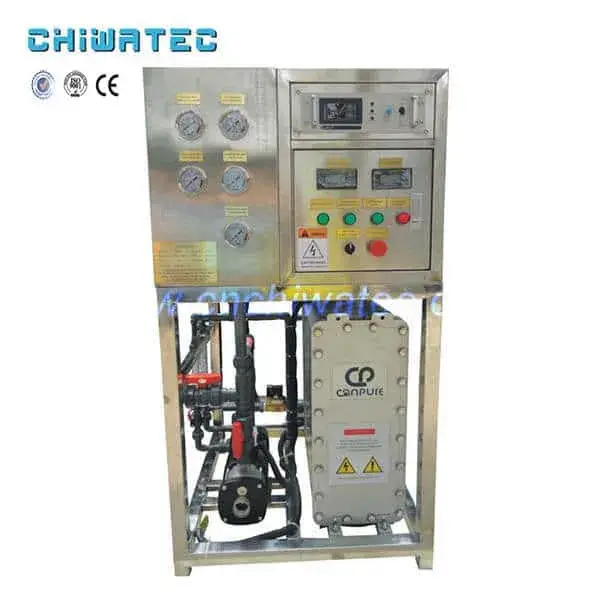
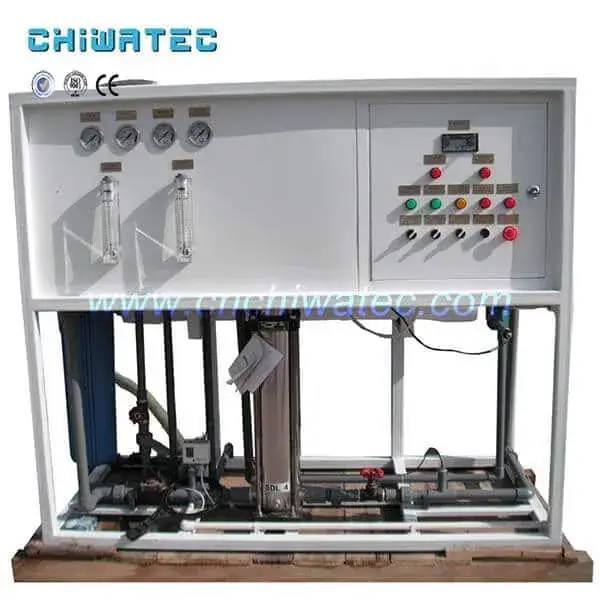
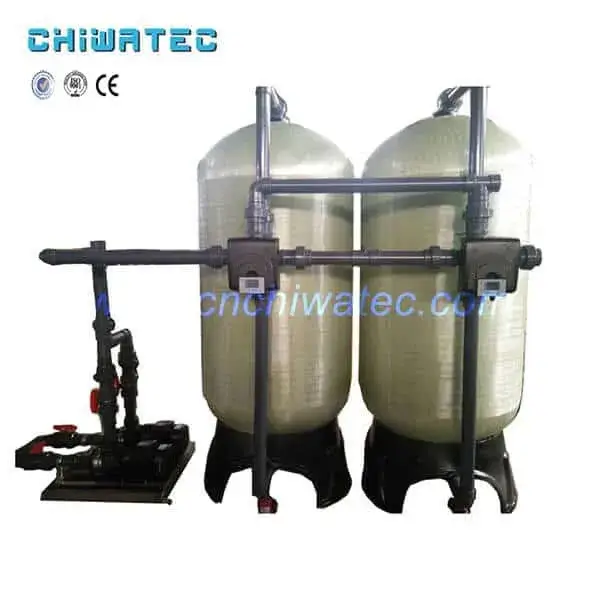
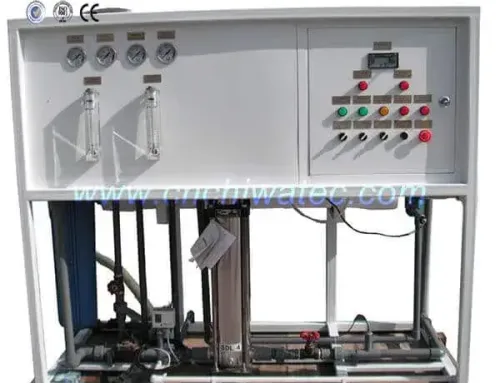
Modern pharmaceutical water treatment equipment typically follows this sequence: Raw water → Multi-media filter → Activated carbon filter → Water softener → Precision filter → Reverse osmosis → Intermediate tank → EDI system → Purified water tank → UV sterilizer → Microporous filter → Point of use. This fully membrane-based process eliminates the need for distillation while meeting all pharmacopoeia requirements.
Comparison: RO + EDI vs. Traditional Distillation
| Parameter | RO + EDI System | Distillation Method |
| Energy consumption | Low — 3-8 kWh/m3 (pumps + DC power) | High — 50-100 kWh/m3 (heating + cooling) |
| Water recovery | 50-75% (up to 90% with recovery systems) | 30-50% (single-effect still) |
| Chemical usage | Minimal (antiscalant only) | None directly, but boiler chemicals needed |
| Operation | Continuous, automatic, minimal labor | Batch or semi-continuous, more operator attention |
| Footprint | Compact — 60-70% less space than distillation | Large — still column + condenser + storage |
| Capital cost (1 m3/h) | USD 30,000-50,000 | USD 50,000-80,000 |
| Operating cost (per m3) | USD 1.50-3.00 | USD 8.00-15.00 |
| Water quality | Conductivity below 1.3 uS/cm, meets USP | Conductivity below 2.0 uS/cm, meets USP |
| GMP validation | IQ/OQ/PQ required, well-established | IQ/OQ/PQ required |
The RO + EDI configuration offers substantial advantages in energy efficiency, water recovery, operating cost, and footprint — which is why it has become the preferred technology for new pharmaceutical water installations worldwide.
High Efficiency and Energy Savings: RO + EDI vs. Distillation
Distillation is historically the longest-used method for medicinal water preparation, but its high energy consumption is a major drawback. Distillation requires heating water to boiling point (100C) followed by vapor condensation — a phase-change process that consumes 50-100 kWh per cubic meter of product water.
In contrast, RO + EDI operates at ambient temperature. The RO system requires 3-6 bar for brackish water (1.5-3 kWh/m3), while the EDI module consumes 0.5-1.5 kWh/m3 of DC power. Total energy consumption for a complete RO + EDI system is 3-8 kWh/m3 — approximately 90% less than distillation. This energy saving translates directly into lower operating costs and reduced carbon footprint for pharmaceutical manufacturers.
Alignment with International Pharmacopoeia Standards
In the process of aligning with international standards, pharmacopoeia authorities worldwide have updated their requirements to recognize membrane-based technologies. The Chinese Pharmacopoeia (ChP), USP, EP, and JP all now accept reverse osmosis combined with electrodeionization for purified water production.
Key regulatory updates that enabled RO + EDI adoption:
- USP General Chapter <1231> — explicitly recognizes RO and EDI as suitable technologies for producing pharmaceutical waters
- EP monograph (0008) — accepts non-distillation methods for purified water including reverse osmosis
- Chinese Pharmacopoeia (2020 edition) — aligns WFI production methods with international standards
- FDA Guide to Inspections of High Purity Water Systems — provides guidance on validation of membrane-based pharmaceutical water systems
These regulatory changes have accelerated the adoption of RO + EDI technology by pharmaceutical manufacturers globally.
Key Components of a Pharmaceutical RO + EDI System
| Stage | Equipment | Purpose |
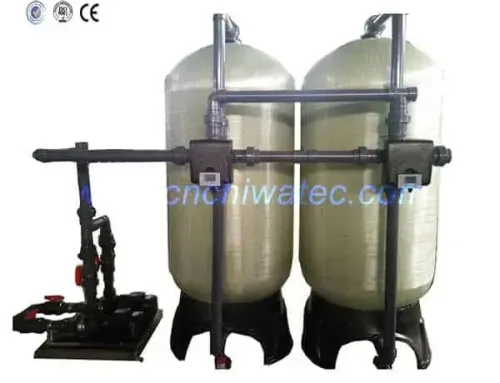
| Pretreatment | Multi-media filter, carbon filter, softener | Remove suspended solids, chlorine, and hardness |
| Primary desalination | Reverse osmosis membranes (TFC) | Remove 95-99% of dissolved salts |
| Polishing | Electrodeionization (EDI) modules | Remove residual ions to achieve 18+ MOhm-cm |
| Disinfection | UV sterilizer (254 nm) | Microbial control in product water |
| Final filtration | 0.2 micron microporous filter | Terminal removal of bacteria and particles |
| Storage and distribution | 316L SS tank with sanitary loop | Maintain water quality with recirculation |
Each component must be constructed from pharmaceutical-grade materials (316L stainless steel or PVDF) with sanitary connections and full drainability for GMP compliance.
Frequently Asked Questions
Q1: Can RO + EDI produce WFI (Water for Injection)?
Yes. Regulatory authorities including the USP, EP, and Chinese Pharmacopoeia now accept RO + EDI as a valid method for WFI production, provided the system is properly validated. The EDI module must be certified for WFI service and the system must include endotoxin monitoring.
Q2: What is the lifespan of EDI modules in pharmaceutical service?
EDI modules typically last 5-10 years in pharmaceutical purified water service. The ion-exchange resins and membranes inside the module gradually degrade over time. Replacement is indicated when the module can no longer achieve target resistivity at rated flow under normal operating conditions.
Q3: How does distillation compare to RO for endotoxin removal?
Distillation inherently removes endotoxins through the phase-change process. RO membranes also remove endotoxins (rejection rate above 99.9%), and EDI provides additional polishing. For WFI production, a double-pass RO or RO + EDI combined with endotoxin-retentive ultrafiltration as a final barrier is considered equivalent to distillation.
Q4: Is RO + EDI more expensive to maintain than distillation?
No. RO + EDI has lower maintenance costs overall. RO membranes need replacement every 3-5 years, EDI modules every 5-10 years, and pretreatment media periodically. Distillation requires boiler maintenance, descaling, and higher energy costs — resulting in 50-70% higher annual maintenance expenditure for distillation.
Q5: What validation is required for an RO + EDI pharmaceutical water system?
Full GMP validation includes: Design Qualification (DQ), Installation Qualification (IQ), Operational Qualification (OQ), and Performance Qualification (PQ). The PQ must demonstrate three consecutive successful batches (or 28 days of consistent operation) meeting all pharmacopoeia specifications for conductivity, TOC, and microbial counts.
Conclusion and Call to Action
RO EDI pharmaceutical purified water technology has become the global standard for pharmaceutical water preparation, offering 90% lower energy consumption, higher water recovery, and a smaller footprint compared to traditional distillation. As pharmacopoeia standards continue to align with membrane-based technologies, the adoption of RO + EDI systems will continue to grow across the pharmaceutical industry.
CHIWATEC Water Treatment Technology is a high-tech enterprise specialized in water processing devices. We design and manufacture complete RO + EDI pharmaceutical purified water systems from 0.5 m3/h laboratory units to 50+ m3/h production plants. For project inquiries, email [email protected] or [email protected] with your capacity requirements and feed water analysis.
Related Resources and Further Reading
- RO System Technical Specifications — Design parameters for industrial RO systems
- Pollution Control for RO Systems — Membrane fouling prevention strategies
- EDI Ultrapure Water System Characteristics — EDI technology features and applications
- RO Pure Water Equipment Process Flow — Complete process description
- Chiwatec RO Water Treatment Systems — Browse commercial and industrial RO equipment
Do you have a water treatment project we can help with
* Designing,machining,installing,commissioning, customize and one-stop service
 English
  Spanish
  Portuguese