

FLECK Centralized Control Valve: Performance Characteristics and Selection Guide 2026
Looking for a reliable FLECK centralized control valve for your water softening system? This comprehensive guide covers the performance characteristics, design advantages, and selection criteria for PENTAIR FLECK control valves – the industry standard for automatic water softener controls. CHIWATEC integrates FLECK control valves into custom water treatment systems, providing reliable automatic control for industrial and commercial softening applications.
Last Updated: January 2026 | Industry-Verified Data | PENTAIR FLECK Certified Information
Why This Guide Matters for Your Control Valve Selection
The FLECK centralized control valve is the heart of any automatic water softening system, responsible for directing water flow through all five regeneration cycles (service, backwash, brine draw, slow rinse, fast rinse). Selecting the right valve model and understanding its performance characteristics directly impacts system reliability, maintenance frequency, and operating costs. With PENTAIR FLECK valves installed in millions of systems worldwide, they have become the benchmark for quality in the water treatment industry.
Key Industry Trends (2026 Update)
- SE Series Advancement: PENTAIR FLECK SE series valves now offer Bluetooth-enabled programming via mobile app, simplifying setup and diagnostics
- Lead-Free Compliance: All current FLECK valve bodies meet NSF/ANSI 372 low-lead requirements, essential for drinking water applications
- Extended Warranty: PENTAIR now offers 5-year warranty on SE series pistons and spacer stacks, reflecting improved durability
- Smart Integration: FLECK valves with conductivity-based regeneration control reduce salt usage by up to 35% compared to time-clock models
1. What Is a FLECK Centralized Control Valve?
Definition and Core Function
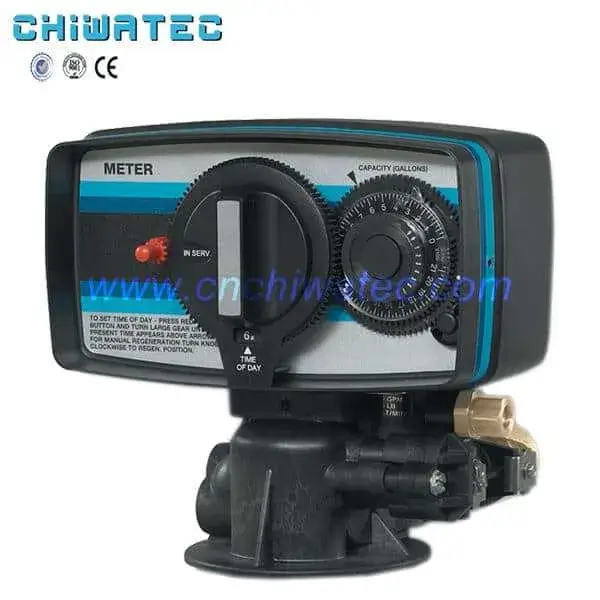
A FLECK centralized control valve is a multi-port valve manufactured by PENTAIR that automatically controls the service and regeneration cycles of ion exchange water softening equipment. Unlike separate valve assemblies, the centralized design integrates all flow paths into a single valve body, reducing potential leak points and simplifying installation.
Key Components
- Piston Valve Core: The heart of the valve – superior hydraulic performance, strong, wear-resistant, and corrosion-resistant
- Lead-Free Brass Valve Body: Non-toxic, harmless, with long service life in potable water applications
- Sealing Rings and Partition Grid: The core assembly composed of piston, sealing rings, and partition grid delivers exceptional hydraulic performance
- Programmable Controller: Digital timer or meter-initiated controls manage all regeneration sequences
- Brine System Connection: Integrated brine draw and refill ports for automatic regenerant handling
Browse Our Full Range of FLECK Control Valves
2. What Are the Key Performance Characteristics of FLECK Valves?
Hydraulic Performance
The piston valve core produced by PENTAIR FLECK delivers superior hydraulic performance through a unique and ingenious design. The core part – composed of piston, sealing ring and partition grid – maintains excellent hydraulic characteristics while providing exceptional strength, wear resistance, and corrosion resistance. The brass valve core is firmly covered with a layer of sealing material to ensure a long-lasting seal.
Material Advantages
- Valve Body: Lead-free brass – non-toxic, harmless, suitable for drinking water, long service life
- Piston: High-grade engineered polymer – self-lubricating, wear-resistant, chemical-resistant
- Seals: EPDM or NBR elastomers – excellent sealing across wide temperature and pressure ranges
- Spacers: Corrosion-resistant grid design – prevents channeling and ensures even flow distribution
3. What Are the Available FLECK Valve Models and Their Applications?
Popular FLECK Valve Series
- FLECK 5600/5600SXT: Economical 1-inch valve for residential and light commercial softeners, flow rates up to 20 GPM
- FLECK 5800/5810: 1.25-inch valve for medium commercial applications, flow rates up to 35 GPM
- FLECK 7000/7000SXT: 1.5-inch valve for commercial and light industrial systems, flow rates up to 60 GPM
- FLECK 9000/9100: 2-inch valve for industrial and large commercial applications, flow rates up to 120 GPM
- FLECK 9500/9500SE: 2-inch side-mount valve for dual-tank systems, flow rates up to 150 GPM
- FLECK SE Series: Latest generation with improved efficiency, Bluetooth programming, and extended warranty
Application Guide
Selecting the correct valve model depends on system flow rate, pipe size, and desired regeneration control type. FLECK valves are available with time-clock (TC), meter-initiated (SXT), or demand-initiated (SE) controllers to match operational requirements.
4. How Does the FLECK Piston and Seal Design Work?
Innovative Core Design
The FLECK valve core features a unique and ingenious design where the piston, sealing rings, and partition grid work together to direct water flow through different regeneration paths. As the piston moves linearly within the valve body, it aligns ports to direct flow for service, backwash, brine draw, slow rinse, and fast rinse cycles. The sealing rings create pressure-tight barriers between ports, preventing cross-contamination between cycles.
Durability Advantages
The piston design offers several advantages over traditional diaphragm or rotary valves: no diaphragms to rupture or fatigue, linear motion reduces wear on seals, self-flushing action clears debris during each cycle, and the balanced design minimizes operating pressure differentials. The brass valve core is firmly covered with a layer of sealing material that provides excellent wear resistance and maintains sealing integrity over thousands of cycles.
5. What Are the Installation Requirements for FLECK Control Valves?
Installation Considerations
- Inlet Water Quality: FLECK valves require pre-filtered water (less than 5 NTU turbidity) to prevent debris from damaging seals
- Pressure Range: 20-120 PSI (1.4-8.3 bar) for standard models
- Temperature Range: 34-110 degrees F (1-43 degrees C) for standard models
- Electrical: 110V or 220V, 50/60Hz depending on model and controller type
- Drain Connection: Adequate gravity drain or atmospheric drain line required for regeneration discharge
Common Installation Mistakes
- Inadequate drain line sizing causing backpressure during regeneration
- Missing or incorrectly positioned bypass valve
- Brine line not properly secured causing air leaks
- Controller not programmed for actual water conditions
6. What Maintenance Is Required for FLECK Centralized Control Valves?
Routine Maintenance
- Monthly: Inspect for leaks around seal plate and piston access cover, verify regeneration cycle completes
- Quarterly: Clean brine line screen, inspect injector and throat for wear
- Annually: Replace piston and spacer stack assembly (recommended preventive maintenance)
- Every 2-3 Years: Complete valve rebuild including seals, piston, spacers, and injector
Troubleshooting Common Issues
- Valve Not Regenerating: Check power supply, controller programming, and drive motor
- Hard Water Leakage: Worn piston seals or spacer stack, foreign material in valve
- Continuous Drain Flow: Debris in valve preventing proper seal closure, piston misalignment
- Low Brine Draw: Clogged injector, insufficient drain flow, or restricted brine line
7. How Does the FLECK Controller Manage Regeneration Cycles?
Controller Types
- Time Clock (TC): Initiates regeneration at preset intervals – simplest but least efficient
- Meter-Initiated (SXT): Regenerates after preset water volume – adapts to actual usage, reducing salt waste
- Demand-Initiated (SE): Uses conductivity sensor to detect resin exhaustion – most efficient, up to 35% salt savings
Cycle Programming
Each regeneration cycle (backwash, brine draw, slow rinse, fast rinse, brine tank refill) has independently programmable duration settings. Proper programming based on resin volume, water hardness, and flow rate ensures complete regeneration without wasting water or chemicals. The latest SE series controllers offer Bluetooth connectivity for programming via smartphone app.
8. What Are the Advantages of FLECK Over Other Control Valve Brands?
Competitive Comparison
- vs. Clack WS Series: FLECK offers wider flow range (5600 at 20 GPM to 9500 at 150+ GPM), more controller options
- vs. Autotrol: FLECK piston design is simpler to service with fewer wear parts than Autotrol diaphragm valves
- vs. Hydraulic Valves: FLECK electric control provides more precise timing and adjustment capability
Why FLECK Remains Market Leader
With over 60 years of continuous refinement, FLECK valves are known for their reliability, serviceability, and parts availability worldwide. The lead-free brass valve body, combined with the proven piston/seal design, makes FLECK the most widely specified control valve for commercial and industrial water softening applications.
9. How to Select the Right FLECK Valve for Your System?
Selection Criteria
- Service Flow Rate: Match valve capacity to peak and continuous flow requirements
- Pipe Size: Ensure valve port size matches system piping (1-inch, 1.25-inch, 1.5-inch, or 2-inch)
- Controller Type: Select TC for simple applications, SXT for variable demand, SE for maximum efficiency
- System Configuration: Single tank, twin tank, or multi-tank (FLECK offers dedicated models for each)
- Water Quality: Consider chlorine levels, iron content, and temperature range for material compatibility
10. Where Can You Purchase Genuine FLECK Control Valves and Parts?
Authorized Supply
Genuine PENTAIR FLECK valves and replacement parts should be sourced from authorized distributors to ensure warranty coverage and product authenticity. CHIWATEC is an experienced integrator of FLECK valves, offering complete control valve solutions including valve selection, system integration, installation, and ongoing maintenance support for industrial and commercial water treatment applications.
Replacement Parts Guide
Commonly replaced FLECK valve components include piston and spacer stack assemblies (annual replacement recommended), injectors and throats (replace when brine draw is low), seal plate assemblies (during major rebuilds), and drive motors and circuit boards (as needed). Using genuine PENTAIR parts ensures proper fit and performance.
Conclusion
FLECK centralized control valves represent the gold standard for automatic water softener control, combining proven piston technology with advanced electronic controllers. The lead-free brass construction, innovative seal design, and comprehensive model range make FLECK valves suitable for applications from residential softeners to large industrial systems. With proper selection, installation, and preventive maintenance, a FLECK control valve provides reliable service for 15-20 years.
Contact CHIWATEC today at [email protected] or +86 18292684865 (WhatsApp) to discuss your FLECK control valve requirements. Our team of water treatment engineers can help you select the right valve model and provide complete system integration services.
Frequently Asked Questions
Q1: How long do FLECK control valves typically last?
With proper maintenance, FLECK centralized control valves typically operate reliably for 15-20 years. The valve body (lead-free brass) can last indefinitely, while the piston and spacer stack assembly should be replaced annually as preventive maintenance. Drive motors typically last 8-12 years, and electronic controllers 10-15 years depending on environmental conditions.
Q2: Can a FLECK valve be repaired, or does it need complete replacement?
FLECK valves are designed to be fully serviceable. Individual components including pistons, spacer stacks, seals, injectors, drive motors, and circuit boards can all be replaced without removing the valve body from the system. Complete rebuild kits are available for major overhauls. Only severe physical damage or corrosion would require complete valve replacement.
Q3: What is the difference between FLECK 5600 and 5600SXT?
The FLECK 5600 has a simple time-clock controller that regenerates at fixed time intervals. The 5600SXT features a meter-initiated electronic controller that tracks actual water usage and regenerates only when needed. The SXT model reduces salt consumption by 20-30% compared to time-clock operation and provides additional features like days override and remote regeneration capability.
Q4: Does the FLECK valve work with all types of water softeners?
FLECK valves are designed primarily for cation exchange water softeners using sodium chloride regeneration. They are compatible with standard fiberglass, steel, or stainless steel resin tanks with 2.5-inch or 4-inch top openings (with appropriate adapters). The valve is not suitable for deionization (mixed-bed) systems without modification, as the brine system is optimized for sodium chloride regeneration.
Q5: What causes a FLECK valve to stick or fail to rotate?
The most common causes of FLECK valve failure to advance include: debris or sediment lodged in the piston/spacer stack (requires disassembly and cleaning), failed drive motor or circuit board (electrical test required), seized piston due to mineral buildup (chemical cleaning or replacement), or incorrect voltage supply (verify transformer output). Regular preventive maintenance prevents most of these issues.
Related Resources and Further Reading
Do you have a water treatment project we can help with
* Designing,machining,installing,commissioning, customize and one-stop service






 English
  Spanish
  Portuguese




