

2026 Complete Guide to RO Concentrate Water Reuse: 10 Practical Ways to Reduce Waste and Save Water
Worried about the water wasted by your reverse osmosis system? A standard residential RO system produces 3-4 gallons of concentrate (reject) water for every gallon of purified water — meaning a family of 4 using 5 gallons of RO water daily discards 15-20 gallons of concentrate water. Here is the direct answer: effective RO concentrate water reuse is not only possible but practical — the reject water is typically just slightly higher in TDS than tap water (by 50-200%) and can be safely used for washing, cleaning, gardening, and toilet flushing, reducing total household water waste by 60-80% with simple collection and distribution systems. CHIWATEC designs residential and commercial RO systems with integrated concentrate water recovery options, helping customers achieve near-zero water discharge.
What Is RO Concentrate Water?
RO concentrate water reuse starts with understanding what the reject stream actually contains. The concentrate (also called reject water, brine, or washing water) is the stream of water containing the dissolved salts and contaminants rejected by the RO membrane:
- Composition: Concentrate water has a TDS typically 3-5 times higher than the feed water. For tap water at 200-400 ppm TDS, the concentrate is 600-2,000 ppm TDS — still well within the range of many municipal water supplies worldwide.
- Contaminant concentration: The concentrate contains concentrated levels of calcium, magnesium, sodium, chloride, silica, and any other dissolved solids or uncharged contaminants present in the feed water. Bacteria and viruses are effectively removed by the RO membrane and do not pass to the concentrate stream in significant quantities.
- Water quality suitability: For most municipal tap water sources, the concentrate water quality is suitable for non-potable uses including washing, cleaning, gardening, and sanitation. The exception is when the feed water naturally has very high hardness (above 300 mg/L as CaCO&sub3;) or contains specific contaminants that could be harmful if accumulated through irrigation.
- Safety consideration: If the feed water is municipal tap water treated to drinking water standards, the concentrate is chemically safe for non-potable household uses. For well water or water with known contamination, testing the concentrate water for key parameters is recommended before reuse.
Purpose and Uses of RO Concentrate Water Reuse
The practical applications of RO concentrate water reuse span the entire household and extend to commercial/institutional settings:
- Kitchen washing water: Drinking water accounts for only about 10% of total kitchen water use. The remaining 90% — washing rice, vegetables, dishes, wiping counters — does not require ultrapure water. RO concentrate is perfectly suitable for all kitchen cleaning tasks. A typical family uses 30-50 liters of kitchen washing water daily, which a standard 50-75 GPD RO system can supply from its concentrate stream.
- Personal hygiene washing: For tap water with low hardness (TDS below 400 mg/L and calcium below 80 mg/L), RO concentrate water is excellent for face washing, bathing, and laundry. However, if the feed water has high hardness (above 150 mg/L as CaCO&sub3;), the concentrate may leave mineral residues on skin and fabrics — in this case, use for cleaning and toilet flushing only.
- Plant watering and gardening: RO concentrate from typical municipal tap water can be used for watering most ornamental plants, lawns, and gardens. Salt-sensitive plants (ferns, azaleas, orchids) may show leaf-tip burn with long-term concentrate irrigation — dilute with tap water at a 1:1 ratio or alternate with rain water. Edible plants and vegetable gardens should use tap water rather than concentrate to avoid soil salinization.
- Mopping floors and general cleaning: Concentrate water is ideal for floor mopping, window cleaning, car washing, and general household sanitation. The slightly elevated mineral content can even improve cleaning efficiency by reducing the surface tension of water.
- Toilet flushing: This is the single largest potential use for RO concentrate water. A standard toilet uses 6-12 liters per flush — a family of 4 can redirect all their RO concentrate to toilet flushing, achieving 70-100% reuse of the reject stream.
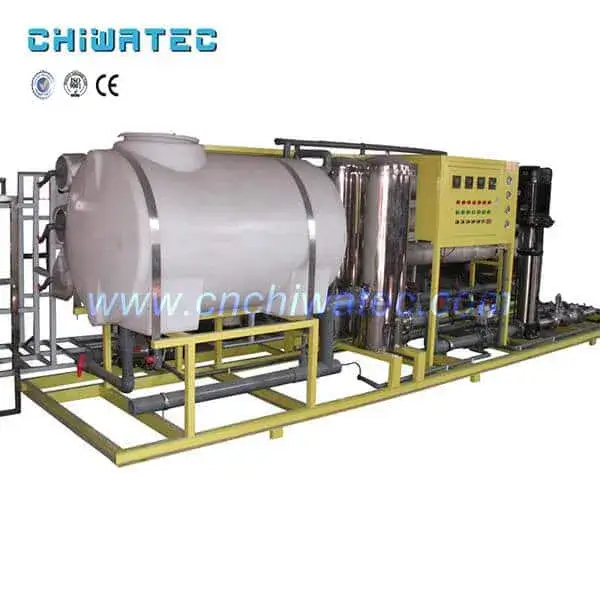
The detailed introduction of reverse osmosis pure water machine provides complete specifications on RO system water production and rejection rates for sizing concentrate collection systems.
Methods for Collecting and Using RO Concentrate Water
Implementing RO concentrate water reuse requires a simple collection and distribution system. Here are the most effective methods, from simplest to most sophisticated:
| Method | Description | Complexity | Reuse Rate |
|---|---|---|---|
| Container accumulation | Simply place a bucket or container under the concentrate drain line | Minimal | 30-50% |
| Dual-tank dual-tap | Two storage tanks: one for purified water, one for concentrate, each with dedicated faucet | Moderate | 60-80% |
| Single-tank dual-chamber | A partitioned tank with purified water on one side, concentrate on the other, single faucet with selector valve | Moderate | 60-80% |
| Wall-mounted tank | A gravity-fed tank mounted above sink level supplies concentrate water to a separate faucet or toilet tank | Moderate-High | 70-90% |
| Toilet direct-feed | Concentrate line plumbed directly to the toilet tank fill valve; overflow goes to drain | High | 90-100% |
| Reverse thinking storage | Using the concentrate water first for any non-potable need; only when stored concentrate is depleted does tap water automatically supplement | High | 85-100% |
The simplest method — container accumulation — requires only a bucket (5-20 liters) placed under the drain line. The most effective — reverse thinking storage — uses a float valve system that prioritizes concentrate water usage and automatically switches to mains water when concentrate is depleted.
Concentrate Water Quality and When NOT to Reuse
While RO concentrate water reuse is safe and beneficial in most situations, there are specific conditions where reuse is not recommended:
- High feed water hardness (> 200 mg/L as CaCO&sub3;): The concentrate will have hardness levels of 600-1,000 mg/L, causing white scale deposits on fixtures, glassware, and laundry. Scale buildup in plumbing lines can reduce flow and eventually cause blockages.
- Very high feed water TDS (> 1,000 ppm): Concentrate TDS can exceed 3,000-5,000 ppm. Using such water for irrigation will cause soil salinization within 6-12 months, killing salt-sensitive plants. For toilet flushing, the high TDS may leave mineral rings in the bowl.
- Known contamination in feed water: If the tap water contains elevated levels of arsenic, lead, chromium, or other toxic heavy metals, the concentrate will have 3-5x higher concentrations. In this case, the concentrate should go to the drain, not be reused for any purpose.
- Iron and manganese (> 0.5 mg/L Fe, > 0.1 mg/L Mn): The concentrate can discolor fixtures, laundry, and toilet bowls with reddish-brown (iron) or black (manganese) staining.
If you are uncertain about your water quality, a simple TDS meter (USD 10-20) can measure the concentrate water TDS. As a general rule: if concentrate TDS is below 2,000 ppm and your feed water is from a municipal treated supply, the water is safe for all non-potable uses described above.
Calculating Potential Water Savings
The environmental and economic benefits of RO concentrate water reuse are substantial for households and communities:
- Household savings (family of 4): A standard 50-75 GPD RO system produces approximately 200-300 L/day of concentrate water. Capturing and reusing 80% of this saves 160-240 L/day — equivalent to 58-87 m³ (58,000-87,000 liters) per year. At a typical municipal water rate of USD 0.50-1.50/m³, this represents annual savings of USD 30-130.
- Environmental impact: In water-stressed regions, 58-87 m³ of annual water savings from a single household is significant. If 10,000 households in a community adopt RO concentrate reuse, the collective savings equal 580,000-870,000 m³ per year — enough to supply 5,000-8,000 people with their basic annual water needs.
- Commercial/institutional impact: A commercial RO system producing 10,000 L/day of purified water generates 30,000-40,000 L/day of concentrate. Capturing 80% of this for cooling tower makeup, equipment washing, or landscape irrigation saves 8,760-11,680 m³ per year — worth USD 4,400-17,500 at typical industrial water rates.
Frequently Asked Questions
Q1: Is RO concentrate water safe to drink?
No. RO concentrate water should never be used for drinking, cooking, or ice making. It contains concentrated levels of dissolved minerals and any contaminants present in the feed water. While the TDS of concentrate from municipal tap water is typically 600-2,000 ppm (within the range of some natural mineral waters), the presence of concentrated disinfection byproducts and the potential for bacterial growth in collection containers make it unsuitable for human consumption.
Q2: Can RO concentrate water be used for watering vegetable gardens?
It is not recommended for edible crops. While the concentrate itself is chemically safe (assuming municipal tap water feed), long-term use can cause sodium and chloride accumulation in soil, reducing crop yields by 15-30%. Vegetables such as beans, carrots, and strawberries are particularly salt-sensitive. For edible gardens, use tap water or collected rainwater. Ornamental plants, lawns, and trees can safely tolerate moderate concentrate irrigation.
Q3: How do I connect my RO concentrate line to the toilet tank?
This requires a basic plumbing modification: (1) Install a 1/4-inch push-fit tee on the RO concentrate drain line, (2) Run a 1/4-inch polyethylene tube from the tee to the toilet tank, (3) Install a float valve in the toilet tank (same as the standard toilet fill valve), (4) Connect the tube to the float valve, (5) Ensure the original drain connection is maintained as an overflow path. When the toilet flushes, the float valve opens and allows concentrate water to refill the tank. When the concentrate collection tank is empty, the toilet fill valve automatically draws from the mains water supply.
Q4: Does using RO concentrate water damage plumbing or appliances?
For standard plumbing (PVC, copper, or PEX pipes), RO concentrate water is not corrosive at typical TDS levels below 2,000 ppm. The slightly elevated mineral content may cause faster scale buildup in areas with naturally hard feed water. Washing machines and dishwashers may experience slightly more mineral buildup if supplied exclusively with hard concentrate water — periodic descaling with citric acid every 3-6 months resolves this. For toilet flushing, an occasional vinegar flush (1 cup white vinegar in the tank, let sit 30 minutes) prevents mineral ring formation.
Q5: What is the payback period for installing an RO concentrate reuse system?
The payback period depends on the method chosen and local water rates. Container accumulation costs nothing (just a bucket) and saves immediately. A dual-tank system (USD 50-150 in materials) for a family of 4 saves USD 30-130/year in water bills, yielding a payback of 6-18 months. A full plumbing-integrated system (USD 200-500 installed) achieves payback in 2-4 years. Considering the environmental benefit of saving 58,000-87,000 liters of water per year, many households consider the investment worthwhile even before financial payback.
Conclusion & CTA
RO concentrate water reuse is one of the simplest and most impactful water conservation measures available to households and businesses with reverse osmosis systems. With the right collection method — from a simple bucket to a fully integrated dual-tank or toilet direct-feed system — you can capture 60-100% of the concentrate stream for non-potable uses, reducing household water waste by 58-87 m³ per year and lowering your water bill by USD 30-130 annually.
Contact CHIWATEC today at [email protected] or [email protected] (WhatsApp available) for advice on integrating concentrate water recovery into your existing or new RO system installation.
Related Resources and Further Reading
- Detailed Introduction of Reverse Osmosis Pure Water Machine — Complete RO system specifications and production rates
- Recirculating Aquaculture Water Treatment Technology — Water reuse technologies for commercial applications
- A2O Water Treatment Process: Principles and Benefits — Biological treatment approaches for water reuse systems
- Prospects of Portable Outdoor Water Purification Devices — Compact water treatment for off-grid water conservation
- RO Water Treatment Systems — CHIWATEC RO systems with integrated concentrate recovery options
Do you have a water treatment project we can help with
* Designing,machining,installing,commissioning, customize and one-stop service






 English
  Spanish
  Portuguese




