Electroplating Wastewater Advanced Treatment Methods: Ferrite, Electrolysis, Extraction, and Adsorption (Part 2) 2026
While chemical precipitation is the most widely used primary treatment for electroplating wastewater, many applications require more advanced methods to achieve lower discharge limits, recover valuable metals, or treat complex waste streams that resist conventional precipitation. Electroplating wastewater advanced treatment methods — including the ferrite process, electrolysis and electrocoagulation, solvent extraction, and adsorption — offer alternative or complementary approaches for heavy metal removal and recovery. This guide covers these four advanced technologies, their principles, advantages, limitations, and best applications. CHIWATEC provides comprehensive electroplating wastewater treatment solutions integrating these advanced methods with ion exchange systems for complete treatment and water reuse.
Electroplating Wastewater Advanced Treatment Methods: Overview
Electroplating wastewater advanced treatment methods go beyond simple chemical precipitation to address specific treatment challenges. The ferrite method produces magnetically separable sludge with high chemical stability. Electrolysis and electrocoagulation recover pure metals while generating minimal secondary waste. Solvent extraction selectively separates valuable metals from complex solutions. Adsorption using specialized media removes trace heavy metals to very low concentrations. Each method has unique strengths, and the optimal treatment strategy often combines two or more of these approaches in sequence with chemical precipitation from Part 1.
Ferrite Method for Heavy Metal Wastewater Treatment
The ferrite method is developed from the principle of ferrite (magnetic iron oxide) production. It converts dissolved heavy metals into stable, magnetically separable ferrite compounds — crystalline materials with the general formula MFe₂O₄ (where M represents a divalent heavy metal ion).
| Parameter | Ferrite Method | Conventional Chemical Precipitation |
| Sludge stability | High — ferrite crystals are chemically stable and non-leaching | Lower — hydroxide sludge can redissolve under pH changes |
| Sludge dewaterability | Excellent — ferrite sludge filters easily | Poor — gelatinous, high moisture content |
| Magnetic properties | Ferrite sludge is magnetic — can be separated magnetically | Non-magnetic |
| Secondary pollution | Minimal — stable ferrite can be safely landfilled | Potential — sludge may require hazardous waste disposal |
| Energy requirement | High — requires heating to ~70°C for ferrite formation | Low — ambient temperature operation |
| Applicability | Cr, Fe, Ni, Cu, Zn — especially mixed wastewater | Most heavy metals (except complexes) |
The process works as follows: excess FeSO₄ is added to chromium-containing wastewater, reducing Cr⁶⁺ to Cr³⁺ while Fe²⁺ is oxidized to Fe³⁺. The pH is adjusted to approximately 8, causing Fe and Cr ions to co-precipitate as hydroxides. Air is bubbled through the solution while maintaining the pH, and the mixture is heated to around 70°C to convert the hydroxides into ferrite crystals. The resulting chromium ferrite (FeCr₂O₄ or similar) is magnetically separable and has such high chemical stability that the sludge passes standard leachability tests for non-hazardous disposal. China has applied the ferrite method for decades, and it remains widely used in the domestic electroplating industry. The method has simple equipment requirements, low investment, straightforward operation, and produces no secondary pollution. However, it requires heating (approximately 70°C), resulting in high energy consumption, and the treated wastewater has elevated salinity. The ferrite method cannot treat wastewater containing mercury or strong complexing agents.
Electrolysis and Electrocoagulation for Metal Recovery
Electrolysis has been used for chromium-containing wastewater treatment in China for over 20 years. The principle is straightforward: when a direct current is applied between electrodes submerged in the wastewater, heavy metal ions migrate to the cathode where they are reduced and deposited as solid metal. Over 30 types of metal ions in wastewater can be electrodeposited. The electrolysis method offers high removal rates, no secondary pollution, and — most importantly — the ability to recover deposited heavy metals as usable material. Recoverable metals include copper (Cu), silver (Ag), and cadmium (Cd).
A major advancement in recent years is the high-voltage pulse electrocoagulation system. Compared to conventional electrolysis:
- 30-40% higher current efficiency — pulse technology minimizes passivation
- 30-40% shorter electrolysis time — faster treatment throughput
- 30-40% energy savings — pulse mode reduces overall power consumption
- Less sludge generation — more efficient metal removal per unit energy
- 96-99% heavy metal removal rate — applicable to Cr, Zn, Ni, Cu, Cd, CN⁻
The iron filing internal electrolysis method is another cost-effective variant. Iron filings and carbon particles form galvanic cells within the wastewater, generating Fe²⁺ ions that reduce Cr⁶⁺ to Cr³⁺ and co-precipitate with other metals. The dynamic wastewater treatment device based on this principle has demonstrated excellent removal of heavy metal ions at low operating cost. The main disadvantage of electrolysis is its relatively high cost — it is most economically viable for concentrated waste streams where metal recovery value offsets the energy cost.
Solvent Extraction and Separation
Solvent extraction is a liquid-liquid separation technique commonly used for purifying and concentrating metals. In wastewater treatment, an organic extractant phase is contacted with the aqueous wastewater. Heavy metal ions form complexes with the extractant and transfer from the aqueous phase into the organic phase. The metal-loaded organic phase is then separated, and the metals are back-extracted into a clean aqueous phase under different pH conditions, regenerating the solvent for reuse.
Key factors for successful solvent extraction in electroplating wastewater advanced treatment methods:
- Extractant selectivity — The extractant must have high selectivity for the target metal ions over competing ions. Common extractants include organophosphorus compounds (D2EHPA, PC-88A), amines (Alamine, Aliquat), and chelating extractants (LIX series).
- Aqueous phase acidity — Extraction efficiency depends critically on pH. Metal extraction generally occurs under acidic conditions, while back-extraction (stripping) occurs under alkaline conditions. Careful pH control at each stage is essential.
- Phase separation — Efficient separation of the organic and aqueous phases after contact is critical. Emulsion formation can reduce recovery efficiency and increase solvent losses.
- Multiple stages — Industrial solvent extraction systems use mixer-settler units arranged in countercurrent cascades to achieve high recovery (typically 95-99.9%).
Despite its high separation efficiency, solvent extraction has significant limitations: solvent loss during extraction (entrainment and solubility), high energy consumption during the regeneration process, and relatively high capital and operating costs. These factors restrict its application to high-value metal recovery scenarios where the economics are favorable.
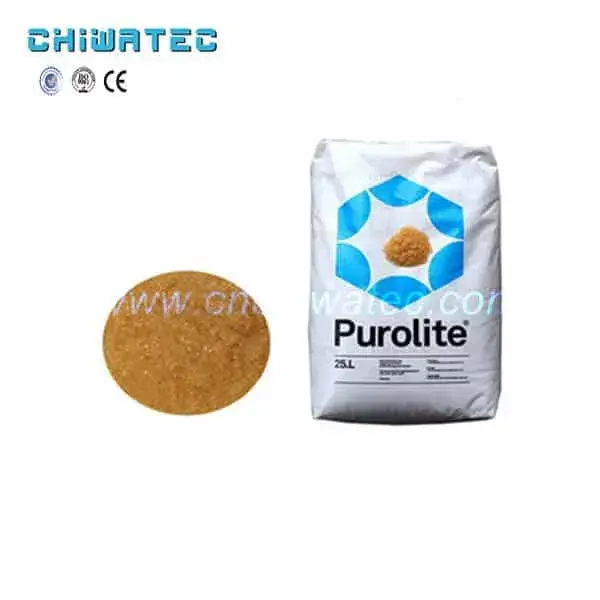
Adsorption Method Using Activated Carbon, Chitosan, and Clay Minerals
The adsorption method leverages the unique surface properties of solid adsorbents to remove heavy metal ions from wastewater. Several adsorbent types are effective for electroplating wastewater treatment:
| Adsorbent | Target Metals | Removal Capacity | Advantages | Limitations |
| Activated carbon | Cr, Cu, Zn, Ni | Moderate (5-50 mg/g) | Simple equipment, well-established technology | Low regeneration efficiency; treated water may not meet reuse standards |
| Chitosan and derivatives | Pb, Cu, Cd, Hg, Cr | High (50-500 mg/g) | Biodegradable, renewable source, excellent metal affinity | Susceptible to pH effects; requires crosslinking for reuse |
| Modified sepiolite | Pb²⁺, Hg²⁺, Cd²⁺ | Moderate to high | Low cost, abundant natural material | Variable quality; requires modification treatment |
| Al-Zr pillared montmorillonite | Cr⁶⁺ | High (99% removal under acidic conditions) | Acid-resistant; meets discharge standards | Laboratory stage — limited industrial application |
| Humic acid resins | Cr, Ni | Moderate to high | Low cost, proven in Cr/Ni treatment | Limited selectivity; may require pre-treatment |
Activated carbon is the most widely used adsorbent in electroplating wastewater treatment due to its simple equipment requirements. However, its low regeneration efficiency and inability to consistently meet reuse-quality standards make it generally suitable as a pretreatment or polishing step rather than a standalone treatment. Chitosan and its derivatives are particularly promising — studies show that crosslinked chitosan resin can be reused 10 times without significant reduction in adsorption capacity. Modified sepiolite and pillared montmorillonite are emerging clay-based adsorbents that show excellent removal of heavy metals, with aluminum-zirconium pillared montmorillonite achieving 99% Cr⁶⁺ removal under acidic conditions, producing effluent below national discharge standards.
Comparison of Advanced Treatment Methods
| Method | Best Application | Metal Recovery | Operating Cost | Sludge/ Waste | Maturity |
| Ferrite method | Mixed heavy metal wastewater, Cr wastewater | Limited (ferrite sludge as byproduct) | Medium-high (heating energy) | Stable ferrite sludge | Proven (decades in China) |
| Electrolysis | Concentrated metal streams, precious metals | Excellent (pure metal deposit) | High (electricity) | Minimal (metal recovered) | Mature |
| Solvent extraction | High-value metal separation and purification | Excellent (high-purity metal solutions) | High (solvent loss + regeneration) | Minimal aqueous waste | Proven in hydrometallurgy |
| Adsorption | Polishing treatment, trace metal removal | Possible with adsorbent regeneration | Low-Medium (adsorbent cost) | Spent adsorbent | Varied (lab to industrial) |
The choice among these electroplating wastewater advanced treatment methods depends on the specific wastewater characteristics, discharge standards, metal recovery value, and budget. In practice, many electroplating facilities combine chemical precipitation (Part 1) with one or more advanced methods: precipitation for bulk removal, followed by adsorption or ion exchange for polishing to meet stringent standards.
Frequently Asked Questions
What is the ferrite method and how does it differ from chemical precipitation?
The ferrite method converts heavy metal hydroxides into stable ferrite crystals (MFe₂O₄) by adding excess FeSO₄, adjusting pH to ~8, and heating to ~70°C. Unlike conventional hydroxide precipitation, ferrite sludge is magnetically separable, chemically stable (passes leachability tests for non-hazardous disposal), and easy to dewater. The main disadvantage is the energy cost of heating.
Can electrolysis recover valuable metals from electroplating wastewater?
Yes — this is one of the main advantages of electrolysis. Metals such as copper, silver, cadmium, and nickel can be electrodeposited at the cathode in solid form and recovered for reuse. The economics improve significantly for concentrated waste streams. High-voltage pulse electrocoagulation systems have further improved energy efficiency and metal recovery rates.
Is activated carbon effective for electroplating wastewater treatment?
Activated carbon is a simple and widely used adsorbent for electroplating wastewater, but its effectiveness is limited. Regeneration efficiency is low, and treated water quality often falls short of reuse standards. It is best applied as a pretreatment or polishing step rather than a standalone treatment. Chitosan, sepiolite, and clay minerals show higher adsorption capacities for specific heavy metals.
What is the best method for treating complexed heavy metal wastewater?
When heavy metals are bound to strong chelating agents (EDTA, citrates, ammonia), neither conventional chemical precipitation nor the ferrite method works effectively. For these waste streams, chelating precipitation (DTCR — see Part 1) or adsorption using specialized media (chitosan, ion exchange resins) is recommended. Electrolysis can also treat complexed metals if the complex is broken first.
How do I choose between chemical precipitation and advanced treatment methods?
Chemical precipitation (Part 1) is the most cost-effective primary treatment for bulk heavy metal removal. Choose advanced methods when: (1) discharge standards require lower metal concentrations than precipitation can achieve, (2) the wastewater contains complexing agents, (3) metal recovery has economic value, or (4) sludge minimization is a priority. In many cases, the optimal solution is precipitation followed by an advanced polishing step.
Conclusion & Call to Action
Electroplating wastewater advanced treatment methods — ferrite precipitation, electrolysis and electrocoagulation, solvent extraction, and adsorption — provide powerful tools for treating challenging waste streams, recovering valuable metals, and meeting increasingly stringent discharge standards. Each method has distinct strengths and optimal applications, and the best treatment strategy often combines multiple approaches in sequence. When selecting a treatment system, consider the complete wastewater profile, regulatory requirements, metal recovery potential, and total lifecycle cost.
Need help selecting the right electroplating wastewater advanced treatment methods for your facility? Contact CHIWATEC for professional engineering support. Email us at [email protected] or [email protected] for a customized wastewater treatment system design and equipment recommendations.
Related Resources and Further Reading
- Electroplating Wastewater Chemical Treatment: Precipitation and Reduction Methods (Part 1)
- Ion Exchange Resin Applications: Complete Guide to Industry Fields
- Ion Exchange Operation and Regeneration: Best Practices for Optimal System Performance
- Mixed Bed Ion Exchange Resin: Complete Guide to Technology, Applications, and Operation
- Ion Exchange and Softening Products
Do you have a water treatment project we can help with
* Designing,machining,installing,commissioning, customize and one-stop service
 English
  Spanish
  Portuguese