Direct Drinking Water System Design 2026: Process Flow and Equipment Configuration
Designing a reliable direct drinking water system requires careful consideration of source water quality, treatment objectives, equipment selection, and process flow configuration. A well-planned drinking water equipment system design integrates multiple treatment stages — from pretreatment and reverse osmosis or ultrafiltration to sterilization and post-treatment — to deliver purified water that meets national drinking water standards. This guide provides a comprehensive overview of the design principles, process flow, and key equipment configurations for direct drinking water systems.
Key Components in Drinking Water Equipment System Design
A complete drinking water equipment system design typically includes the following major subsystems:
| Stage | Component | Function |
|---|---|---|
| Stage 1 | Raw water tank and booster pump | Stores source water and provides consistent inlet pressure (>0.3 MPa) |
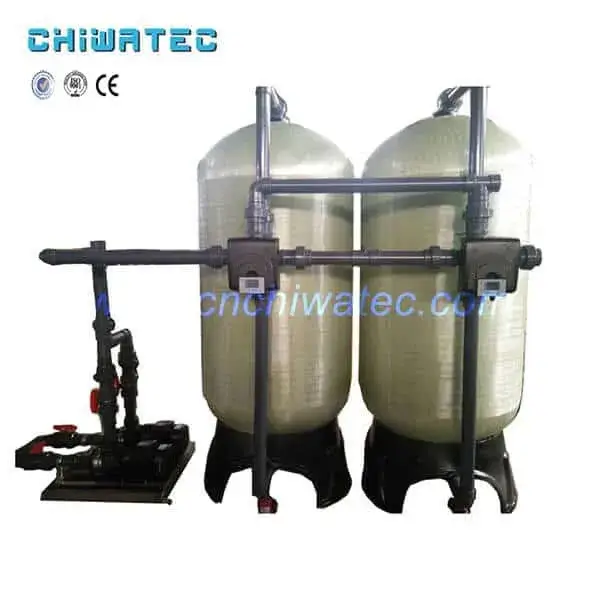
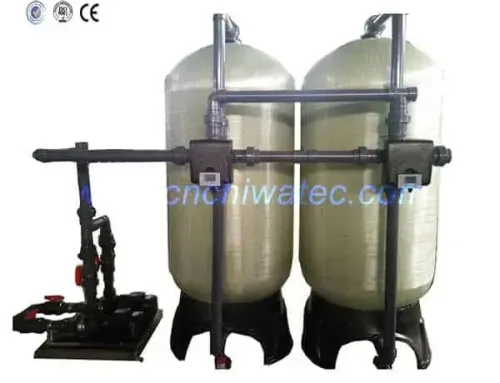
| Stage 2 | Multimedia filter | Removes sediment, rust, suspended solids >20 µm |
| Stage 3 | Activated carbon filter | Removes chlorine, organic matter, color, odor, and pesticides |
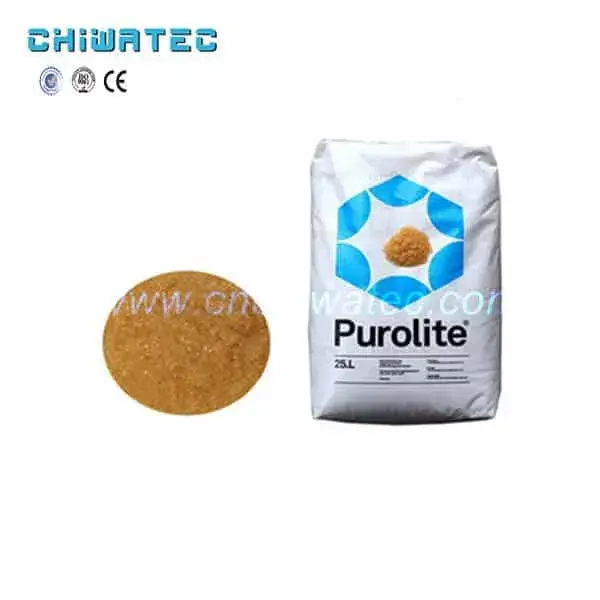
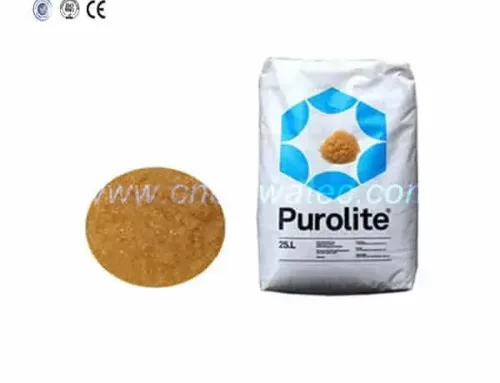
| Stage 4 | Cation resin softener | Removes calcium and magnesium ions to prevent RO membrane scaling |
| Stage 5 | Precision filter (5 µm) | Final particulate filtration before membrane system |
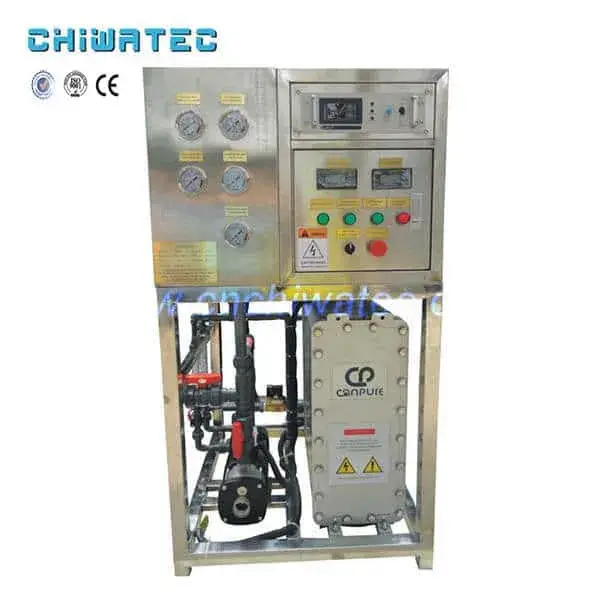
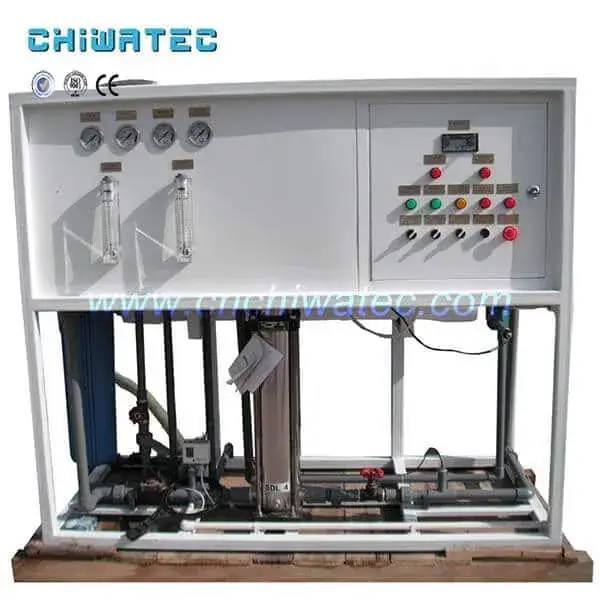
| Stage 6 | RO/UF membrane system | Primary desalination (RO: >99% salt rejection) or ultrafiltration |
| Stage 7 | UV/ozone sterilization | Disinfection with >99% bacterial reduction rate |
Each component plays a critical role in ensuring consistent water quality, operational reliability, and extended equipment service life.
Pretreatment Process Design for Drinking Water Systems
Pretreatment is the foundation of any successful drinking water equipment system design. The four-stage pretreatment process — multimedia filtration, activated carbon adsorption, cation softening, and precision filtration — prepares raw water for the primary membrane treatment stage.
Multimedia filtration uses layered quartz sand and garnet media to trap suspended particles and reduce turbidity. Activated carbon filtration adsorbs residual chlorine, volatile organic compounds, and taste/odor contaminants, protecting RO membranes from oxidation damage. Cation resin softening exchanges calcium and magnesium ions for sodium ions, reducing feed water hardness to below 5 mg/L as CaCO3, which prevents calcium carbonate scaling on membrane surfaces. Finally, a 5 µm precision filter captures any remaining particulate matter before water enters the RO or UF system.
For source water with conductivity exceeding 800 µS/cm, dual-stage reverse osmosis is recommended to achieve the required desalination performance.

RO Membrane Configuration and Selection
The reverse osmosis system is the core desalination unit in a direct drinking water system. Modern RO membranes achieve salt rejection rates above 99%, removing dissolved solids, heavy metals (lead, mercury, cadmium), bacteria, and viruses. Key design considerations include:
– Membrane type: Thin-film composite (TFC) polyamide membranes offer the best combination of rejection rate, flow rate, and chemical resistance.
– System configuration: Single-stage RO for feedwater conductivity less than 800 µS/cm; dual-stage RO for higher TDS water sources to meet drinking water standards.
– Operating parameters: Feed pressure 1.0–1.6 MPa, recovery rate 50–75 percent, operating pH range 2–11.
– Antiscalant dosing: Prevents calcium, barium, and silica scaling on membrane surfaces, important for groundwater sources with high hardness.
Ultrafiltration vs. Reverse Osmosis System Design
Direct drinking water system design may employ either reverse osmosis or ultrafiltration as the primary treatment technology, depending on the target water quality:
| Parameter | Reverse Osmosis | Ultrafiltration |
|---|---|---|
| Pore size | circa 0.0001 µm | 0.01–0.1 µm |
| Salt rejection | >99 percent | None (removes particles only) |
| Removes | Dissolved solids, heavy metals, bacteria, viruses | Suspended solids, bacteria, colloids |
| Operating pressure | 1.0–1.6 MPa | 0.1–0.3 MPa |
| Typical application | Pure/demineralized water | Fine filtration, RO pretreatment |
For applications requiring mineral content in drinking water, ultrafiltration followed by UV sterilization is sufficient. For applications requiring high-purity water (pharmaceutical, electronics, laboratory), reverse osmosis is essential.
Sterilization and Post-Treatment Design
Post-treatment sterilization ensures microbiological safety of the final drinking water. The two most common disinfection methods are:
Ultraviolet (UV) sterilization: UV lamps emit 254 nm wavelength radiation that damages the DNA of bacteria, viruses, and protozoa. UV systems achieve >99 percent microbial inactivation without chemical additives, making them ideal for point-of-use applications in office and commercial drinking water systems.
Ozone sterilization: Ozone (O3) is a powerful oxidant that kills microorganisms and breaks down organic compounds. Ozone dissolves in water to form oxygen-rich water, improving taste and freshness. A water-gas mixer ensures optimal ozone concentration and contact time.
For high-requirement applications, a combination of UV and ozone sterilization provides redundant disinfection and ensures compliance with national Level 1 ultrapure water standards.
Design Parameters and Water Quality Standards
A properly designed direct drinking water system must meet both operational and regulatory requirements:
Feed water requirements: Urban tap water or groundwater (with water sample testing), inlet pressure >0.3 MPa, inlet conductivity less than 800 µS/cm. For conductivity exceeding 800 µS/cm, dual-stage RO is recommended to maintain stable desalination performance.
Production capacity: Standard designs range from 50 GPD (gallons per day) for small office systems to several thousand GPD for commercial and industrial installations.
Water quality targets:
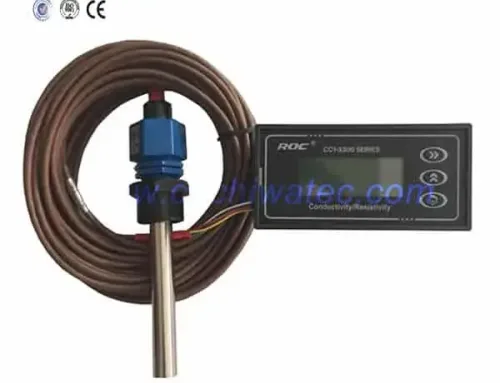
– Standard drinking water: conductivity less than 10 µS/cm, TDS less than 5 mg/L
– Electronics-grade ultrapure water: resistivity >16 MOhm-cm
– Bacterial count: less than 1 CFU/mL after UV/ozone treatment
FAQ
What is the difference between RO and UF in drinking water system design?
RO membranes remove dissolved salts and heavy metals (>99 percent rejection rate) while UF membranes only remove suspended particles and bacteria. RO is necessary for producing demineralized or purified water, while UF is suitable for fine filtration where mineral content should be retained.
How often should the pretreatment filters be backwashed?
Multimedia filters and activated carbon filters should be backwashed when the pressure differential reaches 0.05–0.07 MPa or at least once every 24–48 hours. Resin softeners regenerate based on water volume processed, typically every 2–7 days depending on feed water hardness.
RO membranes require periodic chemical cleaning (every 3–6 months) using alkaline and acidic cleaning solutions to remove organic fouling and mineral scaling. Regular monitoring of normalized permeate flow, salt rejection, and pressure differential helps identify when cleaning is needed. With proper pretreatment and maintenance, RO membranes typically last 3–5 years.
Can a direct drinking water system treat groundwater directly?
Yes, but groundwater requires thorough water sample testing first. High iron, manganese, or hardness levels may necessitate additional pretreatment stages such as iron removal filters or additional softening capacity. For groundwater with conductivity exceeding 800 µS/cm, dual-stage RO is recommended.
A well-designed and properly maintained direct drinking water system has a service life of 10–15 years. Key components have varying lifespans: RO membranes 3–5 years, UV lamps 8,000–12,000 hours, and pretreatment media 3–5 years. Regular maintenance and timely replacement of consumables are essential for long-term reliability.
Conclusion
An effective drinking water equipment system design integrates multi-stage pretreatment, membrane-based desalination (RO or UF), and post-treatment sterilization into a reliable, automated process that delivers consistent water quality. Whether for office buildings, commercial facilities, or industrial applications, a properly configured system ensures safe, great-tasting drinking water while minimizing operating costs and maintenance requirements. For expert guidance on designing and selecting the right direct drinking water system for your specific needs, contact our team today. Email: [email protected] or [email protected]
Related Resources and Further Reading
- Main Process Flow Description of Reverse Osmosis Pure Water Equipment
- Optimizing RO Systems: Analysis of Five Common Pretreatment Processes
- Pollution Control Methods for Reverse Osmosis (RO) Systems
- What Problems Should Be Paid Attention to in the Office Direct Drinking Water Equipment?
- RO Water Treatment System Products
Do you have a water treatment project we can help with
* Designing,machining,installing,commissioning, customize and one-stop service
 English
  Spanish
  Portuguese