Precision Filter for Reverse Osmosis (RO) Systems: A Complete Guide to RO Pretreatment Filtration
A precision filter, also known as a security filter or microfiltration cartridge filter, is a critical component in reverse osmosis (RO) pretreatment systems. It serves as the final barrier before feed water enters high-pressure RO membranes, removing suspended particles down to 1-50 microns. Xi’an CHIWATEC has been engineering high-quality precision filtration solutions for RO systems across industries worldwide since 2012.
*Last Updated: March 2026
Why This Guide Matters
The global water filtration equipment market was valued at approximately USD 43.2 billion in 2025 and is projected to reach USD 71.8 billion by 2035, growing at a compound annual growth rate (CAGR) of 5.2% (Grand View Research, 2025). Precision filters represent a key segment of this market as the first line of defense for protecting expensive RO membrane elements. A single improperly filtered feed stream can reduce RO membrane lifespan by 40-60%, making proper precision filtration selection critical for both CAPEX and OPEX optimization.
Key Industry Trends (2026 Update)
- Smart monitoring integration: IoT-enabled differential pressure sensors now allow real-time filter cartridge condition monitoring, reducing unplanned downtime by up to 30% in automated RO plants.
- Sustainable cartridge designs: Biodegradable and fully recyclable filter cartridges are gaining traction as industries push toward zero-waste water treatment operations.
- Higher flow density housings: New multi-cartridge housing designs achieve 25-40% higher flow rates per square foot of floor space, critical for space-constrained retrofits.
- PFAS and emerging contaminant filtration: Precision filter manufacturers are developing specialized media-enhanced cartridges capable of reducing PFAS levels by 90%+ as regulations tighten globally (EPA proposed PFAS MCLs, 2024-2026).
1. What Is a Precision Filter in Water Treatment?
Definition and Purpose
A precision filter (also called a cartridge filter or microfiltration unit) is a pressure vessel containing replaceable filter cartridges that remove suspended solids, particles, and colloidal matter from water. In RO pretreatment, it is typically installed after multimedia filtration and activated carbon filtration, serving as the final polishing step before water enters the RO membrane array.
Role in Reverse Osmosis Systems
The precision filter protects RO membranes from physical damage caused by abrasive particles that may have passed through upstream pretreatment stages. Without proper precision filtration, suspended solids can cause membrane fouling, increased feed pressure requirements, and irreversible membrane damage. According to NSF/ANSI 58 standards, precision filtration to at least 5 microns is recommended for standard RO system protection.
2. How Does a Precision Filter Work?
Filtration Mechanism
Precision filters operate on the principle of mechanical interception. Feed water flows through the filter housing and passes through porous cartridge media, which traps particles larger than the rated pore size. The cartridges are typically made from polypropylene (PP), polyester, or nylon with melt-blown, wound, or pleated configurations. As particles accumulate, differential pressure across the cartridge increases, signaling the need for replacement.
Flow Path Configurations
Most precision filters use an outside-in flow pattern, where water enters the housing and flows from the outside of the cartridge through to the inner core, exiting through a central collection tube. Some high-flow designs use inside-out flow for applications with high suspended solids loads. The standard operating pressure for precision filters is 0.1-0.4 MPa (15-60 psi), with maximum allowable pressure drops of 0.05-0.1 MPa (7-15 psi) before cartridge changeout is required.
3. What Are the Key Technical Specifications of Precision Filters?
Filtration Rating (Micron)
The micron rating determines the size of particles the filter can remove. Common ratings for RO pretreatment include:
- 5 micron: Standard for most RO systems, removes visible sediment and fine sand
- 10-20 micron: Used for coarse pretreatment or high-turbidity feed water
- 1 micron: Required for high-purity applications or when feed water has low turbidity
- 0.45-0.22 micron: Used in pharmaceutical and laboratory water systems
Housing Materials
Precision filter housings are manufactured from 304 or 316L stainless steel for industrial applications, offering corrosion resistance and pressure ratings up to 1.0 MPa (150 psi). Polypropylene and reinforced plastic housings are available for lower-pressure applications and cost-sensitive installations. Stainless steel housings are preferred for food, beverage, and pharmaceutical applications due to hygienic design requirements and clean-in-place (CIP) compatibility.
4. What Is the Difference Between a Precision Filter and a Multimedia Filter?
Filtration Depth and Media
Multimedia filters use graded layers of sand, anthracite, and garnet to achieve deep-bed filtration, removing particles down to 10-25 microns. Precision filters, in contrast, use replaceable cartridge media for surface filtration down to 0.22-50 microns. While multimedia filters handle higher suspended solids loads (up to 50-100 mg/L TSS), precision filters provide finer filtration and are easier to maintain.
Installation Sequence
In a standard RO pretreatment train, raw water flows through: raw water tank to feed pump to multimedia filter to activated carbon filter to antiscalant dosing to precision filter to high-pressure pump to RO membranes. The precision filter is always the last pretreatment step before the RO membranes to catch any particles dislodged from upstream filters or generated by chemical reactions.
5. What Is the Ideal Micron Rating for RO Pretreatment?
Standard Recommendation
For most industrial RO systems treating municipal water supplies, a 5-micron precision filter provides the optimal balance between RO membrane protection and operating cost. A 5-micron filter removes 99.9% of particles above 5 microns, including fine sand, silt, rust particles, and precipitated scale crystals. For surface water or well water with higher turbidity, a 10-micron pre-filter followed by a 5-micron final filter in series provides enhanced protection without excessive cartridge replacement frequency.
Impact on RO Membrane Lifespan
Proper precision filtration can extend RO membrane life from the standard 2-3 years to 4-5 years or more. A 2024 study published in Desalination and Water Treatment found that RO systems with 5-micron precision filtration achieved 34% lower membrane replacement frequency compared to systems with 20-micron or no cartridge filtration.
6. What Industries Commonly Use Precision Filtration?
Food and Beverage Industry
Precision filters are essential in beverage production for removing particles from process water, juice clarification, and alcoholic beverage filtration. The industry requires 304/316L stainless steel housings with sanitary tri-clamp connections and media that meets FDA 21 CFR 177.1520 requirements for food contact.
Pharmaceutical and Biotechnology
USP <1231> standard pharmaceutical water systems require precision filtration as part of the pretreatment train for purified water (PW) and water for injection (WFI) production. These applications typically use 0.45-micron or 0.22-micron absolute-rated cartridges with low extractables and bacterial retention capabilities.
Electronics and Semiconductor Manufacturing
Ultrapure water systems in semiconductor fabrication use precision filtration at multiple points, including 1-micron and 0.45-micron cartridge filters before RO membranes and 0.22-micron final filters before point-of-use. The ASTM D5127 standard for electronics-grade water requires specific particle counts that precision filtration helps achieve.
Chemical and Petrochemical Processing
Precision filters protect process equipment and catalysts from particulate contamination in cooling water, boiler feed water, and chemical processing streams. High-temperature ratings (up to 80 degrees C / 176 degrees F) and chemical compatibility are critical requirements in these applications.
7. How Often Should Precision Filter Cartridges Be Replaced?
Replacement Indicators
Filter cartridge replacement is determined by differential pressure (delta-P) measurement. Standard practice is to replace cartridges when the delta-P reaches 0.05-0.1 MPa (7-15 psi) above the initial clean pressure drop. Additional indicators include: reduced flow rate, visible particle breakthrough in filtered water, and scheduled maintenance intervals based on operating hours.
Typical Replacement Frequencies
Under normal operating conditions with municipal feed water and proper upstream pretreatment, 5-micron PP melt-blown cartridges typically last 4-8 weeks. High-turbidity surface water may require replacement every 2-3 weeks, while clean well water can extend to 8-12 weeks. Installing a differential pressure gauge with a high-pressure alarm is recommended for proactive maintenance scheduling.
8. What Are the Different Types of Precision Filter Housings?
Single-Cartridge Housings
Designed for low-flow applications up to 5-10 m3/h (22-44 GPM), single-cartridge housings are compact and cost-effective for small-scale RO systems, lab equipment, and point-of-use installations. Standard sizes accept 10-inch, 20-inch, or 30-inch cartridges (2.5-inch diameter).
Multi-Cartridge Housings
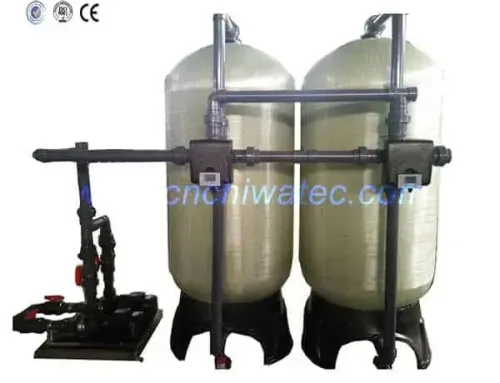
For industrial-scale RO systems requiring flows of 10-500 m3/h (44-2,200 GPM), multi-cartridge housings accommodate 3 to 200+ cartridges in parallel. They feature quick-open clamps, vent valves, drain connections, and differential pressure ports. CHIWATEC manufactures multi-cartridge precision filter housings in 304 and 316L stainless steel with flow capacities up to 300 m3/h.
Self-Cleaning Precision Filters
Automatic self-cleaning precision filters use a backwash mechanism activated by differential pressure or timer. They are ideal for applications with moderate suspended solids (10-50 mg/L) where manual cartridge replacement is impractical. However, self-cleaning filters cannot achieve the same fine filtration (typically limited to 50-100 microns) as replaceable cartridge types.
9. How to Maintain a Precision Filter System?
Daily and Weekly Checks
Operators should monitor differential pressure across the filter daily and record readings. A sudden spike indicates cartridge clogging or breakthrough, while a gradual increase shows normal particulate loading. Weekly inspection of sight glasses, pressure gauges, and valve seals helps prevent leaks. For stainless steel housings, check for corrosion at weld joints and threaded connections.
Cartridge Changeout Procedure
Proper cartridge replacement involves: (1) isolating the filter and depressurizing the housing, (2) opening the vent valve to release trapped air, (3) removing the housing cover using the quick-open clamp or bolts, (4) extracting spent cartridges while wearing appropriate PPE, (5) cleaning the interior housing surfaces, (6) installing new cartridges with proper gasket and O-ring positioning, (7) reassembling and pressure testing, and (8) slowly opening the inlet valve while venting air. Always pre-wet PP cartridges before installation to prevent air binding.
10. Custom Precision Filter Solutions from CHIWATEC
Xi’an CHIWATEC offers a comprehensive range of precision filter equipment designed for RO pretreatment in industries including food and beverage, pharmaceutical, chemical processing, electronics manufacturing, and municipal water treatment. Our product line includes:
- Stainless steel precision filter housings in 304 and 316L grades, rated to 1.0 MPa (150 psi)
- Custom cartridge configurations including PP melt-blown, wound, pleated, and activated carbon-impregnated media
- Self-cleaning automatic filters with differential pressure control for low-maintenance operation
- Sanitary design filters with tri-clamp connections for food and pharmaceutical applications
- Multi-stage filtration skids integrating precision filters with multimedia filters and complete RO system components
Each precision filter system is engineered to match specific feed water quality, flow rate requirements, and RO membrane specifications.
Conclusion
Precision filtration is an indispensable component of any well-designed reverse osmosis system. By providing a reliable final barrier against suspended particles, precision filters protect RO membrane investments, reduce maintenance costs, and ensure consistent treated water quality. Whether you need a single-cartridge housing for a small-scale system or a multi-cartridge industrial filtration unit for a large-scale water treatment plant, selecting the right precision filter for your RO system is essential for long-term operational success. Contact Xi’an CHIWATEC today at [email protected] or [email protected] to discuss your precision filtration requirements.
Frequently Asked Questions
Q1: What is the typical lifespan of a precision filter cartridge?
Under standard operating conditions with municipal feed water and proper pretreatment, 5-micron precision filter cartridges typically last 4-8 weeks. Factors affecting lifespan include feed water turbidity, flow rate, and upstream pretreatment effectiveness. Surface water applications may require replacement every 2-3 weeks, while low-turbidity well water can extend cartridge life to 8-12 weeks.
Q2: Can precision filters remove bacteria from water?
Standard 5-micron and 1-micron precision filters are not designed for bacterial removal, as bacteria (typically 0.2-2 microns) can pass through. For bacterial reduction, a 0.45-micron or 0.22-micron absolute-rated cartridge is required, though these are typically used in pharmaceutical and laboratory applications rather than standard RO pretreatment.
Q3: What is the typical pressure drop across a clean precision filter?
A clean precision filter with new cartridges typically has an initial pressure drop of 0.005-0.02 MPa (0.7-3 psi) at design flow rate. This increases gradually as particles accumulate. Cartridge replacement is recommended when the differential pressure reaches 0.05-0.1 MPa (7-15 psi) above the initial clean reading.
Q4: Do precision filters require a bypass line?
A bypass line with a manual or automatic valve is recommended for systems that require continuous water supply during cartridge changeout. However, during normal operation, the bypass must remain closed — any flow bypassing the precision filter can carry unfiltered particles directly to RO membranes, causing accelerated fouling.
Q5: Can I clean and reuse precision filter cartridges?
Most standard PP melt-blown and wound cartridges are designed for single use and disposal. Pleated cartridges with stainless steel or polypropylene support structures can be cleaned by backwashing or chemical cleaning, though replacement is generally more cost-effective. For high-value applications, some specialty cartridges (e.g., absolute-rated, membrane-type) can be cleaned and reused 3-5 times following manufacturer specifications.
Related Resources and Further Reading
- Application of High Efficiency Filter in Chemical Water Treatment
- Key Factors Affecting Filtration in Oil Processing
- Tips for Using Hydrocyclone Sand Removers and Understanding Their Structure
- Performance Characteristics of Modular Stainless Steel Water Tanks
- Mechanical Filtration Equipment for Water Treatment

Do you have a water treatment project we can help with
* Designing,machining,installing,commissioning, customize and one-stop service

 English
  Spanish
  Portuguese