Water Treatment Basics: Quality Indicators, Standards, and Treatment Methods 2026
Effective water treatment begins with understanding the fundamental relationship between source water quality, regulatory standards, and the treatment technologies available to bridge the gap. This guide covers water treatment basics — water quality indicators, drinking water and industrial standards, and the core treatment methods for removing particulate matter, dissolved ions, organic contaminants, and pathogens. CHIWATEC provides complete water treatment systems from coagulation and filtration through RO membranes and disinfection for municipal and industrial clients.
Water Treatment Basics: Water Quality Indicators
Understanding water treatment basics starts with the four categories of water quality indicators used to characterize source water and monitor treatment effectiveness:
| Category | Key Indicators | Significance |
|---|---|---|
| Physical | Turbidity, suspended solids, odor, taste, color, temperature | Affects aesthetics, treatment process selection, and filter loading |
| Chemical | pH, hardness, alkalinity, TDS, chloride, sulfate, heavy metals, organics | Determines scaling/corrosion potential, disinfection efficiency, and health risk |
| Microbiological | Total coliforms, fecal coliforms, E. coli, heterotrophic plate count | Primary health concern; drives disinfection requirements |
| Radiological | Gross alpha, gross beta, radium-226, radium-228, uranium | Critical for groundwater sources near geological formations |
Each category has maximum contaminant levels (MCLs) defined by national and international standards. The combination of indicators present in the raw water determines the treatment train required.
Drinking Water Quality Standards
Modern drinking water standards have evolved significantly. The current standard includes 96 testing items compared to 35 in earlier versions, reflecting increased awareness of trace contaminants and disinfection byproducts.
Key features of contemporary drinking water standards:
- Conventional testing items (34): Routine parameters including turbidity, pH, residual chlorine, total coliforms, and permanganate index (oxygen consumption ≤3 mg/L O₂)
- Unconventional testing items (62): Less common but health-significant parameters such as pesticides, VOCs, and disinfection byproducts
- Turbidity requirements: Significantly tightened to improve microbial barrier effectiveness
- Disinfection byproducts: Expanded from 1 to 13 regulated items, reflecting research on the health effects of chlorination byproducts
- Fecal coliforms: Added as a mandatory testing item for microbial safety verification
- Heavy metals: Stricter limits for lead, cadmium, and other toxic elements
These standards draw from WHO guidelines, EU directives, and US EPA regulations while accounting for local water quality conditions.
Industrial and Surface Water Quality Standards
Industrial water quality requirements vary by application. Key standards include:
- Surface water environmental quality standards: Classifies surface water into Grades I–V based on 109 indicators, determining suitability for drinking water sources, fisheries, industrial use, and recreational contact
- Boiler feed water standards: Strict limits on hardness, silica, dissolved oxygen, and TDS to prevent scale formation and corrosion at high temperatures
- Cooling water standards: Focus on scaling indices (Langelier Saturation Index), suspended solids, and biological growth potential
- Pharmaceutical and electronics-grade water: Requires resistivity ≥18.2 MΩ·cm, TOC <5 ppb, and endotoxin limits for injectable applications
Particulate and Suspended Solids Removal Methods
The first stage of most water treatment trains focuses on removing particulate matter. Core technologies include:
- Coagulation and flocculation: Chemical addition (alum, ferric chloride) to destabilize colloidal particles, followed by gentle mixing to form settleable flocs
- Sedimentation and clarification: Gravity settling of flocs in rectangular or circular basins; tube settlers increase effective settling area
- Dissolved air flotation (DAF): Fine air bubbles attach to floc particles, floating them to the surface for skimming; effective for algae-laden or low-turbidity waters
- Granular media filtration: Single or dual-media filters (sand, anthracite, garnet) remove remaining floc particles to achieve turbidity <0.3 NTU
- Membrane filtration: Microfiltration (0.1–10 µm) and ultrafiltration (0.01–0.1 µm) provide absolute particle removal without chemical coagulation
Dissolved Ion and Gas Treatment Methods
After particulate removal, dissolved contaminants require specialized treatment. The principal methods for removing or adjusting dissolved ions and gases include:
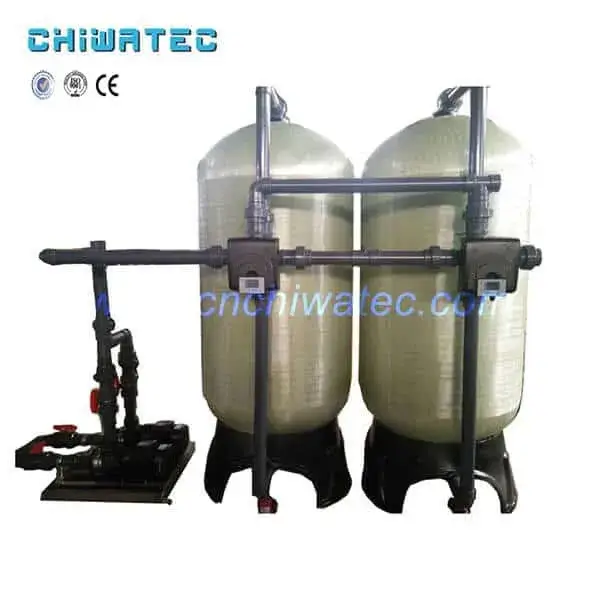
- Ion exchange: Cation and anion exchange resins remove hardness (calcium, magnesium), nitrate, and arsenic; mixed-bed exchangers produce demineralized water
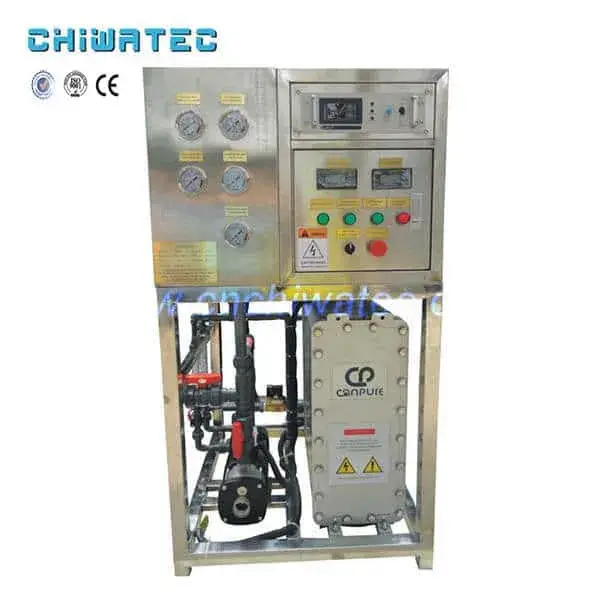
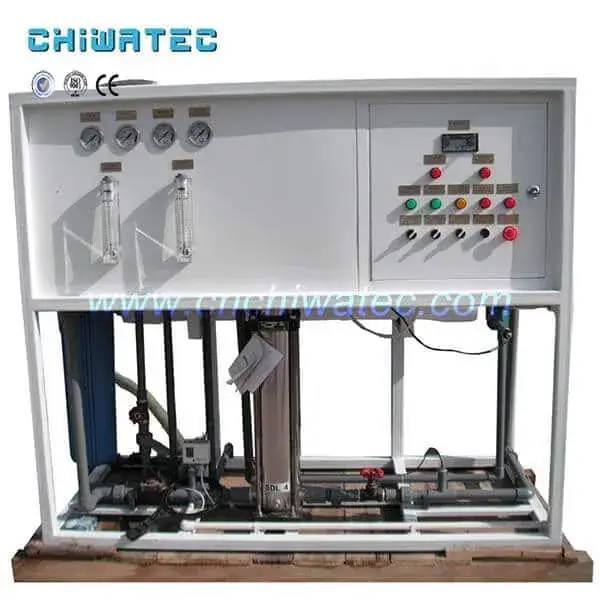
- Reverse osmosis (RO): Semipermeable membranes reject 95–99% of dissolved salts, producing low-TDS permeate for industrial and drinking applications
- Nanofiltration (NF): Selective rejection of divalent ions (hardness) while passing monovalent ions; used for partial softening and organic removal
- Electrodialysis reversal (EDR): Ion-exchange membranes combined with electric potential to remove dissolved salts; polarity reversal minimizes scaling
- Lime softening: Addition of lime (Ca(OH)₂) precipitates calcium carbonate and magnesium hydroxide; cost-effective for high-hardness, high-alkalinity waters
- Aeration and degasification: Stripping of dissolved gases (CO₂, H₂S, radon) by countercurrent air contact; oxidation of iron and manganese for subsequent filtration
Organic Removal and Disinfection Technologies
Organic contaminants and pathogens represent the two final treatment barriers. Key technologies include:
| Treatment Objective | Technology | Typical Removal/Inactivation |
|---|---|---|
| Organic removal | Activated carbon adsorption (GAC, PAC) | 60–99% of TOC, taste/odor compounds, pesticides |
| Organic removal | Biological activated carbon (BAC) | Extended TOC removal through microbial activity on GAC |
| Organic removal | Ozone pre-oxidation | Breaks down NOM; improves downstream coagulation and BAC performance |
| Organic removal | Advanced oxidation (O₃/H₂O₂, UV/H₂O₂) | Mineralization of persistent organic pollutants and pharmaceuticals |
| Disinfection | Chlorine / chloramines | >99.99% bacterial inactivation; residual protection in distribution |
| Disinfection | Chlorine dioxide | Effective against Cryptosporidium and Giardia; fewer THMs than chlorine |
| Disinfection | Ozone | Rapid, broad-spectrum inactivation; no residual (requires secondary disinfectant) |
| Disinfection | UV irradiation | Physical inactivation without chemical addition; ideal for Cryptosporidium control |
Most modern treatment plants use a multi-barrier approach combining several of these technologies to achieve regulatory compliance while minimizing disinfection byproduct formation.
Frequently Asked Questions (FAQ)
What is the difference between turbidity and total suspended solids?
Turbidity measures the scattering of light by particles in water and is reported in NTU. Total suspended solids (TSS) is a gravimetric measurement of particle weight per volume (mg/L). For most drinking water sources, turbidity is the operational control parameter, while TSS is used for regulatory compliance in wastewater discharge.
Why are disinfection byproducts regulated separately from disinfectants?
Disinfectants (chlorine, chlorine dioxide, ozone) are essential for pathogen control, but they react with natural organic matter to form byproducts such as trihalomethanes (THMs) and haloacetic acids (HAAs), which are carcinogenic. Modern standards regulate both the disinfectant residual and the byproduct concentration to balance microbial and chemical risks.
What is the permanganate index and why is it important?
The permanganate index (oxygen consumption, COD̥͂̆Mn) measures the amount of oxygen consumed by organic matter under specific oxidation conditions. Levels below 3 mg/L are required for drinking water. It provides a rapid, low-cost indication of organic contamination and treatment plant performance.
Can reverse osmosis remove all dissolved contaminants?
RO membranes reject 95–99% of dissolved salts, but small neutral molecules (boron, silica, dissolved gases like CO₂ and H₂S) pass through at higher rates. Multi-stage RO or RO followed by ion exchange or electrodeionization (EDI) achieves the >99.9% rejection required for ultrapure water applications.
What treatment method is best for removing Cryptosporidium?
UV disinfection is the most effective and chemical-free method for Cryptosporidium inactivation. Ozone is also highly effective. Chlorine at standard doses has limited efficacy against Cryptosporidium oocysts, requiring extended contact time or elevated concentrations.
Conclusion & Call to Action
Water treatment technology encompasses a wide spectrum of processes — from basic physical indicators and regulatory standards to advanced membrane, oxidation, and disinfection systems. The appropriate treatment train depends on the source water quality, target use, and regulatory framework. For customized water treatment solutions based on water treatment basics and proven engineering practice, contact the CHIWATEC team at [email protected] or [email protected].
Related Resources and Further Reading
Do you have a water treatment project we can help with
* Designing,machining,installing,commissioning, customize and one-stop service
 English
  Spanish
  Portuguese