Ion Exchange Method Working Principle: Complete Guide to Water Softening Process and Regeneration 2026
How does the ion exchange method actually remove hardness from water? This comprehensive guide explains the working principle of the ion exchange method, covering the complete five-step water softening cycle — from service and backwashing to regeneration, slow rinse, and fast rinse. Whether you operate a residential softener or an industrial demineralization system, understanding the ion exchange process is essential for optimizing performance and extending equipment life. Updated with 2026 best practices.
* Last Updated: May 2026 | Industry-Verified Data
Why This Guide Matters
The ion exchange method is the most widely used technology for water softening and demineralization worldwide, treating billions of cubic meters of water annually across residential, commercial, and industrial applications. Properly operated ion exchange systems achieve 95-99% hardness removal efficiency, extend the life of downstream equipment by 30-50%, and reduce energy consumption in boilers and water heaters by 15-30%. Understanding the complete cycle — from ion exchange principles to each regeneration step — enables operators to optimize system performance, reduce chemical consumption, and minimize wastewater generation. The global water softener market was valued at approximately USD 6.8 billion in 2025 and continues to grow as water hardness issues affect more communities worldwide.
Key Industry Trends (2026 Update)
- Smart regeneration controllers: IoT-enabled water softeners now use real-time water quality monitoring and flow measurement to initiate regeneration only when needed, reducing salt consumption by 20-40% compared to timer-based systems.
- Upflow regeneration gaining adoption: Counter-current (upflow) regeneration is becoming standard in new industrial installations, achieving 85-90% regenerant efficiency compared to 60-70% for conventional co-current designs.
- Brine recovery and recycling: Closed-loop brine systems that capture and reuse regenerant wastewater are being mandated in water-stressed regions, reducing salt discharge by 70-90% and freshwater consumption for rinsing.
- Variable frequency drive (VFD) backwash optimization: VFD-controlled backwash pumps maintain optimal bed expansion (50-75%) across varying water temperatures, reducing resin attrition and extending service life by 15-25%.
1. What Is the Ion Exchange Method?
Basic Definition
The ion exchange method is a water treatment process that removes dissolved ionic contaminants by passing water through a bed of ion exchange resin. The resin contains functional groups with loosely held mobile ions that are exchanged for target contaminants in the water. In water softening, the most common application of the ion exchange method, a strong acid cation (SAC) resin in the sodium form (Na+ form) replaces calcium (Ca2+) and magnesium (Mg2+) ions — the primary causes of water hardness — with sodium ions. Because sodium salts remain soluble at high temperatures, scale formation is prevented, protecting boilers, water heaters, pipes, and industrial equipment from costly calcium carbonate deposits.
Why the Ion Exchange Method Is Preferred
Compared to alternative softening methods (lime softening, reverse osmosis, chemical precipitation), the ion exchange method offers several advantages: it achieves the highest removal efficiency (98-99% for hardness), operates at ambient temperature without chemical dosing, requires relatively low energy (only pumping power), and is suitable for a wide range of flow rates from household systems (1-5 L/min) to large industrial plants (500-5000 m3/h). The ion exchange method has been used commercially since the 1940s and is backed by decades of operational experience and well-established design standards (ASTM D5196, AWWA B100).
2. How Does the Ion Exchange Method Work — The Basic Principle?
The Exchange Reaction
The working principle of the ion exchange method is based on a reversible chemical reaction between the resin’s functional groups and the dissolved ions in water. For water softening using SAC resin in sodium form, the reaction is: 2R-SO3Na + Ca2+ → (R-SO3)2Ca + 2Na+ (where R represents the resin matrix). As hard water passes through the resin bed, calcium and magnesium ions are attracted to the negatively charged sulfonate groups and displace sodium ions. The released sodium ions enter the water stream, while calcium and magnesium remain bound to the resin until the resin is fully loaded and requires regeneration.
Driving Forces Behind the Exchange
The exchange reaction is driven by two factors: electrostatic attraction — the divalent calcium and magnesium ions experience stronger coulombic attraction to the resin’s fixed negative charges than monovalent sodium ions (consistent with the selectivity sequence Ca2+ > Mg2+ > Na+); and concentration gradient — the high concentration of calcium and magnesium in the feed water relative to the resin’s initial sodium form creates a thermodynamic driving force for the exchange reaction to proceed. The selectivity preference for divalent over monovalent ions ensures efficient removal even when feed water hardness is relatively low (below 100 mg/L as CaCO3).
3. What Are the Five Steps of the Ion Exchange Water Softening Cycle?
Complete Cycle Overview
The standard ion exchange water softening cycle consists of five sequential steps: service (softening), backwash, regeneration (brine injection), slow rinse (displacement), and fast rinse. The total cycle time for a typical industrial softener ranges from 60 to 180 minutes, depending on resin volume, water temperature, and system design. Modern automatic controllers manage the entire cycle sequence, initiating regeneration based on either total water volume treated (meter-initiated), elapsed time (timer-initiated), or effluent water quality (demand-initiated, the most efficient method).
Importance of Proper Cycle Sequencing
Each step in the cycle serves a specific purpose and must be properly executed to maintain resin performance and water quality. Skipping or shortening any step can lead to incomplete regeneration, channeling, resin fouling, or hardness leakage into the treated water. Understanding the purpose and parameters of each step enables operators to troubleshoot problems and optimize cycle timing for their specific water chemistry and flow conditions.
4. Step 1 — Service (Softening): How the Resin Removes Hardness
Normal Operating Mode
During the service step, raw water enters the top of the resin vessel and flows downward through the resin bed. The SAC resin in sodium form exchanges its sodium ions for calcium and magnesium ions from the water. As the service cycle progresses, a hardness front moves downward through the bed — the top portion of the resin becomes fully loaded with hardness ions, while the bottom portion remains in sodium form and continues to produce soft water. The service cycle continues until the hardness front reaches the bottom of the bed, at which point hardness begins to leak into the effluent (breakthrough).
Service Flow Rates and Capacity
Typical service flow rates for water softening range from 8 to 40 m/h (3-16 gpm/ft2), with standard operation at 15-25 m/h. The resin’s operating capacity depends on feed water hardness, flow rate, and regeneration level. A standard SAC resin can treat approximately 20-40 bed volumes of water per cycle at typical hardness levels of 200-400 mg/L as CaCO3. The service step typically lasts 24-72 hours depending on raw water hardness and resin volume, after which regeneration is required to restore the resin to its sodium form.
5. Step 2 — Backwash: Cleaning and Reclassifying the Resin Bed
Purpose of Backwashing
The backwash step serves two critical functions. Cleaning — upflow water at a rate sufficient to expand the bed by 50-75% (typically 8-15 m/h for SAC resin) removes suspended solids, debris, and resin fines that have accumulated at the top of the bed during the service cycle. Reclassification — the hydraulic sorting that occurs during backwashing re-stratifies the resin bed by particle size, with larger beads settling at the bottom and finer beads at the top. This size-graded bed configuration improves flow distribution and prevents channeling during the subsequent service cycle.
Backwash Parameters and Troubleshooting
Proper backwash flow rate is critical — too low and the bed will not be adequately cleaned or classified; too high can wash resin out of the vessel through the top distributor. The correct backwash rate is temperature-dependent: colder water (higher viscosity) requires lower flow rates to achieve the same bed expansion. For example, at 10 degrees C, a backwash rate of 8-10 m/h may achieve 60% expansion, while at 30 degrees C, 12-14 m/h may be needed for the same expansion. The backwash step typically lasts 10-20 minutes.
6. Step 3 — Regeneration (Brine Injection): Restoring Resin Capacity
The Regeneration Chemistry
During regeneration, a concentrated brine solution (typically 8-12% sodium chloride in water softening systems) is introduced to the resin vessel. The high concentration of sodium ions in the brine overwhelms the resin’s selectivity preference for calcium and magnesium, reversing the exchange reaction: (R-SO3)2Ca + 2NaCl → 2R-SO3Na + CaCl2. The displaced calcium and magnesium, now in the form of soluble calcium and magnesium chlorides, are flushed out of the vessel with the spent brine.
Regeneration Parameters and Efficiency
Salt dosage is typically 120-240 grams of salt per liter of resin (8-15 pounds per cubic foot), applied over 30-60 minutes at a brine flow rate of 4-8 m/h. Regeneration efficiency is rarely 100% — typical SAC resin regeneration achieves 60-80% of theoretical capacity, meaning 200-300% of the stoichiometric salt amount is required. Counter-current regeneration (brine flowing upward, opposite to the service direction) significantly improves efficiency, achieving 85-95% of theoretical capacity with only 110-150% stoichiometric salt requirement. Advanced systems using brine recovery can reduce salt consumption by a further 30-50%.
7. Step 4 — Slow Rinse (Displacement): Removing Regenerant Byproducts
Purpose of the Slow Rinse
After the brine injection is complete, a slow rinse step (also called displacement or slow flush) follows at the same flow rate as regeneration (4-8 m/h) for 30-60 minutes. During this step, raw water slowly displaces the remaining brine through the resin bed, giving the resin additional contact time with the decreasing salt concentration. This gradual dilution allows the exchange reaction to reach equilibrium at each concentration level, maximizing the efficiency of the remaining regenerant. At the end of the slow rinse, the bulk of the displaced calcium and magnesium chlorides have been flushed from the vessel.
Significance of Correct Flow Rate
If the slow rinse flow rate is too high, the remaining regenerant is flushed through too quickly, wasting the last portion of brine that could contribute to regeneration. If too slow, the total cycle time becomes unnecessarily long. The proper slow rinse volume is typically 2-4 bed volumes, and the step continues until the effluent salinity drops below 50-100 mg/L as NaCl. Proper execution of the slow rinse step can reduce overall salt consumption by 10-15% compared to systems that skip or abbreviate this step.
Learn about proper resin regeneration procedures and maintenance
8. Step 5 — Fast Rinse: Final Polishing Before Service
Final Flush Procedure
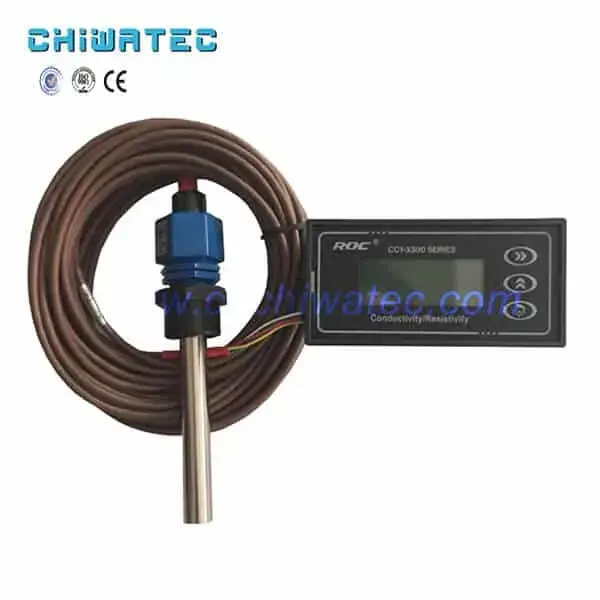
The fast rinse step restores the system to service-ready condition. Raw water flows through the resin bed at the normal service flow rate (15-30 m/h) for 10-30 minutes, removing any residual salt, calcium chloride, and magnesium chloride from the vessel. The effluent is monitored for conductivity or chloride concentration — the fast rinse is complete when the effluent quality matches the expected soft water quality (typically conductivity below 500 microsiemens per centimeter for standard softening applications). The total rinse water volume is typically 3-6 bed volumes.
Quality Verification and Return to Service
Before returning to service, a hardness test should be performed on the effluent to confirm that the resin has been fully regenerated. The target is less than 1 mg/L as CaCO3 for most residential and commercial applications, or below 0.5 mg/L for industrial boiler feed applications. Modern systems with online conductivity monitoring can automatically initiate return to service when the effluent quality reaches the setpoint, minimizing downtime between cycles. At the conclusion of the fast rinse, the control valve returns to the service position, and the softening cycle begins again.
9. What Are the Key Parameters for Optimizing the Ion Exchange Method?
Critical Operating Parameters
Several parameters must be optimized for efficient operation of the ion exchange method. Regeneration frequency — should be based on actual water usage (meter-initiated) rather than a fixed timer to avoid unnecessary regeneration cycles. Salt dosage — must match the total hardness removed between regenerations (typically 150-250 g of salt per equivalent of hardness removed). Brine concentration — optimal range is 8-12% NaCl; lower concentrations reduce regeneration efficiency, while concentrations above 15% may damage the resin matrix. Contact time — minimum 30 minutes of brine contact for effective regeneration. Rinse water quality — using soft water for rinsing reduces hardness leakage by up to 50% compared to raw water rinsing.
Performance Monitoring and Troubleshooting
Key performance indicators for the ion exchange method include: treated water hardness (target below 1 mg/L as CaCO3), salt consumption per kilogram of hardness removed (target 150-180 grams/kg), rinse water volume as percentage of treated water (target below 5%), and cycle length (target 24-72 hours for typical systems). Unexpected shortening of the service cycle, hardness leakage, or increased salt consumption indicate problems such as resin fouling, channeling, broken distributors, or exhausted resin requiring replacement.
10. How Does Manual Regeneration Differ from Automatic Systems?
Manual Regeneration Procedure
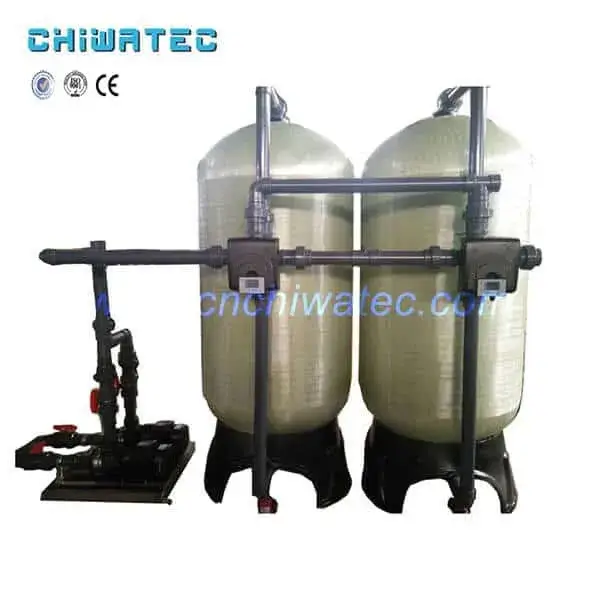
In manual water softening equipment — often used as pretreatment for reverse osmosis systems or in smaller industrial applications — the operator initiates and controls each regeneration step. The typical manual procedure involves: opening the salt inlet valve and closing all other valves; starting the raw water pump to draw brine from the salt tank into the softener; allowing the brine to soak in the resin for 4 hours or more for complete regeneration; then washing the resin by passing raw water through the bed at service flow rate until the effluent runs clear and tests free of hardness. Manual systems require approximately 2-4 hours of operator attention per regeneration cycle, compared to fully automatic systems that complete regeneration in 60-120 minutes without operator intervention.
Automation Advantages
Modern automatic water softening systems use microprocessor controllers with solenoid valves or motor-driven multi-port valves to execute the complete regeneration sequence automatically. Benefits include: consistent regeneration quality independent of operator skill, regeneration at optimal times (typically at night when water consumption is low), data logging for performance analysis, and remote monitoring capability. The additional cost of automation (typically USD 500-3000 for residential systems, USD 3000-20000 for commercial-industrial systems) is recovered through 15-30% lower salt consumption and reduced labor costs.
Learn about troubleshooting common ion exchange system problems
Conclusion
The ion exchange method is a proven, reliable technology for water softening that removes calcium and magnesium ions through a reversible exchange reaction with sodium-form resin. The complete five-step cycle — service, backwash, regeneration (brine injection), slow rinse, and fast rinse — must be properly executed to maintain resin performance and water quality. Understanding the working principle of each step enables operators to optimize salt consumption, minimize wastewater generation, and maximize system reliability. With advances in smart regeneration control, counter-current designs, and brine recovery systems, the ion exchange method continues to evolve toward greater efficiency and environmental sustainability.
For expert assistance in designing, installing, or optimizing ion exchange water softening systems for your specific application, contact CHIWATEC today at [email protected] or [email protected] or via WhatsApp at 008618292684865. CHIWATEC offers comprehensive solutions including design, machining, installation, commissioning, and customized one-stop service for water treatment systems worldwide.
Frequently Asked Questions
Q1: How often should a water softener regenerate?
Regeneration frequency depends on water hardness, daily water consumption, and resin volume. For a typical household with 200-300 mg/L hardness and 4 residents, regeneration is needed every 7-14 days. For industrial systems, regeneration cycles typically occur every 24-72 hours. Meter-initiated controllers that regenerate based on actual water usage are more efficient than timer-based systems, often reducing total regenerations by 20-40%.
Q2: What happens if the ion exchange resin is not regenerated on time?
If regeneration is delayed past the point of resin exhaustion, hardness will break through into the treated water, potentially causing scale formation in downstream equipment. Continued operation past breakthrough can also cause the hardness front to be pushed deeper into the bed, making subsequent regeneration less effective. In extreme cases, calcium carbonate precipitation can occur within the resin bed itself, permanently fouling the resin and requiring chemical cleaning or replacement.
Q3: Can the ion exchange method remove other contaminants besides hardness?
Yes, the ion exchange method can remove a wide range of ionic contaminants depending on the resin type used. Strong acid cation resins can remove iron, manganese, and heavy metals in addition to calcium and magnesium. Anion exchange resins remove nitrate, sulfate, chloride, fluoride, arsenic, and other anions. Chelating resins provide selective removal of specific heavy metals. However, the resin must be selected and regenerated specifically for the target contaminant — a standard softening resin cannot simultaneously remove hardness and other contaminants efficiently.
Q4: How much salt does a water softener use per regeneration?
Residential water softeners typically use 2-8 kg of salt per regeneration, depending on resin volume and hardness removal requirements. Industrial systems may use 50-500 kg per cycle. The salt consumption should be 150-250 grams per equivalent of hardness removed. Counter-current (upflow) regeneration systems use 30-50% less salt than conventional co-current systems. Using more salt than necessary does not improve water quality — it only wastes salt and increases operating costs.
Q5: What is the difference between co-current and counter-current regeneration?
In co-current regeneration, the brine flows in the same direction as the service flow (downward), contacting the most exhausted resin first. This requires 200-300% of theoretical salt and produces higher initial hardness leakage. In counter-current regeneration, brine flows opposite to service flow (upward), contacting the least exhausted resin first. This achieves 85-95% regenerant efficiency with only 110-150% of theoretical salt, and produces consistently lower hardness leakage. Counter-current systems are more expensive to build but offer significantly lower operating costs.
Related Resources and Further Reading
Do you have a water treatment project we can help with
* Designing,machining,installing,commissioning, customize and one-stop service
 English
  Spanish
  Portuguese