Water Purifier vs Pure Water Machine vs Ultrafiltration 2026: Complete Comparison Guide
Meta Description: Complete comparison of water purifier, pure water machine (RO), ultrafiltration, and nanofiltration systems. Learn differences in filtration technology, water quality, and applications from CHIWATEC experts.
Executive Summary: Understanding Water Treatment Technologies 2026
Choosing the right water treatment system requires understanding the key differences between water purifiers, pure water machines (RO systems), ultrafiltration water machines, and nanofiltration energy water machines. Each technology offers distinct filtration capabilities, water quality outputs, and application scenarios.
Key differences at a glance:
- Water Purifier (Basic): Simple adsorption/filtration (activated carbon, PP cotton), removes particles and odors, does NOT remove bacteria/viruses/heavy metals
- Pure Water Machine (RO): Reverse osmosis membrane (0.0001 micron), removes 99%+ contaminants including bacteria/viruses/heavy metals, produces weakly acidic water
- Ultrafiltration (UF): UF membrane (0.001 micron), removes bacteria/viruses, retains minerals, no electricity required
- Nanofiltration (NF): NF membrane + mineralization, combines RO purification with added minerals, produces weakly alkaline water
1. Water Purifier vs Pure Water Machine: Fundamental Differences
Water Purifier (Basic Filtration)
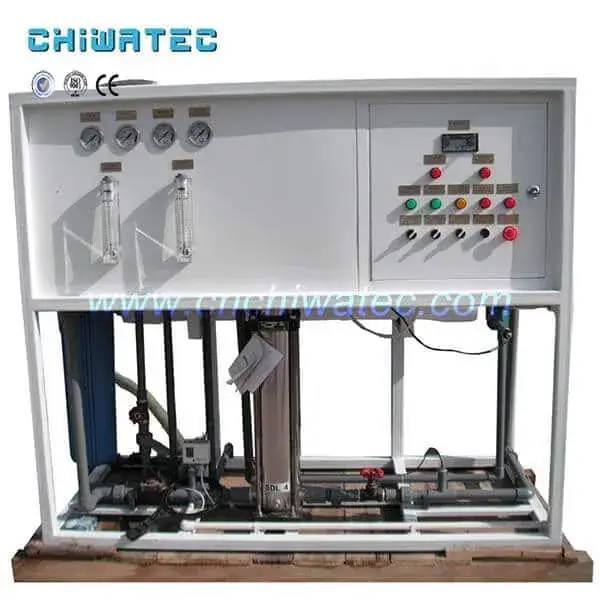
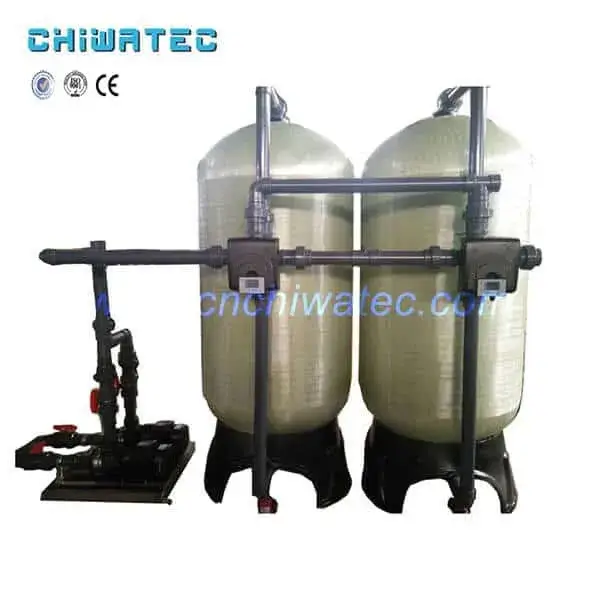
Definition: A water treatment device that uses simple adsorption and mechanical filtration, such as barrel filter water purifiers with activated carbon, PP cotton, quartz sand, or diatomaceous earth.
Filtration capabilities:
- ✅ Removes: Sediment, particles, rust, chlorine, odors, some organic compounds
- ❌ Does NOT remove: Bacteria, viruses, heavy metals, dissolved salts, fluoride
Key limitations:
- Filter saturation risk: If filter elements are not replaced regularly, adsorbed bacteria and contaminants can leach back into water, making purified water dirtier than tap water
- No microbial protection: Cannot ensure microbiological safety
- Best for: Pre-treatment, improving taste/odor, reducing chlorine
Pure Water Machine (RO System)
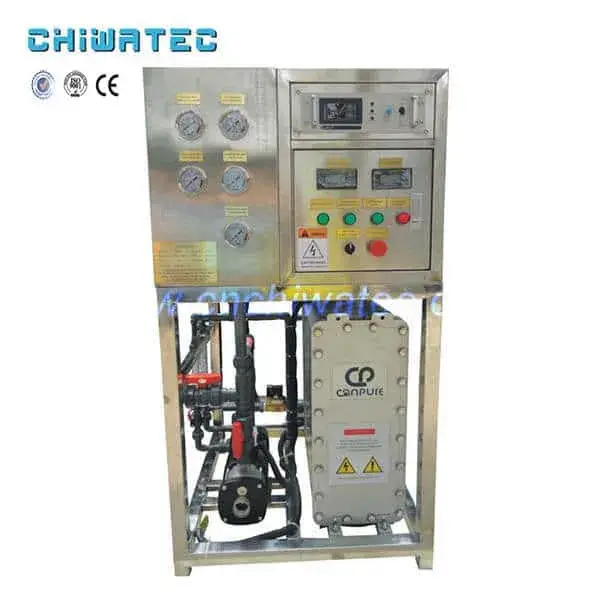
Definition: A direct drinking water machine using RO (Reverse Osmosis) membrane filtration with pore size of 0.0001 microns (one ten-thousandth of a micron).
How it works: Water is “squeezed” through the RO membrane by a pressurizing device (booster pump), separating pure water molecules from contaminants.
Filtration capabilities:
- ✅ Removes: 99%+ of contaminants including bacteria, viruses, heavy metals, dissolved salts, fluoride, nitrates
- ✅ Produces: High-purity water (TDS typically <50 ppm)
- ⚠️ Also removes: Beneficial minerals (calcium, magnesium, potassium)
Water characteristics:
- pH: Weakly acidic (pH 5.5-6.5)
- Mineral content: Very low (demineralized)
- Best for: Industrial applications, medical use, laboratory water, areas with severe contamination
Advantages over basic purifiers:
- Multi-stage pre-filtration (typically 3 stages) protects RO membrane and extends lifespan
- Even if pre-filters are not replaced promptly, water quality remains safe (only affects flow rate and membrane life)
- Consistent production of clean, safe drinking water
2. Pure Water Machine (RO) vs Ultrafiltration Water Machine
Ultrafiltration (UF) Technology
Definition: Uses ultrafiltration membranes with pore size of 0.001 microns (10 times larger than RO membranes).
How it works: Operates on tap water pressure alone (no electricity required), forcing water through UF membrane while retaining larger contaminants.
Filtration capabilities:
- ✅ Removes: Bacteria (>99.9%), viruses (>99%), suspended solids, colloids, macromolecules
- ✅ Retains: Beneficial minerals (calcium, magnesium, potassium, sodium)
- ⚠️ Does NOT remove: Dissolved salts, heavy metals (partial removal only), fluoride, nitrates
Water characteristics:
- pH: Neutral to slightly alkaline (similar to source water)
- Mineral content: Retained (natural minerals from source water)
- TDS: Similar to tap water
RO vs UF: Direct Comparison
| Feature | RO Pure Water Machine | Ultrafiltration (UF) |
|---|---|---|
| Membrane pore size | 0.0001 micron | 0.001 micron |
| Electricity required | Yes (booster pump) | No (tap pressure only) |
| Water waste | Yes (20-50% reject water) | No (100% water usage) |
| Heavy metal removal | 95-99% | Partial (varies by metal) |
| Mineral retention | No (removed) | Yes (retained) |
| TDS reduction | 90-99% | Minimal |
| Best application | Contaminated water, high TDS | Good tap water, mineral retention |
When to Choose RO:
- Source water has high TDS (>500 ppm)
- Heavy metal contamination concern
- Fluoride or nitrate removal needed
- Maximum purity required (medical, laboratory, industrial)
- Brackish or seawater desalination
When to Choose UF:
- Good quality tap water (TDS <300 ppm)
- Want to retain natural minerals
- No electricity available
- Environmental concern (no wastewater)
- Primary concern is microbial safety

3. Pure Water Machine vs Nanofiltration Energy Water Machine
Nanofiltration (NF) Technology
Definition: Nanofiltration membranes have pore sizes between RO and UF (approximately 0.001-0.01 microns), offering selective filtration.
Enhanced NF Systems (Energy Water Machines): Combine nanofiltration with post-treatment mineralization and activation:
- NF membrane: Removes contaminants while retaining some beneficial minerals
- Energy conversion filter: Adds minerals, adjusts pH, activates water structure
- Final water: Weakly alkaline, mineralized, “energized” water
NF vs RO: Key Differences
| Feature | RO Pure Water | NF Energy Water |
|---|---|---|
| Filtration precision | 0.0001 micron (highest) | 0.001-0.01 micron (selective) |
| Mineral content | Removed (demineralized) | Retained + enhanced (mineralized) |
| pH level | Weakly acidic (5.5-6.5) | Weakly alkaline (7.5-8.5) |
| Water structure | Standard | Activated/”energized” (claimed) |
| Health positioning | Pure, safe water | Healthy, functional water |
| Best for | Maximum purity | Daily drinking, health-conscious |
Benefits of Nanofiltration Energy Water
- Mineralization: Adds calcium, magnesium, potassium, sodium in balanced ratios
- pH adjustment: Converts acidic RO water to weakly alkaline (pH 7.5-8.5)
- Selective filtration: Removes harmful contaminants while retaining beneficial minerals
- Water activation: Claims to reduce water cluster size for better cellular absorption (scientific debate exists)
- Physiological compatibility: Designed to match human body’s pH and mineral needs
4. Comprehensive Technology Comparison
Filtration Precision Hierarchy
From coarsest to finest:
Water Purifier (1-10 microns) → Ultrafiltration (0.001 micron) → Nanofiltration (0.001-0.01 micron) → Reverse Osmosis (0.0001 micron)
Contaminant Removal Comparison
| Contaminant | Basic Purifier | Ultrafiltration | Nanofiltration | RO |
|---|---|---|---|---|
| Sediment/Rust | ✅ | ✅ | ✅ | ✅ |
| Chlorine/Odor | ✅ | ✅ | ✅ | ✅ |
| Bacteria | ❌ | ✅ | ✅ | ✅ |
| Viruses | ❌ | ✅ | ✅ | ✅ |
| Heavy Metals | ❌ | ⚠️ Partial | ✅ Good | ✅ Excellent |
| Dissolved Salts | ❌ | ❌ | ⚠️ Partial | ✅ |
| Fluoride | ❌ | ❌ | ⚠️ Partial | ✅ |
| Beneficial Minerals | ✅ | ✅ | ✅ Enhanced | ❌ |
Legend: ✅ = Effective removal/retention | ⚠️ = Partial | ❌ = Not removed/retained
5. Application Scenarios & Recommendations
Residential Drinking Water
- Good tap water quality: Ultrafiltration (mineral retention, no waste)
- Poor tap water / high TDS: RO system (maximum safety)
- Health-conscious families: NF energy water (balanced minerals, alkaline pH)
- Budget option: Basic purifier + boiling (improves taste only)
Commercial Applications
- Restaurants/Cafes: RO for consistency, UF for tea/coffee (mineral retention improves flavor)
- Offices: UF or NF (low maintenance, good taste)
- Schools: UF (safe, mineral-rich for children)
Industrial & Medical
- Laboratories: RO or RO+EDI (ultrapure water)
- Pharmaceuticals: RO+EDI+UV (WFI/purified water standards)
- Electronics: Multi-stage RO+EDI (18.2 MΩ·cm ultrapure)
- Boiler feed: RO (prevents scaling)
Conclusion: Choosing the Right Water Treatment System
Each water treatment technology serves specific needs:
- Basic Water Purifier: Budget pre-treatment, taste improvement only
- RO Pure Water Machine: Maximum purity, contaminated water sources, industrial use
- Ultrafiltration: Good tap water, mineral retention, eco-friendly (no waste)
- Nanofiltration Energy Water: Health-focused, balanced minerals, alkaline water
CHIWATEC provides comprehensive water treatment solutions from household purifiers to industrial RO systems. Our engineering team helps you select the right technology based on your source water quality, usage requirements, and budget.
Related Resources:
FAQ: Water Treatment Technologies
1. Which is better: RO or ultrafiltration?
Neither is universally “better” — it depends on your needs. RO provides maximum purity (removes 99%+ contaminants) but wastes water and removes minerals. UF retains minerals, requires no electricity, and produces no waste, but doesn’t remove dissolved salts or heavy metals effectively. Choose RO for contaminated water; choose UF for good tap water.
2. Is demineralized RO water safe to drink long-term?
Yes, RO water is safe to drink. However, some health experts recommend remineralization or obtaining minerals from food. NF energy water systems address this by adding beneficial minerals back after purification. A balanced diet typically provides adequate minerals regardless of water source.
3. How often should I replace filter elements?
Typical replacement schedule: PP cotton (3-6 months), activated carbon (6-12 months), RO membrane (2-3 years), UF membrane (2-3 years). Actual lifespan depends on water quality and usage. Many systems have indicator lights or TDS meters to alert when replacement is needed.
4. Does ultrafiltration remove heavy metals?
Ultrafiltration provides partial heavy metal removal (varies by metal and water chemistry), but is not as effective as RO. UF primarily removes bacteria, viruses, and suspended solids. For heavy metal concerns, RO or NF with activated carbon pre-filtration is recommended.
5. What is “energy water” and does it work?
“Energy water” refers to water treated with mineralization, pH adjustment, and activation filters. Claims include smaller water clusters for better absorption and health benefits. While mineralization and pH adjustment are scientifically valid, “water activation” claims remain debated. NF energy water provides balanced minerals and alkaline pH, which many users prefer for daily drinking.
FOLLOW US
Do you have a water treatment project we can help with
Designing, machining, installing, commissioning, customize and one-stop service
 English
  Spanish
  Portuguese