Ion Exchange Resin: Complete Guide to Types, Storage & Regeneration 2026
Ion exchange resin is a synthetic polymer material that removes dissolved ions from water through reversible chemical exchange reactions. These cross-linked resin beads contain fixed ionic groups that attract and exchange contaminants with harmless ions, making them essential for water softening, demineralization, and purification applications. This comprehensive guide covers ion exchange resin types, working principles, storage methods, pretreatment procedures, and regeneration techniques for optimal performance in 2026.
1. What Is Ion Exchange Resin?
Ion exchange resin consists of organic polymer beads with a cross-linked structural skeleton, fixed ionic groups chemically bonded to the polymer matrix, and exchangeable ions that reversibly bind to the fixed groups.
1.1 Resin Structure Components
- Polymer backbone: Cross-linked structure providing mechanical strength (typically styrene-divinylbenzene copolymer)
- Fixed ionic groups: Functional groups permanently attached to the polymer matrix
- Exchangeable ions: Mobile ions with opposite charge that can be replaced during exchange reactions
1.2 How Ion Exchange Works
- Contaminated water flows through resin bed
- Target ions in water are attracted to fixed ionic groups on resin
- Exchangeable ions on resin are released into water
- Contaminant ions bind to resin, replacing the original ions
- Process continues until resin reaches exchange capacity
- Resin is regenerated to restore exchange capacity
1.3 Ion Exchange Reaction Example
Water softening (calcium removal): 2R-Na + Ca²⁺ → R₂-Ca + 2Na⁺
Demineralization: R-H + Na⁺ → R-Na + H⁺ (cation); R-OH + Cl⁻ → R-Cl + OH⁻ (anion)
2. Classification of Ion Exchange Resins
2.1 By Functional Group Type
(1) Strong Acid Cation Resins
- Functional group: Sulfonic acid (-SO₃H)
- Operating pH range: 0-14 (all pH levels)
- Applications: Water softening, demineralization, decalcification
- Regenerant: HCl or H₂SO₄
(2) Weak Acid Cation Resins
- Functional group: Carboxylic acid (-COOH)
- Operating pH range: 5-14 (alkaline conditions)
- Applications: High-hardness water softening, alkalinity removal
- Advantages: High exchange capacity, easy regeneration
(3) Strong Base Anion Resins
- Functional group: Quaternary ammonium Type I or Type II
- Operating pH range: 0-14 (all pH levels)
- Applications: Silica removal, nitrate removal, demineralization
- Regenerant: NaOH (4-8%)
(4) Weak Base Anion Resins
- Functional group: Primary, secondary, or tertiary amine
- Operating pH range: 0-7 (acidic conditions)
- Applications: Acid removal, organic matter removal
- Advantages: High capacity for strong acids, low regenerant consumption
2.2 By Physical Structure
- Gel Type: Homogeneous gel matrix, high capacity, standard applications
- Macroporous: Permanent macroscopic pores, better fouling resistance, high-organic feedwater
2.3 By Application Grade
- Industrial grade: Standard water treatment
- Food grade: FDA-compliant for food and beverage
- Nuclear grade: Ultra-high purity for power generation
- Electronics grade: Semiconductor manufacturing
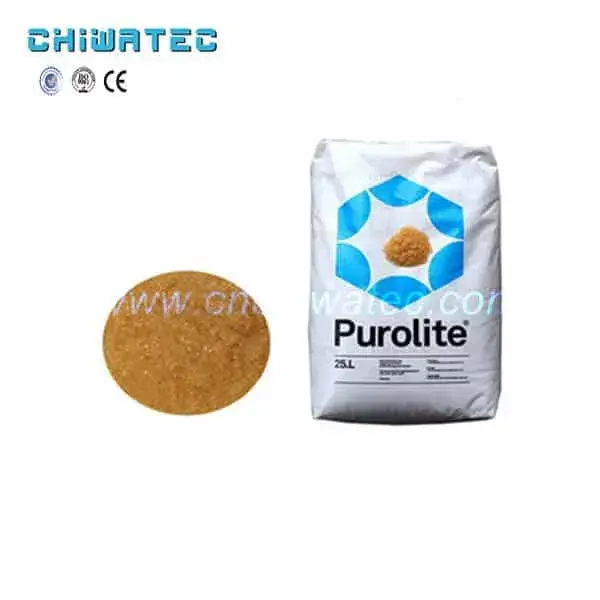
3. Ion Exchange Resin Storage Methods
3.1 Storage Environment Requirements
- Temperature range: 0-40°C (optimal: 5-30°C)
- Avoid freezing: Below 0°C can damage resin structure
- Avoid high heat: Above 40°C accelerates degradation
- Indoor storage only: Never store outdoors or in direct sunlight
- Moisture retention: Keep resin moist at all times
3.2 Long-Term Storage Guidelines
- Keep resin in original sealed packaging
- Add clear saturated brine solution if temperature drops below 0°C
- Check moisture level monthly
- Install temperature monitoring in storage area
3.3 Resin Dehydration Recovery
⚠️ Important: Never add water directly to dehydrated resin!
- Soak in clear saturated brine solution (26% NaCl)
- Allow resin to slowly rehydrate (12-24 hours)
- Gradually dilute brine with water over several hours
- Rinse thoroughly with clean water until salt is removed
- Proceed with standard pretreatment before use
3.4 Shelf Life
- Cation resins: 2-3 years when properly stored
- Anion resins: 1-2 years (more sensitive to degradation)
- Mixed bed resins: 1-2 years
4. Ion Exchange Resin Pretreatment
4.1 Hot Water Washing
- Initial rinse: Wash repeatedly with clean tap water
- Temperature: Cation resin 70-80°C; Anion resin 50-60°C
- Water change schedule: First 4-5 changes every 15 minutes, then every 30 minutes
- Total changes: 7-8 times minimum
- Completion criteria: Water runs clear, minimal foam, no visible particulates
4.2 Acid-Base Chemical Treatment
Cation Exchange Resin:
- Flow 1N HCl through resin (2-3× resin volume)
- Rinse until effluent pH ≈ 5
- Flow 5% NaCl solution (3× resin volume)
- Flow 1N NaOH (same dosage as acid)
- Rinse until effluent pH ≈ 9
- Flow 1N HCl to convert to H-form (3-5× resin volume)
- Final rinse with deionized water until pH > 6
Anion Exchange Resin:
Same procedure but sequence: Base → Acid → Base (final conversion to OH-form)
5. Ion Exchange Resin Regeneration
5.1 When to Regenerate
- Effluent quality declines below specification
- Exchange capacity decreases noticeably
- Pressure drop increases across resin bed
- Breakthrough of target ions detected
5.2 Regeneration Methods by Resin Type
(1) Strong Acid Cation Resin
- Regenerant: HCl (4-8%) or H₂SO₄ (1-5%)
- Dosage: 100-250 g/L resin
- Flow rate: 2-4 BV/h
(2) Strong Base Anion Resin
- Regenerant: NaOH (4-8%)
- Dosage: 80-150 g/L resin
- Temperature: 30-40°C optimal
(3) Weak Acid/Weak Base Resins
- Lower chemical dosage (50-100 g/L)
- Higher regeneration efficiency (90%+)
5.3 Regeneration Process Steps
- Backwash: Reverse flow to expand bed 40-60%, 10-15 minutes
- Regenerant injection: Slowly introduce solution, 30-60 minutes contact
- Slow rinse: Displacement rinse, 1-2 bed volumes
- Fast rinse: Rapid rinse until effluent meets specification
- Return to service
5.4 Regeneration Frequency
- Water softeners: Every 2-7 days
- Demineralizers: Every 1-3 days
- Mixed bed polishers: Every 1-4 weeks
6. Resin Contamination & Resuscitation
6.1 Common Contamination Types
(1) Organic Fouling
- Symptoms: Decreased capacity, darkened resin
- Treatment: Hot brine + NaOH (8-10% NaCl + 2-4% NaOH at 50-60°C)
(2) Iron Contamination
- Symptoms: Reddish-brown resin, capacity loss
- Treatment: 5-10% HCl cleaning
(3) Silica Fouling (Anion)
- Symptoms: Silica leakage
- Treatment: Hot NaOH (8% at 50-60°C)
(4) Bacterial Contamination
- Symptoms: Odor, biofilm
- Treatment: Chlorine or peroxide disinfection
6.2 When to Replace Resin
- Capacity loss exceeds 50% despite cleaning
- Physical degradation (broken beads)
- Irreversible contamination
- Age exceeds 5-10 years with declining performance
7. 2026 Market Trends
7.1 Global Market Growth
- Market size: Expected to reach $9.8 billion by 2027 (CAGR 6.5%)
- Water treatment: Largest segment (55% of market)
- Asia-Pacific: Fastest growth region
7.2 Technology Innovations
- Uniform particle size for improved kinetics
- High-capacity formulations (10-15% increase)
- Fouling-resistant coatings
- Green manufacturing processes
8. Conclusion
Ion exchange resin technology remains essential for water treatment across industries. Understanding resin types, proper storage methods, pretreatment procedures, and regeneration techniques is critical for maximizing performance and service life.
Key takeaways:
- ✓ Four main resin types: Strong acid, weak acid, strong base, weak base
- ✓ Proper storage: 0-40°C, keep moist, never freeze or overheat
- ✓ Pretreatment essential: Hot water washing + acid-base treatment
- ✓ Regular regeneration restores exchange capacity
- ✓ Contamination management requires targeted cleaning
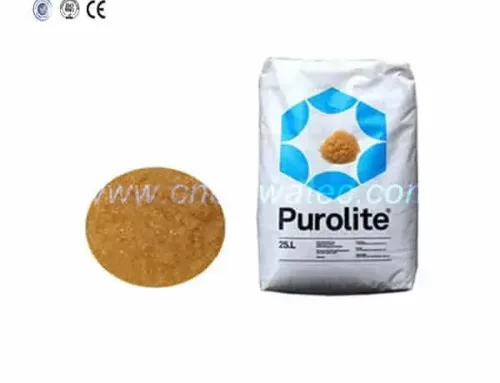
Xi’an CHIWATEC Water Treatment Technology supplies high-quality ion exchange resins including C100E strong acid cation resin, food-grade resins, and nuclear-grade resins. Our technical team provides application support and resin selection guidance.
9. FAQ: Ion Exchange Resin
Q1: How long does ion exchange resin last?
With proper maintenance, cation resins last 5-10 years, anion resins 3-7 years. Lifespan depends on feedwater quality, operating conditions, and contamination prevention.
Q2: What is the difference between gel and macroporous resin?
Gel resin: Homogeneous structure, higher capacity, clean feedwater. Macroporous: Permanent macroscopic pores, better fouling resistance, high-organic applications.
Q3: Can I mix cation and anion resins together?
Yes, mixed bed resins combine both for ultrapure water (18.2 MΩ·cm). Regeneration requires separating resins by density before treating with acid and base separately.
Q4: What regenerant for water softening resin?
Use NaCl (salt) at 8-12% concentration. Dosage typically 100-250 grams NaCl per liter of resin.
Q5: How do I know if resin needs cleaning or replacement?
Cleaning: Gradual capacity decline, discoloration. Replacement: Severe capacity loss (>50%), physical degradation, age >10 years with poor performance.
Q6: Is ion exchange resin safe for drinking water?
Yes, food-grade resins are FDA-compliant and safe for drinking water treatment. Ensure resin meets NSF/ANSI 61 certification for potable water applications.
Further Reading:
Do you have a water treatment project we can help with
* Designing,machining,installing,commissioning, customize and one-stop service
 English
  Spanish
  Portuguese