

Activated Carbon Filter for Water Treatment: Complete Guide 2026
Activated carbon filters are pressure vessels filled with coarse quartz sand cushion and high-quality activated carbon media. These essential water treatment units serve as critical pretreatment components, removing residual chlorine, organic pollutants, odors, colloids, pigments, and heavy metal ions to protect downstream equipment including reverse osmosis membranes and ion exchange resins.
What is an Activated Carbon Filter?
Definition and Construction
An activated carbon filter is a specialized pressure vessel designed for adsorptive water treatment. The filter construction includes:
- Pressure Vessel: Manufactured from rubber-lined steel, stainless steel (SS304/SS316), or fiberglass reinforced plastic (FRP)
- Support Layer: Coarse quartz sand cushion (50-100mm depth) at the bottom to prevent media loss through underdrain
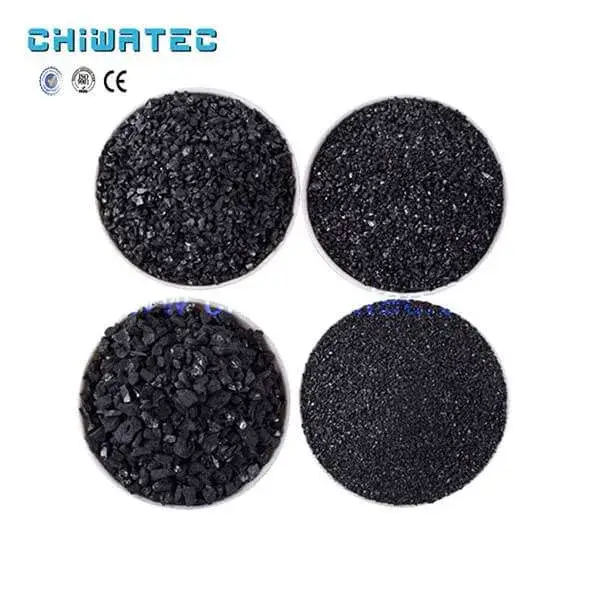
- Activated Carbon Media: High-quality granular activated carbon (GAC) or coal-based activated carbon (800-1200mm depth)
- Distribution System: Inlet/outlet distributors ensure even flow across the media bed
According to 2025 industry data, the global activated carbon filter market reached $1.8 billion USD, with a projected CAGR of 7.5% through 2030, driven by increasing water quality regulations and industrial water reuse requirements.
Primary Functions in Water Treatment
Activated carbon filters serve multiple critical functions in water pretreatment systems:
- Residual Chlorine Removal: Adsorbs free chlorine (Cl₂) and chloramines (NH₂Cl, NHCl₂) that cannot be removed by previous filtration stages, preventing oxidation and degradation of downstream reverse osmosis membranes
- Organic Matter Adsorption: Captures small molecular organic compounds leaked from previous treatment stages, including:
- Natural organic matter (NOM): Humic acids, fulvic acids
- Synthetic organic compounds: Pesticides, herbicides, industrial solvents
- Disinfection byproducts (DBPs): Trihalomethanes (THMs), haloacetic acids (HAAs)
- Odor and Taste Control: Removes geosmin, 2-methylisoborneol (MIB), and other taste/odor compounds causing earthy, musty, or chemical flavors
- Colloid and Pigment Removal: Adsorbs colored organic compounds and fine colloidal particles
- Heavy Metal Reduction: Partial removal of mercury, lead, chromium (VI), and other heavy metals through adsorption and reduction reactions
- COD Reduction: Decreases chemical oxygen demand (COD) by adsorbing oxidizable organic compounds
Performance Targets for RO Pretreatment
When used as RO pretreatment, activated carbon filters ensure:
- SDI (Silt Density Index): Further reduced to <5 (ideally <3)
- TOC (Total Organic Carbon): Reduced to <2.0 ppm (often <1.0 ppm with proper design)
- Residual Chlorine: <0.1 mg/L (undetectable) to protect polyamide RO membranes
Working Principle: Adsorption Mechanism
Carbon Bed Structure
The activated carbon filter operates through a carbon bed composed of activated carbon particles with unique structural properties:
- Microporous Structure: Extensive network of micropores (pore diameter <2 nm), mesopores (2-50 nm), and macropores (>50 nm)
- Huge Specific Surface Area: 500-1500 m²/g (equivalent to 20-60 football fields per gram of carbon)
- Strong Physical Adsorption: Van der Waals forces attract and hold organic molecules within the pore structure
Adsorption Process
As water passes through the carbon bed, organic pollutants are effectively adsorbed through multiple mechanisms:
- Pore Diffusion: Contaminant molecules diffuse from bulk water into carbon pores
- Physical Adsorption: Molecules adhere to pore surfaces through weak intermolecular forces (London dispersion forces)
- Chemical Adsorption: Oxygen-containing functional groups on the non-crystalline carbon surface (carboxyl, hydroxyl, carbonyl, phenolic groups) create active sites for chemisorption of specific compounds
- Catalytic Reduction: Free chlorine is catalytically reduced to chloride ions: C* + HOCl → C-O + H⁺ + Cl⁻
Adsorption Capacity Factors
The adsorption effectiveness and service life of activated carbon filters depend on several critical factors:
| Factor | Impact on Adsorption | Optimal Range |
|---|---|---|
| Pollutant Type | Molecular size, polarity, solubility affect adsorption affinity | Non-polar, high MW compounds adsorb best |
| Pollutant Concentration | Higher concentration increases loading rate, reduces service life | <5 ppm TOC for extended life |
| Contact Time (EBCT) | Longer contact time improves adsorption efficiency | 10-20 minutes EBCT |
| Water Temperature | Lower temperature favors adsorption (exothermic process) | 5-25°C optimal |
| pH Level | Affects ionization of organics and surface charge | pH 6-8 for most applications |
Activated Carbon Types and Selection
Carbon Source Materials
Activated carbon is manufactured from various precursor materials, each offering unique properties:
| Carbon Type | Source Material | Characteristics | Best Applications |
|---|---|---|---|
| Coal-Based GAC | Bituminous or anthracite coal | High hardness, good abrasion resistance, balanced pore structure | General water treatment, chlorine removal |
| Coconut Shell GAC | Coconut shells | Very high microporosity, highest surface area, premium quality | High-purity applications, VOC removal |
| Wood-Based GAC | Hardwood or softwood | Large pore structure, fast adsorption kinetics | Large molecule removal, color reduction |
| Catalytic Carbon | Modified coal or coconut shell | Enhanced catalytic activity for chloramine and H₂S removal | Chloramine removal, hydrogen sulfide control |
Selection Criteria
In actual selection, determine filter type and activated carbon specifications based on:
- Pollutant Type: Identify target contaminants (chlorine, chloramines, VOCs, organics, heavy metals)
- Contaminant Concentration: Measure influent levels to calculate carbon bed capacity requirements
- Flow Rate: Determine required vessel size and contact time (EBCT)
- Water Chemistry: Consider pH, temperature, competing ions
- Regulatory Requirements: Meet drinking water standards or industrial specifications
System Design and Configuration
Filtration Rate and Contact Time
Proper hydraulic design is critical for effective adsorption:
- Service Flow Rate: 5-15 m/h (2-6 gpm/ft²) for standard applications
- Empty Bed Contact Time (EBCT): 10-20 minutes minimum for chlorine removal; 15-30 minutes for organic removal
- Bed Depth: 1.0-2.5 meters (3-8 feet) depending on application
- Backwash Rate: 20-40 m/h to achieve 30-50% bed expansion
Upstream and Downstream Filtration
Proper pre-filtration and post-filtration are essential for optimal activated carbon performance:
- Upstream Filter: Prevents dust and suspended solids from clogging the activated carbon bed. Minimum efficiency: F7 (EN 779) or equivalent 5-10 μm cartridge filter
- Downstream Filter: Captures carbon fines and dust generated by the activated carbon itself. Recommended: 5 μm cartridge filter or bag filter
Important: Without proper upstream filtration, suspended solids will blind the carbon surface, dramatically reducing adsorption capacity and service life. Without downstream filtration, carbon fines can damage downstream equipment including RO membranes.
Applications and Industry Use
Primary Applications
- Reverse Osmosis Pretreatment: Essential chlorine/chloramine removal to protect polyamide membranes from irreversible oxidation damage
- Drinking Water Treatment: Taste, odor, and organic contaminant removal for municipal and residential water supplies
- Wastewater Treatment: Tertiary treatment for organic pollutant removal, color reduction, and trace contaminant adsorption
- Food and Beverage Industry: Process water purification, ingredient water treatment, product quality protection
- Pharmaceutical Industry: Purified water (PW) and water for injection (WFI) pretreatment, organic contaminant control
- Electronics Industry: Ultrapure water (UPW) production pretreatment, TOC reduction
- Swimming Pool Water: Chlorine byproduct removal, water clarification
- Aquarium and Aquaculture: Chlorine removal, organic waste adsorption, water quality maintenance
Contaminant Removal Capabilities
| Contaminant | Removal Efficiency | Mechanism |
|---|---|---|
| Free Chlorine | >99% | Catalytic reduction to chloride |
| Chloramines | 90-99% (catalytic carbon) | Catalytic decomposition |
| VOCs | 80-99% | Physical adsorption |
| THMs (DBPs) | 70-90% | Physical adsorption |
| Pesticides/Herbicides | 80-95% | Physical adsorption |
| Heavy Metals (Hg, Pb) | 50-80% | Adsorption and complexation |
| Color/Turbidity | 60-90% | Adsorption of colored organics |
2026 Technology Trends and Innovations
Advanced Carbon Materials
- Impregnated Carbons: Silver-impregnated for bacteriostatic properties; iodine-impregnated for enhanced mercury removal
- Block Carbon Filters: Compressed carbon blocks with sub-micron pore structure for combined filtration and adsorption
- Extruded Carbon: Uniform particle size, low dust, improved hydraulic performance
- Nanocarbon Composites: Carbon nanotube and graphene-enhanced materials for ultra-high surface area
Smart Monitoring Systems
- Online TOC Analyzers: Real-time organic carbon monitoring for breakthrough detection
- ORP (Oxidation-Reduction Potential) Sensors: Continuous chlorine/chloramine removal verification
- Differential Pressure Monitoring: Bed fouling detection and backwash optimization
- Predictive Maintenance: AI-based service life prediction using historical performance data
Sustainability Features
- Carbon Reactivation: Thermal reactivation of spent carbon (800-1000°C) for 3-5 reuse cycles
- Spent Carbon Recycling: Conversion to activated carbon for soil amendment or energy recovery
- Water-Efficient Backwash: Optimized backwash cycles reduce water consumption by 30-40%
- Low-Pressure Drop Design: Improved hydraulic design reduces pumping energy by 15-25%
Installation and Maintenance
Installation Guidelines
- Vessel Preparation: Clean and inspect vessel interior, verify underdrain integrity
- Media Loading: Load quartz sand support layer first, then carefully add activated carbon to avoid dust generation
- Initial Rinse: Soak carbon bed for 2-4 hours, then rinse thoroughly until effluent is clear (typically 30-60 minutes)
- System Check: Verify all valves, instruments, and controls function correctly
Maintenance Schedule
- Daily: Check differential pressure, verify effluent chlorine residual (<0.1 mg/L)
- Weekly: Inspect for leaks, verify backwash cycle operation
- Monthly: Test effluent TOC, chlorine, and organics; inspect valves and actuators
- Quarterly: Backwash if not automated; check for channeling or bed compaction
- Annually: Complete media inspection, replace if exhausted or fouled
- 2-5 Years: Typical carbon replacement interval (depends on loading and application)
Carbon Replacement Indicators
Replace activated carbon when:
- Effluent chlorine exceeds 0.1 mg/L (chlorine breakthrough)
- TOC removal efficiency drops below 50%
- Differential pressure remains high after backwashing (indicates fouling)
- Service time exceeds design life (typically 2-5 years)
- Iodine number falls below 500 mg/g (laboratory testing)
Conclusion
Activated carbon filters remain indispensable components of modern water treatment systems in 2026, providing reliable removal of chlorine, organic contaminants, taste, and odor compounds. With proper selection based on contaminant profile, flow rate, and water chemistry, activated carbon filters effectively protect downstream equipment including RO membranes and ion exchange resins from oxidation and fouling. As advanced carbon materials, smart monitoring systems, and sustainability initiatives continue to evolve, activated carbon filtration technology maintains its position as the most cost-effective solution for adsorptive water treatment across municipal, industrial, and residential applications.
Xi’an CHIWATEC Water Treatment Technology is a high-tech enterprise specialized in various water processing devices. We provide comprehensive engineering solutions including designing, machining, installing, commissioning, and customization services. As one of the fastest-developing water treatment equipment manufacturers in Western China, we are committed to delivering innovative and sustainable water treatment solutions.
Further Reading
- Mechanical Filters: Complete Guide & Selection
- Ultrafiltration Membrane Applications in Water Treatment
- Ultrafiltration Pretreatment: Best Practices
- Ultrafiltration Technology: Complete Introduction
Do you have a water treatment project we can help with
* Designing,machining,installing,commissioning, customize and one-stop service






 English
  Spanish
  Portuguese




