Reverse Osmosis Pretreatment System: 3 Essential Components for RO Water Treatment 2026
A reliable reverse osmosis pretreatment system is the foundation of any high-performance RO installation. Raw water contains suspended solids, residual chlorine, hardness ions, and organic matter — all of which can foul, scale, or degrade RO membranes within weeks if left untreated. A properly designed reverse osmosis pretreatment system removes these contaminants in three stages: a multimedia filter for particulate removal, an activated carbon filter for chlorine and organic adsorption, and a water softener for hardness elimination. This article provides a complete technical breakdown of each component and its role in protecting your RO investment.
Why a Reverse Osmosis Pretreatment System Is Critical for RO Membrane Protection
Reverse osmosis membranes are sensitive to fouling, scaling, and chemical attack. Without pretreatment, suspended solids above 5 μm can clog membrane feed channels, residual chlorine (free chlorine > 0.1 mg/L) can oxidize and destroy thin-film composite polyamide membranes, and calcium/magnesium hardness can precipitate as carbonate scale on the membrane surface, reducing flux and increasing operating pressure. A properly configured reverse osmosis pretreatment system reduces SDI (Silt Density Index) to below 5, removes free chlorine completely, and lowers hardness to less than 1 ppm as CaCO₃ — ensuring membrane warranty compliance and maximizing membrane service life to 3–5 years or more.
Multimedia Filter (Quartz Sand Filter) — First Stage of the Reverse Osmosis Pretreatment System
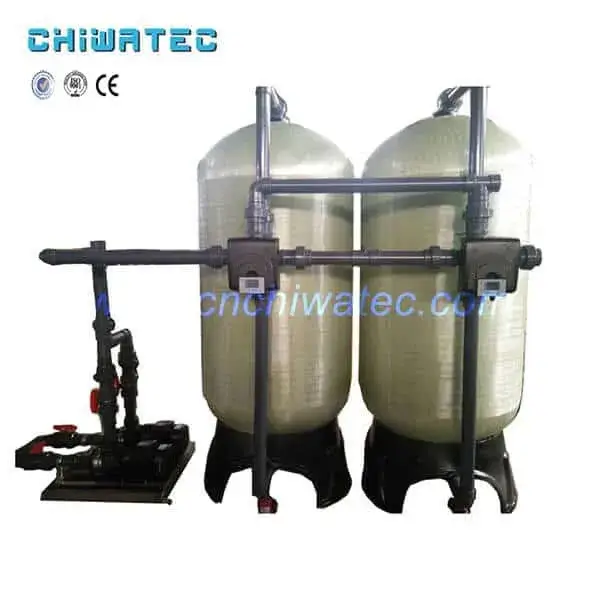
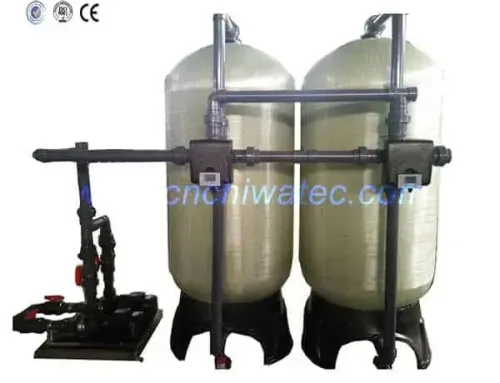
The multimedia filter, also known as a quartz sand filter or mechanical filter, is the first-stage barrier in the reverse osmosis pretreatment system. It consists of a control valve, a pressure vessel (FRP or stainless steel), and three graded layers of filter media — typically anthracite (top layer, 0.8–1.2 mm), quartz sand (middle layer, 0.5–0.8 mm), and garnet or gravel (bottom support layer, 1–4 mm). As raw water passes downward through these graded layers, the multimedia filter effectively captures visible impurities, suspended solids (>20 μm), colloidal particles, and some organic matter through depth filtration. Under standard operating conditions (filtration rate 8–12 m/h), it reduces raw water turbidity from 10–20 NTU to below 1 NTU and lowers SDI to 3–5. The system performs automatic backwashing when differential pressure exceeds 0.05–0.1 MPa or on a timed cycle (every 8–24 hours), which fluidizes the media bed and flushes trapped particulates to drain.
| Parameter | Specification |
| Filtration rate | 8–12 m/h |
| Media layers | Anthracite + Quartz sand + Garnet/gravel |
| Particle removal | >20 μm (99% efficiency) |
| Effluent turbidity | <1 NTU |
| Backwash interval | 8–24 h or ΔP > 0.05–0.1 MPa |
Activated Carbon Filter — Chlorine Removal and Organic Adsorption in RO Pretreatment
The activated carbon filter is the second-stage component of the reverse osmosis pretreatment system. It removes residual chlorine (free and combined) — a critical step because polyamide RO membranes have zero tolerance for oxidizing agents. The filter uses granular activated carbon (GAC) typically derived from coconut shell or bituminous coal, with an iodine number of 900–1100 mg/g and a bed depth of 1.2–2.0 m. As water passes through the carbon bed at a linear velocity of 10–20 m/h, the activated carbon removes free chlorine via catalytic reduction (Cl₂ + H₂O → HCl + HOCl → HCl + O₂), achieving >99% chlorine removal efficiency even at feed concentrations of 1–3 mg/L. The carbon bed also adsorbs organic compounds (humic acids, tannins, pesticides), reduces color and odor, and acts as a polishing filter for fine particulates. The GAC bed typically has a service life of 12–24 months before replacement is needed, depending on feed water quality and chlorine loading.
| Parameter | Specification |
| Media type | Coconut shell GAC or bituminous coal |
| Iodine number | 900–1100 mg/g |
| Chlorine removal efficiency | >99% at 1–3 mg/L feed |
| Linear velocity | 10–20 m/h |
| Media replacement cycle | 12–24 months |
Water Softener — Hardness Removal for the Reverse Osmosis System
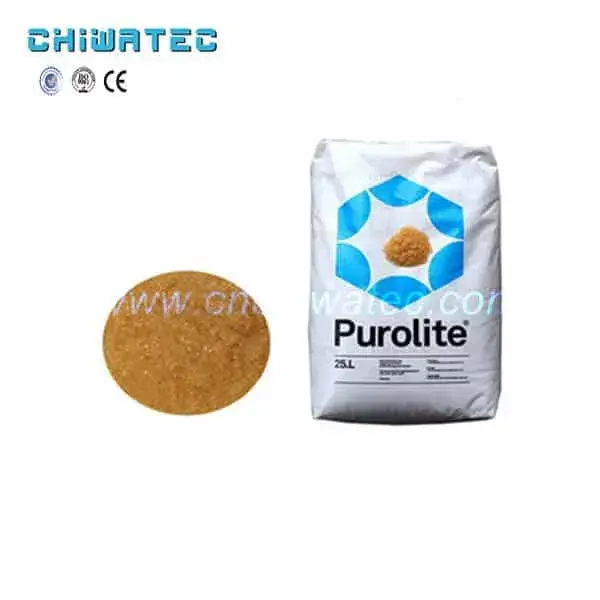
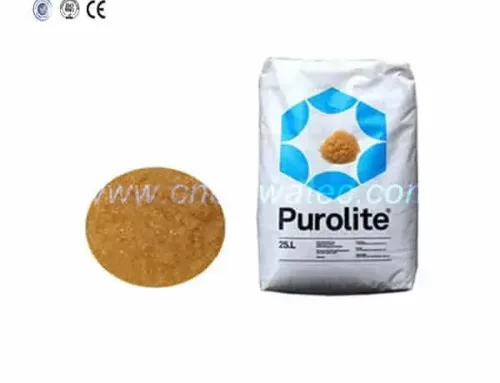
The water softener is the third and final stage in a standard reverse osmosis pretreatment system. It eliminates calcium (Ca²⁺) and magnesium (Mg²⁺) ions that would otherwise precipitate as carbonate or sulfate scale on RO membrane surfaces, causing irreversible flux decline and increased energy consumption. The softener uses strong acid cation exchange resin (SAC, typically gel-type polystyrene sulfonate with 8% DVB crosslinking) in the sodium form. As hard water passes through the resin bed, Ca²⁺ and Mg²⁺ ions exchange with Na⁺ ions according to the reaction: 2R–SO₃Na + Ca²⁺ → (R–SO₃)₂Ca + 2Na⁺. The system achieves effluent hardness below 1 ppm as CaCO₃ from feed hardness levels up to 500 ppm. When the resin is exhausted (typically after 200–600 bed volumes depending on feed hardness), the control valve initiates a brine regeneration cycle using NaCl solution (8–12% concentration), which reverses the ion exchange and flushes the accumulated hardness ions to drain. The complete regeneration process — backwash, brine injection, slow rinse, fast rinse — takes approximately 60–90 minutes.
| Parameter | Specification |
| Resin type | Strong acid cation (SAC), Na-form |
| Feed hardness capacity | Up to 500 ppm as CaCO₃ |
| Effluent hardness | <1 ppm as CaCO₃ |
| Regenerant | NaCl (8–12% brine) |
| Regeneration time | 60–90 minutes |
Comparison Table: Three Core RO Pretreatment Components at a Glance
| Component | Primary Function | Target Contaminants | Key Performance Indicator |
| Multimedia filter | Mechanical filtration | Suspended solids, turbidity, colloids >20 μm | SDI < 5, turbidity < 1 NTU |
| Activated carbon filter | Chlorine removal + adsorption | Free chlorine, organics, color, odor | Free Cl₂ = 0 mg/L, TOC reduction > 50% |
| Water softener | Ion exchange softening | Ca²⁺, Mg²⁺ hardness ions | Hardness < 1 ppm as CaCO₃ |
These three components form a complete reverse osmosis pretreatment system that protects downstream RO membranes from fouling, scaling, and chemical attack. Some installations may also include additional stages such as cartridge filtration (5 μm absolute), antiscalant dosing, or pH adjustment depending on feed water variability.
Frequently Asked Questions (FAQ)
What happens if the reverse osmosis pretreatment system is not used?
Without a reverse osmosis pretreatment system, RO membranes typically foul within weeks. Suspended solids clog feed channels, residual chlorine oxidizes the membrane polymer causing irreversible flux loss, and hardness scaling increases operating pressure by 15–30% within months. Membrane replacement costs are 3–5× the cost of a properly designed pretreatment system.
Can a single vessel combine multimedia and carbon media?
Dual-media and multi-media filters use different density layers in one vessel, but combining multimedia filtration AND activated carbon in a single vessel is not recommended for RO pretreatment. Carbon fines can migrate into the downstream membrane, and backwashing requirements differ. A split design with separate multimedia and carbon vessels is the industry standard.
How often should the pretreatment system be regenerated or backwashed?
The multimedia filter backwashes every 8–24 hours or when differential pressure exceeds 0.05–0.1 MPa. The activated carbon filter backswashes every 24–48 hours with media replacement at 12–24 months. The water softener regenerates based on calculated throughput (200–600 bed volumes) or typically every 1–7 days depending on feed water hardness and system size.
Does the reverse osmosis pretreatment system remove bacteria?
Multimedia and activated carbon filters remove some bacteria via mechanical straining and adsorption, but they are not designed as disinfection barriers. A reverse osmosis pretreatment system primarily targets physical and chemical contaminants; bacteria and microbial control is handled by the RO membrane itself (which removes >99.9% of microorganisms) or by separate UV sterilization if required.
What is the typical pressure drop across a complete pretreatment system?
A well-designed system has a total pressure drop of 0.1–0.3 MPa (1–3 bar) at design flow. Each component contributes: multimedia filter ~0.03–0.08 MPa, activated carbon filter ~0.03–0.08 MPa, and water softener ~0.02–0.05 MPa. A sudden increase in pressure drop indicates media fouling or channeling and signals that backwashing or media replacement is needed.
Conclusion and Call to Action
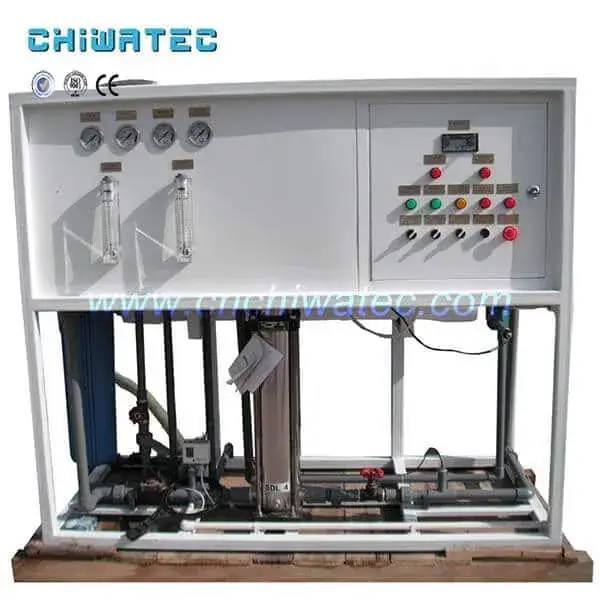
A properly designed reverse osmosis pretreatment system — combining a multimedia filter, activated carbon filter, and water softener — is essential for protecting RO membranes from fouling, scaling, and chemical degradation. These three components work together to remove suspended solids, residual chlorine, and hardness ions, ensuring stable RO operation, lower energy consumption, and extended membrane life. At CHIWATEC, we design and manufacture complete pretreatment systems tailored to your raw water analysis and RO application requirements. For technical consultation or a customized system quote, contact us at [email protected] or [email protected].
Related Resources and Further Reading
- Water Pretreatment Filter System: Complete Guide to RO Pretreatment Equipment
- Optimizing RO Systems: Analysis of Five Common Pretreatment Processes
- Why Does RO Water Treatment Need Pretreatment and What Are the Main Methods
- Classification of Pollutants in RO Pretreatment System Operation
- RO Water Treatment Systems — Browse Products
Do you have a water treatment project we can help with
* Designing,machining,installing,commissioning, customize and one-stop service
 English
  Spanish
  Portuguese