Types and Structural Design of Activated Sludge Aeration Tanks in Wastewater Treatment
The activated sludge process is one of the most widely used biological wastewater treatment methods globally. At the heart of this process lies the aeration tank, where organic matter in wastewater is biologically degraded by microorganisms under aerobic conditions. The design, type, and structure of the aeration tank directly determine the system’s oxygen transfer efficiency, biological activity, and overall treatment performance.
1. Main Working Mode of the Activated Sludge Process
The aeration tank serves as the central biological reactor in the activated sludge system. In this tank, aeration provides oxygen for microbial metabolism while mixing ensures uniform distribution of nutrients, biomass, and dissolved oxygen. The activated sludge process operates in different modes depending on the configuration of the aeration tank and the method of oxygen supply.
2. Types of Aeration Tanks
The classification of aeration tanks can be made based on several key criteria:
(1) Based on the Flowing State of the Mixed Liquor
- Push-Flow (Plug Flow) Aeration Tank:
Wastewater flows in one direction from the inlet to the outlet, forming a gradient of substrate concentration. This design offers high treatment efficiency and is commonly used in traditional activated sludge systems. - Completely Mixed Aeration Tank:
The influent wastewater is instantly mixed with the activated sludge, creating a uniform concentration of organic matter and microorganisms throughout the tank. This design provides excellent resistance to shock loads and is suitable for industrial wastewater treatment. - Circulating Mixed Aeration Tank (Oxidation Ditch):
This type uses a loop-shaped channel where wastewater circulates continuously. The oxidation ditch achieves stable treatment performance, energy efficiency, and low sludge production, making it ideal for small and medium-sized wastewater treatment plants.
(2) Based on Aeration Method
- Diffused Air (Blast) Aeration Tank:
Uses air diffusers or fine-bubble aerators installed at the bottom of the tank to release compressed air. This ensures high oxygen transfer efficiency and effective mixing. - Mechanical Aeration Tank:
Oxygen is supplied by surface aerators or turbine aerators that stir and aerate the water mechanically. It is suitable for shallow tanks and industrial applications. - Combined Mechanical Aeration Tank:
Integrates both diffused air and mechanical aeration for optimal oxygen transfer and energy efficiency, balancing the advantages of both systems.
(3) Based on Tank Shape
Aeration tanks come in different geometries to suit space and process requirements:
- Rectangular Corridor Type: Common in municipal sewage treatment, easy to construct and maintain.
- Circular Type: Compact and efficient in mixing, often used in oxidation ditches.
- Square Type: Simplifies modular design and construction.
- Racetrack Type: Used in oxidation ditch systems, ensuring uniform circulation and oxygenation.
(4) Based on Relationship with Secondary Sedimentation Tank
- Integrated Type (Aeration-Sedimentation Tank):
Combines aeration and sedimentation in a single structure, suitable for compact wastewater treatment units. - Separated Type (Auxiliary Construction):
The aeration tank and secondary sedimentation tank are constructed separately, providing greater design flexibility and higher process stability.
3. Flow Patterns and Structural Considerations
Push Flow Aeration Tank
- Advantages: High treatment efficiency, stable effluent quality.
- Disadvantages: Larger land area, susceptible to load fluctuations.
- Applications: Municipal and large-scale wastewater treatment plants.
Completely Mixed Aeration Tank
- Advantages: Strong shock load resistance, easy to control.
- Disadvantages: Requires higher energy input for mixing.
- Applications: Industrial wastewater with high organic concentration.
Circulating Mixed Aeration Tank (Oxidation Ditch)
- Advantages: Simple operation, stable effluent, low sludge production.
- Disadvantages: Larger footprint.
- Applications: Small and medium-sized municipal wastewater treatment plants.
4. Structural Design Requirements
The structure of the aeration tank should meet three fundamental requirements:
- Adequate Aeration: Sufficient oxygen supply for microbial activity.
- Effective Mixing: Uniform distribution of dissolved oxygen and microorganisms.
- Efficient Hydraulic Design: Proper flow paths to prevent dead zones and short-circuiting.
The final design depends on factors such as aeration method, oxygen transfer rate, wastewater characteristics, and treatment capacity.
Advanced control systems now allow for automatic adjustment of aeration rates, improving energy efficiency and treatment stability.
Conclusion
The type and structure of activated sludge aeration tanks play a critical role in determining the performance, cost, and reliability of wastewater treatment systems. Whether using push-flow, completely mixed, or oxidation ditch configurations, proper design and operation ensure efficient organic matter degradation, stable effluent quality, and optimized energy consumption. As water treatment technology evolves, modern aeration tanks increasingly incorporate smart monitoring and energy-saving aeration technologies to achieve sustainable environmental management goals.
FAQ
1. What is the main purpose of an aeration tank in wastewater treatment?
The aeration tank provides oxygen and mixing to support the biological degradation of organic matter by microorganisms.
2. Which aeration tank type is most efficient?
Efficiency depends on application — push-flow tanks offer high treatment efficiency, while oxidation ditches provide stable and energy-efficient performance.
3. What is the difference between diffused and mechanical aeration?
Diffused aeration uses compressed air through diffusers, while mechanical aeration relies on surface or turbine aerators to mix and oxygenate water.
4. How does tank shape affect treatment performance?
Shape affects flow distribution and oxygen transfer efficiency. For example, circular tanks improve circulation, while rectangular tanks simplify construction.
5. Can aeration tanks be automated?
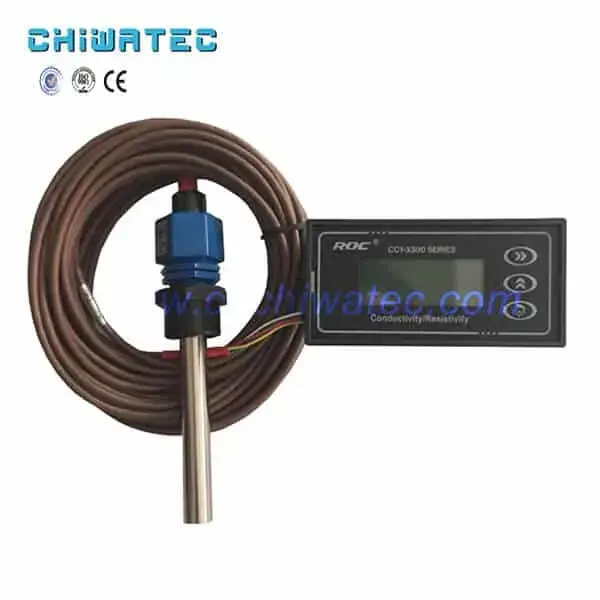
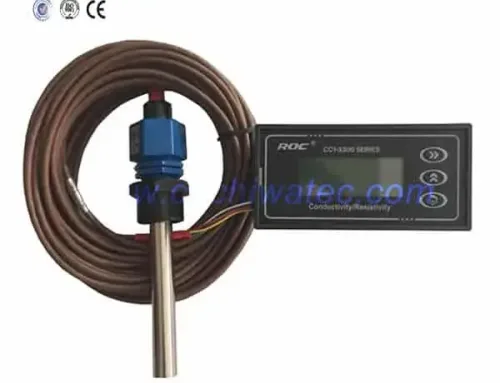
Yes. Modern aeration systems use DO (dissolved oxygen) sensors and PLC control systems to automatically adjust aeration intensity, saving energy and improving reliability.
Xi’an CHIWATEC Water Treatment Technology is a high-tech enterprise specialized in various water processing devices. Aside from these individual products, which cover a number of types and series, we can also help with related comprehensive engineering projects. Thanks to our hard work and dedication upon our founding, we are now one of the fastest-developing water treatment equipment manufacturers in Western China.
Further reading:
FOLLOW US
Do you have a water treatment project we can help with
* Designing,machining,installing,commissioning, customize and one-stop service
 English
  Spanish
  Portuguese