

Principles of Removing Inorganic Compounds Using Reverse Osmosis Membrane Separation Technology
Introduction to Reverse Osmosis Membrane Technology
Reverse osmosis (RO) is a highly efficient and compact technology that offers exceptional removal rates for viruses, phages, and bacteria, achieving a rejection rate of at least 3-log (over 99.9%). However, while RO membranes are highly effective, maintaining water purity on the permeate side requires appropriate assembly, monitoring, and maintenance of the system. System performance, especially in microorganism removal, depends on optimal design, operation, and management, rather than solely on the membrane characteristics.
1. What is Reverse Osmosis?
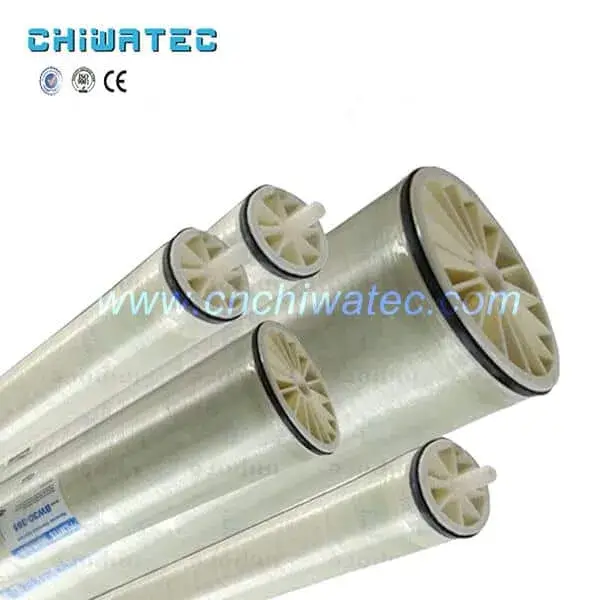
Reverse osmosis (RO) technology, initially developed in the 1960s as part of aerospace research in the United States, operates by using a pressure differential across a semi-permeable membrane. The extremely fine pores of RO membranes are as small as nanometers (1 nanometer = 10^-9 meters). Under sufficient pressure, water molecules (H₂O) can pass through the membrane, while inorganic salts, heavy metal ions, organic substances, colloids, bacteria, and viruses are blocked, resulting in the separation of purified water (permeate) and concentrated impurities (concentrate).
RO technology is widely utilized across various industries, including research, pharmaceuticals, food and beverages, and seawater desalination. After passing through the RO membrane, the purified water typically exhibits an electrical conductivity of 5 µS/cm, meeting the standards for Type III laboratory water. Further purification via atomic-level ion exchange columns can achieve a resistivity of up to 18.2 MΩ·cm, surpassing the standards for Type I laboratory water (GB 682-92).
2. Core Principle of Reverse Osmosis
Reverse osmosis relies on a semi-permeable membrane that allows water to pass but blocks salts. If pure water and saline water are separated by an ideal semi-permeable membrane, water will naturally flow from the pure side to the saline side—a process known as osmosis. By applying pressure to the saline side, the natural osmotic flow is reduced. When this applied pressure matches the osmotic pressure, the net flow of water across the membrane is zero. Exceeding this pressure reverses the flow direction, causing water from the saline side to migrate to the pure side—this is the fundamental principle of reverse osmosis.
Features of RO Membrane Separation Technology
- Thermally Stable: RO technology operates at room temperature without phase changes, making it suitable for the concentration and separation of heat-sensitive substances. Compared to phase-change separation methods, RO is more energy-efficient.
- Broad Impurity Removal: RO membranes can filter a wide range of impurities, from salts to microorganisms.
- High Rejection Rate: RO systems achieve high salt rejection and water recovery, capable of retaining solutes with particle sizes larger than a few nanometers.
3. Importance of Pre-treatment in RO Systems
Proper pre-treatment is crucial for RO systems, particularly in terms of raw water quality. To avoid fouling and maintain efficiency, the following pre-treatment steps are recommended:
- Suspended Solids Removal: Raw water should be pre-treated to remove suspended particles and lower turbidity to prevent blockages.
- Microbial Control: Disinfection is essential to inhibit microbial growth that could cause biofouling.
- Monitoring of Silt Density Index (SDI): The water entering an RO system should have an SDI value of less than 5, ideally below 3, to minimize membrane fouling.
- pH and Temperature Control: Adjusting the pH according to the RO membrane’s optimal range is critical, as each membrane type has its ideal operating pH. Additionally, water temperature affects permeate flux. For cellulose acetate membranes, the temperature is typically kept between 20-40°C, while composite membranes are maintained within 5-45°C to avoid membrane degradation.
Conclusion
RO membrane technology is a powerful and versatile tool for water purification, capable of removing a wide range of impurities with high efficiency. When designed and managed correctly, RO systems can deliver consistent, high-quality water for industrial, laboratory, and residential applications.
Xi’an CHIWATEC Water Treatment Technology is a high-tech enterprise specialized in various water processing devices. Aside from these individual products, which cover a number of types and series, we can also help with related comprehensive engineering projects. Thanks to our hard work and dedication upon our founding, we are now one of the fastest-developing water treatment equipment manufacturers in Western China.
Further reading
FOLLOW US
Do you have a water treatment project we can help with
* Designing,machining,installing,commissioning, customize and one-stop service






 English
  Spanish
  Portuguese




