

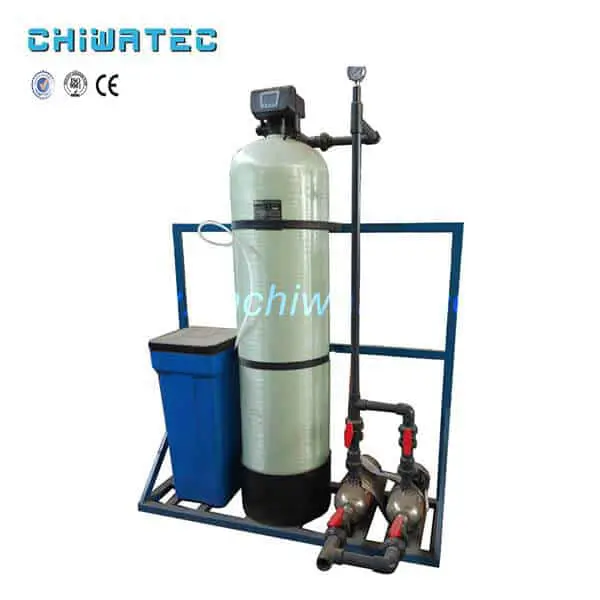
Mixed bed ion exchange desalination represents one of the most effective technologies for producing ultrapure water in 2026. By intimately mixing anion and cation exchange resins within a single vessel, mixed bed systems achieve water purity levels approaching theoretical limits—with resistivity reaching 18.2 MΩ·cm and total dissolved solids (TDS) below 1 ppb.
The global mixed bed desalination market reached $890 million in 2025, growing at 7.2% CAGR according to Global Water Intelligence. This expansion is driven by semiconductor manufacturing, pharmaceutical production, power generation, and laboratory applications demanding the highest water quality standards.
This comprehensive 2026 guide explains the mixed bed ion exchange working principle, system configurations, operational parameters, and optimization strategies for achieving consistent ultrapure water production.
Fundamental Working Principle of Mixed Bed Ion Exchange Desalination
Unlike two-bed systems where cation and anion resins occupy separate vessels, mixed bed desalination equipment contains intimately mixed resins—typically in a 40:60 or 50:50 cation-to-anion ratio. This configuration creates millions of microscopic ion exchange stages within a single vessel.
Multi-Stage Ion Exchange Mechanism
Each contact point between cation resin beads (H⁺ form) and anion resin beads (OH⁻ form) functions as an individual desalination stage. As feedwater flows through the resin bed:
- Cation exchange: R-H + M⁺ → R-M + H⁺ (where M⁺ represents Ca²⁺, Mg²⁺, Na⁺, etc.)
- Anion exchange: R′-OH + A⁻ → R′-A + OH⁻ (where A⁻ represents Cl⁻, SO₄²⁻, HCO₃⁻, etc.)
- Water formation: H⁺ + OH⁻ → H₂O (immediate neutralization)
The simultaneous occurrence of these reactions eliminates the pH excursions typical of two-bed systems, producing consistently neutral ultrapure water.
Chemical Equilibrium Advantages
Mixed bed systems benefit from favorable equilibrium dynamics:
- Continuous product removal: Generated H⁺ and OH⁻ ions immediately combine to form water, shifting equilibrium toward complete ion removal
- High driving force: Near-zero effluent ion concentration maintains maximum concentration gradient
- Deep polishing: Final TDS levels of 0.1-1.0 ppb achievable with proper operation
Industry data (2025) shows mixed bed ion exchange achieves 10-100x lower effluent conductivity compared to equivalent two-bed systems.
Theoretical Plate Concept
Engineers model mixed bed desalination using the theoretical plate concept from distillation theory. Each cation-anion resin pair represents one theoretical plate:
- Typical mixed bed: Contains 5,000-10,000 theoretical plates per cubic meter
- Separation efficiency: Equivalent to 50-100 two-bed systems in series
- Breakthrough characteristics: Sharp breakthrough curve enables >95% resin utilization
System Configurations and Design Variations
Mixed bed ion exchange systems are available in multiple configurations to suit different applications and purity requirements.
Single Mixed Bed Configuration
The simplest arrangement uses a single mixed bed vessel following pretreatment (typically reverse osmosis or two-bed ion exchange):
- Applications: Laboratory water, small-scale pharmaceutical, electronics rinsing
- Flow rates: 0.5-50 m³/h typical
- Effluent quality: 10-18 MΩ·cm resistivity
- Advantages: Low capital cost, simple operation
- Limitations: Requires frequent regeneration or resin replacement
Duplex (Twin) Mixed Bed Systems
Two mixed bed vessels operate in alternating service/regeneration mode:
- Continuous operation: One unit on-line while the other regenerates or stands by
- Applications: Medium-scale industrial, power plant condensate polishing
- Flow rates: 20-200 m³/h
- Automation: PLC-controlled valve sequencing for automatic switchover
RO + Mixed Bed Polishing Configuration
Most common 2026 configuration combines reverse osmosis with mixed bed polishing:
- Primary RO: Removes 95-99% of dissolved solids
- Secondary RO (optional): Further reduces TDS to 1-5 ppm
- Mixed bed polisher: Final polishing to 10-18 MΩ·cm
Benefits:
- Extended mixed bed run length (5-10x longer than standalone)
- Reduced regenerant chemical consumption
- Lower wastewater generation
- More stable effluent quality
Operational Parameters and Performance Optimization
Optimal mixed bed desalination performance requires careful control of operating parameters.
Flow Rate and Contact Time
Service flow rate directly impacts ion exchange efficiency:
- Typical range: 40-60 m/h (16-24 gpm/ft²)
- Maximum: 80 m/h for short-term peak flows
- Contact time: Minimum 0.5-1.0 seconds for complete ion exchange
- Pressure drop: 0.3-0.8 bar when clean; replace/resin when >1.5 bar
2025 Industry benchmark: Semiconductor facilities operate at 45-50 m/h to maximize resin life and effluent quality.
Temperature Considerations
Operating temperature affects ion exchange kinetics and resin stability:
- Optimal range: 15-35°C (59-95°F)
- Maximum: 60°C for standard resins; 80°C for high-temperature formulations
- Minimum: 5°C to prevent freezing and maintain kinetics
- Temperature compensation: Resistivity decreases ~2%/°C; monitor with temperature-compensated meters
Breakthrough Detection and Monitoring
Effective breakthrough monitoring prevents quality excursions:
- On-line resistivity: Primary indicator; alarm at <15 MΩ·cm
- Conductivity: Secondary monitoring; alarm at >0.1 μS/cm
- Silica analyzer: Critical for power plants; anion resin exhaustion indicator
- Sodium analyzer: Cation resin exhaustion indicator
Regeneration Procedures and Best Practices
Proper mixed bed regeneration is critical for restoring capacity and maintaining effluent quality.
Step 1: Resin Separation (Classification)
Cation and anion resins must be separated before regeneration:
- Backwash: Upflow water at 10-15 m/h expands bed 50-75%
- Gravity separation: Denser cation resin settles; lighter anion resin floats
- Interface detection: Visual sight glass or conductivity probe identifies separation zone
- Duration: 15-30 minutes for complete classification
Step 2: Separate Regeneration
Cation resin regeneration:
- Regenerant: 4-6% HCl or 3-5% H₂SO₄
- Dosage: 80-120 g/L resin (100% basis)
- Flow rate: 4-6 m/h
- Contact time: 30-45 minutes
Anion resin regeneration:
- Regenerant: 3-5% NaOH
- Dosage: 80-120 g/L resin (100% basis)
- Temperature: 35-40°C improves silica removal
- Flow rate: 4-6 m/h
Step 3: Rinse and Resin Mixing
- Slow rinse: Displace regenerant at service flow rate (30-45 minutes)
- Fast rinse: High flow rate until effluent conductivity <10 μS/cm
- Drain: Lower water level to just above resin bed
- Air mixing: Oil-free compressed air at 2-3 bar for 5-10 minutes
- Final rinse: Settle bed and rinse to final quality (15-20 minutes)
Conclusion: Maximizing Mixed Bed Desalination Performance
Mixed bed ion exchange desalination remains the gold standard for ultrapure water production in 2026. By understanding the working principle—intimate mixing of anion and cation resins creating millions of microscopic exchange stages—operators can optimize system performance.
Key success factors:
- Proper pretreatment: RO or two-bed systems protect mixed bed from overload
- Optimal flow rates: 40-60 m/h balances capacity and quality
- Rigorous monitoring: On-line resistivity, conductivity, and silica detection
- Expert regeneration: Complete separation, proper chemical dosing, thorough mixing
- Preventive maintenance: Regular inspection, resin replacement every 3-5 years
For mixed bed system design, optimization, or troubleshooting, consult with water treatment specialists who can provide application-specific solutions.
Frequently Asked Questions (FAQ)
Q1: What is the difference between mixed bed and two-bed ion exchange?
A: Mixed bed systems intimately mix cation and anion resins in one vessel, creating thousands of exchange stages for superior purity (10-18 MΩ·cm). Two-bed systems use separate vessels, achieving lower purity (1-5 MΩ·cm) but with simpler regeneration.
Q2: How long does mixed bed resin last?
A: With proper operation and regeneration, mixed bed resins last 3-5 years in industrial applications. Nuclear-grade resins in polishing service can last 5-10 years.
Q3: What causes poor mixed bed effluent quality?
A: Common causes include: incomplete resin separation during regeneration, insufficient regenerant dosage, poor resin mixing, channeling from fouling, exhausted resin capacity, or elevated influent TDS.
Q4: Can mixed bed systems remove silica?
A: Yes, strong base anion resins in mixed beds effectively remove silica. Warm NaOH regeneration (35-40°C) improves silica elution. Effluent silica <10 ppb is achievable.
Q5: Is mixed bed water suitable for drinking?
A: Mixed bed water is ultrapure but not ideal for drinking. It lacks beneficial minerals and is corrosive to pipes. Mixed bed systems are designed for industrial/laboratory use.
Do you have a water treatment project we can help with
* Designing,machining,installing,commissioning, customize and one-stop service






 English
  Spanish
  Portuguese




