Pharmaceutical Ultrapure Water Treatment Systems 2026: GMP-Compliant Solutions for WFI & Purified Water
Meta Description: Complete guide to pharmaceutical ultrapure water treatment systems. Learn GMP-compliant WFI, purified water processes, USP/EP standards, and EDI technology for pharmaceutical manufacturing in 2026.
Executive Summary: Pharmaceutical Water Quality Standards 2026
The pharmaceutical industry requires the highest purity water standards for drug manufacturing, biotechnology applications, and medical device production. Global pharmaceutical water treatment market is projected to reach $12.8 billion by 2028, growing at 7.4% CAGR, driven by stricter regulatory requirements and expanding biologics manufacturing.
Key regulatory frameworks include:
- USP <645> (United States Pharmacopeia) – Water Conductivity and TOC requirements
- EP 2.2.44 (European Pharmacopoeia) – Purified Water and Water for Injection monographs
- ChP 2025 (Chinese Pharmacopoeia) – Updated pharmaceutical water quality standards
- FDA cGMP – Current Good Manufacturing Practice for water systems
- ISPE Baseline Guide Vol 4 – Water and Steam systems best practices
Pharmaceutical Process Water Requirements
Water Classification by Quality (Not by Process)
Modern pharmaceutical regulations classify water based on chemical and microbiological quality indicators, decoupling water names from manufacturing processes:
- Purified Water (PW): Conductivity ≤1.3 μS/cm @25°C, TOC ≤500 ppb, total viable count ≤100 CFU/mL
- Water for Injection (WFI): Conductivity ≤1.3 μS/cm @25°C, TOC ≤500 ppb, endotoxin <0.25 EU/mL, sterile
- Highly Purified Water (HPW): EP standard, intermediate between PW and WFI
Applications of Pharmaceutical Water
Purified Water applications:
- API (Active Pharmaceutical Ingredient) synthesis and purification
- Equipment cleaning and bottle washing
- Non-sterile formulation manufacturing
- Reagent and buffer preparation
- Cleanroom humidification systems
Water for Injection applications:
- Parenteral (injectable) drug manufacturing
- Ophthalmic and inhalation products
- Biologics and vaccine production
- Final rinse for sterile equipment and containers
- WFI clean steam generation for sterilization
Pharmaceutical Water Treatment Processes
Process 1: Dual-Stage RO + EDI (Recommended Modern Technology)
Process Flow:
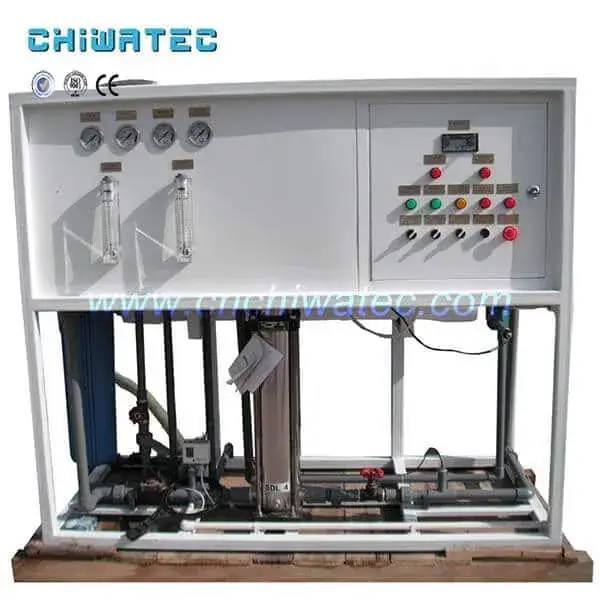
Raw Water → Raw Water Booster Pump → Multi-Media Filter → Activated Carbon Filter → Water Softener → Precision Filter (5μm) → First-Stage RO → pH Adjustment → Intermediate Tank → Second-Stage RO → EDI System → Purified Water Storage Tank → Transfer Pump → UV Sterilizer (254nm) → Polishing Filter (0.2μm) → Point of Use
Key Advantages:
- Continuous operation with no chemical regeneration
- Consistent resistivity 15-18.2 MΩ·cm
- Lower operational cost (60-70% energy savings vs. distillation)
- Automated sanitization capability (hot water or ozone)
- Reduced environmental impact (no acid/caustic discharge)
2026 Technology Update: Latest generation EDI modules achieve 99.5% ion removal efficiency with integrated conductivity monitoring and automatic current optimization.
Process 2: Dual-Stage RO + Ion Exchange (Traditional Process)
Process Flow:
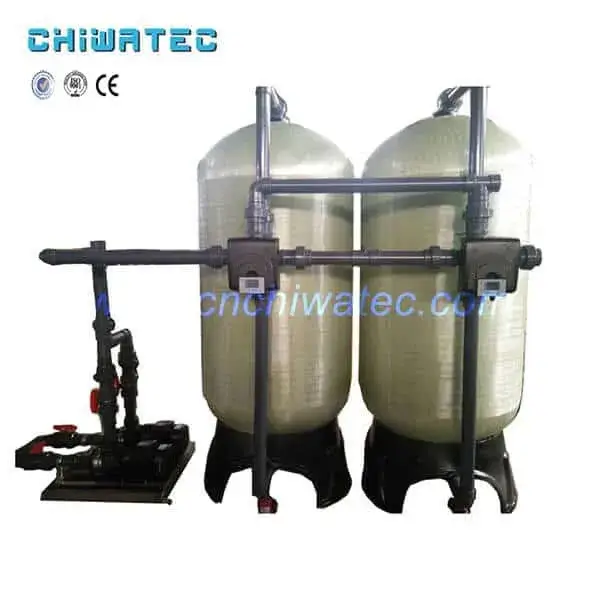
Raw Water → Raw Water Booster Pump → Multi-Media Filter → Activated Carbon Filter → Water Softener → Precision Filter → First-Stage RO → Intermediate Tank → Intermediate Pump → Mixed Bed Ion Exchange → Purified Water Tank → Transfer Pump → UV Sterilizer → Microporous Filter → Point of Use
Considerations:
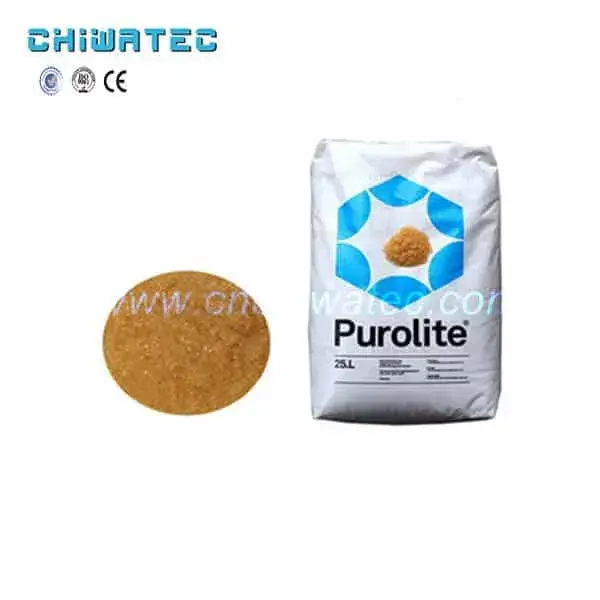
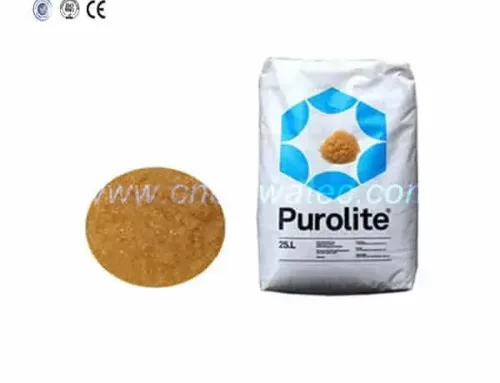
- Requires periodic resin regeneration with HCl/NaOH
- Risk of microbial growth in resin beds
- Higher operational complexity and chemical handling
- Still suitable for small-scale facilities with limited budget
Process 3: WFI Production – Multiple Effect Distillation (MED)
Process Flow:
Purified Water Feed → Preheater → First Effect Evaporator → Second Effect → Third Effect (up to 7 effects) → Condenser → WFI Storage Loop (70-80°C circulation)
Performance:
- Endotoxin reduction >3-log
- Energy efficiency: 0.15-0.25 kg steam per kg WFI (7-effect)
- Complies with all global pharmacopoeia requirements
- Traditional gold standard for WFI production
Process 4: WFI Production – RO + EDI + Ultrafiltration (Alternative Method)
Process Flow:
Purified Water → RO Polish → EDI → Ultrafiltration (10,000 Dalton MWCO) → WFI Storage → UV Sterilizer → 0.2μm Filter → Point of Use
Regulatory Acceptance:
- Accepted by USP (since 2017), EP, and ChP
- Validated endotoxin removal <0.25 EU/mL
- 60-70% lower energy consumption vs. distillation
- Requires comprehensive validation and continuous monitoring
Industry Trend 2026: 45% of new pharmaceutical facilities in Asia-Pacific are adopting non-distillation WFI systems, driven by sustainability goals and operational cost reduction.
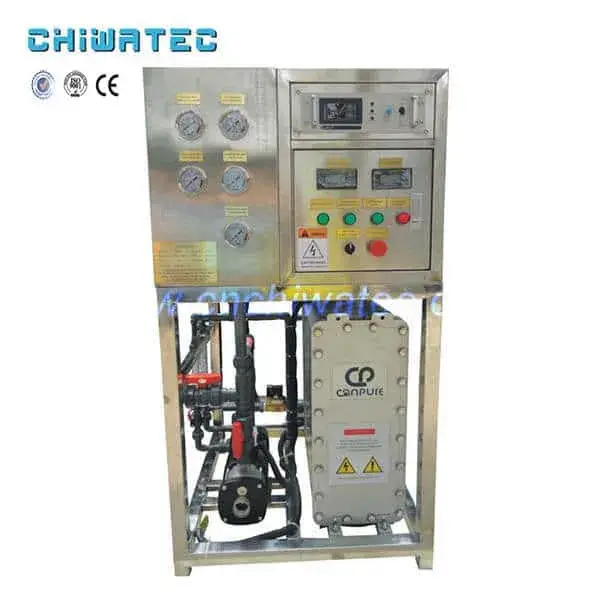
Secondary Reverse Osmosis Technology
Definition: Secondary reverse osmosis uses the permeate from primary RO as feed water for a second RO stage, achieving product water conductivity ≤3 μS/cm without chemical treatment.
Technical Benefits:
- Ion Exchange Pre-treatment: Reduces resin load by >90%, extending resin life from 12 months to 36+ months
- Chemical Savings: Regenerant chemical consumption reduced by 90%
- Environmental Impact: Eliminates acid/caustic discharge, supporting green manufacturing initiatives
- Operational Cost: 40-50% lower total cost of ownership over 10-year lifecycle
Design Considerations:
- Inter-stage pH adjustment (CO₂ removal or NaOH dosing) improves second-pass efficiency
- Second-pass membranes operate at lower pressure (8-12 bar) due to high-quality feed
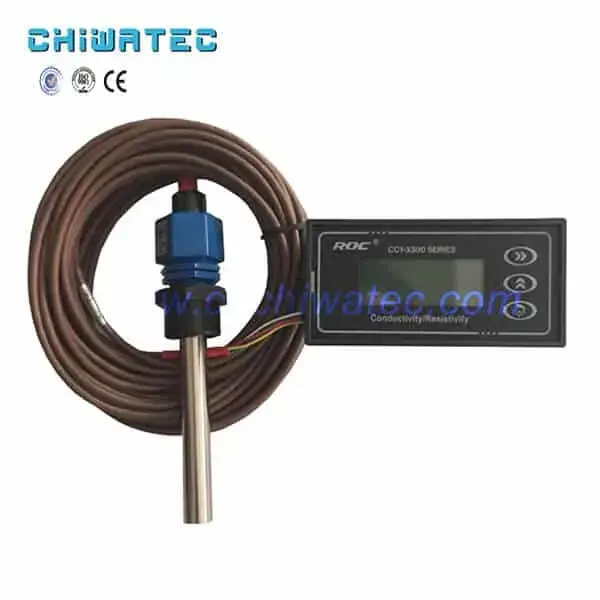
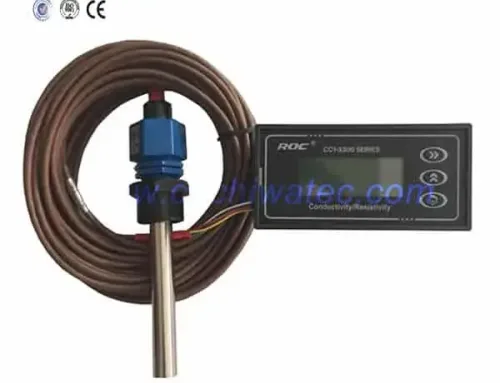
- Conductivity monitoring at each stage enables real-time performance tracking
Pharmaceutical Water Distribution System Design
Storage Tank Specifications
- Material: 316L stainless steel, electropolished (Ra ≤0.6 μm)
- Design: Conical bottom for complete drainage, spray ball for CIP
- Vent Filter: 0.2μm hydrophobic PTFE with trace heating
- Level Control: Load cells or differential pressure transmitter
Distribution Loop Configuration
- Piping Material: 316L SS orbital welded, autogenous welds, pickled & passivated
- Flow Velocity: 1.0-1.5 m/s (turbulent flow, Re >4000) to prevent biofilm
- Slope: 1-2% gradient for complete drainage
- Dead Legs: Zero dead leg design (L/D <1.5 for branch connections)
- Sanitization: Hot water (80-85°C) or ozone (0.1-0.2 ppm) circulation
Monitoring & Control Systems
- Real-time Parameters: Conductivity, TOC, flow rate, pressure, temperature
- Microbial Monitoring: Online ATP bioluminescence (emerging technology)
- Alert/Action Limits: Configurable thresholds with automatic alerts
- Data Integrity: 21 CFR Part 11 compliant data logging and audit trails
Industry Case Studies
Case Study 1: Biopharmaceutical Facility (Shanghai, China)
- Challenge: Monoclonal antibody production requiring 50 m³/h WFI
- Solution: 4-effect MED + 80°C WFI distribution loop with continuous ozone sanitization
- Result: Zero endotoxin excursions in 3 years, 99.95% system availability, passed FDA audit
Case Study 2: Generic Pharmaceutical Manufacturer (India)
- Challenge: High operational cost from ion exchange regeneration
- Solution: Upgraded to dual RO + EDI system with hot water sanitization
- Result: 65% reduction in water treatment OPEX, eliminated chemical handling risks, ROI in 28 months
Case Study 3: Vaccine Production Facility (Brazil)
- Challenge: Expanding capacity from 10m³/h to 40m³/h purified water
- Solution: Modular skid-mounted RO+EDI systems with parallel operation
- Result: Phased installation without production downtime, scalable design for future expansion
Conclusion: Selecting Pharmaceutical Water Treatment Systems
Choosing the optimal pharmaceutical ultrapure water treatment system requires evaluation of:
- Water Quality Requirements: PW, HPW, or WFI based on pharmacopoeia specifications
- Capacity & Scalability: Peak demand, future expansion, modular design options
- Regulatory Compliance: USP, EP, ChP, FDA cGMP, ISPE guidelines
- Total Cost of Ownership: Capital investment + 10-15 year operational expenses
- Energy Efficiency: Non-distillation WFI technologies for sustainability goals
- Automation Level: PLC/SCADA integration, remote monitoring, predictive maintenance
CHIWATEC provides comprehensive pharmaceutical water treatment solutions from feasibility study and process design to FAT/SAT, validation support (DQ/IQ/OQ/PQ), and ongoing technical service. Our engineering team specializes in GMP-compliant water systems for pharmaceutical, biotechnology, and medical device manufacturers worldwide.
Related Resources:
FAQ: Pharmaceutical Ultrapure Water Systems
1. What is the difference between Purified Water and WFI?
Purified Water (PW) meets chemical purity standards (conductivity ≤1.3 μS/cm, TOC ≤500 ppb) but has higher microbial limits (≤100 CFU/mL). Water for Injection (WFI) has stricter requirements: endotoxin <0.25 EU/mL and must be sterile. WFI is required for parenteral drugs, while PW is suitable for oral solid dosage forms and equipment cleaning.
2. Is non-distillation WFI acceptable for pharmaceutical production?
Yes. Since 2017, USP explicitly allows non-distillation methods (RO + EDI + UF) for WFI production. EP and ChP also accept alternative technologies when properly validated. The key is demonstrating consistent endotoxin removal <0.25 EU/mL through comprehensive validation and continuous monitoring.
3. How often should pharmaceutical water systems be sanitized?
Typical sanitization frequency: PW systems every 7-14 days, WFI loops continuously maintained at 70-80°C or sanitized with ozone every 3-7 days. Frequency depends on system design, historical microbial data, and risk assessment. Online TOC and conductivity trending help optimize sanitization schedules.
4. What validation is required for pharmaceutical water systems?
Full validation lifecycle includes: DQ (Design Qualification), IQ (Installation Qualification), OQ (Operational Qualification), and PQ (Performance Qualification). PQ typically runs 12 months with daily testing in Phase 1 & 2, then reduced frequency in Phase 3. Documentation must comply with 21 CFR Part 11 for data integrity.
5. What is the typical lifespan of pharmaceutical water treatment equipment?
RO membranes: 3-5 years (with proper pretreatment), EDI modules: 5-8 years, UV lamps: 8,000-12,000 hours, distribution piping: 20+ years (316L SS). Preventive maintenance and proper sanitization significantly extend equipment life. CHIWATEC offers lifecycle support and performance guarantee programs.
FOLLOW US
Do you have a water treatment project we can help with
Designing, machining, installing, commissioning, customize and one-stop service
 English
  Spanish
  Portuguese