How to Calculate Reverse Osmosis Desalination Rate 2026: Formula, Factors, and Practical Guide
The reverse osmosis desalination rate is the most critical performance parameter for any RO system, indicating the percentage of dissolved salts removed from feed water. Understanding how to calculate, monitor, and optimize the desalination rate is essential for maintaining system efficiency, preventing membrane degradation, and ensuring consistent water quality. This guide explains the standard formula, key influencing factors, and practical methods for calculating and tracking RO desalination rate in real-world applications.
Reverse Osmosis Desalination Rate Formula
The reverse osmosis desalination rate is calculated using the following standard formula:
Desalination Rate (%) = [(Cf – Cp) / Cf] × 100
Where:
- Cf = Salt concentration in feed water (mg/L or µS/cm)
- Cp = Salt concentration in permeate water (mg/L or µS/cm)
For example, if feed water conductivity is 500 µS/cm and permeate conductivity is 5 µS/cm, the desalination rate is:
(500 – 5) / 500 × 100 = 99%
Modern thin-film composite RO membranes typically achieve desalination rates of 97-99.5% under normal operating conditions. A decline in desalination rate below the manufacturer’s specified range indicates membrane fouling, scaling, or damage that requires investigation.
Standard vs. Actual Desalination Rate
It is important to distinguish between two desalination rate values:
| Parameter | Definition | Measurement |
|---|---|---|
| Standard desalination rate | Rated rejection rate under standard test conditions (specified by membrane manufacturer) | Measured at standard pressure, temperature, and feed concentration in the lab |
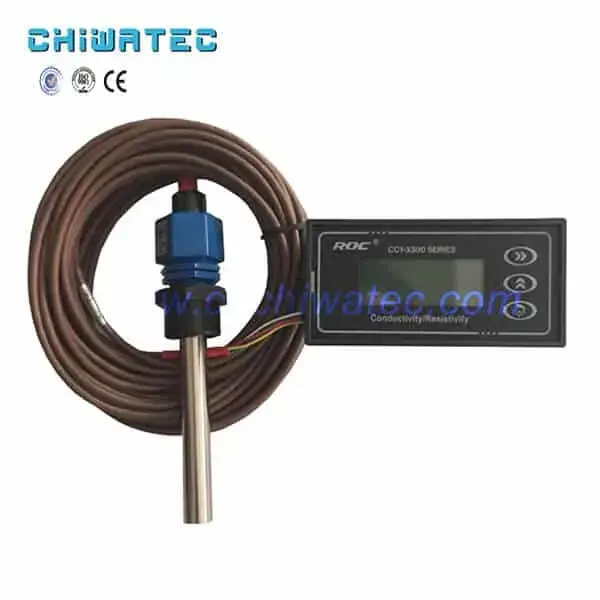
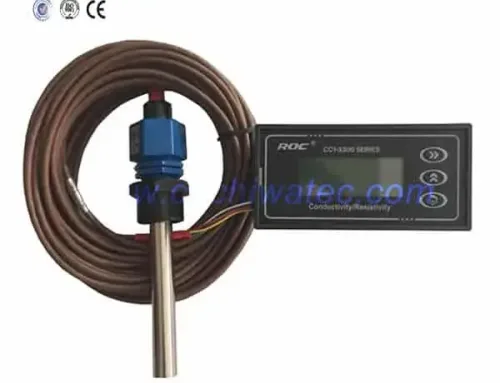
| Actual desalination rate | Real-time rejection rate under actual operating conditions | Calculated from online conductivity meters measuring feed and permeate |
Manufacturers typically quote standard desalination rates of 99.0-99.8% for high-rejection RO membranes. However, actual field desalination rates are often 0.5-2% lower due to temperature variations, membrane compaction, fouling, and differences in feed water composition.
Factors Affecting RO Desalination Rate
Several operational and environmental factors influence the actual reverse osmosis desalination rate:
- Feed water temperature: Desalination rate decreases by approximately 0.5% for every 5°C increase in feed water temperature above 25°C, as higher temperatures increase salt diffusion through the membrane.
- Operating pressure: Higher feed pressure increases both permeate flow and desalination rate. Operating below the rated pressure reduces rejection performance.
- Feed water TDS: Higher feed water salinity reduces the net driving pressure and can lower the desalination rate, particularly at the tail elements of a multi-stage RO system.
- Membrane age: Membrane compaction over time gradually reduces the desalination rate. New membranes typically achieve peak rejection, which declines by 0.1-0.3% per year.
- pH level: RO membranes achieve optimal rejection at pH 7-8. Low pH conditions can reduce the dissociation of certain salts, lowering overall rejection.
- Fouling and scaling: Deposits on the membrane surface create a boundary layer with higher salt concentration (concentration polarization), reducing effective desalination rate.
Water Recovery Rate Calculation
Water recovery rate is closely related to desalination performance and is calculated as:
Recovery Rate (%) = (Qp / Qf) × 100
Where:
- Qp = Permeate flow rate (L/H)
- Qf = Feed water flow rate (L/H)
Higher recovery rates improve system efficiency but increase the risk of scaling and concentration polarization, which can reduce the reverse osmosis desalination rate. Typical recovery rates range from 50% for single-stage RO systems to 75-85% for dual-stage configurations. The balance between recovery and desalination rate must be carefully managed through antiscalant dosing and membrane array design.
Monitoring RO Desalination Rate Performance
Regular monitoring of desalination rate helps identify potential issues before they cause significant performance loss:
| Indicator | Normal Range | Action Required |
|---|---|---|
| Desalination rate drop >1% | Monitor weekly | Check for fouling, clean membrane |
| Desalination rate drop >3% | Investigate immediately | Conduct diagnostic: check O-rings, seals, membrane integrity |
| Pressure differential rise >15% | Normal | Inspect for scaling, consider chemical cleaning |
| Normalized permeate flow drop >10% | Investigate | Check feed temperature, pressure, membrane condition |
Use normalized performance data (corrected to standard temperature and pressure) for accurate trend analysis. Raw conductivity readings can be misleading due to seasonal temperature variations.
FAQ
What is the difference between desalination rate and salt rejection rate?
The terms are used interchangeably in the RO industry. Both refer to the percentage of dissolved salts removed by the membrane. Some manufacturers use “salt rejection” for standard test conditions and “desalination rate” for actual operating conditions.
How often should I measure the RO desalination rate?
For continuous operation systems, online conductivity monitoring provides real-time desalination rate data. Manual verification should be performed weekly. For batch or seasonal systems, measure at the start of each operating cycle and weekly during operation.
Can a low desalination rate be reversed?
Yes, if caused by fouling or scaling — a properly designed chemical cleaning procedure can restore 90-95% of the original desalination rate. However, if caused by membrane oxidation (chlorine damage), abrasion, or hydrolysis, the rejection loss is permanent and membrane replacement is required.
What is the minimum acceptable desalination rate for RO membranes?
For most industrial RO applications, a desalination rate above 95% is considered acceptable. Below 90%, the membrane should be chemically cleaned. If cleaning does not restore the rate above 90%, membrane replacement should be planned. For high-purity applications, the minimum acceptable rate may be 97%.
Does feed water temperature affect desalination rate calculation?
Temperature does not directly affect the formula, but it affects salt diffusion through the membrane. For accurate comparison, always normalize desalination rate data to 25°C using the temperature correction factor provided by the membrane manufacturer.
Conclusion
Calculating and monitoring the reverse osmosis desalination rate is fundamental to successful RO system operation. By understanding the formula, tracking actual versus standard performance, and accounting for factors like temperature, pressure, and membrane condition, operators can ensure optimal system efficiency, extend membrane life, and maintain consistent water quality. For expert assistance with RO system design, membrane selection, or troubleshooting, contact our team. Email: [email protected] or [email protected]
Related Resources and Further Reading
- Main Process Flow Description of Reverse Osmosis Pure Water Equipment
- Best Practices for Antiscalant Treatment and Dosing in Reverse Osmosis Systems
- Pollution Control Methods for Reverse Osmosis (RO) Systems
- The Dangers of Reverse Osmosis Concentration Polarization and How to Eliminate It
- RO Water Treatment System Products
Do you have a water treatment project we can help with
* Designing,machining,installing,commissioning, customize and one-stop service

 English
  Spanish
  Portuguese