Removing residual chlorine before agua desmineralizada y tratamiento de agua pura is critical for protecting ion exchange resins and reverse osmosis membranes from oxidative damage. Free chlorine (HClO, ClO⁻) is a strong oxidant that destroys resin cross-linking bonds and irreversibly damages RO membrane structures.
The global water treatment chemicals market reached $31.2 billion in 2025, with dechlorination agents representing 12% of consumption according to Grand View Research. Industrial facilities increasingly prioritize residual chlorine removal to extend equipment life and maintain consistent water quality.
This comprehensive 2026 guide explains why remove residual chlorine before water treatment, optimal control parameters (0.02-0.1 mg/L), dechlorination methods (activated carbon, chemical reduction), and best practices for protecting resinas de intercambio iónico y membranas de osmosis inversa.
Understanding Residual Chlorine in Water Treatment Systems
Residual chlorine refers to free chlorine (HClO, ClO⁻) or combined chlorine (chloramines) remaining in water after disinfection. While essential for microbial control in distribution systems, residual chlorine poses significant risks to downstream equipo de tratamiento de agua.
Forms of Residual Chlorine
Understanding chlorine chemistry is essential for effective dechlorination:
- Free chlorine: Hypochlorous acid (HClO) and hypochlorite ions (ClO⁻); highly oxidative
- Combined chlorine: Chloramines (NH₂Cl, NHCl₂); less oxidative but more stable
- Total chlorine: Sum of free and combined chlorine
- pH dependence: HClO dominates at pH <7.5; ClO⁻ dominates at pH >7.5
2026 Industry standard: Most facilities target <0.1 mg/L free chlorine before RO; <0.05 mg/L before ion exchange resins.
Why Chlorine Is Added Initially
Municipal and industrial water systems add chlorine for:
- Disinfection: Kills bacteria, viruses, protozoa (99.9%+ pathogen reduction)
- Residual protection: Prevents microbial regrowth in distribution pipes
- Oxidation: Removes iron, manganese, hydrogen sulfide
- Regulatory compliance: EPA requires 0.2-4.0 mg/L residual in drinking water systems
However, this residual chlorine must be removed before sensitive tratamiento de agua pura processes.
Oxidative Damage Mechanisms
Chlorine damages water treatment components through oxidation:
Ion exchange resin degradation:
- Cross-link destruction: Chlorine attacks divinylbenzene (DVB) cross-links in polystyrene resin matrix
- Functional group loss: Sulfonic acid groups (cation resin) or quaternary amines (anion resin) oxidized
- Physical symptoms: Resin swelling, fragmentation, increased pressure drop
- Performance impact: 20-50% capacity loss within 6-12 months at 0.5 mg/L chlorine exposure
Reverse osmosis membrane damage:
- Polyamide layer oxidation: Chlorine breaks amide bonds in thin-film composite (TFC) membranes
- Salt rejection decline: Oxidized membranes show 5-20% reduced rejection
- Irreversible damage: Unlike fouling, oxidation cannot be cleaned or restored
- Replacement cost: RO membrane sets cost $5,000-$50,000 depending on system size
Optimal Residual Chlorine Control Parameters
Target Levels for Different Processes
| Treatment Process | Max Chlorine (mg/L) | Rationale |
|---|---|---|
| Cation exchange resin | <0.1 (ideal <0.05) | Prevents oxidative degradation |
| Anion exchange resin | <0.1 (ideal <0.05) | Type I resins more chlorine-sensitive |
| Thin-film composite RO | <0.1 (zero preferred) | Polyamide oxidation irreversible |
| Cellulose acetate RO | 0.5-1.0 | Chlorine-tolerant but rarely used |
| Ultrafiltration (UF) | 1.0-2.0 | PVDF/PES membranes chlorine-resistant |
| Mixed bed polishers | <0.02 | Ultrapure water applications |
Balancing Sterilization vs. Equipment Protection
Complete chlorine removal creates microbial growth risks:
- Zero chlorine: Resin beds and distribution pipes become breeding grounds for bacteria
- Biofilm formation: Microorganisms colonize resin surfaces, causing organic fouling
- Endotoxin risk: Gram-negative bacteria release pyrogens affecting pharmaceutical/semiconductor applications
Recommended approach (2026):
- Maintain 0.02-0.1 mg/L residual chlorine in cation exchange influent
- Use UV sterilization (254nm) downstream for chemical-free microbial control
- Implement regular sanitization schedules (hot water, ozone, or peracetic acid)
- Monitor bacterial counts weekly; action limit <100 CFU/mL
Monitoring and Detection
Residual chlorine measurement methods:
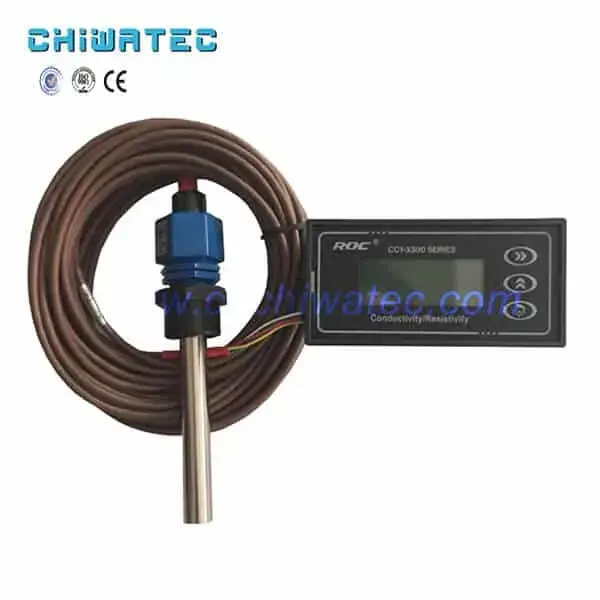
- DPD colorimetric: Most common; 0.01-5.0 mg/L range; portable and on-line analyzers
- Amperometric: Continuous monitoring; 0-20 mg/L; requires regular calibration
- Potentiometric: Ion-selective electrodes; less common for chlorine
- Test strips: Quick checks; ±20% accuracy; suitable for spot verification
Best practice: Install on-line chlorine analyzers with automatic shutdown alarms at 0.15 mg/L to protect downstream equipment.
Dechlorination Methods and Technologies
Activated Carbon Adsorption (Most Common)
Activated carbon dechlorination uses catalytic reduction:
Chemical reactions:
- HClO + C(activated carbon) → C-O + H⁺ + Cl⁻
- ClO⁻ + C(activated carbon) → C-O + Cl⁻
Design parameters:
- Empty bed contact time (EBCT): 5-10 minutes for complete dechlorination
- Flow rate: 5-15 m/h (2-6 gpm/ft²)
- Carbon type: Bituminous coal or coconut shell; 8×30 or 12×40 mesh
- Capacidad: 1 lb chlorine removed per 3-5 lbs activated carbon
- Replacement: Every 6-18 months depending on chlorine load and fouling
Advantages:
- Removes chlorine, chloramines, organics, taste/odor compounds
- Simple operation, no chemical dosing
- Proven technology, low capital cost
Limitations:
- Carbon bed becomes microbial growth medium; requires regular sanitization
- Pressure drop increases with fouling
- Carbon fines may carry over; requires post-filtration
Chemical Reduction Methods
Sodium bisulfite (SBS) dosing:
- Reaction: NaHSO₃ + HClO → NaHSO₄ + HCl
- Dosage: 1.34 mg SBS per 1 mg free chlorine (stoichiometric); use 2-3x excess
- Typical dose: 2-5 mg/L for 1-2 mg/L chlorine
- Advantages: Fast reaction (<1 minute), precise control, low cost
- Limitations: Adds sulfate/sodium, requires chemical storage/handling, overfeed risk
Sodium metabisulfite (SMBS):
- Reaction: Na₂S₂O₅ + H₂O → 2 NaHSO₃; then same as SBS
- Dosage: 1.46 mg SMBS per 1 mg free chlorine
- Form: Solid pellets/crystals; longer shelf life than liquid SBS
Ascorbic acid (Vitamin C):
- Reaction: C₆H₈O₆ + HClO → C₆H₆O₆ + H₂O + HCl
- Dosage: 2.5-3.0 mg ascorbic acid per 1 mg chlorine
- Advantages: Food-grade, safe handling, no harmful byproducts
- Limitations: Higher cost, adds organics (TOC)
UV Dechlorination
Ultraviolet photolysis:
- Wavelength: 185nm and 254nm dual-wavelength systems
- Mecanismo: UV photons break Cl-O bonds; free chlorine → chloride ions
- Dose: 30-100 mJ/cm² for complete dechlorination
- Advantages: Chemical-free, no byproducts, compact footprint
- Limitations: Higher capital cost, lamp replacement (12-18 months), power consumption
2026 trend: UV + hydrogen peroxide (advanced oxidation) for simultaneous dechlorination and TOC reduction in semiconductor UPW systems.
Membrane Degassing
Membrane contactors:
- Principle: Hydrophobic microporous membranes allow chlorine gas transfer
- Application: Primarily for dissolved oxygen; limited chlorine removal
- Use case: Polishing stage after primary dechlorination
System Design and Operational Best Practices
Typical Pretreatment Configuration (2026)
- Raw water → Multimedia filter → Activated carbon (dechlorination)
- → Water softener (optional) → Cartridge filter (5μm)
- → Reverse osmosis → Degasser → EDI/Mixed bed
- → UV oxidation → Ultrafiltration → Point-of-use
Activated Carbon Bed Design
Critical design considerations for effective dechlorination:
- Bed depth: Minimum 1.2m (4 ft) for adequate contact time
- Backwash: Weekly at 15-20 m/h to remove trapped solids
- Sanitization: Monthly with hot water (80°C) or steam
- Post-filtration: 5μm cartridge after carbon to capture fines
- Chlorine monitoring: On-line analyzer at carbon outlet
Operational Monitoring
Essential parameters for residual chlorine control:
- Influent chlorine: 0.5-2.0 mg/L (municipal); 0.2-0.5 mg/L (well water)
- Carbon outlet: <0.05 mg/L (target); alarm at 0.1 mg/L
- RO inlet: <0.1 mg/L (TFC membranes)
- Resin inlet: <0.05 mg/L (optimal resin life)
- Bacterial counts: Weekly monitoring; <100 CFU/mL
Troubleshooting Common Issues
High chlorine breakthrough:
- Exhausted carbon bed → Replace or regenerate carbon
- Excessive flow rate → Reduce to design EBCT (5-10 min)
- Channeling → Inspect underdrain, redistribute bed
- SBS underfeed → Calibrate dosing pump, increase dosage
Microbial growth in carbon bed:
- Implement regular hot water sanitization (80°C, 30 min)
- Add UV sterilization downstream
- Consider periodic chlorine shock (if resin/RO isolated)
- Replace carbon if TOC breakthrough occurs
Conclusion: Protecting Your Water Treatment Investment
Understanding why remove residual chlorine before agua desmineralizada y tratamiento de agua pura is essential for equipment longevity and consistent water quality. Proper dechlorination protects expensive ion exchange resins and RO membranes from irreversible oxidative damage.
Key recommendations for 2026:
- Target residual chlorine: 0.02-0.1 mg/L before ion exchange; <0.1 mg/L before RO
- Choose appropriate method: Activated carbon for most applications; SBS for precise control; UV for chemical-free
- Monitor continuously: On-line chlorine analyzers with automatic alarms
- Balance sterilization: Maintain minimal residual or use UV for microbial control
- Regular maintenance: Carbon sanitization, resin inspection, membrane autopsy
For water treatment system design, dechlorination optimization, or equipment protection strategies, consult with water treatment specialists who can provide application-specific solutions.
Frequently Asked Questions (FAQ)
Q1: What happens if residual chlorine is not removed before RO?
A: Free chlorine oxidizes the polyamide layer of thin-film composite (TFC) RO membranes, causing irreversible damage. Symptoms include declining salt rejection (5-20% loss), increased permeate conductivity, and eventual membrane failure. Replacement costs range $5,000-$50,000 depending on system size.
Q2: How often should activated carbon for dechlorination be replaced?
A: Typical Carbón activado life is 6-18 months. Replace when: chlorine breakthrough exceeds 0.1 mg/L despite adequate EBCT; pressure drop increases >50%; TOC breakthrough occurs; or bacterial counts remain high after sanitization.
Q3: Can I use sodium bisulfite instead of activated carbon?
A: Yes, sodium bisulfite (SBS) is effective for dechlorination. Use 1.34 mg SBS per 1 mg chlorine (stoichiometric) with 2-3x excess. SBS is faster (<1 min reaction) but adds sulfate/sodium to water and requires chemical handling. Activated carbon is preferred for smaller systems; SBS for large industrial installations.
Q4: Is zero residual chlorine safe for water treatment systems?
A: Zero chlorine increases microbial growth risk in resin beds and distribution pipes. Recommended approach: maintain 0.02-0.1 mg/L residual before ion exchange, or use UV sterilization (254nm) downstream for chemical-free microbial control. Regular sanitization and bacterial monitoring are essential.
Q5: What is the best dechlorination method for pharmaceutical water systems?
A: Farmacéutico purified water y WFI systems typically use: (1) Activated carbon as primary dechlorination; (2) UV oxidation (185nm + 254nm) for TOC reduction and microbial control; (3) Avoid chemical dosing (SBS) to minimize ionic contamination. Validate dechlorination efficiency during system qualification.
¿Tiene un proyecto de tratamiento de agua con el que podamos ayudar?
* Diseño, mecanizado, instalación, puesta en marcha, personalización y servicio integral
 Spanish
  English
  Portuguese