Reverse Osmosis Feed Water Quality Requirements: Complete Guide to RO System Standards 2026
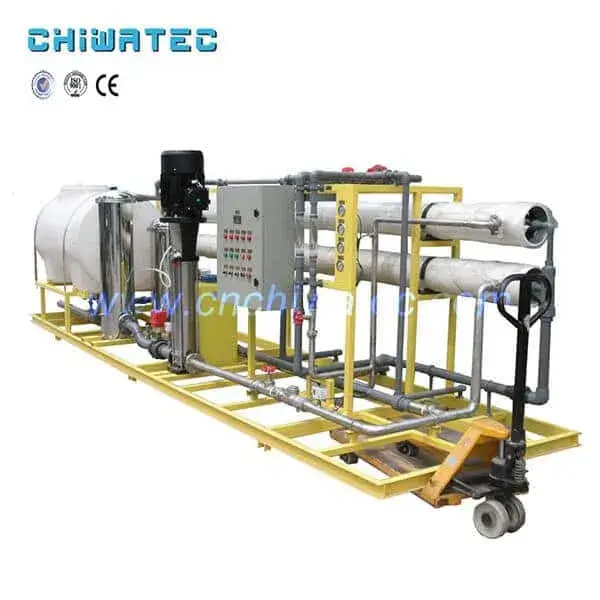
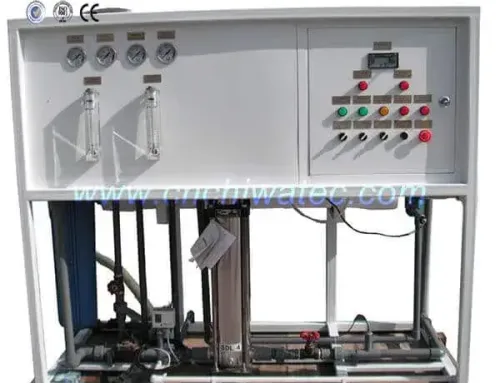
The reverse osmosis (RO) system is a highly effective physical desalination process, but its performance and longevity depend critically on feed water quality. The water quality requirements for the reverse osmosis system are defined by the structural limitations, material properties, and desalination mechanism of RO membrane elements — parameters including temperature, pH, silt density index (SDI), turbidity, organic content, residual chlorine, iron concentration, and silica levels must all meet specific limits to prevent membrane damage and ensure consistent operation. CHIWATEC provides complete RO systems with engineered pretreatment trains designed to meet the strict feed water quality requirements for reliable, long-term membrane performance.
Key Water Quality Requirements for the Reverse Osmosis System
The following table summarizes the critical water quality requirements for the reverse osmosis system that must be met at the membrane feed point. Exceeding any of these limits can cause immediate or cumulative damage to RO membrane elements.
| Parámetro | Required Limit | Consequence of Exceeding |
| La temperatura | 1-45 degrees C | Below 1 degree C: membrane structure damage. Above 45 degrees C: accelerated membrane degradation |
| pH value | 2-11 (continuous operation) | Outside range: hydrolysis of membrane polymer, permanent rejection loss |
| Silt Density Index (SDI) | Below 4.0 | Above 4.0: rapid colloidal fouling, frequent cleaning required |
| Turbiedad | Below 1.0 NTU | Above 1.0: particle fouling, feed channel blockage |
| Organic matter (COD) | Below 1.5 mg/L | Above 1.5: organic fouling, biofilm formation, membrane degradation |
| Residual chlorine | Below 0.1 mg/L (ideally 0) | Above 0.1: oxidation of thin-film composite membrane, irreversible rejection loss |
| Iron (Fe) with dissolved O2 above 5 mg/L | Below 0.05 mg/L | Above 0.05: iron oxide fouling, catalytic membrane degradation |
| Silica (SiO2) in concentrate | Below 100 mg/L | Above 100: silica scaling, extremely difficult to clean |
| LSI (Langelier Saturation Index) | Below 0 | Above 0: calcium carbonate scaling on membrane surface |
| Strontium/barium scaling potential (Ipb) | Below 0.8 Ksp | Above 0.8: SrSO4 or BaSO4 scale formation, irreversible |
The last three parameters — LSI, Ipb, and silica limits — can be extended through the use of specialty scale inhibitors, which allow the RO system to operate at higher recovery rates without scaling. Modern antiscalants can raise the LSI tolerance to +2.5 or higher and increase CaSO4 saturation by up to 2.3 times.
Temperature and pH Operating Limits
The RO membrane temperature range of 1-45 degrees C is a fundamental constraint in system design. Within this range, permeate flow increases by approximately 3% per 1 degree C rise in feed water temperature, making warmer feed water desirable for production capacity. However, temperatures below 5 degrees C are particularly problematic — membrane manufacturers generally do not warrant performance at such low temperatures, and the physical structure of the membrane can be compromised. At the upper end, sustained operation above 45 degrees C accelerates polymer hydrolysis, causing permanent loss of salt rejection.
The pH operating range of 2-11 for thin-film composite (TFC) membranes is based on the chemical stability of the polyamide active layer. Continuous operation outside this range causes hydrolysis of the amide bonds, progressively destroying the membrane’s desalination capability. Short-term cleaning at pH extremes (1-12) is permitted during chemical cleaning procedures, but only within strict time and temperature limits defined by the membrane manufacturer.
SDI, Turbidity, and Particulate Limits
The Silt Density Index (SDI) and turbidity measurements are the primary indicators of particulate and colloidal fouling potential in RO feed water. The water quality requirements for the reverse osmosis system specify SDI below 4.0 and turbidity below 1.0 NTU as the maximum allowable levels at the membrane feed point. SDI is measured using a standardized 0.45-micron filter test that quantifies the rate of plugging — a value above 4.0 indicates a high fouling risk that will lead to frequent chemical cleaning cycles and shortened membrane life.
For surface water sources with high turbidity, the pretreatment system must include coagulation, sedimentation, and multi-media filtration to reduce SDI below 4.0. When UF membranes are used as pretreatment, SDI values consistently below 2.0 can be achieved, providing a significant safety margin and reducing cleaning frequency by 50-70% compared to conventional pretreatment alone.
Organic Matter and Residual Chlorine Limits
Organic contaminants in RO feed water can cause several types of damage. The COD limit of 1.5 mg/L reflects the threshold above which organic fouling becomes significant — organic compounds adsorb onto the membrane surface, providing a nutrient base for microbial growth and in some cases chemically degrading the membrane polymer. Feed water sources with TOC above 2-3 mg/L require removal through coagulation, activated carbon adsorption, or ultrafiltration before the RO system.
Residual chlorine is perhaps the most critical single parameter to control. Free chlorine rapidly oxidizes the polyamide active layer of thin-film composite RO membranes, causing irreversible loss of salt rejection within hours of exposure. The limit of 0.1 mg/L is the absolute maximum — in practice, chlorine should be completely removed (0 mg/L) through activated carbon filtration or sodium bisulfite dosing. Continuous chlorine monitoring with automatic system shutdown on breakthrough is recommended for municipal feed water sources where chlorine levels may fluctuate.
Iron, Silica, and Scaling Potential Limits
Iron fouling is one of the most common causes of premature RO membrane degradation. The allowable iron concentration depends on the oxidation state of the feed water — when dissolved oxygen exceeds 5 mg/L, the iron limit drops to just 0.05 mg/L because ferrous iron (Fe2+) rapidly oxidizes to insoluble ferric hydroxide (Fe(OH)3), which forms adherent deposits on the membrane surface. At lower dissolved oxygen levels or acidic pH, higher iron concentrations can be tolerated temporarily, but iron should always be removed through aeration, oxidation, and filtration for reliable long-term operation.
Silica scaling is particularly dangerous because it is extremely difficult to remove once formed. The limit of 100 mg/L as SiO2 in the concentrate stream is a general guideline — at higher silica concentrations, colloidal silica polymerizes and forms hard silicate scale that can permanently damage membrane elements. For high-silica feed water, temperature adjustment (28-35 degrees C) or lime softening with magnesium addition can increase silica solubility and prevent scaling.
The LSI (Langelier Saturation Index) must be maintained below 0 to prevent calcium carbonate scaling. When scale inhibitors are used, the LSI can safely reach +2.5 or higher, allowing higher system recovery without scaling risk.
Consequences of Non-Compliant Feed Water
When the water quality requirements for the reverse osmosis system are not met, the consequences cascade from the membrane level to the entire system:
- Membrane fouling — Suspended solids, colloids, and organic matter accumulate on the membrane surface, increasing feed pressure and reducing permeate flow
- Metal oxide fouling — Iron, manganese, and aluminum oxides form hard deposits that are chemically difficult to remove
- Colloidal fouling — Sub-micron particles pass through pretreatment and accumulate in membrane feed channels
- Microbiological fouling — Organic contaminants provide nutrients for biofilm growth on membrane surfaces
- Reduced water production — Fouling increases resistance to permeate flow, lowering system output
- Reduced product water quality — Damaged membranes allow increased salt passage, degrading permeate quality
- Increased energy consumption — Higher feed pressure requirements increase pumping energy costs by 15-30%
- Increased operating costs — More frequent chemical cleaning, higher chemical consumption, and earlier membrane replacement
- Irreversible membrane damage — Long-term exposure to non-compliant feed water causes permanent physical and chemical damage, drastically reducing membrane service life from the expected 3-5 years to as little as 6-12 months
Frequently Asked Questions
What is the most important water quality parameter for RO systems?
While all parameters are important, residual chlorine is arguably the most critical because it causes rapid, irreversible damage to TFC RO membranes. A chlorine level above 0.1 mg/L for even a few hours can destroy the membrane’s desalination layer. SDI is second in importance because inadequate particle removal leads to progressive fouling that reduces performance over time.
Can RO operate with SDI above 5?
Operating with SDI above 5 is not recommended for any extended period. At SDI above 5, particulate and colloidal fouling rates increase dramatically, requiring chemical cleaning every 1-4 weeks compared to every 3-6 months with SDI below 3. The cleaning chemicals themselves cause gradual membrane degradation, so high SDI operation indirectly shortens membrane life even if cleaning restores performance temporarily.
What happens if RO feed water contains chlorine?
Free chlorine oxidizes the polyamide active layer of thin-film composite RO membranes, permanently destroying the membrane’s ability to reject salts. Even short-term exposure (hours) can cause significant damage. Chlorine must be removed to below 0.1 mg/L — ideally to undetectable levels — using activated carbon filtration or sodium bisulfite dosing before the RO membranes.
Why is the iron limit lower when dissolved oxygen is high?
When dissolved oxygen exceeds 5 mg/L, ferrous iron (Fe2+) rapidly oxidizes to ferric iron (Fe3+), which precipitates as insoluble ferric hydroxide Fe(OH)3. This colloidal iron oxide forms hard, adherent deposits on the membrane surface that are difficult to remove chemically. At lower oxygen levels, iron remains in the soluble Fe2+ form and passes through the system without depositing.
How can RO systems operate beyond the basic water quality limits?
Specialty scale inhibitors and antiscalants allow RO systems to operate beyond the basic LSI and silica limits. Modern antiscalants can raise LSI tolerance to +2.5 or higher, increase CaSO4 saturation by 2.3 times, and allow silica concentrations up to 240-290 ppm in the concentrate. However, these extended limits should only be applied based on manufacturer recommendations and site-specific water analysis.
Conclusion and Call to Action
Meeting the water quality requirements for the reverse osmosis system is not optional — it is the foundation of reliable, cost-effective RO operation. Temperature must be maintained between 1-45 degrees C, pH between 2-11, SDI below 4.0, turbidity below 1.0 NTU, COD below 1.5 mg/L, residual chlorine below 0.1 mg/L, and iron, silica, and scaling potential must all be controlled within their respective limits. When these parameters are met, RO membranes can deliver 3-5 years of service life with consistent performance. When they are not, operators face accelerated fouling, frequent cleaning, higher energy costs, and premature membrane replacement — typically within 6-18 months.
Xi’an CHIWATEC Water Treatment Technology is a high-tech enterprise specialized in designing and manufacturing complete water treatment systems, including RO systems with engineered pretreatment solutions that ensure all feed water quality parameters meet membrane manufacturer specifications. Our engineering team provides one-stop service from raw water analysis through system design, installation, commissioning, and ongoing support. For expert guidance on your RO system design and feed water quality requirements, contact us at [email protected] o [email protected].
¿Tiene un proyecto de tratamiento de agua con el que podamos ayudar?
* Diseño, mecanizado, instalación, puesta en marcha, personalización y servicio integral
 Spanish
  English
  Portuguese