

What is the Nature and Use of Quartz Sand?
Quartz sand is a high-purity silica material widely used in glass manufacturing, water treatment, electronics, refractory industries, and advanced high-tech applications. Learn about its properties, classifications, industrial uses, and importance in modern technology.
1. What Is Quartz Sand?
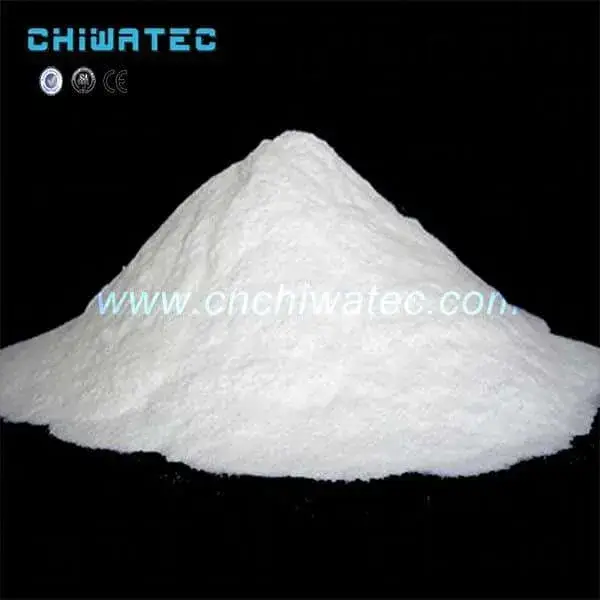
Quartz sand—often called silica sand—is a naturally occurring granular material composed mainly of silicon dioxide (SiO₂).
- When SiO₂ content ≥ 98.5%, it is usually referred to as high-purity silica o quartz.
- When SiO₂ content < 98.5%, it is typically categorized as silica sand.
Quartz ore becomes quartz sand after mechanical crushing and processing. According to purity and processing level, quartz sand can be classified into:
- Refined quartz sand
- Semi-refined quartz sand
- Ordinary quartz sand
2. Physical and Chemical Properties of Quartz Sand
Quartz possesses distinctive physical and chemical characteristics that make it indispensable in industrial and high-tech fields:
Key Properties
- Hardness: Mohs hardness of 7
- Density: Specific gravity around 2.65
- Color: Milky white, light yellow, brown, gray
- High refractory performance: Melting point up to 1730°C
- Excellent chemical stability: Strong resistance to acids (except hydrofluoric acid)
- Low thermal expansion coefficient
- Outstanding insulation and dielectric properties
- Piezoelectric and resonance effects
- Stable crystal structure that supports optical and electronic applications
These properties allow quartz sand to remain stable under high temperature, corrosive environments, and electrical fields.
3. Industrial Uses of Quartz Sand
Quartz sand is one of the most important industrial minerals in the world. Its diverse applications include:
(1) Glass Manufacturing
Quartz sand is the primary raw material for:
- Flat glass
- Optical glass
- Glassware
- Solar panel glass
Its high silica content ensures transparency, hardness, and heat resistance.
(2) Refractory Materials
Because of its high melting point (1730°C) and excellent thermal resistance, quartz sand is used in:
- Refractory bricks
- Furnace linings
- High-temperature casting materials
(3) Metallurgy
Quartz sand is essential in:
- Smelting ferrosilicon
- Metallurgical flux production
(4) Ceramics and Enamel
Quartz sand improves:
- Heat resistance
- Fuerza
- Glaze smoothness and durability
(5) Abrasives and Grinding Materials
Its high hardness makes quartz ideal for:
- Sandblasting
- Grinding wheels
- Polishing materials
(6) Water Treatment Industry
Quartz sand serves as one of the most widely used filter media because it has:
- High mechanical strength
- Strong pollutant interception capacity
- Excellent acid resistance
- Long filtration life
It is used in:
- Municipal water treatment plants
- Industrial water filtration
- Swimming pool filtration systems
(7) Construction Materials
Because of its strong chemical resistance, quartz sand is used to produce:
- Acid-resistant concrete
- Acid-resistant mortar
- Specialized building materials for chemical plants
(8) Advanced High-Tech Applications
High-purity quartz plays a critical role in the IT, semiconductor, aerospace, optical, and communication industries, especially due to its unique crystal structure and stability.
It is indispensable for manufacturing:
- Computer chips (silicon wafers)
- Optical fibers
- Electronic resonators and oscillators
- High-insulation sealing components
- Advanced lighting technology
- Aerospace navigation instruments
- Military-grade optical equipment
- Chemical analysis instruments
Without high-purity quartz, modern electronics and communication systems cannot function.
Conclusión
Quartz sand is a highly versatile industrial mineral with exceptional physical and chemical properties. Its applications span from everyday products like glass and ceramics to cutting-edge fields including semiconductors, aerospace technology, and optical communications. With strong heat resistance, high purity, and chemical stability, quartz sand remains a foundational raw material in both traditional industries and modern high-tech manufacturing.
FAQ
1. What is the chemical composition of quartz sand?
Quartz sand is primarily composed of silicon dioxide (SiO₂), typically ranging from 85% to over 99.9%, depending on its grade and application.
2. Why is quartz sand used in water treatment?
Because it has high strength, excellent filtration capacity, and strong acid resistance, making it ideal for removing suspended solids and impurities in filtration systems.
3. What industries rely heavily on high-purity quartz?
Semiconductors, optical fiber communications, aerospace, solar panel manufacturing, and advanced electronics.
4. Are quartz sand and silica sand the same?
They are similar but classified by purity:
- Quartz sand: SiO₂ ≥ 98.5%
- Silica sand: SiO₂ < 98.5%
5. Can quartz sand withstand high temperatures?
Yes. Quartz sand has a melting point of about 1730°C, making it suitable for refractory and high-temperature industrial applications.
Xian CHIWATEC Water Treatment Technology es una empresa de alta tecnología especializada en varios dispositivos de procesamiento de agua. Aparte de estos productos individuales, que cubren una serie de tipos y series, también podemos ayudar con proyectos de ingeniería integrales relacionados. Gracias a nuestro arduo trabajo y dedicación desde nuestra fundación, ahora somos uno de los fabricantes de equipos de tratamiento de agua de más rápido desarrollo en el oeste de China.
Otras lecturas:
SÍGANOS
¿Tiene un proyecto de tratamiento de agua con el que podamos ayudar?
* Diseño, mecanizado, instalación, puesta en marcha, personalización y servicio integral






 Spanish
  English
  Portuguese




