What is the Color of Water? | Definition, Causes, Standards & Measurement Methods
Understanding the color of water is essential for water quality analysis and industrial water treatment. Learn what affects water color, how chromaticity is measured, and why controlling the color of water is important.
1. What Is the Color of Water?
los color of water, also known as water chromaticity, is a key indicator used to quantitatively assess the appearance and quality of natural water or treated water. Although pure water is theoretically colorless, natural water sources often present light yellow, light brown, or yellow-green hues. These colors mainly arise from:
- Natural humic substances
- Dissolved organic or inorganic materials
- Industrial wastewater pollution
- Suspended clay, silt, algae, or iron–manganese compounds
As a result, water color plays an important role in evaluating the quality, pollution level, and suitability of water for domestic, industrial, and commercial applications.
2. True Color vs. Apparent Color
When analyzing the color of water, it is essential to distinguish between two categories:
True Color (Real Color)
- The color that remains after removing suspended solids through filtration.
- Caused only by dissolved substances such as organic acids, iron ions, or industrial chemicals.
- Used as the standard parameter for water quality testing.
Apparent Color (Surface Color)
- The color observed before filtration, including suspended particles, clay, silt, algae, and colloids.
- Influenced by both dissolved substances and physical particles.
- Often used to assess raw water conditions.
3. Why Does Water Have Color?
Water may appear colored due to a range of natural and artificial sources:
Natural Sources
- Humus and organic matter → yellow to brown
- Clay and silt → yellowish
- Iron oxide → reddish-brown
- Manganese compounds → dark brown or black
- Algae growth → green or blue-green
- Sulfide minerals → light blue
Industrial Pollution Sources
- Dyeing, textile, chemical, paper-making wastewater
- Heavy metals and inorganic salts
- Organic dyes and pigments
These pollutants can significantly alter water color, making chromaticity testing crucial for water treatment facilities.
4. How Is Water Color Measured? (Standard Methods)
The most widely used method for evaluating water color is the Platinum–Cobalt Standard Colorimetric Method, where:
- Potassium chloroplatinate (K₂PtCl₆)
- Cobalt chloride (CoCl₂·6H₂O)
are used to prepare a standard color solution.
Measurement Unit: “Degree”
- 1 degree (°) = the color produced by 1 mg of platinum (Pt) per liter of water.
- Also known as the Pt-Co unit, which is still widely used globally.
This standard provides highly reproducible results for consistent water quality evaluation.
5. Chromaticity Requirements for Different Water Uses
Different industries have strict water color specifications to ensure quality and performance:
| Solicitud | Maximum Allowed Color (°) |
|---|---|
| Domestic drinking water | < 15° |
| Paper industry water | < 15–30° |
| Textile industry water | < 10–12° |
| Dyeing processes | < 5° |
High chromaticity affects product appearance (e.g., paper, textiles) and indicates possible contamination, making color control a priority.
6. How Industrial Water Treatment Reduces Water Color
Because water color originates from dissolved and suspended substances, treatment processes often include:
- Coagulation and flocculation
- Sedimentation and clarification
- Sand filtration and activated carbon adsorption
- Ultrafiltration (UF) membranes
- Advanced oxidation processes (AOP)
- Reverse osmosis (RO) for high-purity applications
Efficient removal of chromaticity ensures compliance with industry standards and improves downstream process performance.
Conclusión
los color of water is a crucial water quality indicator that reflects both natural characteristics and pollution levels. By distinguishing between true color y apparent color, using standardized color measurement methods, and applying appropriate treatment technologies, industries can ensure water quality meets required specifications. Maintaining low chromaticity is essential for domestic safety, industrial production quality, and environmental protection.
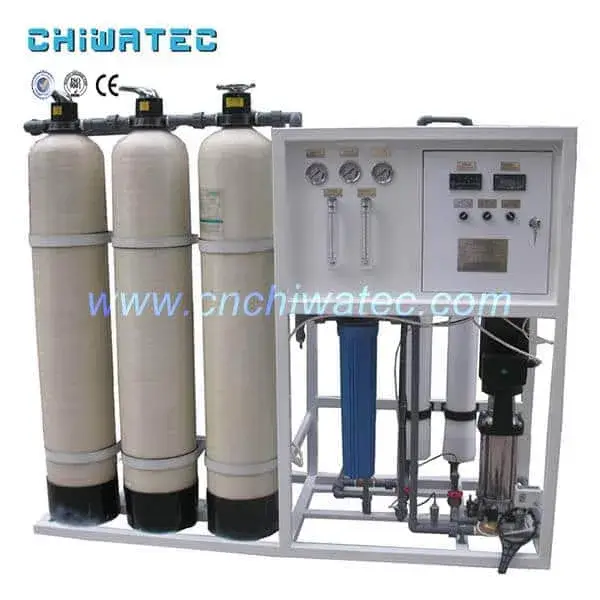
For advanced RO and pretreatment systems, explore CHIWATEC’s full product range:
👉 CHIWATEC Water Treatment Equipment & Solutions
FAQ (Frequently Asked Questions)
1. Is pure water really colorless?
Yes. Pure water is virtually colorless, but natural water often contains organic matter and minerals that give it color.
2. What is the difference between true color and apparent color?
True color is measured after filtration, while apparent color includes the influence of suspended particles.
3. What causes yellow or brown water?
Common causes include humic substances, iron-manganese minerals, clay, and industrial pollutants.
4. Why is controlling water color important?
Because water color affects product quality, indicates pollution level, and is required to meet industrial and domestic water standards.
5. What method is used to measure water color?
The Platinum–Cobalt Standard Colorimetric Method, where 1 Pt-Co unit equals 1 degree of chromaticity.
Xian CHIWATEC Water Treatment Technology es una empresa de alta tecnología especializada en varios dispositivos de procesamiento de agua. Aparte de estos productos individuales, que cubren una serie de tipos y series, también podemos ayudar con proyectos de ingeniería integrales relacionados. Gracias a nuestro arduo trabajo y dedicación desde nuestra fundación, ahora somos uno de los fabricantes de equipos de tratamiento de agua de más rápido desarrollo en el oeste de China.
Otras lecturas:
SÍGANOS
¿Tiene un proyecto de tratamiento de agua con el que podamos ayudar?
* Diseño, mecanizado, instalación, puesta en marcha, personalización y servicio integral




 Spanish
  English
  Portuguese