

UV Sterilizer Guide 2026: How Ultraviolet Water Disinfection Works & Benefits
Introduction: The Growing Importance of UV Water Disinfection
UV sterilizers have become essential components in modern water treatment systems, providing chemical-free disinfection for drinking water, pure water preparation, swimming pools, aquaculture, and industrial applications. According to 2025 industry data, the global UV water disinfection market is projected to reach $2.8 billion by 2027, with a compound annual growth rate (CAGR) of 8.4%, driven by increasing demand for safe drinking water and stringent regulatory standards.
Ultraviolet sterilization offers unique advantages: strong bactericidal capability, rapid disinfection (typically under 10 seconds), effectiveness against all bacterial species including viruses and protozoa, and no chemical addition that could alter water composition. This makes UV water treatment particularly suitable for pure water preparation systems, pharmaceutical applications, food and beverage processing, and residential water purification.
Unlike chemical disinfection methods (chlorine, ozone), UV sterilization produces no disinfection byproducts (DBPs), requires no chemical handling or storage, and provides immediate disinfection without contact time requirements. A properly designed esterilizador ultravioleta achieves 99.99% (4-log) reduction of bacteria and viruses while maintaining water purity.
1. What is a UV Sterilizer?
1.1 How UV Sterilization Works
A esterilizador ultravioleta uses ultraviolet light at specific wavelengths (primarily 254 nm) to inactivate microorganisms by damaging their DNA and RNA, preventing reproduction. The process involves:
- UV lamp emission: Low-pressure or medium-pressure mercury lamps emit UV-C radiation at 254 nm (germicidal wavelength)
- Water exposure: Water flows through a quartz sleeve surrounding the UV lamp, ensuring all microorganisms receive adequate UV dose
- DNA damage: UV photons penetrate microbial cell walls, forming thymine dimers in DNA/RNA
- Cell inactivation: Damaged genetic material prevents reproduction, effectively killing the organism
UV dose (measured in mJ/cm² or μW·s/cm²) determines disinfection effectiveness. Typical doses: 16 mJ/cm² for 99% bacteria reduction, 40 mJ/cm² for 99.99% reduction including viruses.
1.2 Key Components of UV Sterilizers
Modern UV water treatment systems consist of:
- UV lamp: Low-pressure (single wavelength 254 nm) or medium-pressure (broad spectrum 200-400 nm)
- Quartz sleeve: Transparent tube protecting lamp from water while transmitting UV light (90%+ transmittance)
- Reactor chamber: Stainless steel (304 or 316L) housing designed for optimal UV exposure
- Ballast/power supply: Provides stable electrical current to UV lamp
- Control system: Monitors lamp operation, UV intensity, and alerts for maintenance
Advanced systems include UV intensity sensors, automatic cleaning mechanisms, and remote monitoring capabilities.
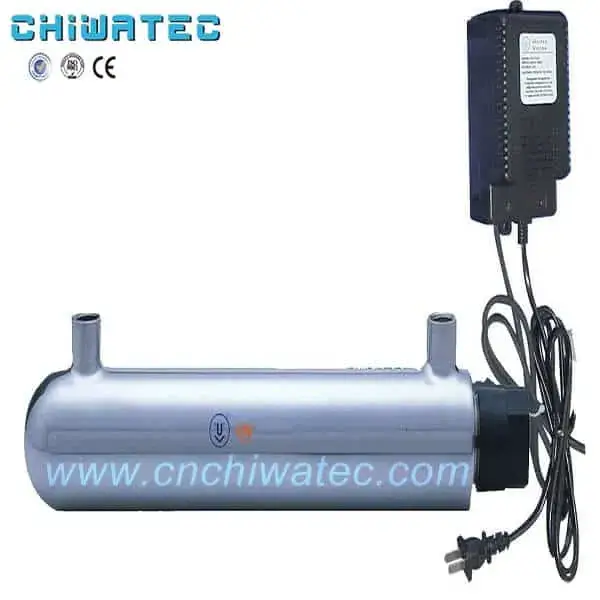
2. Features and Advantages of UV Sterilization
2.1 Rapid and Efficient Disinfection
UV sterilization is fast, efficient, and effective. Generally, after 10 seconds of exposure to a 3KW UV lamp, the removal rate of Escherichia coli in water reaches approximately 98-99.9%. For complete disinfection:
- Bacteria: 99.99% reduction at 16-40 mJ/cm² UV dose
- Viruses: 99.99% reduction at 40-100 mJ/cm² UV dose
- Protozoa (Cryptosporidium, Giardia): 99.9% reduction at 10-20 mJ/cm² UV dose
- Contact time: Typically 5-30 seconds depending on flow rate and chamber design
Unlike chemical disinfection requiring 30+ minutes contact time, desinfección ultravioleta is instantaneous, making it ideal for continuous flow applications.
2.2 Chemical-Free Water Treatment
Ultraviolet radiation does not change the physical and chemical properties of water, and does not introduce pollutants from additives to pure water. Benefits include:
- No disinfection byproducts: No trihalomethanes (THMs), haloacetic acids (HAAs), or bromate formation
- No taste/odor changes: Water maintains natural taste without chlorine flavor
- No chemical handling: Eliminates storage, dosing, and safety concerns
- Environmentally friendly: No chemical discharge to environment
- Compatible with sensitive applications: Ideal for pharmaceutical, food/beverage, electronics
2.3 Operational Flexibility
UV sterilizers can be used under various water flow rates. They are easy to operate and use, requiring only regular cleaning of the quartz glass casing. Key operational advantages:
- Wide flow rate range: Systems available from 0.5 GPM (residential) to 10,000+ GPM (municipal)
- Instant on/off: No warm-up or cooldown period required
- Simple maintenance: Lamp replacement annually (8,000-12,000 hours), quartz sleeve cleaning quarterly
- Compact footprint: Small size, light weight, suitable for space-constrained installations
- Low power consumption: Typical residential units consume 30-60W; industrial units 100-1000W
- Long lamp life: 9,000-12,000 hours for low-pressure lamps; 8,000-10,000 hours for medium-pressure
2.4 Cost-Effective Disinfection
UV sterilization offers excellent cost-effectiveness:
- Low operating costs: $0.001-0.01 per m³ depending on system size and electricity rates
- Minimal maintenance: Annual lamp replacement ($50-500), occasional sleeve cleaning
- No chemical costs: Eliminates ongoing chemical purchase expenses
- Energy efficient: Modern LED UV systems reduce energy consumption by 30-50%
Total cost of ownership is typically 30-50% lower than chemical disinfection over 10-year lifecycle.
3. UV Sterilization Applications
3.1 Drinking Water and Municipal Treatment
desinfección ultravioleta is widely adopted in municipal water treatment for primary disinfection and Cryptosporidium/Giardia control. Applications include:
- Municipal drinking water: Primary or secondary disinfection barrier
- Well water: Bacteria and virus elimination for private and community wells
- Spring water: Bottled water production requiring chemical-free disinfection
- Emergency water treatment: Rapid deployment for disaster relief
For detailed municipal applications, see our guide on UV Disinfection Technology in Municipal Water Supply.
3.2 Pure Water and Ultrapure Water Systems
UV sterilizers are essential in pure water preparation for pharmaceutical, laboratory, and electronics industries:
- Pharmaceutical water: USP Purified Water and WFI (Water for Injection) systems
- Laboratory water: Type I, II, III纯水 systems
- Electronics: Ultrapure water for semiconductor and PCB manufacturing
- RO pre-treatment: 185 nm UV for TOC reduction before reverse osmosis
UV at 185 nm wavelength photo-oxidizes organic compounds, reducing TOC by 50-90%, while 254 nm provides disinfection.
3.3 Swimming Pools and Spas
Pool UV sterilizers reduce chlorine demand and improve water quality:
- Chlorine reduction: 50-90% less chlorine required
- Chloramine destruction: Eliminates combined chlorine causing eye/skin irritation
- Crystal clear water: Enhanced water clarity and quality
- Residential pools: 0.5-2 GPM systems
- Commercial pools: 10-500 GPM systems
3.4 Aquaculture and Fish Farming
UV sterilization in aquaculture prevents disease transmission and improves fish health:
- Pathogen control: Eliminates bacteria, viruses, and parasites
- Water recirculation: Enables RAS (Recirculating Aquaculture Systems)
- Reduced chemical use: Minimizes antibiotics and treatments
- Improved survival rates: 10-20% higher survival in UV-treated systems
3.5 Industrial Applications
Industrial UV water treatment serves diverse sectors:
- Food and beverage: Process water disinfection, CIP rinse water
- Cosmetics: Pure water for product formulation
- Power generation: Cooling tower water treatment
- HVAC: Legionella control in cooling systems
For industrial applications, explore our article on Application of Ultraviolet Technology in Industry.
4. UV Sterilizer Selection and Design Considerations
4.1 Key Selection Criteria
Proper UV sterilizer sizing requires consideration of:
- Flow rate: Maximum and average flow rates (GPM or m³/h)
- Water quality: UV transmittance (UVT), turbidity, TSS, iron, hardness
- Target microorganisms: Bacteria, viruses, protozoa requiring specific UV doses
- Regulatory requirements: NSF, EPA, EU standards compliance
- Application: Drinking water, process water, wastewater
UV transmittance (UVT) is critical: 90%+ UVT ideal, 75-90% acceptable with oversized systems, <75% requires pretreatment.
4.2 UV Lamp Types
Two primary UV lamp technologies:
- Low-pressure (LP) lamps: Monochromatic 254 nm output, high efficiency (40%), low power (30-1000W), ideal for clear water applications
- Medium-pressure (MP) lamps: Polychromatic 200-400 nm spectrum, lower efficiency (15%), high power (1-10kW), better for high-flow or challenging water quality
- UV-LED: Emerging technology, mercury-free, instant on/off, longer life (20,000+ hours), currently higher cost
4.3 Pretreatment Requirements
Optimal UV disinfection performance requires proper pretreatment:
- Filtration: 5-50 micron filters remove particles that shield microorganisms
- Water softening: Prevents scale formation on quartz sleeve (hardness <7 gpg ideal)
- Iron removal: Iron <0.3 ppm prevents sleeve staining
- UV transmittance: UVT >75% for effective disinfection
For comprehensive water purification system design, reference our Drinking Water Treatment Process Flow Guide.
5. Maintenance and Safety
5.1 Routine Maintenance
UV sterilizer maintenance is straightforward but essential:
- Lamp replacement: Annually (8,000-12,000 hours) even if still glowing (UV output degrades over time)
- Quartz sleeve cleaning: Quarterly with citric acid or vinegar solution to remove scale
- O-ring replacement: Annually to prevent leaks
- UV intensity monitoring: Continuous monitoring with sensors (if equipped) or regular testing
Preventive maintenance ensures consistent disinfection performance and extends system life to 10+ years.
5.2 Safety Considerations
Important safety note: If people are exposed to the direct light of UV lamps, they must be careful not to damage skin and eyes. UV-C radiation causes:
- Eye damage: Photokeratitis (welder’s flash), potential permanent vision damage
- Skin burns: Erythema similar to severe sunburn
- Long-term risks: Potential skin cancer with chronic exposure
Safety measures include: interlocked enclosures, warning labels, UV-blocking sight glasses, and proper training. Never operate UV systems with exposed lamps or damaged enclosures.
5.3 Troubleshooting Common Issues
Common UV sterilizer problems and solutions:
- Lamp won’t light: Check power supply, ballast, lamp connections
- Low UV intensity: Clean quartz sleeve, replace aging lamp, check UVT
- High pressure drop: Clean chamber, check for debris or scale buildup
- Frequent lamp failure: Verify voltage, check ballast, ensure proper grounding
- Quartz sleeve breakage: Replace immediately, check for thermal shock or mechanical damage
Conclusión
UV sterilizers provide proven, chemical-free water disinfection for diverse applications from residential drinking water to industrial pure water systems. With advantages including rapid disinfection, no chemical byproducts, low operating costs, and simple maintenance, ultraviolet water treatment has become the preferred choice for applications requiring safe, pure, and great-tasting water.
Key benefits summarized:
- 99.99% bacteria and virus reduction in seconds
- No chemicals, no byproducts, no taste changes
- Low energy consumption and maintenance costs
- Compact, reliable, and easy to operate
- Environmentally friendly and sustainable
Chiwatec offers comprehensive UV sterilizer solutions for residential, commercial, and industrial applications, with systems ranging from 0.5 GPM to 10,000+ GPM. Our UV systems integrate seamlessly with RO, filtration, and other water treatment technologies to deliver optimal water quality.
FAQ: UV Sterilizers and Water Disinfection
Q1: How long does UV sterilization take to work?
UV sterilization is nearly instantaneous, typically requiring 5-30 seconds of exposure depending on flow rate and chamber design. Unlike chemical disinfection requiring 30+ minutes contact time, UV disinfection occurs as water passes through the reactor, making it ideal for continuous flow applications.
Q2: Does UV sterilization remove chemicals from water?
No, UV sterilization only inactivates microorganisms (bacteria, viruses, protozoa). It does not remove dissolved chemicals, heavy metals, or minerals. For comprehensive water treatment, UV should be combined with filtration (sediment, carbon) and possibly reverse osmosis for chemical removal.
Q3: How often should UV lamps be replaced?
UV lamps should be replaced annually (every 8,000-12,000 operating hours), even if they still glow. UV output degrades over time, and old lamps may not provide adequate disinfection dose. Many systems include lamp life timers and alarms for replacement reminders.
Q4: Is UV water treatment safe?
Yes, UV-treated water is completely safe to drink. UV disinfection adds nothing to water and produces no harmful byproducts. The UV light stays contained within the sterilizer—water never contacts the lamp directly. However, never look directly at operating UV lamps as UV-C radiation can damage eyes and skin.
Q5: What water quality is needed for UV disinfection?
Optimal UV disinfection requires: UV transmittance (UVT) >75%, turbidity <1 NTU, iron <0.3 ppm, hardness <7 gpg (120 mg/L). Poor water quality reduces UV effectiveness by absorbing or scattering UV light. Pretreatment (filtration, softening) may be necessary for challenging water sources.
Q6: Can UV kill Cryptosporidium and Giardia?
Yes, UV is highly effective against Cryptosporidium and Giardia, requiring only 10-20 mJ/cm² for 99.9% inactivation. These protozoan parasites are highly resistant to chlorine but very susceptible to UV disinfection, making UV an excellent choice for surface water treatment.
¿Tiene un proyecto de tratamiento de agua con el que podamos ayudar?
* Diseño, mecanizado, instalación, puesta en marcha, personalización y servicio integral






 Spanish
  English
  Portuguese




