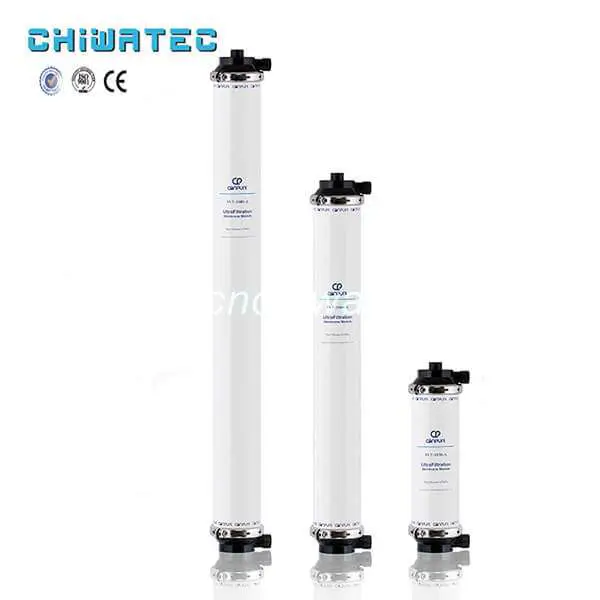
What is a Hollow Fiber Ultrafiltration Membrane?
Hollow fiber ultrafiltration membrane is an advanced water treatment technology that uses semi-permeable membranes with pore sizes ranging from 0.01 to 0.1 microns to separate contaminants from water. This comprehensive guide covers the working principle, applications, and latest industry trends for 2026.
Hollow Fiber Ultrafiltration Membrane Technology
Separation Principle and Core Characteristics
Ultrafiltration technology selectively separates substances through the microporous structure of the membrane surface. When liquid flows through the membrane under pressure (typically 0.1-0.6 MPa), small molecular solutes and water permeate the membrane (called ultrafiltrate), while macromolecular substances, bacteria, viruses, and colloids are retained. This achieves separation, concentration, and purification without phase change or chemical additives.
According to 2025 industry data, the global ultrafiltration membrane market reached $4.8 billion USD, with a projected CAGR of 8.2% through 2030. Hollow fiber configurations account for approximately 65% of the UF membrane market due to their superior packing density and cost-effectiveness.
Key Advantages of Hollow Fiber UF Membranes
- High Packing Density: Hollow fiber modules provide 3-5 times more membrane surface area per unit volume compared to flat sheet or tubular configurations
- Energy Efficient: Normal temperature operation with no phase change, reducing energy consumption by 40-60% compared to thermal separation methods
- Superior Contaminant Removal: Achieves 4-6 log removal of bacteria and viruses, meeting WHO drinking water standards
- Low Maintenance: Dynamic filtration with forward/backward cleaning cycles maintains consistent flux rates
- Environmental Friendly: No secondary pollution, minimal chemical usage, and reduced wastewater discharge
Membrane Cleaning and Maintenance
The separation system employs dynamic filtration to prevent retentate deposition on the membrane surface. Cleaning protocols include:
- Forward Cleaning: Standard water or filtrate flush at operating pressure
- Backwash Cleaning: Reverse flow at 1.5-2x normal pressure to dislodge accumulated particles
- Chemical Enhanced Backwash (CEB): Periodic addition of sodium hypochlorite (10-50 ppm) or citric acid for organic/inorganic fouling removal
- CIP (Clean-in-Place): Deep cleaning with hydrogen peroxide, sodium hypochlorite, or sodium hydroxide solutions for severe fouling
Storage Requirements: Hollow fiber components must remain wet. For long-term storage (>30 days), preserve with 0.5% formaldehyde or sodium hypochlorite solution. Systems can be sterilized using hydrogen peroxide, sodium hypochlorite, or sodium hydroxide aqueous solutions.
2026 Application Fields and Industry Trends
Water Treatment Applications
Membrane separation technology has become the preferred solution for water purification, replacing traditional methods including drum vacuum filtration, plate and frame filter presses, ion exchange, centrifugal separation, solvent extraction, and flocculation/precipitation processes.
Primary Application Areas:
- Pharmaceutical industry GMP-compliant water treatment (WFI preparation)
- Municipal drinking water purification and seawater desalination pretreatment
- Reverse osmosis (RO) pretreatment for ultrapure water systems
- Industrial wastewater recycling and zero liquid discharge (ZLD) systems
- Aquaculture water treatment and recirculating systems
- Food and beverage processing (juice clarification, dairy concentration)
- Electronics industry ultrapure water preparation
- Thermal power plant boiler makeup water treatment
- Landfill leachate concentration treatment
- Textile printing and dyeing wastewater recovery
2025-2026 Market Trends and Innovations
Recent developments in hollow fiber ultrafiltration technology include:
- Advanced Materials: PVDF (Polyvinylidene fluoride) and PES (Polyethersulfone) membranes with enhanced hydrophilicity and chemical resistance
- Hybrid Systems: Integration with MBR (Membrane Bioreactor) technology for municipal wastewater treatment
- Smart Monitoring: IoT-enabled systems with real-time TMP (Transmembrane Pressure) monitoring and predictive maintenance
- Sustainability Focus: Reduced carbon footprint manufacturing and recyclable membrane modules
- Nanocomposite Enhancements: Incorporation of TiO2, Ag nanoparticles for antimicrobial properties and improved flux
Research and Development Directions
Current research focuses on developing microporous polyethylene hollow fiber membranes with enhanced hydrophilic modification. Through continuous stretching technology, manufacturers have achieved polyethylene hollow fiber membranes with excellent air permeability. After hydrophilic treatment, these membranes demonstrate superior water permeability for water purification and wastewater treatment applications.
Future development priorities include:
- Larger pore sizes with higher porosity for increased flux rates
- Enhanced mechanical strength for higher operating pressures
- Stable long-term hydrophilicity without chemical degradation
- Lower manufacturing costs through scalable production methods
Conclusión
Hollow fiber ultrafiltration membrane technology represents a mature, efficient, and sustainable solution for modern water treatment challenges. With proven performance across pharmaceutical, industrial, and municipal applications, UF membranes deliver consistent water quality while minimizing operational costs and environmental impact. As 2026 market trends indicate continued growth and innovation, hollow fiber UF technology remains essential for achieving water security and sustainability goals.
Xi’an CHIWATEC Water Treatment Technology is a high-tech enterprise specialized in various water processing devices. We provide comprehensive engineering solutions including designing, machining, installing, commissioning, and customization services. As one of the fastest-developing water treatment equipment manufacturers in Western China, we are committed to delivering innovative and sustainable water treatment solutions.
Further Reading
- Ultrafiltration Membrane Process: Operating Parameters Guide
- Ultrafiltration Pretreatment: Best Practices and Requirements
- RO Membrane Filtration Mechanism and Operational Process
- Ultrafiltration Membrane Cleaning Methods and Procedures
¿Tiene un proyecto de tratamiento de agua con el que podamos ayudar?
* Diseño, mecanizado, instalación, puesta en marcha, personalización y servicio integral
 Spanish
  English
  Portuguese