Mercury-Containing Wastewater Treatment Methods: Complete Technology Guide 2026
Looking for proven treatment technologies for mercury-containing wastewater? This comprehensive guide covers six major treatment methods — precipitation, electrolysis, ion exchange, activated carbon adsorption, combined processes, and emerging technologies. Featuring removal efficiency data, operating parameters, advantages and limitations for each method, with practical selection guidance for industrial applications.
*Last Updated: May 2026 | Industry-Verified Technical Data*
Why This Guide Matters
Mercury-containing wastewater remains one of the most challenging industrial waste streams to treat, with discharge limits tightening globally under the Minamata Convention. The five primary treatment methods — chemical precipitation, electrolysis, ion exchange, activated carbon adsorption, and combined processes — each offer distinct advantages depending on mercury concentration, flow rate, and target effluent quality. CHIWATEC provides comprehensive wastewater treatment solutions incorporating these technologies for mercury removal across multiple industries. Understanding each method’s capabilities and limitations is essential for designing cost-effective, compliant treatment systems.
Key Industry Trends (2026 Update)
- Sulfide precipitation remains dominant — Chemical precipitation using sodium sulfide accounts for over 50% of installed mercury treatment capacity worldwide, achieving 95-99.9% removal rates at costs of USD 0.50-1.50 per cubic meter.
- Ion exchange gains for trace removal — Macroporous thiol-functionalized ion exchange resins have emerged as the preferred technology for polishing mercury below 0.001 mg/L, with selectivity for mercury over competing ions by factors of 10,000:1 or more.
- Combined process optimization — Multi-stage treatment trains combining precipitation with activated carbon or ion exchange polishing now account for 65% of new mercury treatment installations, achieving consistently stable effluent quality across varying influent conditions.
- Sustainable adsorbent development — Bio-based and waste-derived mercury adsorbents (functionalized cellulose, chitosan, and sulfur-impregnated agricultural wastes) have reached pilot demonstration stage, showing 80-95% of commercial activated carbon performance at 40-60% lower material cost.
1. Chemical Precipitation Method for Mercury Removal
Coagulation Precipitation
Coagulation precipitation operates by adding coagulants such as lime, iron salts (FeCl3, FeSO4), or aluminum salts (Al2(SO4)3) to mercury-containing wastewater. Under weak alkaline conditions (pH 8-10), hydroxide flocs form and mercury co-precipitates by adsorption onto and enmeshment within the floc structure. This method is relatively simple and cost-effective but produces significant sludge volumes and achieves limited removal at low mercury concentrations.
Sulfide Precipitation
Sulfide precipitation — using sodium sulfide (Na2S) or sodium hydrosulfide (NaHS) — is the most frequently reported chemical precipitation approach for mercury removal. The method exploits the extremely strong affinity between Hg2+ and S2- ions, producing mercury sulfide (HgS, cinnabar) with an extremely low solubility product (Ksp = 2 x 10^-54). This method is suitable for treating different concentrations and types of mercury salts and is particularly recommended for small-to-medium chemical industry applications. When mercury ion concentrations are high, chemical precipitation should be the first-choice treatment. The removal rate by precipitation methods can reach 95-99.9%. However, this method can cause water quality hardening, is incomplete for low-concentration mercury wastewater, and can create secondary pollution. The effluent concentration is often difficult to meet discharge standards without further polishing treatment.
2. Electrolysis Method for Mercury Removal
Working Principle
The electrolysis method uses the electrochemical properties of metals to remove mercury from wastewater. Under the influence of direct current, mercury compounds dissociate into mercury ions (Hg2+) at the anode and are reduced to metallic mercury (Hg0) at the cathode. The metallic mercury can be recovered from the cathode surface. This method is specifically suitable for treating wastewater containing high-concentration inorganic mercury, typically above 100 mg/L, where other methods would be economically or technically impractical.
Limitations and Considerations
The electrolysis method has several disadvantages: the concentration of mercury ions in the treated effluent cannot be reduced to very low levels (typically 1-10 mg/L residual), electrical power consumption is relatively high, capital investment costs are significant, and mercury vapor can be generated during the process — creating secondary pollution risks that require vapor capture and treatment systems. These limitations restrict electrolysis to niche high-concentration applications where mercury recovery offsets operating costs.
3. Ion Exchange Method for Mercury Removal
Mechanism and Resin Selection
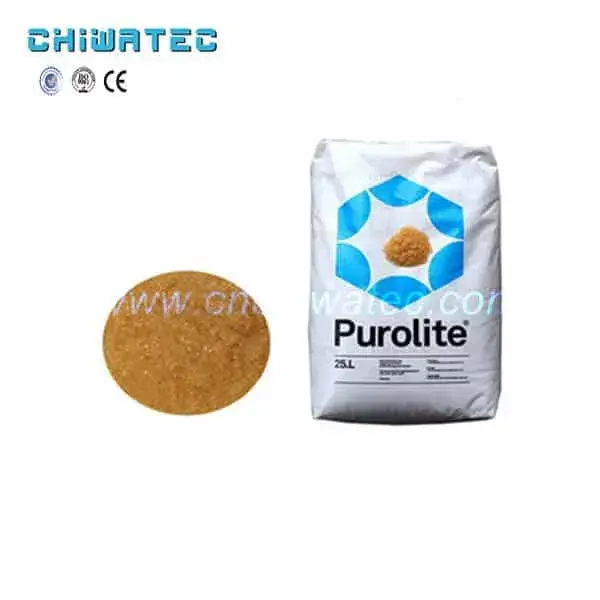
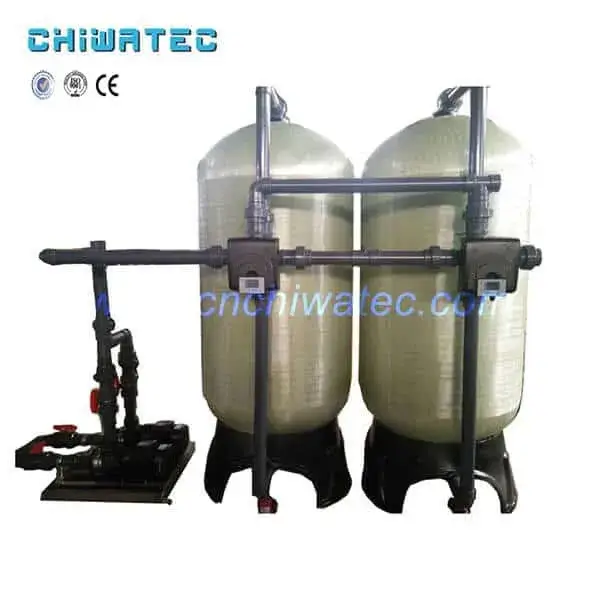
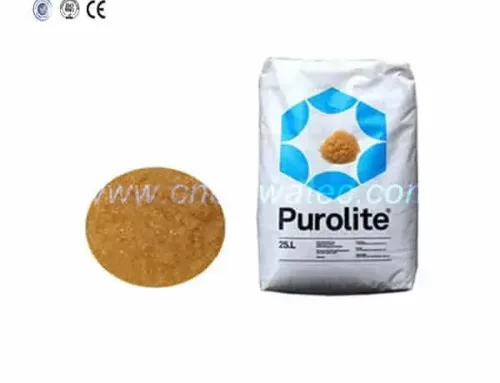
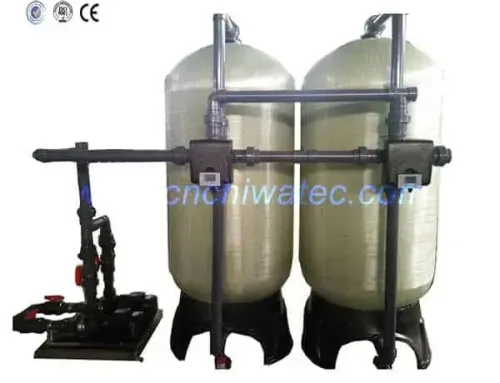
The ion exchange method is carried out in an ion exchange column using macroporous thiol-functionalized (mercapto-group) ion exchange resin to adsorb mercury ions. The mercapto group (-SH) on the resin has an extremely strong and selective adsorption capacity for mercury ions, forming stable mercury-sulfur complexes. This method is particularly suitable for treating low-concentration mercury wastewater, typically below 10 mg/L, where precipitation methods become inefficient. After primary treatment followed by ion exchange, effluent inorganic mercury content can be reduced to 1-5 ug/L (0.001-0.005 mg/L).
Operational Considerations
The mercury adsorbed on the resin can be eluted with concentrated hydrochloric acid and recovered quantitatively, allowing resin regeneration and mercury recovery. However, this method is affected by impurities in the wastewater, which can compete for exchange sites or foul the resin. Limitations include the variety of available exchangers, production capacity constraints, and resin cost. For efficient operation, the feed water should have low suspended solids and limited competing ion concentrations. Electroplating wastewater treatment process and ion exchange treatment method provides practical application data for ion exchange in heavy metal removal.
4. Activated Carbon Adsorption Method for Mercury Removal
Performance and Application Range
The activated carbon adsorption method is a relatively mature mercury-containing wastewater treatment technology widely adopted in industrial applications. Activated carbon effectively adsorbs both inorganic and organic mercury species from wastewater through physical adsorption (pore filling) and chemisorption (surface functional group binding). This method is most suitable for treating low-concentration mercury wastewater with mercury content of 1-2 mg/L or less. After activated carbon adsorption treatment, effluent mercury concentration can be reduced to 0.01-0.05 mg/L, meeting most industrial discharge standards.
System Design and Limitations
When wastewater mercury concentration is too high for direct activated carbon treatment, preliminary treatment (such as chemical precipitation) should be applied first. Sulfur-impregnated activated carbons offer 3-10 times higher mercury capacity than standard grades due to enhanced chemisorption of mercury onto sulfur sites. The main disadvantages of this treatment method are: tight supply of high-quality activated carbon in many regions, limited regeneration equipment availability, and relatively high regeneration costs. Spent carbon saturated with mercury must be handled as hazardous waste, adding disposal costs, or sent to specialized regeneration facilities. Introducción al filtro aireado biológico discusses complementary biological treatment approaches applicable within comprehensive wastewater treatment trains.
5. Combined and Multi-Stage Treatment Technologies
Integrated Treatment Trains
For mercury-containing wastewater requiring compliance with the most stringent discharge limits (below 0.001 mg/L), combined treatment technologies are essential. A typical multi-stage treatment train includes: (1) primary sulfide precipitation for bulk mercury removal (achieving 95-99% removal, effluent below 0.5 mg/L), (2) intermediate clarification and filtration for solids removal, (3) activated carbon or ion exchange polishing (reaching below 0.005-0.01 mg/L), and (4) final activated carbon adsorption for trace mercury capture (achieving below 0.001 mg/L where required).
Process Selection Guidelines
The selection of combined treatment processes depends on: influent mercury concentration and speciation, flow rate and variability, discharge compliance requirements, available capital and operating budget, and existing site infrastructure. For small-to-medium industrial facilities (< 100 m3/day), a compact system combining sulfide precipitation with in-line filtration and activated carbon polishing offers optimal cost-performance. For large-scale operations (> 500 m3/day), a fully automated system with real-time monitoring and adaptive chemical dosing provides the lowest lifecycle cost. Tecnología avanzada de tratamiento de aguas residuales discusses multi-stage treatment approaches applicable to complex industrial wastewater applications.
6. Emerging and Advanced Treatment Technologies
Superconducting High-Gradient Magnetic Separation
Superconducting magnetic separation technology is a newly developed application that uses the force of a magnetic field to separate materials with different magnetic properties. By adding magnetic seed materials that specifically bind to mercury, this technology can purify and separate mercury-containing wastewater using superconducting high-gradient magnetic separators. The technology is currently in the active scientific research and pilot testing stage, with initial results showing potential for rapid, continuous mercury removal without chemical consumption.
Other Developing Technologies
Additional emerging technologies under investigation include: photocatalytic reduction using TiO2 nanomaterials that convert Hg2+ to Hg0 under UV light for subsequent recovery; bio-adsorption using modified bacterial, fungal, and algal biomass that binds mercury through surface functional groups; and membrane-assisted chelation using nanofiltration or forward osmosis combined with selective chelating agents that concentrate mercury for recovery while producing clean permeate. While these technologies show promise, none have yet achieved commercial-scale implementation for mercury wastewater treatment. MBBR and its function discusses biological treatment innovations relevant to comprehensive wastewater management.
7. How to Select the Right Treatment Method for Your Application
Method Selection Matrix
Method — Best For — Removal Rate — Effluent Hg — Cost Level
Chemical precipitation — High concentration (>10 mg/L) — 95-99.9% — 0.05-0.5 mg/L — Low to moderate
Electrolysis — Very high concentration — 90-98% — 1-10 mg/L — High
Ion exchange — Low concentration (<10 mg/L) — 99-99.9% — 0.001-0.005 mg/L — Moderate to high
Activated carbon — Low concentration (1-2 mg/L) — 95-99% — 0.01-0.05 mg/L — Moderate
Combined process — Any concentration — 99.5-99.99% — Below 0.001 mg/L — Moderate to high
Magnetic separation — Emerging/pilot — 90-95% (pilot) — TBD — Not yet commercial
Practical Recommendations
For most industrial applications, the recommended approach is: precipitation + polishing. Start with sulfide precipitation for bulk removal, followed by either activated carbon or ion exchange polishing depending on the target discharge limit and flow rate. This combination provides reliable compliance at reasonable cost for the widest range of operating conditions. Prevention and control measures for mercury-containing wastewater provides complementary guidance on source reduction strategies that can reduce treatment load and costs.
Conclusión
The treatment of mercury-containing wastewater has advanced significantly, with five primary technologies — chemical precipitation (95-99.9% removal), electrolysis, ion exchange (achieving 1-5 ug/L effluent), activated carbon adsorption (0.01-0.05 mg/L effluent), and combined multi-stage processes (below 0.001 mg/L) — providing proven solutions for every mercury concentration range and discharge standard. The key to cost-effective mercury treatment is matching the technology to the specific application: high-concentration streams benefit from precipitation as the primary step, while low-concentration polishing requirements drive selection toward ion exchange or activated carbon. Contact CHIWATEC today to discuss your mercury wastewater treatment requirements. Our engineering team specializes in designing optimized treatment systems for heavy metal removal across industrial applications. Reach us at [email protected] o [email protected], or via WhatsApp at 008618292684865.
Frequently Asked Questions
Q1: Which mercury treatment method achieves the highest removal efficiency?
Combined multi-stage treatment trains — typically sulfide precipitation followed by activated carbon or ion exchange polishing — achieve the highest overall removal efficiency, exceeding 99.9% and producing effluent mercury below 0.001 mg/L. For single-stage methods, ion exchange achieves the lowest effluent concentrations (1-5 ug/L) when treating low-concentration feed water.
Q2: What is the most cost-effective method for high-concentration mercury wastewater?
Chemical sulfide precipitation is the most cost-effective primary treatment for high-concentration mercury wastewater (above 10 mg/L), achieving 95-99.9% removal at operating costs of USD 0.50-1.50 per cubic meter. Electrolysis may be competitive for very high concentrations (above 100 mg/L) where mercury recovery value offsets higher energy costs.
Q3: Can activated carbon alone meet discharge standards for mercury?
Activated carbon alone can achieve effluent mercury of 0.01-0.05 mg/L, which meets many industrial discharge standards. However, for the most stringent limits (below 0.005 or 0.001 mg/L), activated carbon alone is insufficient and must be combined with primary precipitation or followed by ion exchange polishing.
Q4: What is the difference between coagulation precipitation and sulfide precipitation?
Coagulation precipitation uses iron or aluminum salts to form flocs that physically enmesh mercury, achieving moderate removal. Sulfide precipitation uses Na2S to form insoluble HgS, achieving much lower effluent mercury due to the extremely low solubility of mercury sulfide (Ksp = 2 x 10^-54). Sulfide precipitation is more effective but requires careful pH control and excess sulfide management.
Q5: How does ion exchange compare to activated carbon for mercury polishing?
Ion exchange using thiol-functionalized resins achieves lower effluent mercury (1-5 ug/L) than activated carbon (10-50 ug/L) and offers higher selectivity for mercury over competing ions. However, activated carbon is less expensive and does not require regeneration chemical handling. The choice depends on the target discharge limit and site-specific operating constraints.
Related Resources and Further Reading
¿Tiene un proyecto de tratamiento de agua con el que podamos ayudar?
* Diseño, mecanizado, instalación, puesta en marcha, personalización y servicio integral
 Spanish
  English
  Portuguese