Basic Types of Ion Exchange Resins: Complete Classification Guide 2026
Looking for a clear explanation of the basic types of ion exchange resins? Understanding the four primary resin classifications – strong acid cation, weak acid cation, strong base anion, and weak base anion – is essential for designing effective water treatment systems. Each resin type has distinct chemical properties, operating characteristics, and application advantages. CHIWATEC integrates all major ion exchange resin types into custom water treatment solutions for industrial clients worldwide.
Last Updated: January 2026 | Industry-Verified Data | Resin Chemistry Reference Information
Why This Guide Matters for Your Resin Selection
Choosing the correct type of ion exchange resin directly impacts system performance, chemical consumption, treated water quality, and operating costs. The four basic resin types strong acid cation (SAC), weak acid cation (WAC), strong base anion (SBA), and weak base anion (WBA) each have unique functional groups, operating pH ranges, and regeneration requirements. With the global ion exchange resins market valued at approximately USD 1.6 billion in 2024 and projected to reach USD 2.4 billion by 2034, understanding resin classification is fundamental to proper system design.
Key Industry Trends (2026 Update)
- Monodisperse Resin Technology: Uniform bead size distribution improves kinetic performance by 15-20% across all resin types, reducing rinse water requirements
- High-Capacity SAC Resins: New-generation strong acid cation resins achieve up to 2.2 eq/L capacity, 10-15% higher than standard grades
- Specialty Resin Development: Application-specific resins with tailored functional groups for selective removal of boron, arsenic, nitrate, and PFAS
- Mixed-Bed Advancements: Improved separation technologies enable more efficient regeneration of mixed cation-anion resin beds
1. What Are the Basic Types of Ion Exchange Resins?
The Four Primary Classifications
Ion exchange resins are classified into four basic types based on their functional groups and chemical properties:
- Strong Acid Cation (SAC) Resin: Contains sulfonic acid groups (-SO3H), operates across the full pH range
- Weak Acid Cation (WAC) Resin: Contains carboxylic acid groups (-COOH), operates in alkaline pH range
- Strong Base Anion (SBA) Resin Type I and II: Contains quaternary amine groups (-NR3OH), operates across the full pH range
- Weak Base Anion (WBA) Resin: Contains primary, secondary, or tertiary amine groups (-NH2, -NHR, -NR2), operates in acidic pH range
Additional Classification Dimensions
Beyond functional group type, resins are also classified by physical structure: gel-type resins (homogeneous, microporous structure, higher capacity) and macroporous resins (porous structure with visible pores, higher physical and chemical stability, better resistance to fouling).
Learn More: Physical Properties of Ion Exchange Resins
2. What Is Strong Acid Cationic Resin?
Chemical Properties
Strong acid cationic resin contains a large number of strongly acidic functional groups, primarily the sulfonic acid group (-SO3H). These groups easily dissociate H+ ions in solution, making the resin strongly acidic. After dissociation, the negatively charged groups (SO3-) can adsorb and bind other cations in the solution through electrostatic attraction. The exchange reaction exchanges the H+ in the resin with cations in the solution.
Key Characteristics
- pH Range: 0-14 (functional across complete pH range)
- Functional Group: Sulfonic acid (-SO3H)
- Capacidad: 1.8-2.2 eq/L (wet volume)
- Regeneration: Strong acid (HCl) or sodium chloride (NaCl)
- Aplicaciones: Water softening, demineralization, dealkalization, heavy metal removal
Regeneration Method
After the resin has been used for a period of time, it needs to undergo regeneration treatment. The ion exchange reaction is carried out in the reverse direction using chemicals to restore the functional groups to their original state for reuse. Strong acid cationic resin is typically regenerated with hydrochloric acid (HCl) at 4-8% concentration for demineralization systems, or with sodium chloride (NaCl) at 8-12% concentration for water softening applications.
3. What Is Weak Acid Cationic Resin?
Chemical Properties
Weak acid cationic resin contains weakly acidic functional groups, primarily the carboxyl group (-COOH). These groups can dissociate H+ in water under certain pH conditions, becoming acidic. The remaining negatively charged groups after dissociation (R-COO-) can adsorb and combine with other cations in the solution to produce cation exchange. Unlike SAC resins, WAC resins only function effectively in alkaline conditions (pH above 4-5).
Key Characteristics
- pH Range: 5-14 (functional only in alkaline conditions)
- Functional Group: Carboxyl (-COOH)
- Capacidad: 3.5-4.5 eq/L (very high – nearly double SAC capacity)
- Regeneration: Acid (efficient – 105-110% of theoretical)
- Aplicaciones: High-alkalinity water treatment, dealkalization, partial demineralization
Advantages and Limitations
WAC resins offer significantly higher exchange capacity (3.5-4.5 eq/L) compared to SAC resins, and their regeneration efficiency is excellent requiring only 105-110% of the theoretical acid dose. However, they cannot remove all cations in low-alkalinity waters and are typically used in combination with SAC resins for optimal performance.
4. What Is Strong Base Anion Resin?
Chemical Properties
Strong base anion resin contains strongly basic functional groups, primarily quaternary amine groups (-NR3OH). These groups can dissociate OH- in water, becoming strongly basic. The positively charged groups of this resin can adsorb and combine with anions in the solution, producing anion exchange. SBA resins come in two types: Type I (higher capacity, lower regeneration efficiency, better silica removal) and Type II (slightly lower capacity, higher regeneration efficiency, slightly less silica removal).
Key Characteristics
- pH Range: 0-14 (functional across complete pH range)
- Functional Group: Quaternary amine (-NR3OH)
- Capacidad: Type I: 1.0-1.4 eq/L; Type II: 1.2-1.6 eq/L
- Regeneration: Strong alkali (NaOH) at 4-6% concentration
- Aplicaciones: Complete demineralization, silica removal, deionization
Operating Characteristics
SBA resins can work normally across the entire pH range due to their strong dissociation properties. They require strong alkali (typically NaOH) for regeneration. Type I resins provide better silica and carbon dioxide removal, making them preferred for high-purity water production. Type II resins offer higher operating capacity and better regeneration efficiency but may not achieve the same effluent quality for silica removal.
5. What Is Weak Base Anion Resin?
Chemical Properties
Weak base anion resin contains weakly basic functional groups, including primary amino groups (-NH2), secondary amino groups (-NHR), or tertiary amino groups (-NR2). These groups can dissociate OH- in water under certain pH conditions, becoming weakly alkaline. The positively charged groups after dissociation can adsorb and combine with anions in the solution. The degree of dissociation of weakly basic groups is weak and depends on the pH of the solution.
Key Characteristics
- pH Range: 0-7 (functional only in acidic conditions)
- Functional Group: Primary (-NH2), secondary (-NHR), or tertiary amine (-NR2)
- Capacidad: 1.5-2.5 eq/L
- Regeneration: Weak alkali (NaOH or Na2CO3), or even ammonia
- Aplicaciones: Acid removal, partial demineralization, organic scavenging
Advantages
WBA resins offer excellent regeneration efficiency (can be regenerated with weak alkali, sodium carbonate, or even ammonia solutions) and high resistance to organic fouling. They are typically used as a pretreatment for SBA resins to remove strong acids, reducing the load on the downstream SBA resin and improving overall system economics.
6. What Is the Difference Between Gel and Macroporous Resin Types?
Gel-Type Resins
Gel-type resins have a homogeneous, microporous structure with pore sizes typically less than 50 angstroms. They offer higher exchange capacity per unit volume, lower cost, and better regeneration efficiency. However, they are more susceptible to organic fouling, have limited resistance to osmotic shock, and cannot handle large organic molecules or colloidal materials.
Macroporous Resins
Macroporous resins have a physically porous structure with visible pores (200-2000 angstroms) that provide physical porosity even when dry. They offer superior resistance to organic fouling, better physical strength and resistance to osmotic shock, and the ability to handle larger organic molecules. The trade-off is slightly lower exchange capacity (5-10% less) and higher cost per unit volume.
Selection Guide
Choose gel-type resins for clean water applications with minimal organic content where maximum capacity is desired. Choose macroporous resins for challenging water sources with organic fouling potential, variable operating conditions, or where longer resin life is prioritized over maximum capacity.
7. How to Select the Right Ion Exchange Resin Type for Your Application?
Selection Flowchart
- Identify Target Ions: Determine which ions need removal – cations, anions, or both
- Check Water Chemistry: Analyze pH, alkalinity, silica, TDS, and organic content
- Choose Cation Type: SAC for complete removal across pH range; WAC for high-alkalinity waters with high efficiency
- Choose Anion Type: SBA for complete anion removal including silica; WBA for acid removal with high efficiency
- Select Physical Form: Gel-type for clean water; macroporous for challenging conditions
- Consider Configuration: Separate beds, mixed beds, or layered beds for specific applications
Common System Configurations
- SAC + SBA: Standard two-bed demineralization for general industrial water treatment
- SAC + WBA + SBA: Three-bed system for high-efficiency demineralization with organic protection
- WAC + SAC + WBA + SBA: Four-bed system for high-alkalinity, high-TDS waters
- SAC + SBA + Mixed Bed: Polishing configuration for ultrapure water production
8. What Are the Regeneration Requirements for Different Resin Types?
Regeneration Chemicals and Dosages
- SAC Resin (Na-form): NaCl at 8-12%, 6-15 lb/ft3, 150-200% of theoretical
- SAC Resin (H-form): HCl at 4-8%, 5-10 lb/ft3 as 100% HCl, 200-300% of theoretical
- WAC Resin: HCl or H2SO4 at 1-5%, 105-110% of theoretical (very efficient)
- SBA Resin Type I: NaOH at 4-6%, 4-8 lb/ft3 as 100% NaOH, 200-300% of theoretical
- SBA Resin Type II: NaOH at 4-6%, 3-6 lb/ft3 as 100% NaOH, 150-200% of theoretical
- WBA Resin: NaOH, Na2CO3, or NH4OH at 2-5%, 110-120% of theoretical
Regeneration Efficiency Comparison
WAC and WBA resins offer significantly better regeneration efficiency (105-120% of theoretical) compared to strong resins (150-300% of theoretical). This means weak resins require less chemical regenerant and produce less waste regenerate effluent, making them more economical and environmentally favorable when the application allows their use.
9. What Are the Typical Applications for Each Resin Type?
Application Matrix
- SAC Resin: Boiler feed water softening, reverse osmosis pretreatment, household water softeners, industrial process water, chemical processing
- WAC Resin: High-alkalinity water dealkalization, partial demineralization, wine and juice processing, heavy metal removal from mining wastewater
- SBA Resin: Complete demineralization, ultrapure water production, silica removal, nuclear power generation water treatment, pharmaceutical water systems
- WBA Resin: Organic acid removal, sugar decolorization, formaldehyde removal, SBA resin protection from organic fouling
10. How Do Resin Types Affect System Design and Operating Costs?
Design Considerations
The choice of resin type directly impacts several design parameters: required vessel size (determined by resin capacity and flow rate), regeneration system design (chemical storage, dilution, and injection equipment), waste neutralization requirements (acid and alkali waste streams), and treated water quality achievable (effluent conductivity and silica levels).
Cost Implications
WAC and WBA resins typically reduce operating costs by 30-50% compared to SAC and SBA resins when the application allows their use, due to lower chemical consumption and higher regeneration efficiency. However, they cannot achieve the same treated water quality alone, so the total system configuration must be evaluated. CHIWATEC engineers evaluate all factors to recommend the optimum resin configuration for each specific application, balancing capital cost, operating cost, and treated water quality requirements.
Conclusión
Understanding the basic types of ion exchange resins is fundamental to designing effective, efficient water treatment systems. Strong acid cation, weak acid cation, strong base anion, and weak base anion resins each play specific roles in water treatment, with distinct functional group chemistry, operating pH ranges, capacity characteristics, and regeneration requirements. By selecting the right resin types and combining them in optimal configurations, engineers can achieve the desired water quality at the lowest operating cost. As resin technology continues to advance with higher capacities and improved selectivities, staying informed about resin classification becomes increasingly valuable.
Contact CHIWATEC today at [email protected] o +86 18292684865 (WhatsApp) to discuss your ion exchange resin requirements. Our team of water treatment engineers can help you select the optimal resin types and system configuration for your specific application.
Frequently Asked Questions
Q1: What is the difference between strong acid and weak acid cation resins?
Strong acid cation (SAC) resins contain sulfonic acid groups that function across the entire pH range (0-14), while weak acid cation (WAC) resins contain carboxyl groups that only function above pH 4-5. SAC resins have lower capacity (1.8-2.2 eq/L vs 3.5-4.5 eq/L for WAC) but can remove all cations regardless of alkalinity. WAC resins offer higher capacity and better regeneration efficiency but only work in alkaline conditions.
Q2: Can different resin types be mixed in the same vessel?
Different resin types can be combined in the same vessel in several configurations: layered beds (SAC over WAC, or SBA over WBA) where resins are separated by density, and mixed beds where cation and anion resins are intimately mixed for polishing applications. However, SAC and SBA resins cannot be effectively mixed without specialized separation and regeneration procedures.
Q3: Which resin type is best for removing silica from water?
Strong base anion (SBA) resin, specifically Type I, is most effective for silica removal. Type I SBA resins can reduce silica to below 0.02 mg/L under optimal conditions. Silica removal requires the resin to be in hydroxide (OH-) form and is temperature-dependent, with higher temperatures improving removal efficiency. Weak base anion resins cannot remove silica effectively.
Q4: How does resin type selection affect chemical operating costs?
Resin type selection significantly impacts chemical costs. Weak resins (WAC and WBA) require only 105-120% of theoretical chemical dose for regeneration, while strong resins (SAC and SBA) require 150-300%. For a typical demineralization system, using WAC resin for the cation stage can reduce acid consumption by 40-50% compared to using SAC resin alone, with proportional reductions in waste neutralization costs.
Q5: How do I identify an unknown ion exchange resin type?
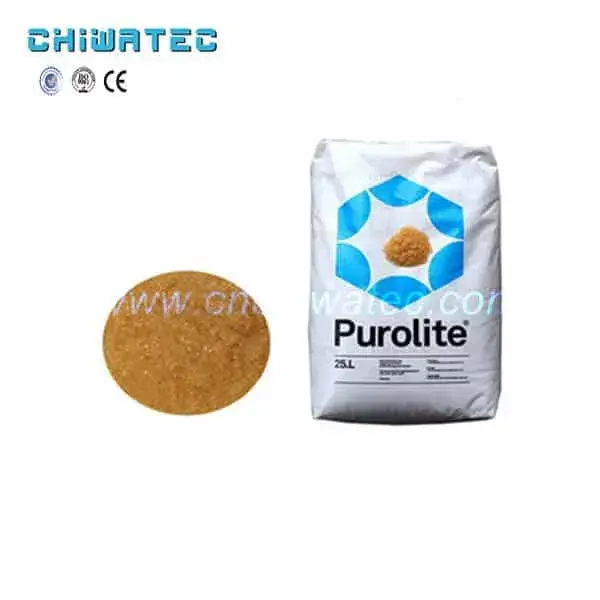
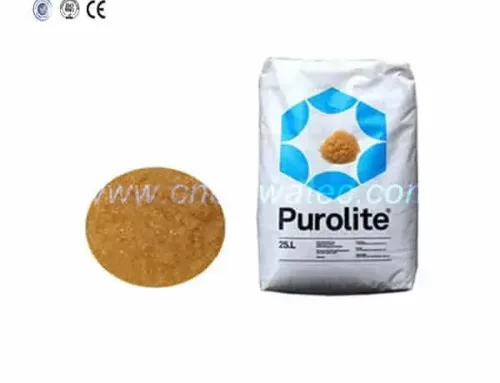
Resin type can be identified through several methods: checking manufacturer specifications and part numbers, the bead color (SAC: light yellow to amber; SBA: light yellow to dark amber; WAC: white or translucent; WBA: white or light yellow), performing a simple pH indicator test on regenerated resin samples, and conducting capacity and density measurements. For critical applications, a full resin analysis by a qualified laboratory is recommended.
Related Resources and Further Reading
¿Tiene un proyecto de tratamiento de agua con el que podamos ayudar?
* Diseño, mecanizado, instalación, puesta en marcha, personalización y servicio integral
 Spanish
  English
  Portuguese