

Water Softening Techniques: Types, Methods, and Benefits
Water softening is a crucial process with applications spanning various industries. In this article, we’ll delve into different water softening techniques, the reasons behind water softening, and the methods commonly employed to combat scale buildup.
Understanding Water Softening
Water naturally contains a range of soluble compounds. Some of these compounds, like calcium carbonate and magnesium carbonate, exhibit changes in solubility with temperature variations. When the temperature rises, these compounds tend to precipitate, forming deposits commonly known as scale. These deposits can take the form of flakes, powder, or adhere to the surfaces of containers and pipes, leading to the formation of limescale.
Common Water Softening Methods
To prevent the buildup of limescale and soften hard water, several methods are commonly used:
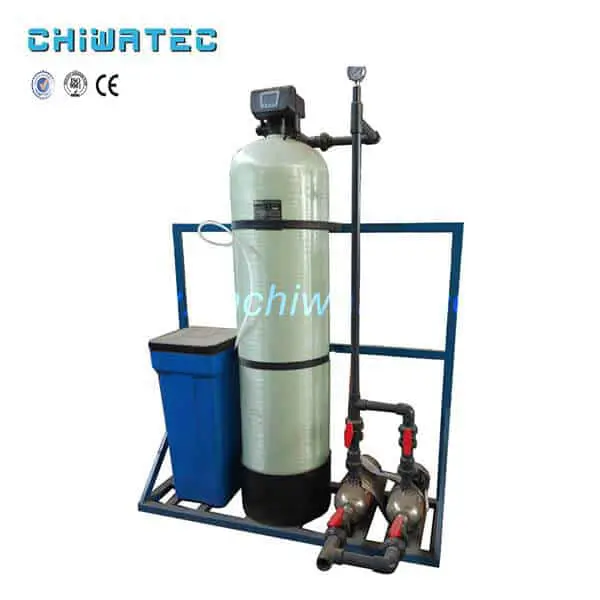
1) Ion Exchange Method: This method employs specific cation exchange resins to replace calcium and magnesium ions in water with sodium ions. Since sodium salts have high solubility, this process prevents scale formation even with temperature fluctuations. It’s a widely adopted and standard method known for its stability and accuracy. It can reduce water hardness to near zero. Equipment used for this method is often referred to as an “ion exchanger.”
2) Membrane Separation: Technologies like nanofiltration (NF) and reverse osmosis (RO) can intercept calcium and magnesium ions in water, significantly reducing water hardness. While effective and stable, this method requires higher water pressure and involves higher equipment investment and operational costs. It is generally less used for specific water softening applications.
3) Lime Softening: Lime is added to water to treat high-flow, highly hard water, but it can only reduce hardness to a certain extent.
4) Chemical Treatment: Specialized scale inhibitors are added to water to alter the characteristics of calcium and magnesium ions, preventing limescale from precipitating. While this method requires a relatively low initial investment and is versatile, it can become costly to operate when treating large volumes of water. Due to the addition of chemicals, it’s not suitable for drinking water, food processing, or industrial production and is rarely used in domestic applications.
5) Electromagnetic Method: By applying an electric or magnetic field to water, the properties of ions are altered, affecting the rate and physical characteristics of calcium carbonate (and magnesium carbonate) precipitation, thereby preventing the formation of hard water deposits. This method is known for its low equipment investment, easy installation, and cost-effectiveness. However, its effectiveness may vary and is not standardized. It is often used in commercial applications, such as cooling water systems for central air conditioning, rather than industrial production or boiler feedwater treatment.
Measuring Water Hardness
Water hardness, measured in various units such as mg/L, mmol/L, and grains per gallon, is the total concentration of calcium (Ca2+) and magnesium (Mg2+) ions. In daily life, water with hardness below 3 mmol/L is considered relatively soft, while 3-6 is categorized as moderately hard, 6-8 as hard, and above 10 as very hard.
The Importance of Water Softening
Limescale deposits have a significant impact on daily life and industrial processes. For example, in the case of boilers, the presence of hardness salts in the feedwater can lead to reduced thermal efficiency, increased fuel consumption, and even damage to components due to localized overheating and potential explosions. Therefore, low-pressure boilers require water softening, while medium and high-pressure boilers require both softening and desalination.
Conclusión
Water softening is essential to prevent limescale buildup and ensure the efficient operation of various equipment and processes. Different industries and applications require specific water softening methods based on their unique needs and operating conditions. Understanding the importance of water softening and the available techniques is crucial for maintaining equipment performance and efficiency.
Xian CHIWATEC Water Treatment Technology es una empresa de alta tecnología especializada en varios dispositivos de procesamiento de agua. Aparte de estos productos individuales, que cubren una serie de tipos y series, también podemos ayudar con proyectos de ingeniería integrales relacionados. Gracias a nuestro arduo trabajo y dedicación desde nuestra fundación, ahora somos uno de los fabricantes de equipos de tratamiento de agua de más rápido desarrollo en el oeste de China.
Otras lecturas
- ¿Cuál es la función principal del equipo de tratamiento de agua ablandada para ablandar el agua de la caldera?
- Introducción a las ventajas de los ablandadores de agua automáticos, ablandadores de agua y equipos de ablandamiento de agua
- ¿Por qué hacer el mantenimiento de rutina del equipo automático de ablandamiento de agua de calderas?
- Selection method of water softening equipment for steam boiler
SÍGANOS
¿Tiene un proyecto de tratamiento de agua con el que podamos ayudar?
* Diseño, mecanizado, instalación, puesta en marcha, personalización y servicio integral






 Spanish
  English
  Portuguese




