Visión general
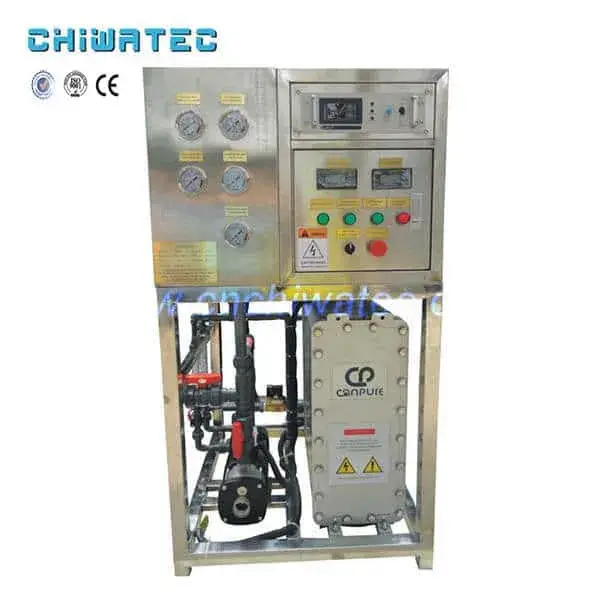
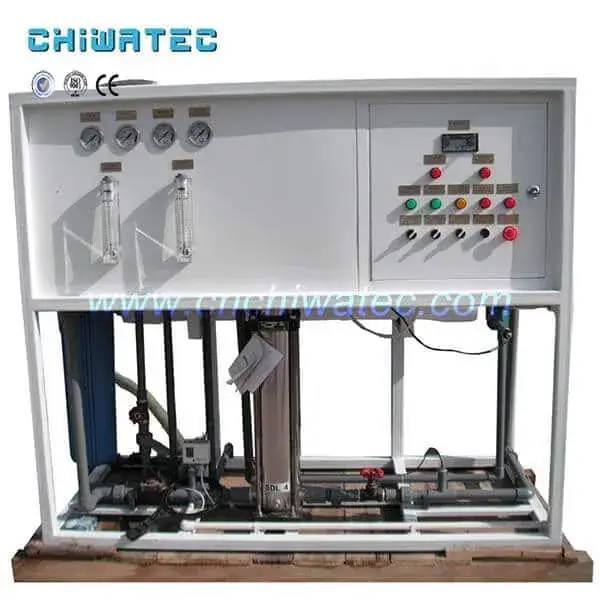
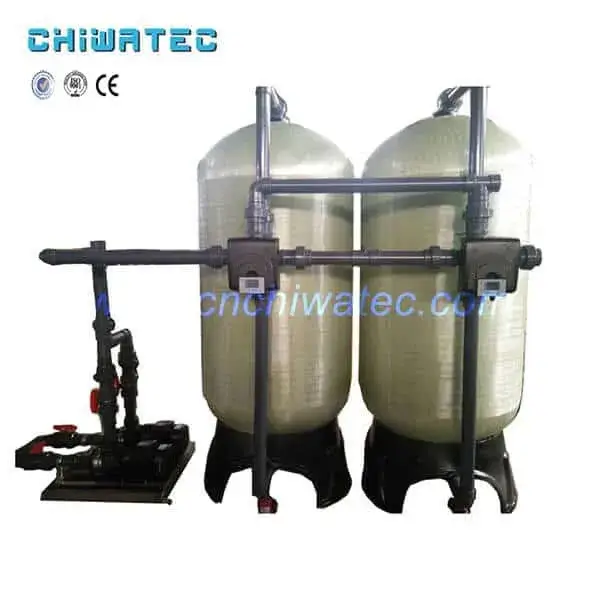
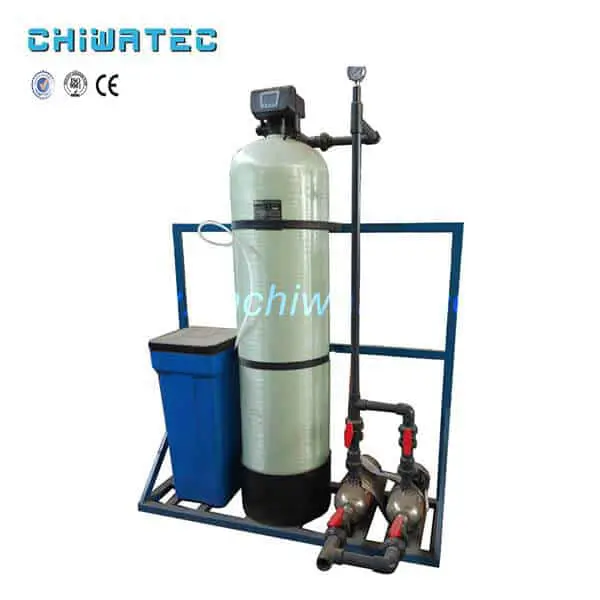
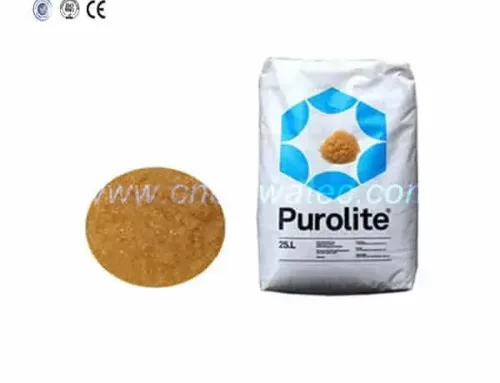
Softening, as the name suggests, reduces the hardness of water. The softened water system consists of three parts, namely the ion exchange part, the salt regeneration part and the control part. Ion exchange technology is the working principle of the softening system. Its main body is ion exchange resin. Since the hardness of water is mainly formed and represented by calcium and magnesium, cation exchange resin is generally used to remove Ca2+ and Mg2+ in water (the main components of scale formation). ) was replaced, with the increase of Ca2+ and Mg2+ in the resin, the efficiency of the resin to remove Ca2+ and Mg2+ gradually decreased. Therefore, when the softened water equipment is used for a period of time, the resin needs to be regenerated with the salt regeneration part to restore the performance of the resin and improve the service life of the resin. The control part can realize the automatic operation of the whole system, and automatically perform salt regeneration according to the operating time of the system or through the amount of water.
Principio
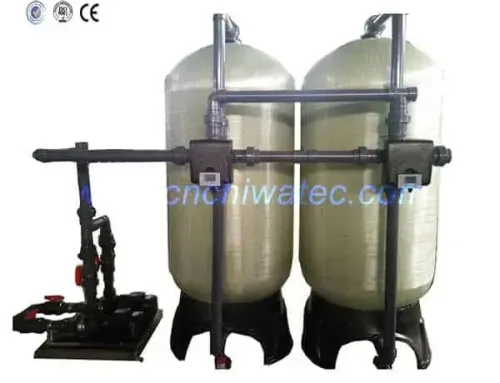
The fully automatic softening water system removes the scaling ions such as calcium and magnesium in the water through the principle of ion exchange to soften the water. The system is an integrated equipment composed of resin tank, salt tank (softening resin), controller, etc. The system adopts the siphon principle to absorb salt, automatically injects hydration salt, and the proportioning concentration does not require auxiliary equipment such as salt pump and dissolved salt.
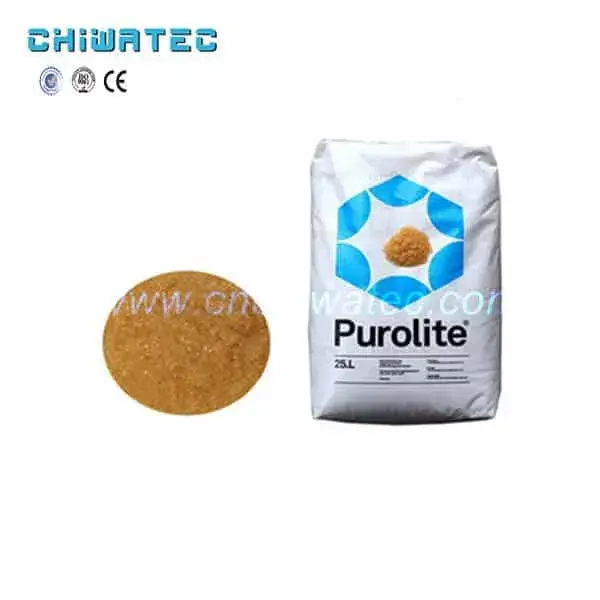
The principle of the sodium ion exchange softening treatment is to pass the raw water through the sodium cation exchange resin, so that the hardness components Ca2+ and Mg2+ in the water are exchanged with the Na+ in the resin, so as to absorb the Ca2+ and Mg2+ in the water and soften the water. For example, the sodium resin is represented by RNA, and its exchange process is as follows:
2RNa + Ca2+ = R2Ca + 2Na+ 2RNa + Mg2+ = R2Mg + 2Na+
That is, after the water passes through the sodium ion exchanger, the Ca+ and Mg+ in the water are replaced by Na+.
When the sodium ion exchange resin fails, it needs to be regenerated in order to restore its exchange capacity. The regenerant is a salt solution that is cheap and widely available. The regeneration process reacts as follows:
R2Ca + 2NaCl = 2RNa + CaCl2 R2Mg + 2NaCl = 2RNa + MgCl2
Características
The pipeline is simplified and the floor space is saved; the operation is stable and reliable; the regeneration salt is saved; the operation cost is low; maintenance-free.
Wide applicability: can be used in industrial boilers, heat exchangers, central air conditioners and food, pharmaceutical, electronics and other industries
Requerimientos técnicos
- Dureza del agua cruda: ≤8mmol/L;
- Dureza residual del efluente: ≤0.03mmol/L;
- Presión de trabajo: 0.2-0.6MPa;
- Inlet water temperature: 2~38℃; Working temperature: 2-60℃;
- Automatic control power supply: 220V 50Hz; power consumption: 10W;
- Modelo de resina: resina de intercambio catiónico de ácido fuerte tipo 001 × 7; (alrededor de 18 kg)
- La presión de entrada es inferior a 0.2MPa~0.4MPa
- Equipment total pressure loss: 0.03MPa.
- Rango de pH: 1-14
- Método de regeneración: regeneración dinámica aguas abajo (contracorriente)
- Consumo de sal: <160-250g/mol (según calidad del agua)
- Water consumption: ﹤2% of water production
- Capacidad de tratamiento de agua: 100-150L/H
- Dimensions: 480×280×1150(mm)
- Peso: 35Kg
- Control mode: time period type, resin exchange and regeneration are carried out according to the set time.
Xian CHIWATEC Water Treatment Technology es una empresa de alta tecnología especializada en varios dispositivos de procesamiento de agua. Aparte de estos productos individuales, que cubren una serie de tipos y series, también podemos ayudar con proyectos de ingeniería integrales relacionados. Gracias a nuestro arduo trabajo y dedicación desde nuestra fundación, ahora somos uno de los fabricantes de equipos de tratamiento de agua de más rápido desarrollo en el oeste de China.
Otras lecturas:
- Introducción a las ventajas de los ablandadores de agua automáticos, ablandadores de agua y equipos de ablandamiento de agua
- ¿El mantenimiento del ablandador de agua debe realizarse semanal, mensual y anualmente?
- ¿Cómo seleccionar el ablandador de agua y el equipo de ablandamiento de calderas?
- Ablandador de agua automático 100-150L por hora
- Notas sobre la selección de ablandadores de agua automáticos
- Asuntos que requieren atención en el ablandador de agua automático de Fleck
- Suavizador de agua
- ¿Cuáles son los componentes principales de un ablandador de agua doméstico?
- Principio del ablandador de agua
- Introducción de las características del producto suavizante de agua
- Introducción de equipos automáticos de ablandador de agua.
- Tanque de ablandador de agua Pentair
- Suavizador de agua Fleck 2850
- Selección requerida de ablandador de agua y selección de equipo ablandador
- Descripción de la tecnología del ablandador de agua y descripción general del principio de ablandamiento
SÍGANOS
¿Tiene un proyecto de tratamiento de agua con el que podamos ayudar?
* Diseño, mecanizado, instalación, puesta en marcha, personalización y servicio integral
 Spanish
  English
  Portuguese