

Water Quality Preconditioner: Complete Guide to Water Pretreatment Systems & Filtration Technology
Water quality preconditioners serve as critical pretreatment systems in modern water purification processes, combining multi-media filtration, activated carbon adsorption, and ion exchange softening to prepare feed water for reverse osmosis, deionization, and other advanced treatment technologies. The global water pretreatment equipment market reached $8.9 billion in 2025, with industrial pretreatment systems growing at 6.8% CAGR, driven by stringent water quality requirements in pharmaceutical, semiconductor, food & beverage, and power generation sectors.
Understanding water pretreatment system design, filter media selection, and operational parameters is essential for water treatment engineers, facility managers, and process operators seeking to optimize downstream treatment performance, extend membrane lifespan, and ensure consistent product water quality. This comprehensive guide explores pretreatment technologies, filtration mechanisms, and 2026 industry innovations in water quality preconditioning.
Key Technical Parameters
- Multi-Media Filter Flow Rate: 5-15 GPM/ft² (typical), up to 20 GPM/ft² (high-rate)
- Activated Carbon Flow Rate: 2-5 GPM/ft² (dechlorination), 5-10 GPM/ft² (organic removal)
- Softener Exchange Capacity: 15,000-80,000 grains (residential/commercial)
- Influent Turbidity: <20 NTU (multi-media filter inlet)
- Effluent Turbidity: <3 NTU (multi-media filter outlet)
- Operating Pressure: 20-100 PSI (typical range)
- Temperature Range: 40-100°F (4-38°C)
Understanding Water Quality Preconditioners: Fundamentals and Applications
What is a Water Quality Preconditioner?
A water quality preconditioner (also called water pretreatment system) is a multi-stage filtration assembly designed to remove suspended solids, organic matter, chlorine, hardness, and other contaminants from feed water before it enters sensitive downstream processes such as reverse osmosis (RO), electrodeionization (EDI), or distillation. Proper pretreatment protects expensive membranes and equipment from fouling, scaling, and chemical degradation.
According to 2026 industry standards, effective water pretreatment systems must achieve:
- Silt Density Index (SDI): <3.0 (RO feed requirement)
- Free Chlorine: <0.1 ppm (protects polyamide RO membranes)
- Hardness: <1 gpg (prevents scale formation)
- Turbiedad: <1.0 NTU (optimal for membrane systems)
- TOC (Total Organic Carbon): <500 ppb (reduces biofouling risk)
Typical Pretreatment System Configuration
A complete water quality preconditioner typically consists of:
- Multi-Media Filter: Removes suspended solids, sediment, and turbidity
- Activated Carbon Filter: Adsorbs chlorine, organics, taste, and odor compounds
- Water Softener: Removes calcium and magnesium hardness via ion exchange
- Security/Micron Filter: Final particulate protection (5-20 micron) before RO
Additional pretreatment components may include:
- Chemical Dosing: Antiscalants, biocides, pH adjusters
- Ultrafiltration (UF): Advanced particulate and pathogen removal
- Degassification: CO₂ and dissolved gas removal
Multi-Media Filters: Mechanical Filtration Fundamentals
Working Principle
Multi-media filters employ multiple layers of filter media with varying particle sizes and densities to capture suspended solids through mechanical straining, sedimentation, and adsorption mechanisms. Water flows downward through the media bed under pressure (typically 20-80 PSI), with larger particles trapped in upper layers and finer particles captured in deeper layers.
Filter Media Composition
| Media Type | Particle Size | Gravedad específica | Primary Function |
|---|---|---|---|
| Anthracite Coal | 0.8-1.6 mm | 1.4-1.6 | Upper layer, coarse filtration |
| Silica Sand | 0.4-0.8 mm | 2.6-2.7 | Middle layer, medium filtration |
| Garnet/Ilmenite | 0.2-0.4 mm | 3.8-4.2 | Bottom layer, fine filtration |
Alternative Media Options:
- Quartz Sand: Cost-effective, widely available
- Granular Porous Ceramics: High surface area, chemical resistance
- Manganese Sand: Iron and manganese removal (catalytic oxidation)
- Activated Alumina: Fluoride and arsenic removal
Performance Specifications
- Influent Turbidity: <20 NTU (recommended)
- Effluent Turbidity: <3 NTU (typical), <1 NTU (optimized)
- Flow Rate: 5-15 GPM/ft² (service), 10-15 GPM/ft² (backwash)
- Bed Depth: 24-48 inches (total media depth)
- Backwash Frequency: Every 24-72 hours or ΔP >10-15 PSI
- Backwash Duration: 10-20 minutes (until effluent runs clear)
Backwash Mechanism
Regular filter backwashing is critical for maintaining filtration efficiency:
- Backwash: Reverse water flow (upward) expands media bed 40-50%, flushing trapped particles to drain
- Air Scour (optional): Compressed air injection agitates media, dislodging stubborn particulates
- Rinse: Brief downflow settles media bed and removes residual debris
2026 automated multi-media filters incorporate differential pressure sensors and programmable logic controllers (PLC) for demand-initiated backwashing, optimizing water usage and extending filter run times.
Activated Carbon Filters: Adsorption Technology for Chemical Contaminant Removal
Activated Carbon Properties
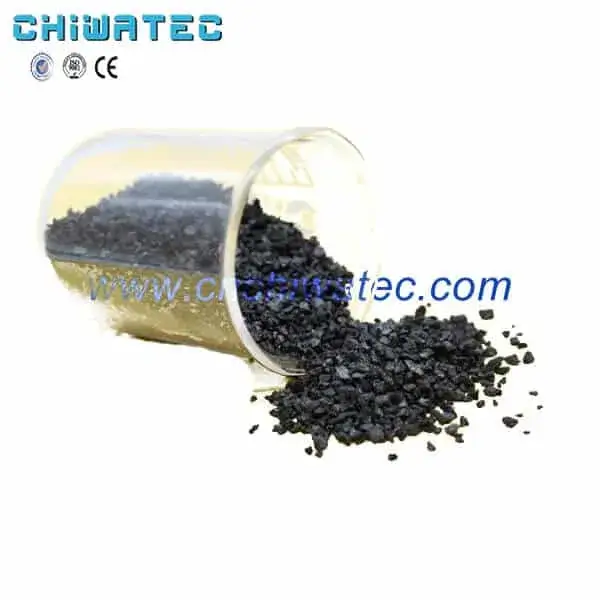
Carbón activado is a highly porous form of carbon with enormous internal surface area (500-1,500 m²/g), created by thermal activation of carbonaceous materials (coal, coconut shell, wood). This porous structure provides extensive adsorption sites for organic molecules, chlorine, and other contaminants.
Adsorption Mechanisms
Physical Adsorption (Van der Waals Forces):
- Organic molecules are attracted to carbon surface pores
- Larger molecules (higher molecular weight) adsorb more readily
- Non-polar compounds adsorb more strongly than polar compounds
Chemical Adsorption (Chemisorption):
- Chlorine reacts with carbon surface: C* + Cl₂ + H₂O → C*O + 2HCl
- Catalytic decomposition converts chlorine to chloride ions
- Requires sufficient contact time (empty bed contact time, EBCT)
Applications and Flow Rates
| Solicitud | Flow Rate (GPM/ft²) | EBCT (minutes) | Primary Target |
|---|---|---|---|
| Dechlorination | 10-20 | 0.5-1.5 | Free chlorine, chloramine |
| Organic Removal | 2-5 | 5-10 | TOC, VOCs, pesticides |
| Taste & Odor | 2-5 | 5-10 | Geosmin, MIB, organics |
| Heavy Metals | 1-3 | 10-15 | Mercury, lead, chromium |
Adsorption Capabilities
Activated carbon filters effectively remove:
- Organic Compounds: Natural organic matter (NOM), synthetic organics, pesticides, herbicides
- Disinfection Byproducts: Trihalomethanes (THMs), haloacetic acids (HAAs)
- Non-Metallic Substances: Chlorine, chloramine, bromine, iodine, ozone
- Heavy Metals: Silver, arsenic, hexavalent chromium, mercury, antimony, tin (limited capacity)
- Aesthetic Contaminants: Color, taste, odor compounds, pharmaceutical residues
Carbon Replacement and Regeneration
- Service Life: 2-5 years (typical), depends on contaminant loading
- Depletion Indicators: Chlorine breakthrough (>0.1 ppm), increased TOC, pressure drop
- Backwashing: Weekly to monthly (removes trapped particulates, reclassifies bed)
- Thermal Regeneration: Possible for industrial carbons (specialized facilities required)
2026 industry data shows catalytic activated carbon (CAC) growing in popularity for chloramine removal, offering 3-5x longer service life than standard coal-based carbon in municipal water applications.
Water Softeners: Hardness Removal via Ion Exchange
Role in Pretreatment
Water softeners are frequently incorporated into pretreatment systems to prevent scale formation on RO membranes, heat exchangers, and boiler tubes. By removing calcium (Ca²⁺) and magnesium (Mg²⁺) ions, softeners eliminate the primary contributors to carbonate and sulfate scaling.
Ion Exchange Process
Softener resin (strong acid cation, SAC) exchanges sodium ions (Na⁺) for hardness ions:
- Exchange Reaction: 2R-Na + Ca²⁺ → R₂-Ca + 2Na⁺
- Resin Capacity: 30,000-45,000 grains/ft³ (standard SAC resin)
- Hardness Removal: 95-99% efficiency (properly operated)
Regeneration Requirements
- Regenerant: 10-15% NaCl brine solution
- Salt Dosage: 6-15 lbs/ft³ resin (efficiency vs. capacity tradeoff)
- Frequency: Every 3-7 days (prevents resin fouling)
- Brine Contact Time: 30-60 minutes (slow rinse phase)
For detailed information on softener operation and regeneration, refer to our comprehensive guide on water softener working principles.
Pretreatment System Design Considerations
Tank Materials and Construction
| Material | Advantages | Limitations | Aplicaciones |
|---|---|---|---|
| Stainless Steel (304/316) | Corrosion resistant, durable, sanitary | Higher cost | Food, pharma, high-purity |
| Carbon Steel (Epoxy Lined) | Cost-effective, strong | Lining can degrade | Industrial, commercial |
| Fiberglass Reinforced Plastic (FRP) | Corrosion resistant, lightweight | Lower pressure rating | General water treatment |
| PVC/UPVC | Low cost, chemical resistant | Limited size/pressure | Small systems, residential |
Control Systems
Manual Control:
- Operator-initiated backwash/regeneration cycles
- Lower cost, suitable for small systems
- Requires consistent operator attention
Fully Automatic Control:
- Time-clock or demand-initiated (flow-based) cycles
- PLC-based automation with remote monitoring
- Consistent performance, reduced labor
- Standard for industrial and commercial installations
Filtration Media Selection
Choosing appropriate filter materials depends on feed water quality and treatment objectives:
- Filter Cloth/Screen: Coarse particulate removal (>100 micron)
- Filter Disc: Self-cleaning filtration (20-400 micron)
- Sintered Filter Tube: Fine particulate removal (5-50 micron)
- Honeycomb Filter Element: High surface area, extended service life
- Microporous Filter Cartridge: Final security filtration (1-20 micron)
- Multi-Function Filter Elements: Combined mechanical/chemical treatment
Latest Industry Trends and Innovations (2026)
Smart Pretreatment Systems with IoT Integration
Modern water quality preconditioners incorporate advanced monitoring and control:
- Real-time turbidity, chlorine, and pressure monitoring
- Predictive maintenance alerts based on performance trends
- Remote diagnostics and cloud-based data logging
- Automatic backwash optimization based on differential pressure
- Integration with SCADA and building management systems
2026 market analysis indicates smart pretreatment systems reducing operational costs by 20-30% through optimized backwash cycles and early fouling detection.
Advanced Filter Media Technologies
- Catalytic Media: Enhanced chlorine/chloramine removal, extended service life
- Nano-Enhanced Carbon: Improved adsorption capacity for emerging contaminants (PFAS, pharmaceuticals)
- High-Uniformity Resin: Better flow distribution, higher exchange capacity
- Antimicrobial Media: Silver-impregnated carbon prevents biofilm growth
Sustainable Pretreatment Solutions
- Water-Efficient Backwash: Counter-current backwash reduces water consumption by 40-50%
- Brine Reduction: High-efficiency softeners use 30-40% less salt
- Media Recycling: Spent carbon and resin reactivation programs
- Energy Recovery: Pressure exchangers in high-pressure pretreatment systems
Pretreatment Performance Monitoring
Key Parameters to Monitor
| Parámetro | Frequency | Target Value | Significance |
|---|---|---|---|
| Turbiedad | Daily/Continuous | <1.0 NTU | Particulate fouling potential |
| SDI (Silt Density Index) | Weekly | <3.0 | RO membrane fouling index |
| Free Chlorine | Daily/Continuous | <0.1 ppm | RO membrane oxidation risk |
| Dureza | Weekly | <1 gpg | Scale formation potential |
| Pressure Drop (ΔP) | Daily | <10-15 PSI | Filter fouling indicator |
Troubleshooting Common Issues
| Problem | Possible Cause | Solution |
|---|---|---|
| High effluent turbidity | Channeling, exhausted media, high flow rate | Backwash filter, reduce flow rate, replace media |
| Chlorine breakthrough | Carbon exhausted, insufficient contact time | Replace carbon, reduce flow rate, add second stage |
| High pressure drop | Media fouling, clogged underdrain | Backwash, inspect/clean underdrain, replace media |
| Softener hardness leakage | Resin exhausted, brine system malfunction | Regenerate softener, check brine tank/valve |
Conclusión
Water quality preconditioners form the foundation of reliable water treatment systems, protecting downstream processes from fouling, scaling, and chemical degradation. By combining multi-media filtration, activated carbon adsorption, and ion exchange softening, pretreatment systems ensure consistent feed water quality for reverse osmosis, deionization, and other advanced purification technologies.
As we advance through 2026, innovations in smart monitoring, advanced filter media, and sustainable design continue to enhance water pretreatment system performance while reducing operational costs and environmental impact. Whether designing new installations or optimizing existing systems, proper selection of filter media, control strategies, and maintenance protocols ensures long-term reliability and cost-effective operation.
For water treatment professionals and facility operators, mastering water quality preconditioner fundamentals provides an essential foundation for achieving optimal water quality objectives while maximizing equipment lifespan and operational efficiency.
FAQ: Water Quality Preconditioners
Q1: How often should multi-media filters be backwashed?
Multi-media filter backwash frequency depends on influent water quality and flow rate. Typical intervals range from 24-72 hours, or when differential pressure exceeds 10-15 PSI. Demand-initiated backwashing (based on ΔP or turbidity breakthrough) is more efficient than fixed time-clock schedules. Backwash duration should be 10-20 minutes, or until effluent runs clear. Insufficient backwashing leads to media fouling and reduced filtration efficiency.
Q2: What is the difference between coal-based and coconut-shell activated carbon?
Coal-based activated carbon offers larger pores, better suited for removing larger organic molecules and general water treatment. Coconut-shell carbon has finer pores and higher hardness, ideal for adsorbing smaller molecules (VOCs, taste/odor compounds) and applications requiring low dust. Coconut carbon typically costs 20-30% more but provides superior performance for specific contaminants. Selection should be based on target contaminant profile and application requirements.
Q3: Can pretreatment systems remove bacteria and viruses?
Standard water pretreatment systems (multi-media, carbon, softener) provide limited pathogen removal through mechanical entrapment and adsorption, but are not designed or certified for disinfection. For reliable bacteria/virus removal, incorporate:
- Ultrafiltration (UF) membranes (0.01-0.1 micron)
- UV disinfection systems
- Chemical disinfection (chlorine, ozone) followed by carbon dechlorination
- Sub-micron absolute-rated filters (0.2-0.45 micron)
Q4: How do I know when to replace activated carbon?
Activated carbon replacement is indicated by:
- Chlorine breakthrough (>0.1 ppm at filter outlet)
- Increased TOC or COD in effluent
- Taste/odor complaints (for drinking water applications)
- Service time exceeds 2-5 years (typical lifespan)
- Pressure drop cannot be restored by backwashing
Regular monitoring of chlorine and TOC provides early warning of carbon exhaustion. Some facilities schedule preventive replacement based on throughput (gallons treated) rather than waiting for breakthrough.
Q5: Is water softening always necessary for RO pretreatment?
ablandamiento del agua is recommended when feed water hardness exceeds 3-5 gpg (50-85 mg/L as CaCO₃). Softening prevents calcium carbonate and calcium sulfate scale on RO membranes, especially in high-recovery systems. For low-hardness water (<3 gpg), antiscalant chemical dosing may be more cost-effective. Brackish water RO systems treating high-hardness water often require softening to achieve economical recovery rates without frequent membrane cleaning.
Q6: What is SDI and why is it important?
Silt Density Index (SDI) measures the fouling potential of suspended and colloidal particles in water. SDI is determined by measuring the time required for a fixed volume of water to pass through a 0.45-micron filter under constant pressure. RO membrane manufacturers typically require SDI <3.0 (some specify <5.0). High SDI indicates inadequate pretreatment and predicts rapid membrane fouling. SDI testing should be performed weekly on RO feed water.
Further Reading – Related Articles
- CHIWATEC Provides a Complete Guide to Reverse Osmosis (RO) System Operation and Maintenance – Comprehensive RO system commissioning, operation, and cleaning guide
- Ion Exchange Resin Classification: Complete Guide to Water Treatment Resins 2026 – Overview of resin types for softening and deionization
¿Tiene un proyecto de tratamiento de agua con el que podamos ayudar?
* Diseño, mecanizado, instalación, puesta en marcha, personalización y servicio integral






 Spanish
  English
  Portuguese




