Various Indicators of Water Quality — pH Value, Suspended Matter and Other Key Parameters
This article explains the most important water quality indicators used in environmental protection, industrial processes, and water treatment engineering. Understanding pH, suspended matter, hardness, resistivity, and conductivity is essential for evaluating water purity, designing treatment processes, and ensuring safe water supply.
1. pH Value — A Core Indicator of Water Acidity and Alkalinity
los pH value represents the acidity or alkalinity of water and is defined as the negative logarithm of hydrogen ion concentration:
pH=−log[H+]
Because hydrogen ion concentrations in water are extremely small, the logarithmic expression provides a practical way to judge whether water is acidic, neutral, or alkaline.
- Neutral water: pH = 7
- Acidic water: pH < 7 — lower values mean stronger acidity
- Alkaline water: pH > 7 — higher values mean stronger alkalinity
Classification of water based on pH:
| pH Range | Water Type |
|---|---|
| pH < 5.0 | Strong acidic water |
| 5.0–6.4 | Weak acidic water |
| 6.5–8.0 | Neutral water |
| 8.1–10.1 | Weak alkaline water |
| > 10.0 | Strong alkaline water |
The pH value is critical in drinking water treatment, industrial processes, chemical reactions, and boiler feedwater adjustment.
2. Suspended Matter — A Major Source of Water Turbidity
Suspended matter refers to visible particles larger than 10⁻⁴ mm, and includes:
- Sand and clay
- Organic debris from plants and animals
- Protozoa, bacteria, algae, viruses
- High-molecular organic substances
These particles float or settle depending on their density and are responsible for turbidity, color, and odor in water.
Behavior of suspended particles:
- Heavier inorganic particles sink to the bottom when water is allowed to stand
- Lighter organic particles float and can be removed by filtration
Because suspended matter fluctuates with seasons, rainfall, and watershed conditions, it is one of the most unstable water quality parameters. Efficient removal requires sedimentation, coagulation, and filtration.
3. Water Hardness — Key for Boiler and Industrial Water Quality
Water hardness is caused by metal cations that form scale when water is heated or concentrated. The main contributors are:
- Calcium ions (Ca²⁺)
- Magnesium ions (Mg²⁺)
These ions combine with anions such as:
- CO₃²⁻ (carbonate)
- HCO₃⁻ (bicarbonate)
- SO₄²⁻ (sulfate)
- Cl⁻ (chloride)
- NO₃⁻ (nitrate)
Why hardness matters
Hardness causes:
- Boiler scale formation
- Reduced heat transfer
- Increased energy consumption
- Pipeline blockages
Thus, boiler water must be softened or desalinated before use.
Common hardness units and conversions
Hardness is often expressed as mmol/L, mg/L CaO or CaCO₃, German degrees (°dH), or French degrees (°fH).
Example conversion:
- 0.5 mmol/L = 28 mg/L CaO = 50 mg/L CaCO₃
These conversions help standardize hardness measurement across regions and industries.
4. Resistivity and Conductivity — Indicators of Water Purity
4.1 Resistivity of Water
Resistivity is the ability of water to resist electrical current.
- High resistivity means low ion content → purer water
- Ultrapure water used in electronics and pharmaceuticals has extremely high resistivity
Derived from Ohm’s law, resistivity depends on:
- Ion concentration
- Ion valence
- Ion mobility
- Salt content
Pure or ultrapure water has very high resistivity because it contains very few dissolved ions.
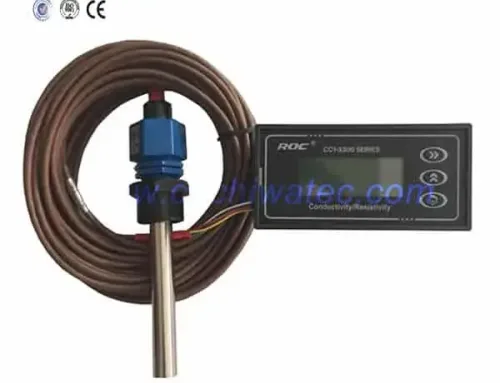
4.2 Conductivity of Water
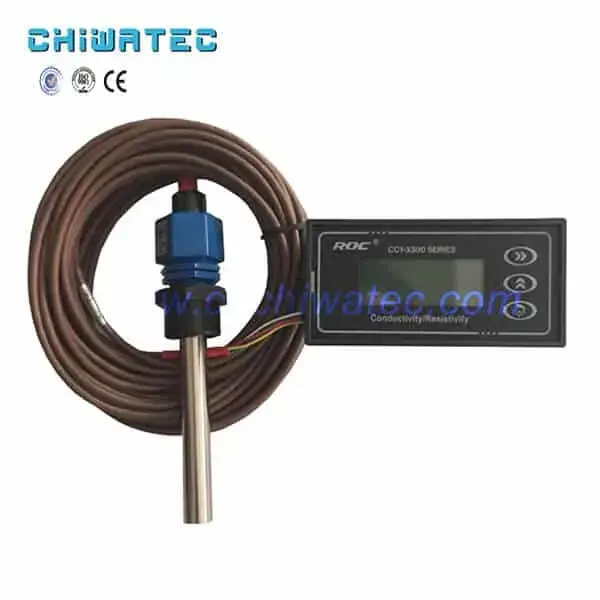
Conductivity is the inverse of resistivity:
Water conducts electricity because dissolved salts dissociate into ions. When an electric field is applied:
- Anions move to the anode
- Cations move to the cathode
This movement creates electrical conduction.
Key points:
- Higher salt concentration → higher conductivity
- Purer water → lower conductivity
- Ultrapure water has conductivity near zero
Conductivity is one of the most important indicators used in:
- RO/EDI water treatment
- Power plants
- Semiconductor manufacturing
- Laboratory ultrapure water systems
Conclusión
Water quality evaluation requires understanding multiple indicators, not just a single parameter. pH, suspended solids, hardness, resistivity, and conductivity together determine water purity and suitability for industrial, domestic, and scientific applications. Accurate measurement and control of these indicators are essential for reliable water treatment and system performance.
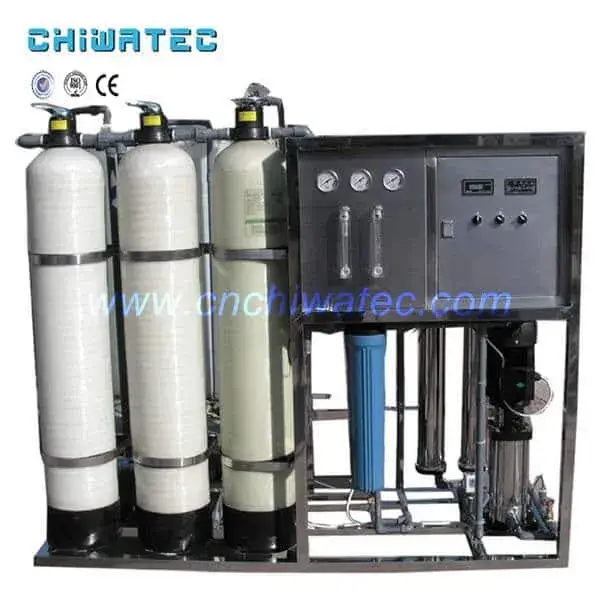
For advanced RO and pretreatment systems, explore CHIWATEC’s full product range:
👉 CHIWATEC Water Treatment Equipment & Solutions
FAQ
1. What is the most important indicator of water quality?
Different applications prioritize different indicators. Drinking water focuses on pH and turbidity, while industrial water focuses on hardness, conductivity, and resistivity.
2. Why is suspended matter harmful?
It causes turbidity, clogs filters, supports microbial growth, and can reduce the effectiveness of disinfection.
3. How does water hardness affect boilers?
It leads to scale formation, reducing heat transfer efficiency and increasing fuel consumption.
4. What is the difference between resistivity and conductivity?
- Resistivity increases as water becomes purer.
- Conductivity increases as dissolved salts increase.
They are mathematical inverses.
5. What is the ideal pH for drinking water?
Most guidelines recommend 6.5–8.5, which is safe for consumption and non-corrosive to pipes.
Xian CHIWATEC Water Treatment Technology es una empresa de alta tecnología especializada en varios dispositivos de procesamiento de agua. Aparte de estos productos individuales, que cubren una serie de tipos y series, también podemos ayudar con proyectos de ingeniería integrales relacionados. Gracias a nuestro arduo trabajo y dedicación desde nuestra fundación, ahora somos uno de los fabricantes de equipos de tratamiento de agua de más rápido desarrollo en el oeste de China.
Otras lecturas:
- The Role of Zinc Chloride and Phosphoric Acid in Water Treatment Chemicals for Closed Loop Systems
- Solar Ultrapure Water System Process Flow for Photovoltaic High-Concentration Acidic and Alkaline Wastewater Treatment
- Comprehensive Guide to Four Key Pharmaceutical Ultra-Pure Water Preparation Processes
- Comprehensive Guide to Four Key Pharmaceutical Ultra-Pure Water Preparation Processes
SÍGANOS
¿Tiene un proyecto de tratamiento de agua con el que podamos ayudar?
* Diseño, mecanizado, instalación, puesta en marcha, personalización y servicio integral
 Spanish
  English
  Portuguese