

The Most Commonly Used Filter Materials in Modern Water Treatment Equipment
Modern water treatment systems rely on a variety of filter materials to remove suspended solids, dissolved contaminants, heavy metals, organic pollutants, odors, and microorganisms. Each filtration medium has unique characteristics that make it suitable for specific applications, from municipal treatment plants to commercial systems and household filtration devices.
Below is a comprehensive overview of the most commonly used filter materials in current water treatment equipment, along with their working principles, advantages, and typical applications.
1. Activated Carbon
Activated carbon is one of the oldest and most widely used filtration materials. Produced from sources such as coal, wood, coconut shells, or palm kernels, it features a highly porous structure that provides excellent adsorption capacity.
Key characteristics:
- Strong adsorption of organic contaminants, chlorine, pesticides, VOCs, odors, and pigments
- Coconut-shell activated carbon offers the best pore distribution and stability
- Available in multiple granular sizes: 6×12 for large systems, 20×50 for household filters
- Used in:
- Drinking water systems
- Household filtration units
- Aquariums
- Industrial purification
- Pre-treatment for RO systems
Smaller granule size = higher adsorption capacity but also higher pressure drop, so proper system design is essential.
2. KDF (Kinetic Degradation Fluxion)
KDF is a high-purity alloy of copper and zinc. It works through redox (oxidation–reduction) reactions, which effectively remove contaminants from water.
Capabilities:
- Removes heavy metals, chlorine, hydrogen sulfide, and organic contaminants
- Inhibits bacterial growth
- Greatly extends the lifespan of Carbón activado y RO membranes
- Typically placed before the activated carbon layer for optimal performance
- Removes chlorine by up to 95%, reducing carbon filter load by up to 15×
KDF is widely used in household systems, commercial filtration, and industrial water purification.
3. Manganese Greensand
Manganese greensand is a specialized media used to remove:
- Iron (Fe²⁺)
- Manganese (Mn²⁺)
- Hydrogen sulfide (H₂S)
How it works:
- Oxidizes dissolved iron and manganese into solid particles
- Captures precipitates within the filter bed
- Requires regular backwashing
- Must be periodically regenerated with potassium permanganate (KMnO₄) to restore oxidizing power
Ideal for well water, groundwater treatment, and municipal systems.
4. Ion Exchange Resin
Ion exchange resin is widely used for ablandamiento del agua, reducing hardness caused by calcium and magnesium ions.
Types of resins:
- Cation exchange resin: removes Ca²⁺, Mg²⁺, and other cations
- Anion exchange resin: removes nitrates, fluoride, and some organic acids
Aplicaciones:
- Residential water softeners
- Boiler feedwater systems
- Cooling towers
- Industrial production lines
- Pretreatment for RO systems
Softened water significantly reduces scale formation in pipelines, boilers, water heaters, and heat exchange equipment.
5. Sand Filter (Filter Sand)
Sand is one of the most traditional and commonly used filter media, especially in large-scale water treatment systems.
Functions:
- Removes suspended solids, colloids, and fine particles
- Often used with a coagulant to enhance removal efficiency
- Requires frequent backwashing due to its high density
- Suitable for municipal water treatment, industrial process water, and swimming pools
Sand filters provide reliable mechanical filtration and serve as the backbone of many filtration systems.
6. PP Decontamination Filter (PP Melt-Blown Filter)
PP (polypropylene) filters are depth filters used to capture sediment, rust, sludge, and suspended solids.
Common micron ratings:
1 μm, 5 μm, 10 μm, 20 μm
Advantages:
- Stable structure
- High dirt-holding capacity
- Ideal for pre-filtration before activated carbon or RO systems
- Inexpensive and safe for potable water
PP filters are widely used in home filtration systems, industrial water lines, and commercial RO units.
7. Pleated (Origami) Filter
Pleated filters use a folded structure to increase surface area, improving filtration efficiency and flow rate.
Materials:
- Paper
- Polypropylene or other plastics
Características:
- Washable and reusable
- Higher filtration area than standard PP filters
- Paper variants may clog or degrade when microbial load is high
Ideal for high-flow systems requiring reliable particle filtration.
8. Sodium Polyphosphate
Sodium polyphosphate is a specialty media used for:
- Preventing scale formation
- Protecting pipelines from corrosion
How it works:
- Forms a thin protective film on metal surfaces
- Prevents calcium scale in hot water systems
- Safe for drinking water (FDA-approved sodium hexametaphosphate)
Not suitable for copper or copper alloys, but effective for steel and most other metals.
9. Ceramic Filter
Ceramic filters have been used for over a century, particularly in Europe.
Advantages:
- Extremely fine and uniform pore size
- Can serve as an absolute filtration barrier
- Reusable—surface contaminants can be scrubbed off
- Often impregnated with silver to inhibit bacterial growth
Ceramic filters are popular in gravity-fed systems, countertop filters, and emergency water purification.
10. Reverse Osmosis (RO) Membranes
Reverse osmosis is one of the most advanced and effective filtration technologies available.
RO capabilities:
- Removes 95–99% of dissolved salts (TDS)
- Removes heavy metals, bacteria, viruses, chemicals, and organic pollutants
- Used in:
- Seawater desalination
- Ultrapure water production
- Pharmaceutical manufacturing
- Kidney dialysis
- Cosmetics production
- Beverage and food industries
- Household RO systems
RO membranes are the final step in many multi-stage purification systems due to their unparalleled filtration performance.
Conclusión
The modern water treatment industry uses a wide range of filter materials, each designed to target specific types of contaminants. From simple sand filters to advanced RO membranes, every filter media plays a vital role in ensuring clean, safe, and high-quality water for industrial, commercial, and household use. Understanding the characteristics of each material helps ensure proper system design, improved efficiency, and long-term reliability.
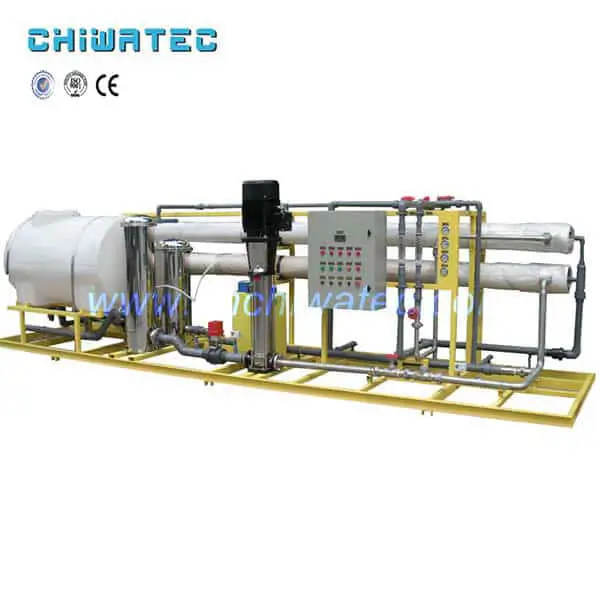
For advanced RO and pretreatment systems, explore CHIWATEC’s full product range:
👉 CHIWATEC Water Treatment Equipment & Solutions
FAQ (Frequently Asked Questions)
1. Which filter material removes heavy metals most effectively?
KDF and RO membranes are the most effective for heavy metal removal.
2. Is activated carbon enough for drinking water treatment?
Activated carbon removes chlorine, odors, and organic pollutants, but does not remove dissolved salts or microorganisms. It is best used with additional filtration stages.
3. What is the best filter material for well water with iron or manganese?
Manganese greensand or catalytic media filters are typically recommended.
4. How often should PP filters be replaced?
Typically every 3–6 months, depending on water quality and usage.
5. What is the most effective filtration technology overall?
Reverse osmosis offers the highest level of contaminant removal across a wide range of pollutants.
Xian CHIWATEC Water Treatment Technology es una empresa de alta tecnología especializada en varios dispositivos de procesamiento de agua. Aparte de estos productos individuales, que cubren una serie de tipos y series, también podemos ayudar con proyectos de ingeniería integrales relacionados. Gracias a nuestro arduo trabajo y dedicación desde nuestra fundación, ahora somos uno de los fabricantes de equipos de tratamiento de agua de más rápido desarrollo en el oeste de China.
Otras lecturas:
- Los materiales filtrantes más utilizados en los equipos de tratamiento de agua actuales
- Successful Transformation of Desalination Water Filters: A Technological Breakthrough
- Application of High Efficiency Filter in Chemical Water Treatment
- Main features and process of self-cleaning iron and manganese removal filter
SÍGANOS
¿Tiene un proyecto de tratamiento de agua con el que podamos ayudar?
* Diseño, mecanizado, instalación, puesta en marcha, personalización y servicio integral






 Spanish
  English
  Portuguese




