Activated Carbon Water Treatment: Key Factors Affecting Adsorption Efficiency
Understanding the influencing factors of activated carbon water treatment is crucial for optimizing water purification systems in 2026. This comprehensive guide explores how activated carbon properties and adsorbate characteristics impact adsorption performance, incorporating latest industry data and technological advances.
Key Takeaways:
- Activated carbon specific surface area directly correlates with adsorption capacity (1000-1500 m²/g optimal for water treatment)
- Pore size distribution affects adsorption rate – transition pores (20-1000Å) critical for molecular diffusion
- Adsorbate solubility, molecular structure, and polarity determine removal efficiency
- 2026 market data shows 8.2% CAGR growth in activated carbon water treatment sector
Introduction: Activated Carbon Water Treatment in 2026
los tratamiento de agua con carbón activado industry continues to evolve rapidly. According to 2025-2026 market research, the global activated carbon water treatment market reached $4.8 billion USD, with projected growth to $7.2 billion by 2028. This expansion reflects increasing demand for advanced water purification technologies across municipal, industrial, and residential applications.
Since the adsorption process and the principle of action involved in activated carbon water treatment are more complicated, there are also many influencing factors. It is mainly related to the nature of activated carbon, the nature of pollutants in water, the process principle of activated carbon treatment, and the selected operating parameters and operating conditions.
Properties of Activated Carbon: Primary Influencing Factors
Specific Surface Area and Adsorption Capacity
Since the adsorption phenomenon occurs on the surface of the adsorbent, the specific surface area of the adsorbent is one of the important factors affecting the adsorption. The larger the specific surface area, the better the adsorption performance.
Industry standards in 2026 specify that high-quality water treatment activated carbon should maintain specific surface area between 900-1500 m²/g. Premium coconut shell-based activated carbon can achieve up to 1800 m²/g, offering superior adsorption capacity for organic contaminants.
Micropore Distribution and Internal Diffusion
Because the adsorption process can be regarded as three stages, internal diffusion has a greater influence on the adsorption rate, so the micropore distribution of activated carbon is another important factor affecting adsorption.
Optimal Pore Structure for Water Treatment:
- Micropores (<20Å): Primary adsorption sites for small molecules
- Transition pores (20-1000Å): Critical for molecular diffusion – should comprise 40-50% of total pore volume
- Macropores (>1000Å): Facilitate bulk transport to internal surfaces
Surface Chemical Properties and Polarity
In addition, the surface chemical properties, polarity and charge of activated carbon also affect the adsorption effect. Surface functional groups (carboxyl, hydroxyl, lactone) influence affinity for different contaminants.
2026 research indicates that modified activated carbon with enhanced surface chemistry can improve removal rates for specific pollutants by 15-30% compared to standard grades.
Physical Requirements for Water Treatment Activated Carbon
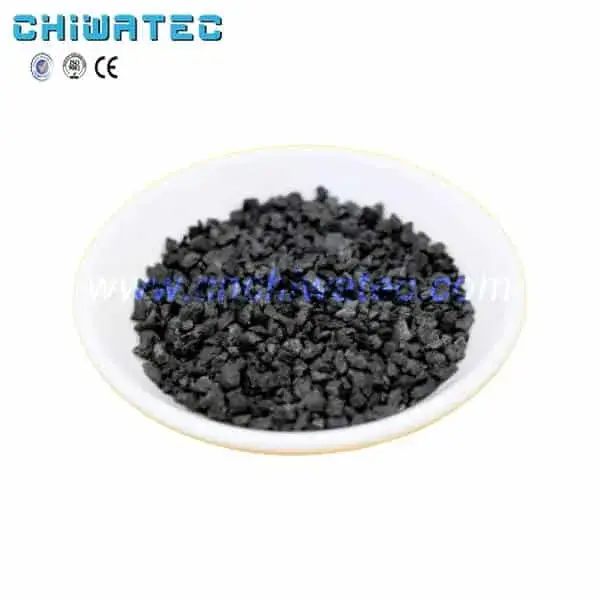
The activated carbon used for water treatment should have three requirements: large adsorption capacity, fast adsorption speed, and good mechanical strength. The adsorption capacity of activated carbon is attached to other external conditions, which is mainly related to the specific surface area of activated carbon. The specific surface area is large, the number of micropores is large, and there are many adsorbates that can be adsorbed on the pore wall.
The adsorption speed is mainly related to particle size and fine pore distribution. Activated carbon for water treatment requires transition pores (radius 20~1000A) to be developed, which is beneficial to the diffusion of adsorbate into fine pores. The smaller the particle size of activated carbon, the faster the adsorption speed, but the loss of water head should be increased, generally in the range of 8~30 mesh. The mechanical wear resistance of activated carbon directly affects the service life of activated carbon.
Nature of Adsorbate: How Pollutant Characteristics Affect Removal
The adsorption capacity of the same activated carbon for different pollutants is very different. Understanding adsorbate properties enables optimized system design for targeted contaminant removal.
(1) Solubility and Adsorption Affinity
The solubility of the same group of substances decreases with the lengthening of the chain, while the adsorption capacity increases with the series of homologues or molecular weight. The lower the solubility, the easier the adsorption.
For example, the order of activated carbon adsorbing organic acids from water is increased by formic acid-acetic acid-propionic acid-butyric acid. This principle guides selection of activated carbon grades for specific industrial wastewater applications.
(2) Molecular Structure and Size
The size and chemical structure of the adsorbate molecules also have a greater influence on the adsorption. Because the adsorption rate is affected by the internal diffusion rate, the size of the adsorbate (solute) molecule is proportional to the pore size of the activated carbon, which is most conducive to adsorption.
Key Molecular Factors:
- Larger molecules in homologues adsorb more readily than smaller counterparts
- Unsaturated bonds enhance adsorption compared to saturated structures
- Aromatic organic matter adsorbs more easily than aliphatic organic matter
- Molecular weight above 500 Da may experience pore exclusion in microporous carbon
(3) Polarity Effects
Activated carbon can basically be regarded as a non-polar adsorbent, the adsorption capacity of non-polar substances in water is greater than polar substances. This characteristic makes activated carbon particularly effective for:
- Volatile organic compounds (VOCs)
- Chlorinated hydrocarbons
- Pesticides and herbicides
- Industrial solvents
(4) Adsorbate Concentration
When the concentration of the adsorbate is within a certain range, as the concentration increases, the adsorption capacity increases. Therefore, the concentration of the adsorbate (solute) changes, and the adsorption capacity of the activated carbon for the adsorbate (solute) also changes.
2026 studies show that optimal adsorption efficiency occurs at concentrations between 10-500 ppm for most organic contaminants. Above this range, competitive adsorption and pore saturation reduce per-unit efficiency.
Conclusion: Optimizing Activated Carbon Water Treatment Systems
Successful tratamiento de agua con carbón activado requires careful consideration of both carbon properties and adsorbate characteristics. Key optimization strategies for 2026 include:
- Select activated carbon with appropriate pore size distribution for target contaminants
- Match surface chemistry to pollutant polarity and molecular structure
- Optimize particle size balancing adsorption rate vs. pressure drop
- Monitor breakthrough curves to maximize carbon utilization
- Consider regeneration options to reduce operational costs
As water quality standards become more stringent globally, understanding these influencing factors of activated carbon adsorption becomes increasingly critical for treatment system designers and operators.
FAQ: Activated Carbon Water Treatment
1. What is the optimal specific surface area for water treatment activated carbon?
For most water treatment applications, activated carbon with specific surface area between 900-1500 m²/g provides optimal balance of adsorption capacity and cost-effectiveness. Premium applications may benefit from carbons exceeding 1500 m²/g.
2. How does pore size affect adsorption rate?
Transition pores (20-1000Å) are critical for molecular diffusion into the carbon structure. Optimal pore size should match target contaminant molecular dimensions – typically 1.5-2x the molecular diameter for maximum adsorption kinetics.
3. Can activated carbon remove polar contaminants effectively?
Standard activated carbon has limited affinity for highly polar substances. For polar contaminants, consider surface-modified activated carbon or combine with other treatment methods such as ion exchange or advanced oxidation processes.
4. What particle size is best for water treatment applications?
Granular activated carbon (GAC) in the 8-30 mesh range (0.6-2.4mm) offers optimal balance between adsorption rate and pressure drop for most fixed-bed water treatment systems. Powdered activated carbon (PAC) provides faster kinetics but requires separate clarification.
5. How often should activated carbon be replaced or regenerated?
Replacement frequency depends on contaminant load and carbon capacity. Monitor breakthrough curves and pressure drop. Typical service life ranges from 6-24 months for municipal applications. Regeneration can extend carbon life 3-10 cycles depending on method and contaminant type.
Further Reading
¿Tiene un proyecto de tratamiento de agua con el que podamos ayudar?
* Diseño, mecanizado, instalación, puesta en marcha, personalización y servicio integral
 Spanish
  English
  Portuguese