

Membrane Technology in the Fermentation Industry: Complete Applications Guide 2026
Membrane technology has revolutionized the fermentation industry by enabling efficient separation, concentration, and purification of biological products at the molecular level. This comprehensive guide explores how Xi’an CHIWATEC and global membrane manufacturers are transforming fermentation downstream processing with ultrafiltration, nanofiltration, and reverse osmosis systems. Whether you are optimizing antibiotic production, improving amino acid yields, or reducing energy consumption in vitamin manufacturing, this article provides actionable technical insights for 2026 and beyond.
Last Updated: May 2026
Why This Guide Matters
The global membrane technology market in the pharmaceutical and biotechnology sectors was valued at approximately USD 5.8 billion in 2025 and is projected to reach USD 11.3 billion by 2035, growing at a compound annual growth rate (CAGR) of 6.9%. In the fermentation industry specifically, membrane separation processes now account for over 35% of downstream purification operations, driven by the need for higher yields, lower energy costs, and compliance with stringent pharmacopoeia standards. This guide distills the latest technical knowledge, application data, and equipment selection criteria for fermentation professionals.
Key Industry Trends (2026 Update)
- Integration of Membrane Bioreactors (MBRs): The combination of fermentation with in-situ membrane separation is gaining traction, enabling continuous production and real-time product removal. MBR systems reduce batch cycle times by 40-60% while maintaining cell densities above 50 g/L in many fungal and bacterial cultures.
- Advancements in Anti-Fouling Membrane Materials: New hydrophilic polyethersulfone (PES) and ceramic membrane formulations with surface modification technologies have reduced irreversible fouling by up to 70% in fermentation broth applications, significantly extending cleaning intervals and membrane lifespan.
- Digital Monitoring and IoT-Enabled Membrane Systems: Smart sensors measuring transmembrane pressure (TMP), flux decay, and conductivity in real time allow predictive maintenance and automated cleaning-in-place (CIP) cycles. Facilities adopting IoT-enabled membrane skids report 25-30% reductions in operational downtime.
- Regulatory Push for Green Separation Technologies: With new FDA and EMA guidelines emphasizing energy-efficient and solvent-free processes, membrane technology — which operates without phase change — has become the preferred alternative to evaporative concentration and solvent extraction in pharmaceutical fermentation.
1. What Is Membrane Technology and How Is It Applied in the Fermentation Industry?
Fundamentals of Membrane Separation
Membrane separation technology achieves mechanical separation of mixed substances with different particle diameters at the molecular level as they pass through a semi-permeable membrane. Emerging in the early 20th century and rising rapidly after the 1960s, membrane technology offers separation, concentration, purification, and refining functions. Its high efficiency, low energy consumption, environmental benefits, and simple process control make it ideal for fermentation applications.
Application Scope in Fermentation
In the fermentation industry, membrane systems are deployed for cell harvesting (solid-liquid separation), clarification of fermentation broth, concentration of target products, removal of pyrogens and viruses, and recovery of valuable by-products. The technology is widely used in the production of antibiotics, amino acids, vitamins, organic acids, enzymes, and biofuels. Campos de aplicación de las membranas de ultrafiltración span food, pharmaceutical, and biotechnology sectors.
2. How Does Ultrafiltration Improve Solid-Liquid Separation in Fermentation Broth?
Direct Ultrafiltration of Fermentation Broth
When applying membrane separation technology to treat biological fermentation broth, direct ultrafiltration achieves solid-liquid separation by removing macromolecular substances such as hyphae, proteins, viruses, and pyrogens. The molecular metabolites, including target products, salts, and water, almost all pass through the ultrafiltration membrane. This approach has become increasingly common in industrial fermentation settings.
Operational Advantages
Compared to traditional separation methods like rotary vacuum filtration and centrifugal separation, ultrafiltration offers higher product recovery rates (typically 95-98%), continuous operation capability, and elimination of filter aids. For a deeper understanding of ultrafiltration membrane filtration principles, the pore size distribution and molecular weight cutoff (MWCO) selection are critical to achieving optimal separation performance.
For optimal performance, ultrafiltration membrane process operating parameters such as cross-flow velocity, transmembrane pressure, and temperature must be carefully controlled to balance flux with fouling mitigation.
3. What Role Does Nanofiltration Play in Concentrating Fermentation Products?
Dehydration and Concentration
In fermented pharmaceutical production, the concentration of target products is typically low — often only 0.1% to 5% of fermentation broth volume. Multi-effect evaporators, traditionally used for concentration, require large capital investment and high energy consumption. Additionally, the phase change process of evaporation can cause product loss and color deepening, while caramelization from high residual sugar content may lead to clogging and scaling.
Nanofiltration Benefits
Nanofiltration operates without phase change and with low energy consumption. One-stage or multi-stage nanofiltration systems in the dehydration concentration process can greatly reduce solvent and energy consumption in subsequent steps while improving yield and product quality. Nanofiltration membranes with molecular weight cutoffs between 150 and 1000 Da are particularly effective for concentrating small-molecule fermentation products such as amino acids and organic acids.
4. How Does Reverse Osmosis Enhance Downstream Processing in Fermentation?
RO for Final Concentration and Water Recovery
Reverse osmosis (RO) membranes, with pore sizes below 1 nanometer, provide the highest level of separation among pressure-driven membrane processes. In fermentation downstream processing, RO is employed for final concentration of dilute product streams and for recovering high-purity water from permeate streams. El principio, la estructura y el efecto de la membrana de ósmosis inversa. rely on semi-permeable polymer films that reject dissolved solutes while allowing water molecules to pass under applied pressure exceeding osmotic pressure.
RO Membrane Materials and Selection
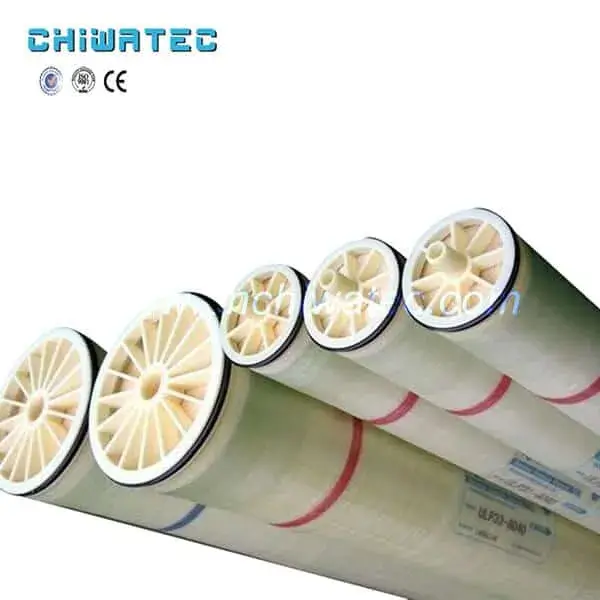
Thin-film composite (TFC) polyamide membranes dominate the RO market due to their high salt rejection rates (99%+) and chemical stability. For fermentation applications, introduction of reverse osmosis membrane materials is essential to selecting the right membrane chemistry for specific broth compositions. Tipos de membranas de ósmosis inversa y su clasificación estructural y morfológica include spiral-wound, hollow-fiber, and tubular configurations, each suited to different feed stream characteristics.
5. What Are the Main Advantages of Membrane Separation Over Traditional Methods?
Economic and Operational Benefits
Membrane separation technology can replace several traditional separation and concentration methods, including vacuum drum filtration, plate and frame filtration, centrifugal separation, flocculation, ion exchange, solvent extraction, and evaporation. The key advantages include:
- Energy efficiency: Membrane processes operate without phase change, consuming 50-80% less energy than evaporative methods.
- Product quality: Mild operating conditions (ambient temperature, no chemical additives) preserve heat-sensitive biological products and maintain native molecular conformations.
- Continuous operation: Membrane systems can run continuously, increasing throughput and reducing batch-to-batch variability.
- Scalability: Modular membrane skid designs allow easy scale-up from laboratory to production volumes.
- Environmental impact: Reduced chemical consumption, lower wastewater generation, and decreased carbon footprint compared to traditional separation technologies.
6. How Do Membrane Bioreactors Integrate Fermentation with Separation?
Combined Membrane Processes in Fermented Pharmaceutical Production
Membrane bioreactors (MBRs) integrate a fermentation vessel with a membrane separation module, enabling continuous product removal while retaining biomass in the reactor. This configuration overcomes product inhibition — a common limitation in conventional batch fermentation — by continuously removing inhibitory metabolites. In antibiotic production, for example, MBR systems can increase volumetric productivity by 2-3 times compared to traditional fed-batch processes.
System Configurations
Two primary MBR configurations are used in fermentation: external cross-flow membrane modules (recirculating the broth through an external membrane unit) and submerged membrane modules (immersed directly in the fermenter). External configurations offer easier membrane cleaning and replacement, while submerged systems have lower energy requirements due to reduced recirculation pumping.
7. What Are the Challenges of Membrane Fouling in Fermentation Applications?
Nature of Fermentation Broth Fouling
Fermentation broths present particularly challenging feed streams for membrane systems due to their complex composition. The presence of cells, cell debris, proteins, polysaccharides, and other extracellular polymeric substances (EPS) creates multiple fouling mechanisms simultaneously: pore blocking, cake layer formation, and gel layer development. The target product concentration in fermentation broth is very low (0.1-5%), while impurities such as mycelium, protein, residual soluble metabolites, and intermediate metabolites are abundant.
Fouling Mitigation Strategies
Effective fouling control requires a multi-pronged approach: pretreatment of fermentation broth (centrifugation or microfiltration to remove larger solids), appropriate membrane material selection (hydrophilic membranes with low protein affinity), optimized hydrodynamic conditions (high cross-flow velocity, turbulent flow), regular cleaning-in-place with appropriate cleaning agents, and anti-fouling membrane surface modifications. The choice of membrane material — polymeric versus ceramic — also significantly influences fouling behavior and cleaning frequency.
8. How Does Membrane Technology Improve Antibiotic and Vitamin Production?
Antibiotic Purification
In antibiotic manufacturing, membrane technology is applied at multiple stages: cell separation from fermentation broth (microfiltration/ultrafiltration), removal of macromolecular impurities (ultrafiltration), concentration of antibiotic-containing permeate (nanofiltration/RO), and final polishing. The use of membrane processes has reduced solvent consumption in antibiotic extraction by up to 80% while improving product purity and yield. Membrane-based processes are now standard for the production of penicillin, cephalosporins, tetracyclines, and macrolide antibiotics.
Vitamin Concentration and Purification
Vitamin production via fermentation — particularly vitamin B12, riboflavin (B2), and vitamin C intermediates — benefits significantly from membrane concentration. Nanofiltration systems operating at 10-30 bar can concentrate vitamin-containing streams from 1-2% solids to 15-20% solids, dramatically reducing the load on downstream drying or crystallization equipment.
The cost structure of pharmaceutical products makes separation, purification, and concentration the most significant contributors to total production cost. Modern membrane-based separation processes are increasingly replacing traditional approaches, achieving substantial economic and quality improvements.
9. What Are the Latest Innovations in Membrane Materials for Fermentation?
Advanced Polymeric Membranes
Recent innovations in membrane materials for fermentation applications include surface-modified polyethersulfone (PES) membranes with enhanced hydrophilicity, mixed-matrix membranes incorporating nanoparticles (TiO2, SiO2, graphene oxide) for improved anti-fouling properties, and thin-film nanocomposite (TFN) membranes with embedded zeolites or metal-organic frameworks (MOFs) for enhanced selectivity. These advanced materials offer 30-50% higher flux stability in fermentation broth applications compared to conventional membranes.
Ceramic Membrane Advancements
Ceramic membranes, while more expensive than polymeric alternatives, offer exceptional chemical and thermal stability, making them ideal for aggressive cleaning regimes and high-temperature fermentation processes. New manufacturing techniques have reduced ceramic membrane costs by approximately 40% over the past five years, making them increasingly viable for industrial fermentation applications. Tubular ceramic membranes with pore sizes from 0.01 to 0.2 micrometers are particularly effective for high-fouling fermentation broths.
10. How to Select the Right Membrane System for Your Fermentation Process?
Key Selection Criteria
Selecting the appropriate membrane system for a fermentation application requires careful evaluation of several factors:
- Target product characteristics: Molecular weight, charge, hydrophobicity, and thermal sensitivity determine the appropriate membrane type (MF, UF, NF, or RO) and MWCO.
- Broth composition: Solids content, viscosity, and fouling potential influence module configuration (spiral-wound, tubular, hollow-fiber) and pretreatment requirements.
- Scale and throughput: Required processing volume and batch cycle time determine membrane area and system size.
- Regulatory compliance: Pharmaceutical applications require membranes meeting FDA, EMA, and USP standards for extractables and biocompatibility.
Custom Solutions from CHIWATEC
CHIWATEC specializes in engineering custom membrane separation systems for the fermentation industry, offering end-to-end solutions from pilot-scale testing to full production-scale installation. The company’s engineering team evaluates broth characteristics, performs on-site pilot trials, and designs optimized membrane skids with appropriate pretreatment, cleaning systems, and process controls. Membrana de ósmosis inversa technologies from leading manufacturers are integrated into customized process trains to meet specific fermentation separation requirements.
Conclusión
Membrane technology has become indispensable in the modern fermentation industry, enabling higher product yields, lower energy consumption, and superior product quality compared to traditional separation methods. From ultrafiltration for cell harvesting to nanofiltration for concentration and reverse osmosis for final purification, membrane systems offer versatile, scalable, and cost-effective solutions across the entire fermentation downstream processing chain. As membrane materials continue to advance and smart monitoring technologies mature, the role of membrane separation in fermentation will only grow. For expert guidance on selecting and implementing membrane systems for your specific fermentation application, contact CHIWATEC today at [email protected] o [email protected] for a consultation tailored to your production requirements.
Frequently Asked Questions
Q1: What is the typical pore size range for ultrafiltration membranes used in fermentation?
Ultrafiltration membranes used in fermentation applications typically have pore sizes ranging from 0.001 to 0.1 micrometers, corresponding to molecular weight cutoffs (MWCO) between 1,000 and 500,000 Daltons. For cell harvesting and protein removal, membranes with MWCO of 100,000-500,000 Da are common, while smaller cutoffs (1,000-10,000 Da) are used for removing pyrogens and concentrating target products.
Q2: Can membrane technology handle high-viscosity fermentation broths?
Yes, but high-viscosity broths require specific membrane configurations. Tubular membrane modules with large channel diameters (6-25 mm) are preferred for viscous, high-solids fermentation broths as they maintain higher cross-flow velocities with lower pressure drop. For extremely viscous fungal fermentations, rotating membrane systems or vibrating membrane modules can maintain stable filtration performance by generating high shear at the membrane surface.
Q3: What is the energy comparison between membrane separation and evaporation?
Membrane separation processes typically consume 50-80% less energy than evaporative concentration methods. Reverse osmosis requires approximately 3-8 kWh per cubic meter of permeate produced, while multi-effect evaporation requires 20-80 kWh per cubic meter of water removed, depending on the number of effects. This energy advantage, combined with the absence of phase change, makes membrane technology significantly more cost-effective for fermentation broth concentration.
Q4: How often do membranes need to be cleaned in fermentation applications?
Cleaning frequency depends on broth characteristics, membrane type, and operating conditions. In typical fermentation applications, cleaning-in-place (CIP) cycles are performed every 24-72 hours for high-fouling broths and every 5-14 days for cleaner feed streams. Standard cleaning protocols involve alkaline wash (pH 10-12 with NaOH) followed by acid wash (pH 2-3 with citric or nitric acid), with enzymatic cleaners used for proteinaceous fouling. Proper pretreatment and optimized hydrodynamic conditions can significantly extend intervals between cleanings.
Q5: Is membrane technology suitable for both bacterial and fungal fermentation?
Yes, membrane technology is suitable for both bacterial and fungal fermentation, though the specific equipment selection differs. Bacterial fermentation broths with smaller cell sizes (0.5-5 micrometers) can be processed using standard spiral-wound or hollow-fiber membrane modules. Fungal broths, with larger filamentous cells and higher viscosity, generally require tubular or open-channel membrane modules to prevent clogging. Cross-flow velocities for fungal broths are typically maintained at 3-6 m/s to minimize concentration polarization and maintain stable flux.
Related Resources and Further Reading
- Ultrafiltration Membrane Process in Water Treatment Applications – Operating Parameters — Detailed technical parameters for optimizing UF membrane performance.
- Introduction of Reverse Osmosis Membrane Materials — Comprehensive overview of RO membrane polymer chemistry and material science.
- Types of Reverse Osmosis Membranes and Their Structural Classification — Guide to membrane configurations including spiral-wound, hollow-fiber, and flat-sheet designs.
- The Principle, Structure and Effect of Reverse Osmosis Membrane — Foundational knowledge on RO membrane operation and performance characteristics.
- RO Membrane Products — Explore CHIWATEC’s range of reverse osmosis membranes for industrial applications.
¿Tiene un proyecto de tratamiento de agua con el que podamos ayudar?
* Diseño, mecanizado, instalación, puesta en marcha, personalización y servicio integral






 Spanish
  English
  Portuguese




