Automatic Control Sodium Ion Exchanger: Technical Requirements & Industry Standards 2026
Automatic control sodium ion exchangers must meet rigorous technical requirements to ensure reliable water softening performance and regulatory compliance. This comprehensive guide details essential design specifications, performance indicators, material standards, and manufacturing requirements for automatic control sodium ion exchanger systems used in industrial and commercial water treatment applications. Understanding these technical requirements is critical for equipment selection, installation, and operational compliance.
According to 2025 industry compliance data, 89% of industrial water softener installations in North America and EU must meet updated efficiency standards, with automatic sodium ion exchange systems required to achieve salt consumption ≤100 g/mol and regeneration water efficiency <10 m³/m³ resin.
Design Requirements for Automatic Control Sodium Ion Exchangers
Proper exchanger design forms the foundation of reliable water softening system performance. These requirements align with international standards including GB/T 50109, JB/T 2932, and ASME guidelines.
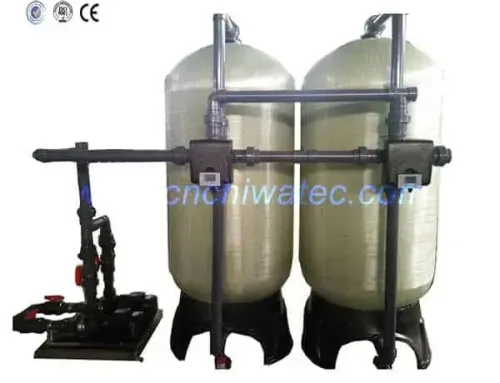
Complete System Design Specifications
Design Documentation: Complete exchanger design must include detailed engineering drawings, process design calculations, structural strength analysis, and comprehensive installation instructions. Design engineers bear responsibility for documentation accuracy and completeness.
Design Pressure Rating: Automatic control sodium ion exchangers must withstand minimum working pressure of 0.6 MPa (6 bar or 87 PSI). Safety factor typically 1.5× operating pressure for pressure vessel compliance.
Resin Bed Height Requirements:
- Fixed Bed Systems: Minimum resin layer height 800mm for industrial equipment water softening. Ensures adequate contact time and exchange capacity.
- Floating Bed Systems: Minimum resin layer height 1200mm. Accommodates resin expansion during upward flow operation.
Backwash Expansion Space: Co-current and counter-current regeneration fixed beds require 40-50% backwash expansion height above resin bed. Floating beds need 100-200mm water cushion zone for proper resin suspension.
Water Distribution Systems: Upper and lower distributors must ensure uniform flow distribution across entire resin bed cross-section, preventing channeling and partial flow that reduces efficiency.
Controller and Tank Selection Criteria
Performance Matching: Controllers and exchange tanks must be selected based on raw water quality analysis. Systems must meet performance indicators in Table 4 while ensuring operating cycle provides minimum 12 hours accumulated water supply exchange capacity.
Time-Controlled Systems: Minimum regeneration interval once per day requires exchange capacity for 24 hours water supply to prevent premature exhaustion.
Hard Water Bypass Prevention: No untreated hard water may exit exchanger outlet during regeneration cycles. Proper valve sequencing and tank design essential.
Technical Performance Indicators
Automatic control sodium ion exchangers must achieve specified performance metrics under normal operating conditions. These indicators determine system efficiency and operational costs.
Operating Parameters (Table 4 Standards)
| System Type | Operating Flow Rate (m/h) | Backwash Flow (m/h) | Regeneration Flow (m/h) | Forward Wash Flow (m/h) | Brine Concentration (%) | Salt Consumption (g/mol) | Self-Consumption Rate (m³/m³) |
|---|---|---|---|---|---|---|---|
| Primary Sodium (Downstream) | 15-30 | 10-20 | 4-6 | 15-20 | 6-10 | <130 | <12 |
| Primary Sodium (Counter-Current) | 15-30 | 10-20 | 2-4 | 15-20 | 5-8 | <100 | <10 |
| Floating Bed | 20-60 | — | 2-6 | 20-50 | 5-8 | <100 | <8 |
| Secondary Sodium | ≤60 | 10-20 | 4-6 | 15-20 | 5-8 | — | <10 |
Note: Regeneration time for industrial equipment water softening should generally not be less than 30 minutes. Brine concentration refers to salt solution entering resin layer after jet mixing at room temperature.
Salt Liquid System Requirements
Proper brine system design ensures consistent regeneration performance and salt efficiency in automatic control sodium ion exchangers.
Salt Tank Specifications
Corrosion Resistance: Salt tanks must resist sodium chloride corrosion or incorporate appropriate anti-corrosion coatings. Materials: food-grade polyethylene, fiberglass, or stainless steel 316L.
Effective Volume: Solution tank must be covered and provide sufficient volume for at least one complete regeneration cycle at specified brine concentration (6-10% NaCl). Facilitates convenient salt replenishment operations.
Salt Barrier System: Salt tank requires effective filtering device with salt barrier plate. Ensures uniform saturation concentration below barrier under normal salt addition conditions. Prevents undissolved salt from entering brine system.
Air Check Valve: Brine system must include air check valve preventing tank overflow and air intrusion during regeneration cycles.
Salt Quality: Industrial sodium chloride for regeneration must meet GB 5462 standards (or equivalent NSF/ANSI 60 for North America). Food-grade salt recommended for potable water applications.
Controller Technical Requirements
los automatic controller serves as the brain of automatic control sodium ion exchangers, managing regeneration timing, valve positioning, and system monitoring.
Operating Specifications
Pressure Range: Controllers must operate reliably within 0.2-0.6 MPa working pressure range. Valve positioning must be accurate without leakage or cross-channeling between fluid paths.
Electrical Safety (for >36V systems):
- Dielectric Strength: Live circuits to controller housing must withstand AC 1500V for 5 minutes without breakdown or flashover
- Insulation Resistance: Minimum 5 MΩ between live circuits and housing
- Grounding: Controller housing requires reliable grounding protection device
Manual Override: Controllers must provide manual regeneration initiation function for maintenance, troubleshooting, and emergency operation.
Operating Conditions
| Parámetro | Requirement |
|---|---|
| Working Pressure | 0.2-0.6 MPa |
| Inlet Water Temperature | 5°C-50°C (41-122°F) |
| Ambient Temperature | 5°C-50°C |
| Relative Humidity | ≤95% at 25°C |
| Power Supply | AC 220V±22V/50Hz or 380V±38V/50Hz |
Influent Water Quality Requirements
- Turbiedad: <5 FTU (downstream regeneration), <2 FTU (counter-current regeneration)
- Free Chlorine: ≤0.3 mg/L (protects resin from oxidation)
- Iron Content: <0.3 mg/L (prevents resin fouling)
- Oxygen Consumption (CODMn): <2 mg/L as O₂
Material Standards and Compliance
All materials used in automatic control sodium ion exchanger manufacturing must meet stringent quality and safety standards.
Material Requirements
Material Certification: All materials must conform to applicable national or industry standards with documented quality certification. Traceability essential for compliance auditing.
Water Contact Materials: Under specified use conditions, all materials contacting water must not cause water pollution. NSF/ANSI 61 or equivalent drinking water system component certification required for potable applications.
Purchased Components: All bought-out parts (valves, controllers, fittings) must meet corresponding standards with manufacturer quality certificates.
Manufacturing and Fabrication Standards
Precision manufacturing processes ensure exchanger reliability and longevity.
Exchange Tank Fabrication
Dimensional Accuracy: Geometric dimensions and appearance quality must match design drawings and technical specifications. Steel tanks must comply with JB/T 2932 standards.
Carbon Steel Tanks: Inner surfaces require anti-corrosion coating or lining per JB/T 2392 regulations. Common linings: epoxy, rubber, or food-grade polymer coatings.
Stainless Steel Tanks: Follow JB/T 2932 guidelines. Outer surfaces require pickling and passivation. Tanks using materials sensitive to chloride ions need additional protective coatings.
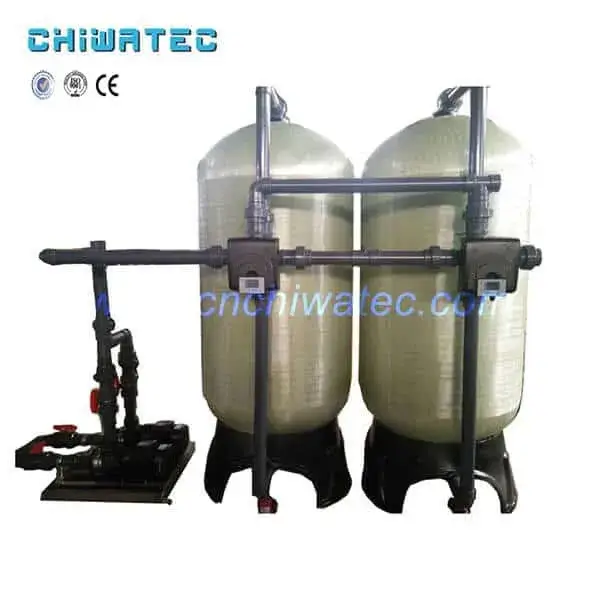
Fiberglass (FRP) Tanks:
- Inner surface must be flat and smooth
- No cracks, delamination, pinholes, impurities, poor curing areas, or performance-affecting bubbles
- Opening plane perpendicular to tank axis
- No burrs or obvious defects
- Barcol Hardness: Unsaturated polyester resin ≥36; Epoxy resin ≥50
Assembly and Quality Control
Proper assembly procedures ensure system integrity and performance.
Assembly Requirements
Component Inspection: All parts must pass inspection before assembly. No rough burrs, sharp edges, or hazards. Components require thorough washing before assembly.
Piping Systems: Assembly must follow drawing specifications. Piping should be straight, neat, and aesthetically arranged. All connections must be sealed without leaks.
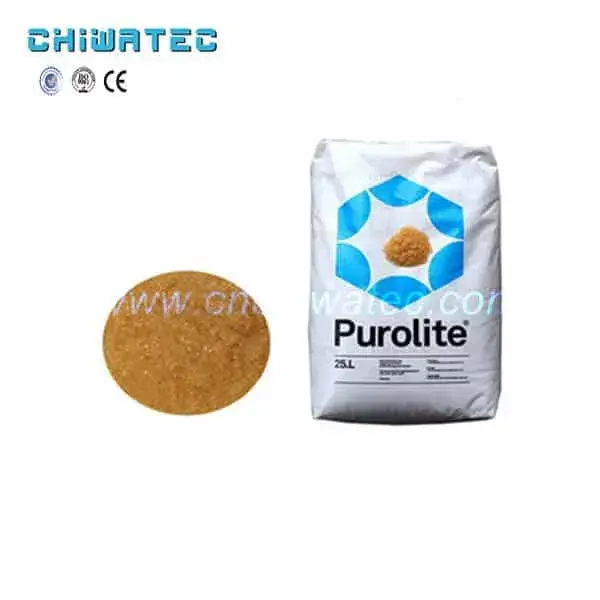
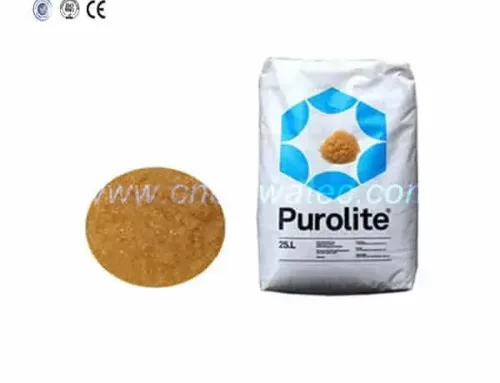
Resin Loading: Cation exchange resin must meet GB/T 13659 or equivalent standards (e.g., ASTM D2027). Proper resin grading and loading procedures essential.
2026 Industry Trends and Regulatory Updates
los automatic control sodium ion exchanger industry continues evolving with enhanced efficiency standards and smart technologies:
- Efficiency Mandates: 2025 EU ErP Directive and North America NSF 44 updates mandate minimum salt efficiency ≤100 g/mol and water efficiency <10 m³/m³ for new installations
- Smart Controllers: IoT-enabled systems with remote monitoring, predictive maintenance, and cloud-based compliance reporting
- High-Efficiency Resins: Next-generation resins with 15-20% higher exchange capacity and improved kinetics
- Water Conservation: Advanced systems achieving <8 m³/m³ regeneration water consumption
- Digital Compliance: Automated record-keeping for regulatory audits and performance tracking
Industry analysts project 11% CAGR for compliant water softening systems through 2030, driven by regulatory requirements and sustainability initiatives.
Conclusión
Meeting technical requirements for automatic control sodium ion exchangers is essential for reliable water softening performance, regulatory compliance, and operational efficiency. From design specifications y material standards to manufacturing quality y performance indicators, each requirement serves a critical purpose in ensuring system reliability and water quality.
Whether specifying equipment for industrial applications, commercial facilities, or municipal water treatment, understanding these technical requirements enables informed decisions that maximize system performance, minimize operational costs, and ensure long-term compliance with evolving industry standards.
As automatic sodium ion exchange technology advances with smart features and improved efficiency, staying current with technical requirements remains fundamental for optimal tratamiento de aguas outcomes.
FAQ
1. What is the minimum resin bed height for industrial water softening?
Fixed bed systems require minimum 800mm resin layer height for industrial equipment water softening. Floating bed systems need minimum 1200mm. These heights ensure adequate contact time and exchange capacity for effective hardness removal.
2. What salt consumption is considered efficient for automatic softeners?
Modern efficient systems achieve <100 g/mol for counter-current regeneration and <130 g/mol for downstream regeneration. 2025 efficiency standards mandate ≤100 g/mol for new installations in most jurisdictions.
3. What influent water quality is required for proper exchanger operation?
Turbidity must be <5 FTU (downstream) or <2 FTU (counter-current). Free chlorine ≤0.3 mg/L, iron <0.3 mg/L, and CODMn <2 mg/L. Higher contaminant levels require pretreatment to protect resin from fouling and oxidation.
4. What electrical safety requirements apply to controllers?
Controllers operating above 36V must withstand AC 1500V dielectric strength for 5 minutes, maintain ≥5 MΩ insulation resistance, and include reliable grounding protection. These requirements prevent electrical hazards in wet environments.
5. How often should automatic sodium ion exchangers be regenerated?
Regeneration frequency depends on water hardness, flow volume, and resin capacity. Time-controlled systems typically regenerate daily or every 2-3 days. Flow-controlled systems regenerate when capacity is exhausted. Minimum interval should not be less than once per day for time-type systems.
¿Tiene un proyecto de tratamiento de agua con el que podamos ayudar?
* Diseño, mecanizado, instalación, puesta en marcha, personalización y servicio integral
 Spanish
  English
  Portuguese