

Technical and Functional Descriptions of Common Water Treatment Methods
Explore the technical principles and functions of common water treatment methods, including mechanical, biological, and advanced treatment processes. Learn how sedimentation, filtration, biological oxidation, and tertiary purification ensure clean and safe water for industrial and municipal use.
1. Basic Concepts of Water Treatment
Water treatment refers to the physical and chemical processes used to remove unwanted substances from water—such as suspended solids, dissolved salts, bacteria, and organic matter—to make it suitable for industrial, domestic, or environmental use.
It involves several stages and techniques including sedimentation, filtration, coagulation, flocculation, corrosion inhibition, and scale prevention. Given the essential role of water in daily life and industrial production, water treatment has become one of the most vital sectors in environmental engineering.
Commonly used water treatment agents include polyaluminum chloride (PAC), polyferric chloride (PAFC), basic aluminum chloride (BAC), polyacrylamide (PAM), Carbón activado, and various filter media.
2. Water Treatment Process Overview
Wastewater treatment generally includes three major stages—primary, secondary, and tertiary treatment—each designed to progressively remove contaminants from water:
- Primary (Mechanical) Treatment: Removes large solids such as sand, grease, and suspended particles through screening, sedimentation, or air flotation.
- Secondary (Biological) Treatment: Uses microorganisms to break down organic pollutants into sludge and clean water.
- Tertiary (Advanced) Treatment: Removes remaining nutrients (nitrogen and phosphorus), organic matter, bacteria, and viruses through adsorption, membrane filtration, or disinfection.
Each stage builds on the previous one, ensuring that water leaving the treatment plant meets environmental or reuse standards.
3. Mechanical (Primary) Treatment
los mechanical stage uses grit chambers, screens, and sedimentation tanks to remove larger particles and suspended solids by physical separation.
- Purpose: To prevent clogging or damage in downstream biological or membrane systems.
- Effectiveness: Typically removes around 25% of biochemical oxygen demand (BOD₅) y 50% of suspended solids (SS).
- Design Notes: Aerated sedimentation tanks should be avoided in biological phosphorus and nitrogen removal plants, as rapid degradation can affect nutrient balance.
By ensuring proper solid-liquid separation, this stage prepares water for more efficient secondary and tertiary treatment.
4. Biological (Secondary) Treatment
Biological wastewater treatment is the core stage of most water treatment systems. It uses microorganisms to decompose and transform organic pollutants into harmless products such as carbon dioxide, water, and microbial biomass (sludge).
Common methods include:
- Activated Sludge Process (ASP)
- Anaerobic Digestion
- A²/O (Anaerobic–Anoxic–Oxic) Process
- Sequencing Batch Reactor (SBR)
- Oxidation Ditch
- Stabilization Ponds
- Land Treatment Systems
Factors Affecting Biological Treatment Efficiency
- Nutrients (Matrix): Microorganisms require carbon, nitrogen, phosphorus, and trace elements (Fe, Zn, Mn) for growth. Toxic compounds like phenols, heavy metals (Cu, Cd, Pb), or benzene derivatives can inhibit activity.
- Temperature: Optimal microbial activity occurs between 20–30°C. Efficiency drops sharply below 10°C or above 35°C.
- pH Value: The ideal range is 6.5–8.5. Too acidic or alkaline environments can damage microbial flocs and reduce performance.
- Dissolved Oxygen (DO): Maintaining DO around 2 mg/L in the aeration tank is crucial. Low oxygen causes poor degradation and sludge bulking; excessive oxygen wastes energy.
In modern treatment plants, real-time monitoring systems track DO levels and optimize aeration to balance efficiency and cost.
5. Tertiary (Advanced) Treatment
los tertiary stage removes fine contaminants that survive earlier processes and enhances water quality for reuse or discharge.
Common tertiary techniques include:
- Nutrient Removal: Eliminating nitrogen and phosphorus using biological or chemical methods.
- Adsorption: Usando Carbón activado to capture organic compounds and trace pollutants.
- Membrane Filtration: Applying reverse osmosis (RO) o ultrafiltration (UF) for ultra-pure water production.
- Disinfection: Killing bacteria and viruses through ozone, chlorine, or UV sterilization.
Treated water can then be reused for toilet flushing, landscaping, street cleaning, firefighting, or industrial cooling, promoting sustainable water resource management.
6. Sludge Treatment and Disposal
During wastewater treatment, sludge accumulates in both primary and secondary stages. This sludge contains organic matter, heavy metals, and pathogens that must be treated to prevent secondary pollution.
Sludge is typically subjected to:
- Thickening and Dewatering: Reducing volume and water content.
- Stabilization: Using digestion (aerobic or anaerobic) to reduce odor and pathogens.
- Safe Disposal or Reuse: Dehydrated sludge can be used in fertilizer production, construction materials, or energy recovery when properly treated.
Proper sludge management is essential for sustainable operation and environmental compliance.
7. General Water Treatment Methods and Principles
Water treatment methods are designed to remove impurities and make water safe for industrial or domestic use.
The most common methods include:
- Sediment Filtration
- Hard Water Softening
- Activated Carbon Adsorption
- desionización
- Osmosis inversa
- Ultrafiltración
- Distillation
- Ultraviolet (UV) Disinfection
Below are simplified explanations of each method and how they work.
7.1 Sediment Filtration Method
Purpose:
Removes suspended solids, sand, rust, and other large particles from water.
How it works:
Water passes through filters such as mesh screens, sand filters, or membrane filters that physically block particles larger than the pore size.
However, dissolved ions cannot be removed this way.
Maintenance:
- Filters must be cleaned or replaced regularly to prevent clogging and bacterial growth.
- When the pressure difference between the inlet and outlet becomes too high, the filter should be backwashed or changed.
7.2 Hard Water Softening Method
Purpose:
Removes calcium (Ca²⁺) y magnesium (Mg²⁺) ions, which cause water hardness and scale buildup.
How it works:
Uses a cation exchange resin that swaps calcium and magnesium ions for sodium (Na⁺) ions.
When the resin becomes saturated, it is regenerated using salt water (brine).
Key points:
- Prevents scale formation on reverse osmosis membranes and plumbing.
- Requires regular regeneration and backflushing.
- Malfunctioning softeners may cause high sodium levels (hypernatremia) if excess salt enters the water.
7.3 Activated Carbon Adsorption
Purpose:
Removes chlorine, chloramines, and organic compounds that affect taste, odor, and safety.
How it works:
Activated carbon has a highly porous surface that traps organic molecules and chemicals through physical adsorption.
It also protects reverse osmosis membranes that are sensitive to chlorine.
Maintenance:
- Must be backwashed regularly to remove trapped impurities.
- When adsorption capacity drops (shown by rising TOC or bacterial count), the carbon needs replacement.
- Bacteria can grow inside the pores, so disinfection or replacement is essential.
7.4 Deionization (DI) Method
Purpose:
Removes dissolved inorganic ions (both positive and negative) to produce very pure water.
How it works:
- Cation exchange resins replace positive ions with hydrogen (H⁺).
- Anion exchange resins replace negative ions with hydroxide (OH⁻).
The H⁺ and OH⁻ combine to form pure water (H₂O).
Maintenance:
- When exhausted, resins must be regenerated using acids (for cation resins) or alkalis (for anion resins).
- Effectiveness is monitored using water conductivity or resistivity.
- Unmaintained resins can cause bacterial growth and affect water acidity.
7.5 Reverse Osmosis (RO) Method
Purpose:
Removes inorganic salts, organic matter, bacteria, and pyrogens — one of the most effective water purification processes.
How it works:
RO uses a semi-permeable membrane that allows only water molecules to pass while blocking most dissolved substances.
By applying pressure greater than the osmotic pressure, water flows in the reverse direction, leaving contaminants behind.
Effectiveness:
- Removes 90–99% of ions and almost all microorganisms.
- Membrane materials include cellulose acetate, polyamide, and polyimide.
Precauciones:
- Pre-treatment with softeners and activated carbon is essential to prevent scaling and chlorine damage.
- Regular cleaning and maintenance prevent fouling and extend membrane life.
7.6 Ultrafiltration (UF) Method
Purpose:
Removes bacteria, viruses, and colloidal particles, but not dissolved ions.
How it works:
Uses a semi-permeable membrane with larger pores (10–200 Å) than reverse osmosis.
Often used before RO to protect the RO membrane or as a final polishing step to ensure bacterial removal.
Maintenance:
When the pressure difference increases, the membrane should be backwashed to restore flow.
7.7 Distillation Method
Purpose:
Removes non-volatile impurities by heating water until it evaporates and then condensing the vapor into pure water.
Características:
- Effective but energy-intensive.
- Not suitable for removing volatile contaminants.
- Rarely used in modern water treatment systems due to cost and maintenance requirements.
7.8 Ultraviolet (UV) Disinfection Method
Purpose:
Kills microorganisms by damaging their DNA, preventing them from reproducing.
How it works:
Water passes through a UV light chamber (typically using a 253.7 nm wavelength).
UV lamps destroy bacteria, viruses, and algae without adding chemicals.
Advantages:
- Safe, quick, and environmentally friendly.
- Does not alter the chemical composition of water.
- Often used after filtration or RO to ensure complete sterilization.
Aplicaciones:
Used in drinking water systems, aquaculture, swimming pools, and dialysis water systems.
Sterilization efficiency can reach 99–99.99%.
Each water treatment method has its unique role:
- Sediment filtration removes visible solids.
- Reblandecimiento prevents scale buildup.
- Carbón activado eliminates chlorine and organic matter.
- Deionization and RO produce ultra-pure water.
- Ultrafiltration, distillation, and UV disinfection provide final polishing and sterilization.
Combining these methods in the right sequence ensures safe, clean, and high-quality water for industrial, medical, and domestic use.
8. Three Common Methods for Treating Water in the Wild
When you’re outdoors or camping in the wild, the water you find in rivers, lakes, or streams may look clean — but that doesn’t mean it’s safe to drink. Even remote water sources can contain bacteria, viruses, parasites, or harmful chemicals.
To stay safe, it’s important to treat the water before drinking.
There are three main methods for treating wild water:
- Boiling
- Water purification tablets
- Water filters or purifiers
Each water treatment method has its own benefits and drawbacks:
| Method | Main Strength | Main Weakness |
|---|---|---|
| Boiling | Very effective against all microbes | Time- and fuel-consuming |
| Purification Tablets | Lightweight, cheap | Bad taste, limited virus protection |
| Filters/Purifiers | Safe, instant water | Expensive, requires maintenance |
In short:
- Use boiling when you have fuel and time.
- Use tablets for emergencies or travel.
- Use filters or purifiers for regular outdoor adventures.
Whichever method you choose, always treat wild water before drinking — it’s the best way to stay healthy in the outdoors.
Conclusión
Understanding common water treatment methods is crucial for designing effective and sustainable water management systems. Each stage—mechanical, biological, and tertiary—plays a distinct role in removing pollutants and ensuring water quality.
As global demand for clean water rises, technologies such as biological nutrient removal, membrane filtration, and advanced oxidation are becoming increasingly important. Combining these processes with intelligent monitoring systems helps achieve higher efficiency, lower costs, and environmental protection.
FAQ
Q1: What is the purpose of mechanical water treatment?
A1: Mechanical treatment removes large solids and suspended matter from wastewater through physical methods like screening and sedimentation, protecting downstream equipment and improving treatment efficiency.
Q2: How does biological treatment work?
A2: Biological treatment uses microorganisms to decompose organic pollutants into harmless by-products such as carbon dioxide, water, and sludge.
Q3: Why is tertiary treatment necessary?
A3: Tertiary treatment ensures the removal of remaining nutrients, bacteria, and organic matter, producing high-quality water suitable for reuse or sensitive discharge areas.
Q4: What factors affect the efficiency of biological treatment?
A4: Temperature, pH, dissolved oxygen levels, and the presence of nutrients or toxic substances are the main factors influencing microbial performance.
Q5: How is sludge from wastewater treatment handled?
A5: Sludge undergoes processes like thickening, digestion, and dewatering to reduce volume and remove pathogens, allowing for safe disposal or reuse.
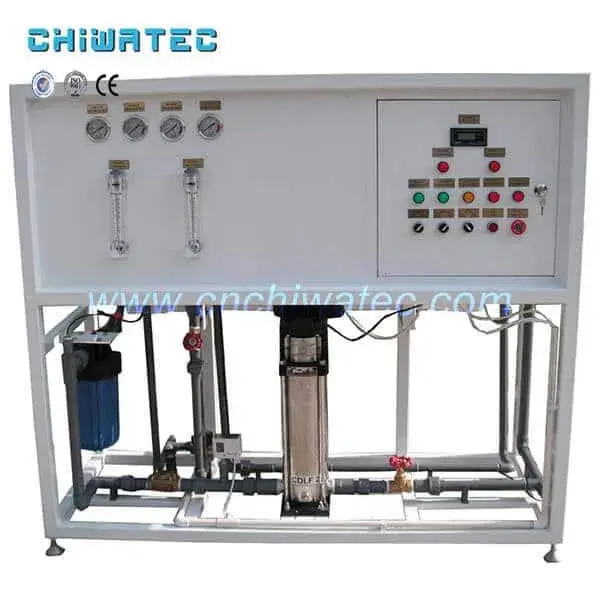
Xian CHIWATEC Water Treatment Technology es una empresa de alta tecnología especializada en varios dispositivos de procesamiento de agua. Aparte de estos productos individuales, que cubren una serie de tipos y series, también podemos ayudar con proyectos de ingeniería integrales relacionados. Gracias a nuestro arduo trabajo y dedicación desde nuestra fundación, ahora somos uno de los fabricantes de equipos de tratamiento de agua de más rápido desarrollo en el oeste de China.
Otras lecturas:
SÍGANOS
¿Tiene un proyecto de tratamiento de agua con el que podamos ayudar?
* Diseño, mecanizado, instalación, puesta en marcha, personalización y servicio integral






 Spanish
  English
  Portuguese




