

Reverse osmosis pretreatment resin regeneration operation method
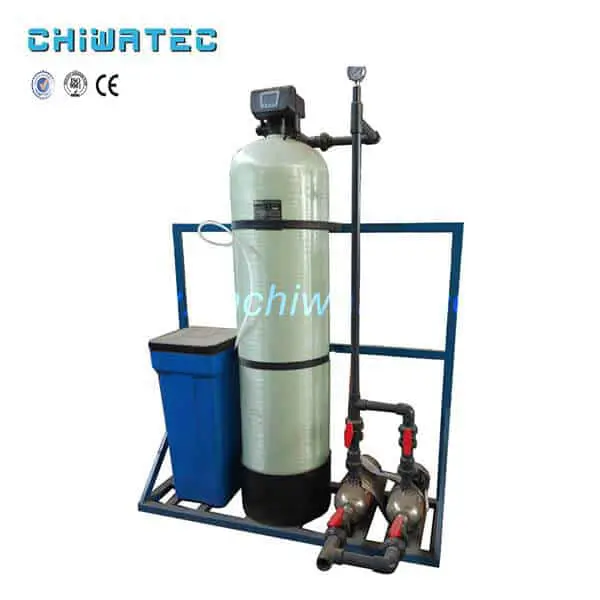
The salt absorption operation of manual softened water equipment refers to the operation method of reverse osmosis pretreatment resin regeneration, as follows: After the resin absorbs a certain amount of calcium and magnesium ions, it must be regenerated. The time is about every 48 hours of operation (when the raw water is municipal tap water), it must be regenerated once. The regeneration process is to wash the resin layer with the industrial salt in the salt tank, to replace the hardness ions such as calcium and magnesium on the resin, and to discharge the regeneration waste liquid out of the tank, and the resin will restore the softening and exchange capacity (the water softener cannot be added with the addition of water softener). Iodized salt, adding calcium salt as regeneration agent, regularly adding salt to the salt tank to ensure the saturated concentration of brine), the regeneration time is recommended in the evening, after the equipment is shut down, the salt is absorbed and left for one night. Steps After cleaning, start the host.
Resin regeneration steps:
Open the salt inlet valve, close the other valves, start the raw water pump, suck all the brine in the salt tank into the softener, and leave it for more than 4 hours.
Wash salt:
After the resin is regenerated, the salt in the softener must be rinsed before use, according to the manual valve flushing method (including forward flushing and back flushing).
The presence of calcium and magnesium ions in water is the main reason for the formation of scale when the water temperature changes. At present, the softening water equipment commonly used in China mainly includes manual type, domestic combined type, domestic multi-valve type and imported multi-way valve type. Among them, the imported multi-way valve type softened water equipment is the main product on the market. With the imported multi-way valve and controller as the core, it is equipped with domestic resin tanks, salt tanks, pipes and other materials to form a fully automatic softening water equipment.
Since the deposition of scale has a significant impact on people’s life and production, both production water and domestic water have certain requirements for hardness indicators, especially if the boiler water contains hardness salts, it will be formed on the heating surface of the boiler. Scale, thereby reducing the thermal efficiency of the boiler, increasing the fuel consumption, and even damaging parts and causing explosions due to local overheating of the metal wall. Therefore, water softening treatment should be carried out for low pressure boilers; water softening and desalination treatment should be carried out for medium and high pressure boilers.
Método de intercambio de iones:
Using a specific cation exchange resin, the calcium and magnesium ions in the water are replaced with sodium ions. Due to the high solubility of sodium salts, the formation of scale with the increase of temperature is avoided. This method is the standard method in common use today. The main advantages are: The effect is stable and accurate, and the process is mature. The softening water equipment using this method is also generally called “ion exchanger” (because most of the sodium ion exchange resins are used, so it is also called “sodium ion exchanger”).
How the ion exchange method works:
Ion exchange resin is a polymer with corresponding functional gene groups. In general, conventional sodium ion exchange resins have a large amount of sodium ions.
When the content of calcium and magnesium ions in the water is high, the ion exchange resin can release sodium ions, and the functional gene group is combined with the calcium and magnesium ions, so that the content of calcium and magnesium ions in the water decreases, and the hardness of the water decreases. Hard water becomes soft water, which is the working process of softening water equipment.
When a large number of functional gene groups on the resin are combined with calcium and magnesium ions, the softening ability of the resin decreases, and sodium chloride solution can be used to flow through the resin. At this time, the sodium ion content in the solution is high, and the functional gene groups will release calcium and magnesium ions. When combined with sodium ions, the resin regains its exchange capacity, a process called “regeneration”.
Xian CHIWATEC Water Treatment Technology es una empresa de alta tecnología especializada en varios dispositivos de procesamiento de agua. Aparte de estos productos individuales, que cubren una serie de tipos y series, también podemos ayudar con proyectos de ingeniería integrales relacionados. Gracias a nuestro arduo trabajo y dedicación desde nuestra fundación, ahora somos uno de los fabricantes de equipos de tratamiento de agua de más rápido desarrollo en el oeste de China.
Otras lecturas:
- Solución de problemas de intercambiadores de iones
- Equipos de tratamiento de agua ablandada: introducción del método de intercambio iónico
- Electroplating wastewater treatment process and ion exchange treatment method (3)?
- ¿Proceso de tratamiento de aguas residuales de galvanoplastia y método de tratamiento de intercambio iónico (2)?
- ¿Proceso de tratamiento de aguas residuales de galvanoplastia y método de tratamiento de intercambio iónico (1)?
- Ventajas de la tecnología EDI en comparación con la tecnología híbrida de intercambio iónico
- Introducción al principio de funcionamiento y pretratamiento del sistema de resina de intercambio iónico.
- Introducción a las características y campos de aplicación del proceso de preparación de agua ultrapura con resina de intercambio iónico
- Resina de intercambio iónico, resina de intercambio iónico de lecho mixto
- Resina de intercambio iónico y resina de intercambio iónico de lecho mixto
- Filtro de intercambio de iones, Resina de intercambio de iones, Intercambiador de iones
- ¿Qué es el método de intercambio iónico? ¿Cuál es el principio de funcionamiento del método de intercambio iónico?
- Otros conocimientos complementarios de la resina de intercambio iónico
- Propiedades físicas de la resina de intercambio iónico
- Selectividad de adsorción de la resina de intercambio iónico.
- Estructura física de la resina de intercambio iónico.
- Composición de la matriz de resina de intercambio iónico
- Introducción a la resina de intercambio iónico
- Introducción a los campos de aplicación de las resinas de intercambio iónico
- ¿Cuáles son los tipos básicos de resinas de intercambio iónico?
- Capacidad de intercambio de iones de la resina de intercambio de iones
- Equipo de agua blanda de intercambio iónico
- Cuestiones a las que se debe prestar atención en la operación de intercambio iónico y la regeneración
- Almacenamiento de resina de intercambio iónico
- Aplicación de resina de intercambio iónico
- Cuestiones que requieren atención en el uso de resina de intercambio iónico
- Clasificación de resinas de intercambio iónico
- Preguntas y respuestas sobre equipos de tratamiento de agua de intercambio iónico
- Descripción general del equipo de agua pura de intercambio iónico
- Características y aplicación de la resina de intercambio iónico.
- Características de la resina de intercambio iónico
- Requisitos técnicos para el intercambiador de iones de sodio de control automático
- Términos técnicos y definiciones del intercambiador de iones de sodio de control automático
- ¿Qué es la resina de intercambio iónico? ¿Cuál es el método de conservación y el método de regeneración?
- Factores que afectan la capacidad de intercambio del intercambiador de iones de sodio completamente automático
- Resina de intercambio iónico C100E
SÍGANOS
¿Tiene un proyecto de tratamiento de agua con el que podamos ayudar?
* Diseño, mecanizado, instalación, puesta en marcha, personalización y servicio integral






 Spanish
  English
  Portuguese




