Reverse Osmosis Equipment Cleaning Method
This guide explains the complete cleaning method for reverse osmosis (RO) equipment, including online cleaning, offline cleaning, chemical formulas, and essential cleaning tools. Proper cleaning ensures efficient system performance, extends membrane lifespan, and reduces operational costs.
1. Overview of Reverse Osmosis Equipment Cleaning
Reverse osmosis systems are widely used in industrial water treatment, ultrapure water production, desalination, and drinking water processing. Over time, RO membranes accumulate fouling—such as scale, organic matter, biofilm, colloids, and metal oxides—that reduces system output and increases operating pressure.
Regular cleaning is essential for maintaining optimal performance.
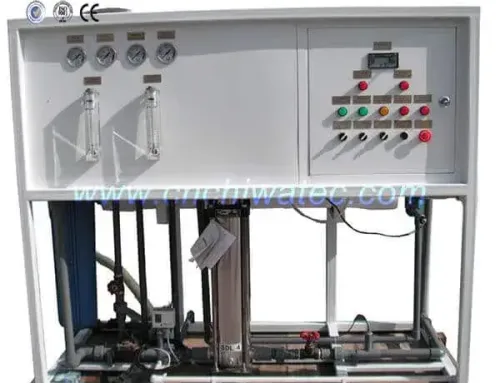
Explore our full range of RO systems here:
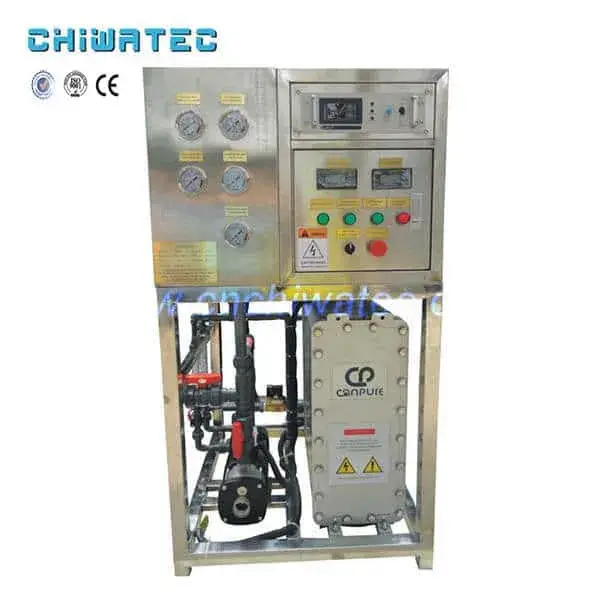
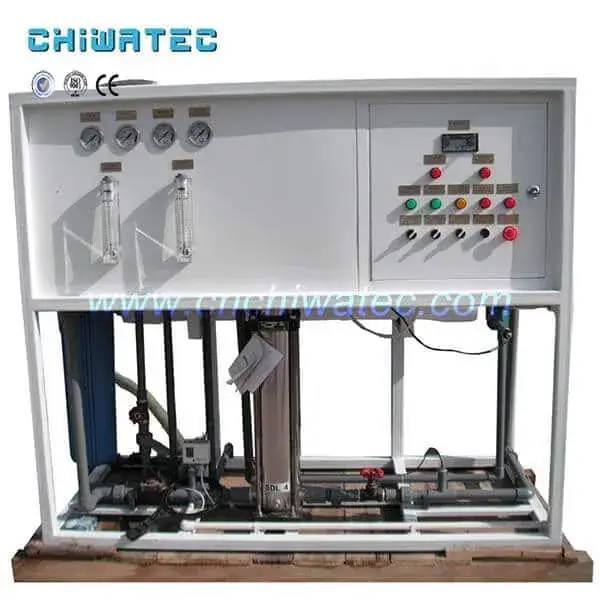
Industrial Reverse Osmosis Equipment
2. Reverse Osmosis Cleaning Methods
2.1 Online Chemical Cleaning
Online cleaning is performed using the built-in cleaning system of the RO unit.
It is suitable for:
- Light to moderate fouling
- Early indicators of performance decline
- Routine maintenance cleaning
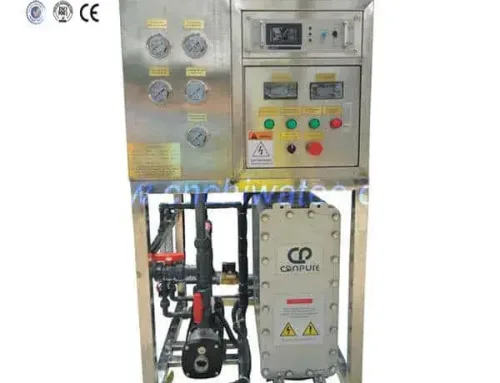
Modern RO systems such as our Industrial Reverse Osmosis Water Purification Equipment often include an integrated CIP loop for easy operation.
2.2 Offline Chemical Cleaning (Specialized RO Membrane Cleaning System)
Offline cleaning is used when membrane fouling is severe and cannot be fully restored using online CIP.
Características:
- Membrane elements are removed and cleaned individually
- Uses specialized RO membrane cleaning equipment
- Ensures thorough removal of stubborn deposits
- Prevents interruption of the main water treatment system
3. Reverse Osmosis Membrane Cleaning Formulas
Different pollutants require different cleaning chemicals.
Here is the recommended formula table:
| Pollutant Type | RO Cleaning Formula | Effect |
|---|---|---|
| Inorganic salts (CaCO₃, CaSO₄, BaSO₄) | 1% HCl, 0.5% H₃PO₄, 2% citric acid | ★★★★★ Optimal |
| Metal oxides (iron deposits) | 0.5% H₃PO₄ + 1% sodium bisulfite | ★★★★ Good |
| Inorganic colloids (sand, silt) | 1% NaOH (30°C), 0.025% SLS surfactant | ★★★★ Good |
| Biopelícula | 2% NaOH (30°C) + 1% EDTA | ★★★★★ Optimal |
| Silica scale | 1% NaOH (30°C) + 1% EDTA | ★★★ General |
Note: Always measure pH, temperature and membrane compatibility before chemical cleaning.
4. Reverse Osmosis Cleaning Equipment Components
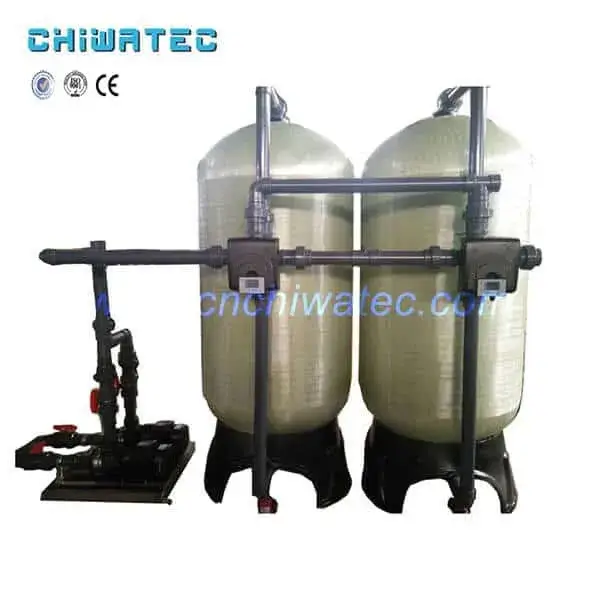
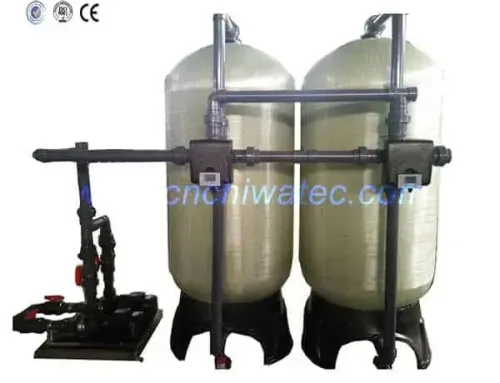
4.1 Chemical Cleaning Tank (PE or FRP)
The chemical tank must withstand pH 1–12 and is usually made of:
- PE (polyethylene)
- FRP (fiberglass-reinforced plastic)
Recommended product for durable FRP tanks:
FRP Water Treatment Tank
4.2 Cleaning Heating System
Temperature directly affects cleaning efficiency.
Guidelines:
- Optimal cleaning temperature: 20–40°C
- Below 10°C, cleaning becomes ineffective
- Some RO cleaning skids include electrical or steam heating
4.3 Cleaning Chemicals
Common RO cleaning agents include:
- Hydrochloric acid (HCl)
- Phosphoric acid (H₃PO₄)
- Citric acid
- Sodium hydroxide (NaOH)
- EDTA
Incorrect selection may damage the membrane.
We recommend using chemicals certified for RO membrane compatibility.
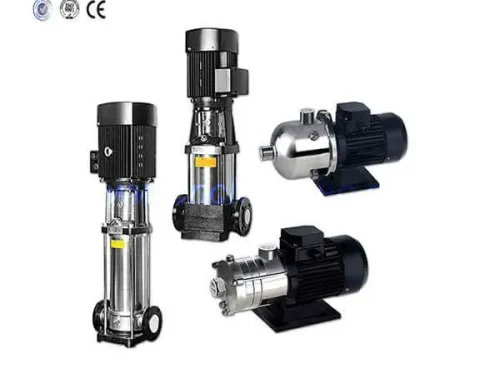
4.4 Cleaning Pump (Acid & Alkali Resistant)
A proper CIP pump should have:
- Flow rate: 12–15 m³/h
- Pressure: 20–30 m
- Acid and alkali resistance
RO systems from Chiwatec include compatible CIP pumps:
Industrial RO Systems
4.5 Piping, Valves & Instrumentation
During cleaning, ensure the following:
- Pressure gauges installed at inlet/outlet
- Chemical-resistant pipes
- Ball valves for flow control
- Correct loop connection:
Pump → Membrane Inlet → Membrane Outlet → Chemical Tank → Pump
Conclusión
Proper reverse osmosis equipment cleaning is essential for restoring membrane performance, extending membrane life, and ensuring stable water production.
By selecting the correct cleaning method—online or offline—and using compatible chemicals and equipment, you can significantly reduce operating costs and guarantee consistent water quality.
To explore RO membranes, RO systems, and water treatment equipment, visit:
👉 https://cnchiwatec.com/
FAQ – Reverse Osmosis Equipment Cleaning
1. How often should RO membranes be cleaned?
Typically every 3–6 months, or when pressure increases by 10–15% or permeate flow drops by 10%.
2. Can improper chemicals damage RO membranes?
Yes. Acidic and alkaline cleaners must be selected based on membrane type and fouling characteristics.
3. What is the ideal temperature for RO cleaning?
20–40°C. Cleaning efficiency drops sharply below 10°C.
4. What is the difference between online and offline cleaning?
- Online: For light fouling, uses built-in CIP system.
- Offline: For severe fouling, uses specialized cleaning equipment and sometimes spare membranes.
5. Do you supply RO cleaning equipment?
Yes — we provide membrane cleaning machines, chemical tanks, CIP pumps, and RO membranes
Xian CHIWATEC Water Treatment Technology es una empresa de alta tecnología especializada en varios dispositivos de procesamiento de agua. Aparte de estos productos individuales, que cubren una serie de tipos y series, también podemos ayudar con proyectos de ingeniería integrales relacionados. Gracias a nuestro arduo trabajo y dedicación desde nuestra fundación, ahora somos uno de los fabricantes de equipos de tratamiento de agua de más rápido desarrollo en el oeste de China.
Otras lecturas:
- ¿Cómo instalar y depurar equipos de ósmosis inversa?
- Equipo de ósmosis inversa Chiwatec RO: Introducción a la tecnología de ósmosis inversa
- Solución de problemas de equipos de ósmosis inversa
- ¿Cuáles son las características de los equipos de ósmosis inversa de dos etapas?
- ¿Cuáles son los pretratamientos de los equipos de ósmosis inversa?
SÍGANOS
¿Tiene un proyecto de tratamiento de agua con el que podamos ayudar?
* Diseño, mecanizado, instalación, puesta en marcha, personalización y servicio integral
 Spanish
  English
  Portuguese