Automatic Water Softening Equipment: Complete Guide to Productivity, Automation, and Performance
The global water softener market was valued at approximately USD 12.8 billion in 2024 and is projected to reach USD 21.5 billion by 2034, growing at a CAGR of 5.3% (Grand View Research). Automatic water softening equipment has become essential for industrial, commercial, and residential applications where hard water causes scaling, reduces equipment efficiency, and increases energy consumption. This comprehensive guide examines the productivity characteristics, automation features, and performance benefits of modern automatic water softeners.
What Is Automatic Water Softening Equipment?
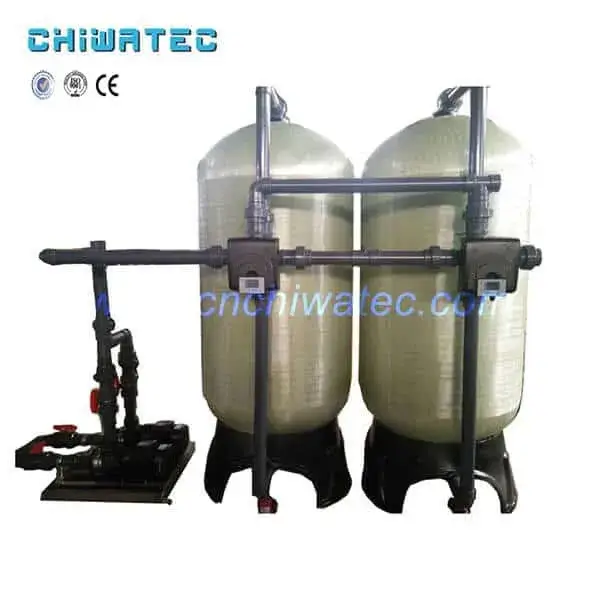
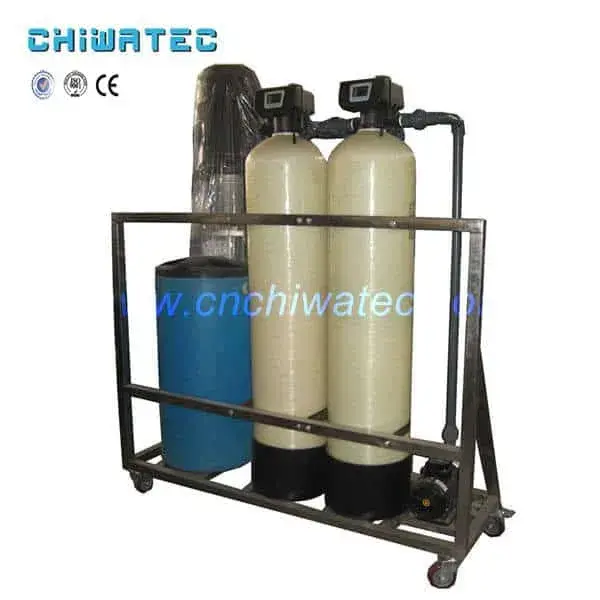
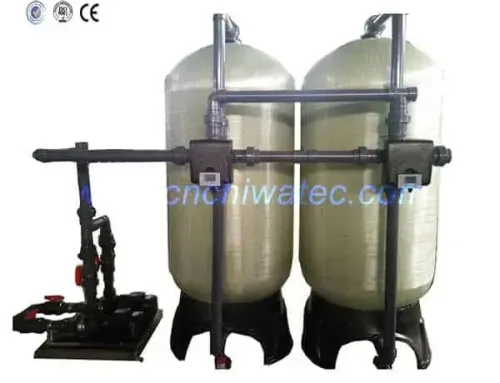
Automatic water softening equipment is a self-regulating system that removes hardness-causing calcium and magnesium ions from water through ion exchange, and automatically initiates regeneration cycles based on water usage or timed intervals. Unlike manual water softeners that require operator intervention for regeneration, automatic systems continuously monitor water production and initiate the regeneration process without human involvement, ensuring uninterrupted supply of softened water. The core components of an automatic water softener include a resin tank filled with ion exchange resin, a brine tank for regenerant storage, and an automatic control valve that manages the service, backwash, brine draw, rinse, and refill cycles.
High Degree of Automation
The automatic water softener automatically completes the cycle process of softening and regeneration according to the preset program. It does not require any manual operation except for the periodic addition of regeneration salt during operation, which saves substantial manpower and material resources and eliminates the undesirable consequences of human error.
Meter-Controlled vs. Timer-Controlled Automation
Modern automatic water softeners use either meter-controlled or timer-controlled regeneration. Meter-controlled systems track actual water usage and only regenerate when the resin’s softening capacity has been consumed, optimizing salt and water efficiency. Timer-controlled systems regenerate at preset time intervals regardless of water usage, providing simpler operation but potentially higher operating costs. Meter-controlled systems typically achieve 20-35% lower salt consumption and 15-25% less wastewater compared to timer-controlled equivalents, making them the preferred choice for most industrial and commercial applications.
Benefits of Full Automation
Fully automatic operation provides several critical advantages. Labor costs are minimized as the system requires no operator intervention for normal operation or regeneration cycles. Process consistency is improved because regeneration timing and chemical dosing are precisely controlled by the automation system. System monitoring capabilities enable early detection of performance issues such as resin fouling, salt bridging, or mechanical valve problems before they affect water quality.
Stable and Consistent Water Quality
The automatic water softener incorporates high-performance ion exchange resin and a scientifically designed water distribution system within the resin tank. This design ensures that calcium and magnesium ions in the feed water rapidly exchange with sodium ions on the resin, and there is virtually no possibility of hardness “breakthrough” (incomplete softening where hard water penetrates through the resin layer). The result is consistently high-quality softened water that meets the required specifications for downstream processes.
Factors Ensuring Water Quality Stability
Several design features contribute to consistent water quality. Proper resin bed depth (typically 900-1200 mm for standard applications) provides adequate contact time for ion exchange. Uniform water distribution through header-lateral or nozzle plate underdrain systems prevents channeling and ensures all resin is utilized effectively. Adequate regeneration salt dosage (typically 120-240 grams of salt per liter of resin) restores resin capacity fully after each cycle. The scientific water distribution system ensures that water flows evenly through the entire resin bed cross-section, maximizing the utilization of resin exchange capacity and preventing untreated water from bypassing active resin.
Reliable Operation and Long Service Life
The automatic water softening device operates reliably and delivers a long service life when properly maintained. The use of special composite materials that are corrosion-resistant and anti-aging significantly extends the operational lifespan of the equipment compared to conventional materials.
Construction Materials and Durability
Modern automatic water softeners are constructed from corrosion-resistant materials designed for long-term reliable operation. The resin tank is typically fabricated from fiber-reinforced plastic (FRP) or stainless steel, offering excellent resistance to corrosion and pressure cycling. Control valves are manufactured from high-grade engineering plastics or corrosion-resistant metal alloys, with wear-resistant internal components rated for millions of cycles. The use of composite materials for structural components eliminates rust and corrosion that would otherwise contaminate the softened water and shorten equipment life. With proper maintenance, a high-quality automatic water softener can provide 10-15 years of reliable service, with periodic resin replacement every 5-8 years.
Maintenance Requirements
Maintenance is straightforward and primarily consists of periodic salt addition to the brine tank (typically monthly for industrial systems), annual inspection of the control valve and injector assembly, and resin replacement every 5-8 years depending on feed water quality. The automatic control system includes diagnostic indicators that alert operators when salt levels are low or when service is required.
Application Scope of Automatic Water Softeners
Automatic water softening equipment can be widely applied in industrial, civil, and commercial fields that require prepared softened water. Key application areas include:
- Boiler feed water: Preventing scale formation in boiler tubes, improving heat transfer efficiency, and reducing fuel consumption by up to 15-25% compared to operation with hard water.
- Cooling circulating water: Preventing scale deposition in cooling towers and heat exchangers, maintaining thermal efficiency, and reducing maintenance cleaning frequency.
- Chemical industry: Ensuring consistent water quality for chemical processing, preventing interference from hardness ions in chemical reactions.
- Steel smelting: Protecting high-temperature furnace cooling systems from scale accumulation that can cause localized overheating and equipment failure.
- Textile printing and dyeing: Preventing hardness ions from reacting with dyes, ensuring consistent color quality and reducing dye consumption by 10-20%.
- Laundry and commercial cleaning: Reducing detergent consumption by 30-50% and improving cleaning effectiveness with softened water.
- Food processing water: Meeting food safety requirements for process water quality and preventing mineral-related quality issues in food products.
- Pure water equipment pretreatment: Protecting reverse osmosis membranes from hardness scaling, extending membrane life by 2-3 times.
Latest Trends in Water Softening Technology (2024-2025)
The water softening industry is advancing with innovations focused on efficiency, sustainability, and smart control. Demand-initiated regeneration with adaptive learning algorithms now optimizes regeneration timing based on historical water usage patterns, achieving additional 10-15% salt savings beyond conventional meter-controlled systems. High-capacity ion exchange resins with improved kinetics and resistance to fouling are enabling smaller equipment footprints for the same softening capacity, reducing installed costs by 15-25%.
Salt-free water conditioning technologies using template-assisted crystallization (TAC) and electromagnetic treatment are gaining attention as alternatives for applications where sodium addition to water is undesirable, though these technologies do not remove hardness ions and are not equivalent to traditional ion exchange softening for most industrial applications. IoT-enabled water softeners with remote monitoring, automatic salt level notification, and predictive maintenance alerts are becoming standard features in commercial and industrial equipment, reducing unplanned downtime and optimizing operating costs.
Conclusión
Automatic water softening equipment provides a reliable, efficient, and cost-effective solution for hardness removal across diverse applications. The combination of high automation, stable water quality, durable construction, and broad application scope makes automatic water softeners an essential component of modern water treatment systems. As technology continues to evolve with smart controls, improved resins, and enhanced monitoring capabilities, automatic water softening equipment will deliver even greater efficiency and reliability for industrial, commercial, and residential users worldwide.
Frequently Asked Questions (FAQ)
What is the difference between automatic and manual water softeners?
Automatic water softeners initiate regeneration cycles based on preset parameters (water usage or time) without operator intervention. Manual softeners require an operator to manually initiate each regeneration cycle, which can lead to inconsistent water quality if regeneration is delayed or forgotten.
How much salt does an automatic water softener use?
Salt consumption depends on water hardness, daily water usage, and system efficiency. Typical industrial systems consume 120-240 grams of salt per liter of resin per regeneration. Meter-controlled systems are 20-35% more salt-efficient than timer-controlled models.
How long does an automatic water softener last?
With proper maintenance, a high-quality automatic water softener can provide 10-15 years of reliable service. The ion exchange resin should be replaced every 5-8 years depending on feed water quality and operating conditions.
What maintenance does an automatic water softener require?
Primary maintenance includes periodic salt addition to the brine tank (monthly for most systems), annual inspection of the control valve and injector, and resin replacement every 5-8 years. The automatic controller provides diagnostic alerts for low salt and service requirements.
Can an automatic water softener remove iron from water?
Standard water softeners can remove dissolved ferrous iron (Fe2+) up to concentrations of 2-5 mg/L. For higher iron levels, a dedicated iron removal filter or special resin with iron-cleaning capability is recommended.
What industries use automatic water softening equipment?
Key industries include boiler feed water treatment, cooling water systems, chemical processing, steel manufacturing, textile dyeing, commercial laundry, food processing, and as pretreatment for reverse osmosis and pure water systems.
Further Reading
For more information on water softening technology and related topics, explore these resources:
¿Tiene un proyecto de tratamiento de agua con el que podamos ayudar?
* Diseño, mecanizado, instalación, puesta en marcha, personalización y servicio integral
 Spanish
  English
  Portuguese