Ultrapure Water System for Electroplating: Complete Process Flow and Technology Guide 2026
Looking for the right ultrapure water system for your electroplating operation? The electroplating industry demands extremely high water quality – typically resistivity of 18.2 MΩ·cm and conductivity below 0.055 μS/cm – to prevent plating defects, ensure adhesion quality, and maintain bath chemistry stability. This comprehensive guide compares the three primary methods for producing ultrapure water for electroplating: ion exchange, two-stage reverse osmosis (RO), and electrodeionization (EDI), providing process flow diagrams, technology comparisons, and selection criteria for 2026.
*Last Updated: May 2026 | Industry-Verified Data*
Why This Guide Matters
The global ultrapure water market was valued at approximately USD 12.8 billion in 2024 and is projected to reach USD 22.5 billion by 2034, growing at a CAGR of 5.8%. The electroplating industry accounts for a significant share of this demand, as modern plating processes for electronics, automotive components, and decorative finishes require increasingly stringent water quality standards. Water-related plating defects can account for 15-30% of total quality losses in electroplating operations, making proper ultrapure water system selection a critical factor in production yield and profitability.
Key Industry Trends (2026 Update)
- EDI Overtaking Mixed-Bed Ion Exchange: Electrodeionization (EDI) is becoming the preferred polishing technology for new electroplating ultrapure water installations, offering continuous operation without chemical regeneration and reducing operating costs by 30-50% compared to conventional mixed-bed ion exchange.
- Integrated RO+EDI Systems: The combination of two-stage reverse osmosis with EDI has become the gold standard for electroplating ultrapure water, achieving 18.2 MΩ·cm consistently while reducing wastewater discharge by up to 90% compared to traditional ion exchange systems.
- Smart Monitoring and Automation: IoT-enabled water quality monitoring with real-time resistivity, TOC, and particle count sensors is becoming standard, allowing predictive maintenance and reducing unplanned downtime in electroplating water systems.
- Zero Liquid Discharge (ZLD) Drivers: Increasingly stringent wastewater discharge regulations in the electroplating industry are driving adoption of ultrapure water systems with high recovery rates (75-85% for RO+EDI vs. 50-60% for conventional systems), reducing both water consumption and wastewater treatment costs.
1. What Water Quality Does the Electroplating Industry Require?
Critical Water Quality Parameters
Electroplating processes require ultrapure water meeting the following specifications: resistivity of 18.2 MΩ·cm (at 25 degrees C), conductivity below 0.055 μS/cm, TOC below 10 ppb, particle count below 100 particles per milliliter at 0.2 microns, and total silica below 3 ppb. These parameters are substantially stricter than standard purified water (typically 1-10 MΩ·cm) and are necessary to prevent plating defects such as pitting, poor adhesion, and surface discoloration.
Why Quality Matters
Contaminants in rinse water directly affect electroplating quality. Dissolved solids can cause spotting and staining. Organic compounds can interfere with plating bath chemistry, reducing deposition efficiency by 10-25%. Silica can form insulating layers on plated surfaces. Bacteria and endotoxins can cause pitting corrosion in subsequent processing steps. For high-reliability applications such as PCB plating and aerospace coatings, ultrapure water meeting ASTM D1193-91 Type I standards is non-negotiable.
2. Method 1: Ion Exchange Ultrapure Water System for Electroplating
Process Flow
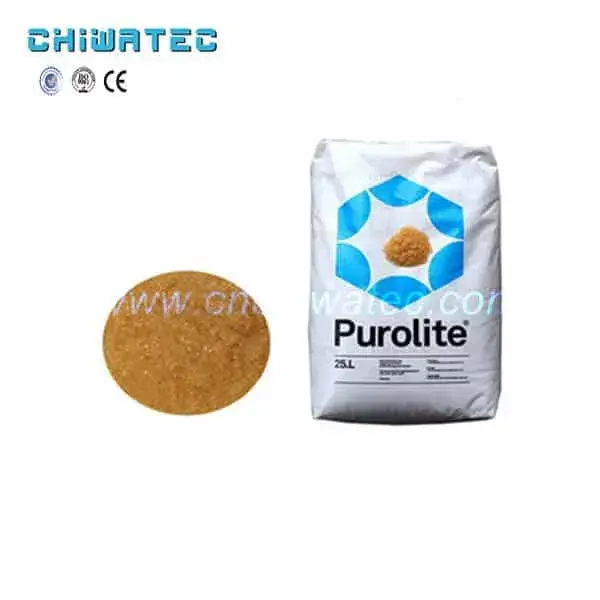
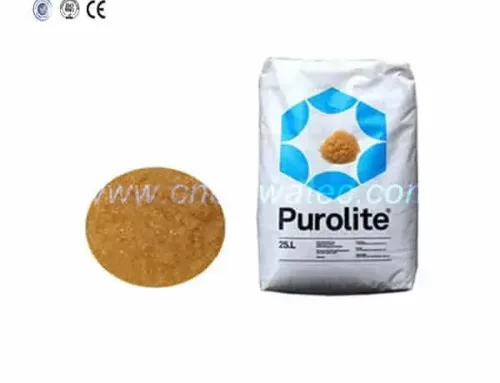
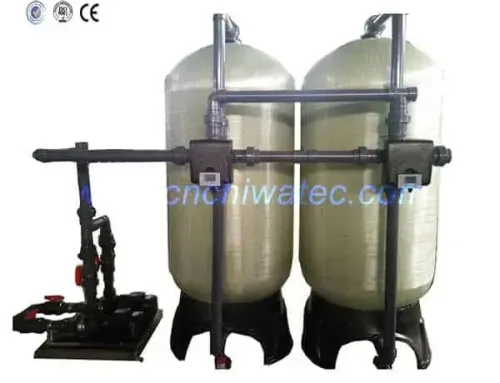
The ion exchange method for electroplating ultrapure water follows this process: Raw water → Raw water pressure pump → Multi-media filter → Activated carbon filter → Water softener → Precision filter → Cation resin filter bed → Anion resin filter bed → Mixed resin filter bed → Ultrapure water storage tank. The cation and anion resin beds remove dissolved ionic contaminants, while the mixed bed provides final polishing to achieve resistivity of up to 18.2 MΩ·cm.
Advantages and Limitations
The ion exchange method offers the advantage of producing the highest quality ultrapure water (up to 18.2 MΩ·cm) with relatively simple equipment. However, it requires chemical regeneration of resin beds using acid and caustic solutions, producing chemical wastewater that must be neutralized before disposal. Regeneration frequency depends on feed water quality – for feed water with 200-400 μS/cm conductivity, regeneration may be required every 2-7 days. Operating costs for chemicals and wastewater treatment make this method increasingly expensive compared to membrane-based alternatives.
Best Applications
Ion exchange remains suitable for smaller electroplating operations (flow rates below 5 m³/h) where the capital cost of RO+EDI systems cannot be justified, or as a polishing step after RO in hybrid systems. For facilities with existing wastewater treatment capable of handling regeneration waste, conventional ion exchange can still be a viable option.
3. Method 2: Two-Stage Reverse Osmosis Ultrapure Water System
Process Flow
The two-stage RO method follows: Raw water → Raw water pressure pump → Multi-media filter → Activated carbon filter → Water softener → Precision filter → First-stage reverse osmosis → Second-stage reverse osmosis → Ultrapure water storage tank. The first-stage RO typically operates at 10-15 bar and achieves 97-99% salt rejection, producing permeate with conductivity of 10-30 μS/cm. The second-stage RO further reduces conductivity to 1-5 μS/cm, representing about 99.5% total salt rejection.
Advantages and Limitations
Two-stage RO offers significant advantages: no chemical regeneration required, continuous operation, reduced operator attention, and minimal wastewater compared to ion exchange. However, two-stage RO alone typically cannot achieve the 18.2 MΩ·cm resistivity required for critical electroplating applications – the permeate quality typically ranges from 1-5 μS/cm (approximately 0.2-1 MΩ·cm), which meets some but not all electroplating needs. RO membranes require periodic cleaning (every 3-6 months) and replacement every 2-3 years, representing ongoing operational costs.
Best Applications
Two-stage RO is best suited as a pretreatment stage before EDI or mixed-bed polishing, rather than as a standalone ultrapure water system for electroplating. It is also suitable for non-critical electroplating operations where water quality requirements are less stringent (e.g., rough plating, pre-cleaning stages). Modern two-stage RO systems offer recovery rates of 70-80%, significantly better than single-stage RO systems.
4. Method 3: EDI Ultrapure Water System for Electroplating
Process Flow
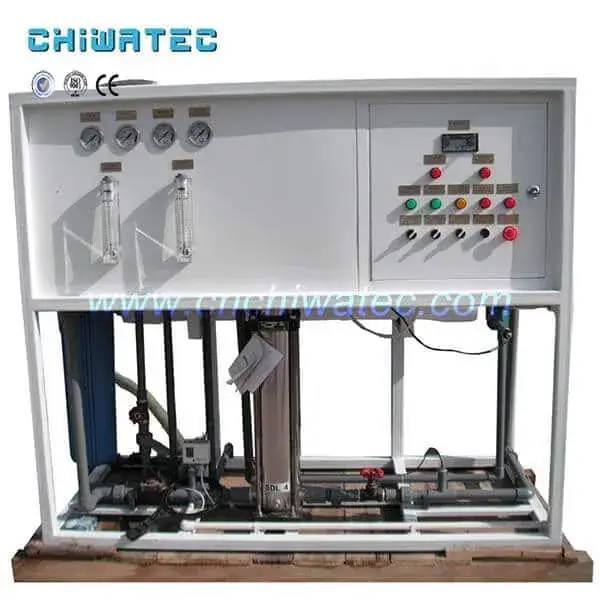
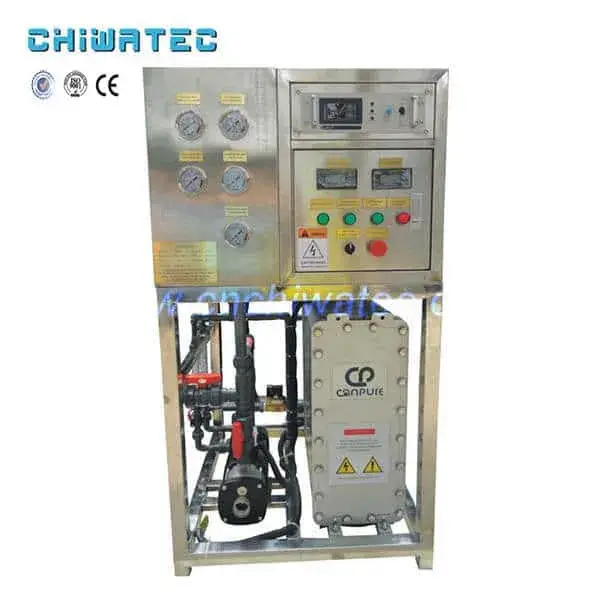
The EDI method follows: Raw water → Raw water pressure pump → Multi-media filter → Activated carbon filter → Water softener → Precision filter → Primary reverse osmosis machine → EDI (Electrodeionization) module → Ultrapure water storage tank. The RO pretreatment reduces feed water conductivity to below 20 μS/cm, allowing the EDI module to polish the water to 18.2 MΩ·cm in a single continuous pass without chemical regeneration.
How EDI Works
Electrodeionization combines ion exchange membranes and ion exchange resins with a direct current electric field. The electric field drives dissolved ions through selective membranes into concentrate streams, while the resins provide a conductive path for ion transport. The result is continuous, chemical-free deionization that produces ultrapure water with resistivity stable at 18.2 MΩ·cm, silica below 3 ppb, and TOC below 5 ppb. Unlike mixed-bed ion exchange, EDI operates without regeneration downtime or chemical waste.
Advantages of RO+EDI Systems
The RO+EDI combination is the most advanced and cost-effective technology for electroplating ultrapure water systems. Key benefits include: continuous operation (no regeneration cycles), no chemical handling or storage, wastewater reduction of up to 90% compared to ion exchange, lower operating costs (USD 0.20-0.40 per cubic meter vs. USD 0.50-1.00 for mixed-bed), consistent water quality regardless of feed water variations, and compact system footprint. The initial capital investment is typically 20-40% higher than conventional ion exchange, but the total cost of ownership over 5 years is usually 30-50% lower due to reduced chemical, labor, and wastewater treatment costs.
5. How to Choose Between Ion Exchange, Two-Stage RO, and EDI?
Decision Matrix
- Water quality requirement: If 18.2 MΩ·cm is required, choose RO+EDI or ion exchange mixed-bed. If 1-5 μS/cm is sufficient, two-stage RO alone may be adequate.
- Flow rate: For flow rates below 2 m³/h, ion exchange may be more economical. For 2-50 m³/h, RO+EDI offers the best lifecycle cost. Above 50 m³/h, custom-engineered RO+EDI or hybrid systems are recommended.
- Feed water quality: For feed water TDS above 500 ppm, two-stage RO + EDI is strongly recommended. For TDS below 200 ppm, single-stage RO + EDI may be sufficient.
- Wastewater constraints: Facilities with strict discharge limits should avoid conventional ion exchange due to regeneration wastewater. RO+EDI systems reduce waste streams by 80-90%.
- Operator expertise: Facilities with limited technical staff benefit from the automation and simplicity of RO+EDI systems compared to the chemical handling requirements of ion exchange.
6. What Pretreatment Is Required for Electroplating Ultrapure Water Systems?
Standard Pretreatment Train
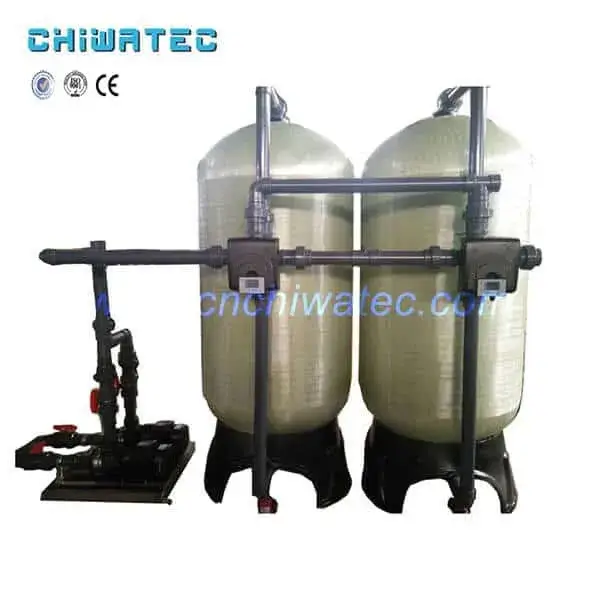
All three ultrapure water methods require proper pretreatment to protect downstream equipment. The standard pretreatment train includes: (1) Multi-media filtration – removes suspended solids down to 20-25 microns; (2) Activated carbon filtration – removes chlorine, chloramines, and organic compounds; (3) ablandamiento del agua – removes calcium and magnesium hardness; (4) Precision/cartridge filtration – removes particles down to 1-5 microns as final protection.
Additional Pretreatment Options
For challenging feed water sources, additional pretreatment may include: antiscalant dosing to prevent RO membrane scaling, sodium bisulfite dosing for residual chlorine removal, UV sterilization for bacteria control (particularly important for EDI systems), and ultrafiltration (UF) as an alternative to multi-media filtration for high-turbidity or algae-prone water sources.
7. What Are the Operating Costs of Each Ultrapure Water Method?
Cost Comparison (per cubic meter)
- Ion Exchange: USD 0.50-1.00/m³ – includes chemical costs, resin replacement, wastewater treatment, and labor.
- Two-Stage RO: USD 0.15-0.35/m³ – dominated by membrane replacement and energy costs (3-5 kWh/m³).
- RO + EDI: USD 0.20-0.40/m³ – RO membrane replacement plus EDI module replacement. No chemical costs. Lowest total operating cost for 18.2 MΩ·cm water.
Total Cost of Ownership (5-Year)
For a typical electroplating facility requiring 10 m³/h of ultrapure water, the 5-year total cost of ownership is approximately: ion exchange – USD 350,000-500,000; two-stage RO + mixed-bed – USD 300,000-450,000; RO + EDI – USD 250,000-380,000. The RO+EDI system offers the lowest total cost while providing the highest and most consistent water quality.
8. How Does the Electroplating System Differ from Pharmaceutical or Electronics Systems?
Key Differences by Industry
- Electroplating: Primary concern is ionic contamination. Resistivity of 18.2 MΩ·cm is critical. TOC requirements are moderate (<10 ppb).
- Pharmaceutical: Focus on endotoxin control, microbial limits (USP <1231>), and TOC (<500 ppb for PW, <50 ppb for WFI).
- Electronics/Semiconductor: Extremely stringent – TOC below 1 ppb, dissolved oxygen below 1 ppb, particles below 0.05 micron.
- Laboratory: ASTM D1193-91 Type I water at much lower flow rates (10-100 L/h).
9. What Are the Common Problems with Electroplating Ultrapure Water Systems?
Troubleshooting Guide
- Low resistivity output: Check RO membrane integrity, EDI module fouling, or mixed-bed resin exhaustion. Feed water conductivity above 20 μS/cm entering the EDI module is the most common cause.
- High TOC levels: Typically caused by biological fouling in pretreatment, exhausted activated carbon, or UV lamp failure.
- Flow rate decline: RO membrane fouling (scaling, biofouling) is the most common cause. Implement CIP cleaning every 3-6 months.
- EDI module voltage increase: Indicates scaling or fouling. Feed water hardness breakthrough from the softener is the typical root cause.
10. How to Size and Select an Ultrapure Water System for Your Facility?
System Sizing
Proper sizing requires calculating: (1) peak flow rate based on maximum rinse station demand; (2) daily consumption based on production volume; (3) storage capacity (2-4 hours of peak demand); (4) future expansion (20-30% capacity margin). A typical electroplating line requires 1-5 m³/h, while large-scale operations may need 10-50 m³/h.
Selection Criteria
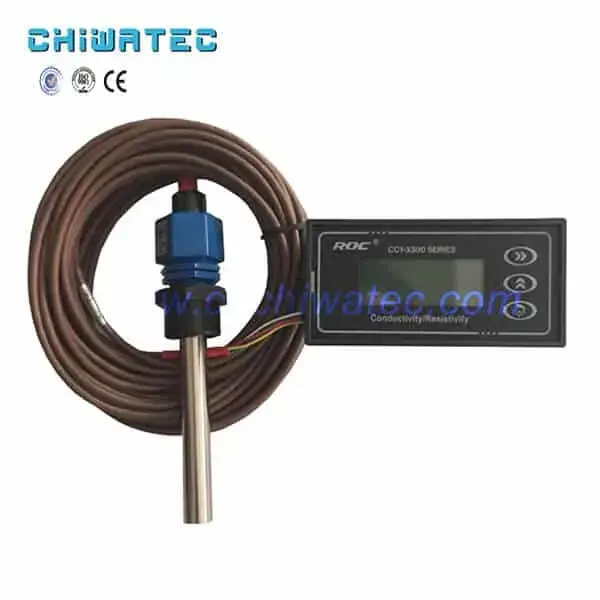
Evaluate: (1) water quality consistency – maintain 18.2 MΩ·cm regardless of feed variations; (2) operational simplicity – automated RO+EDI systems minimize intervention; (3) footprint – compact skid-mounted systems available; (4) service and support – choose a supplier with local capability. CHIWATEC offers custom-engineered ultrapure water systems for the electroplating industry. CHIWATEC engineers work with you to select the optimal configuration based on your specific requirements.
Conclusión
Selecting the right ultrapure water system for electroplating is a critical decision that directly impacts plating quality, production efficiency, and operating costs. While conventional ion exchange remains viable for smaller operations, the RO+EDI combination has emerged as the preferred technology for most electroplating applications, offering superior water quality (18.2 MΩ·cm), continuous operation, and significantly lower total cost of ownership. Contact CHIWATEC today at [email protected] o [email protected] (WhatsApp available) for expert guidance on selecting the ideal ultrapure water system for your electroplating facility.
Frequently Asked Questions
Q1: What is the best ultrapure water system for small electroplating shops?
For small operations (flow rates below 2 m³/h), a two-stage RO system with a mixed-bed polishing loop offers a good balance of capital cost and water quality. As production grows, the mixed-bed can be replaced with an EDI module for reduced operating costs.
Q2: How often should I replace RO membranes in an electroplating ultrapure water system?
RO membranes typically last 2-3 years with proper pretreatment. Membrane lifespan is extended by maintaining consistent feed water quality, implementing regular CIP cleaning (every 3-6 months), and monitoring normalized permeate flow and salt rejection.
Q3: Can I use the same ultrapure water system for different plating processes?
Yes, a well-designed system producing 18.2 MΩ·cm water is suitable for virtually all electroplating processes including decorative chrome, hard chrome, nickel, copper, zinc, gold, silver, and tin plating, as well as PCB manufacturing, anodizing, and electropolishing.
Q4: What is the difference between EDI and mixed-bed ion exchange?
Both produce 18.2 MΩ·cm water, but they operate differently. Mixed-bed requires periodic chemical regeneration with acid and caustic. EDI uses a continuous electrical field to drive ions through membranes without chemicals. EDI has higher capital cost but 30-50% lower operating cost over 5 years.
Q5: How do I maintain consistent water quality in my system?
Key practices: (1) monitor feed water quality daily; (2) replace pretreatment filters on schedule; (3) regenerate softener based on hardness breakthrough; (4) perform RO membrane CIP at first sign of decline; (5) sanitize the distribution loop quarterly; (6) verify inline resistivity meters annually.
Related Resources and Further Reading
- Process Flow of Ultrapure Water Equipment in Electroplating Industry – Detailed electroplating-specific process configurations
- Process Description of Ultrapure Water Equipment for Preparing Electroplating Industry – Complementary process description and equipment details
- Pure Water Equipment Working Principle 2026 – Foundational technology overview
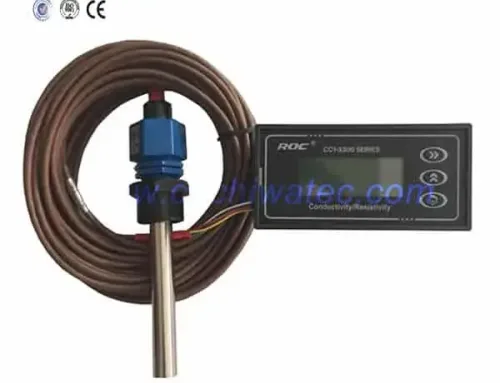
- Ultrapure Water Treatment Equipment: Working Principles 2026 – Broader ultrapure water reference
- EDI Equipment for Ultrapure Water Systems – Explore CHIWATEC EDI solutions
¿Tiene un proyecto de tratamiento de agua con el que podamos ayudar?
* Diseño, mecanizado, instalación, puesta en marcha, personalización y servicio integral
 Spanish
  English
  Portuguese