

Osmosis and Reverse Osmosis 2026: Complete Guide to Water Purification Principles
Meta Description: Understand osmosis and reverse osmosis principles in 2026. Learn how RO achieves 98-99% desalination, osmotic pressure mechanics, and water purification technology for industrial applications.
Introduction to Osmosis and Reverse Osmosis
Ósmosis y ósmosis inversa represent fundamental natural and engineered processes that drive modern water purification technology in 2026. With global sistema de osmosis inversa installations exceeding 30,000 new plants annually and water scarcity affecting over 2 billion people, understanding RO water purification principles has become essential for industries ranging from pharmaceuticals to power generation.
los reverse osmosis desalination rate of modern RO equipment typically reaches 98-99%, meeting requirements for most industrial and commercial applications. However, in specialized sectors like electronics manufacturing, ultra-high pressure boiler feed water, and pharmaceutical production, pure water requirements may exceed single-stage RO capabilities, necessitating multi-stage systems or integration with electrodeionization (EDI) technology.
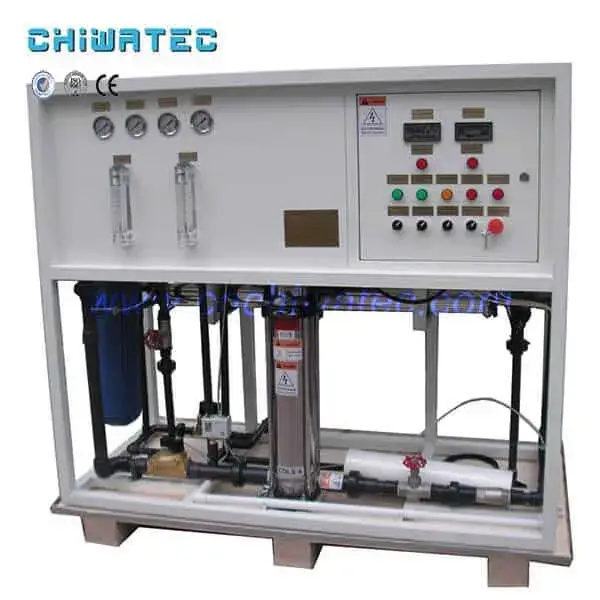
Understanding Osmosis: The Natural Phenomenon
What is Osmosis?
Osmosis is a naturally occurring phenomenon fundamental to biological and chemical processes. When a semi-permeable membrane separates two solutions of different concentrations, water molecules naturally migrate from the dilute solution (low concentration) to the concentrated solution (high concentration) in an attempt to equalize concentrations on both sides.
Real-World Osmosis Examples
los osmosis phenomenon is observable in everyday life:
- Cucumber in salt water: When placed in saline solution, a cucumber shrinks as water molecules migrate from the cucumber (dilute) into the salt water (concentrated)
- Plant root absorption: Plants absorb water from soil through osmotic pressure gradients
- Human kidney function: Biological membranes use osmosis for waste filtration and water balance
Osmotic Pressure Explained
Consider a container divided by a semi-permeable membrane that allows only water molecules to pass:
- Pure water and brine are filled to the same height on both sides
- Water molecules naturally migrate from pure water to brine through the membrane
- The brine level rises while the pure water level decreases
- This migration continues until reaching an equilibrium point
- The pressure difference at equilibrium is called osmotic pressure
Osmotic pressure is directly proportional to the concentration of dissolved salts in the brine. For seawater (35,000 ppm TDS), osmotic pressure measures approximately 27 bar (390 PSI).
Reverse Osmosis: Reversing Nature for Water Purification
The Reverse Osmosis Principle
Reverse osmosis (RO) occurs when external pressure exceeding the natural osmotic pressure is applied to the concentrated solution side. This forces water molecules to migrate in the opposite direction—from concentrated solution to dilute solution—effectively reversing the natural osmotic process.
When pressure greater than the osmotic pressure is applied to salt water, pure water passes through the semi-permeable membrane while dissolved salts, bacteria, viruses, and organic contaminants are rejected and concentrated in the reject stream.
Two Keys to Reverse Osmosis Water Purification
Successful RO water purification requires two critical components:
- Selective Semi-Permeable Membrane: The RO membrane contains microscopic pores approximately 0.0001 microns (10 Angstroms) in size—equivalent to water molecule dimensions. This allows water to pass while blocking larger contaminants including:
- Bacteria (0.2-2 microns)
- Viruses (0.02-0.4 microns)
- Dissolved salts and ions (hydrated radius >0.001 microns)
- Organic pollutants (molecular weight >100 Daltons)
- Colloids and suspended particles
- Sufficient Applied Pressure: Operating pressure must exceed the feed water’s osmotic pressure:
- Brackish water (1,000-5,000 ppm TDS): 150-300 PSI
- Seawater (35,000-45,000 ppm TDS): 800-1,200 PSI
- Ultra-high purity applications: 1,200+ PSI
Reverse Osmosis Desalination Rate and Performance
Measuring RO System Performance
Among water impurities, soluble salts present the greatest removal challenge. Therefore, reverse osmosis purification effectiveness is typically evaluated by salt removal rate (desalination rate):
- Standard RO systems: 98-99% salt rejection
- High-rejection membranes: 99.5-99.7% salt rejection
- Seawater RO membranes: 99.7-99.8% salt rejection
Factors Affecting Salt Removal Rate
los RO salt removal rate is primarily determined by reverse osmosis membrane selectivity, influenced by:
- Membrane material: Thin-film composite (TFC) and thin-film nanocomposite (TFN) membranes offer highest selectivity
- Feed water TDS: Higher salinity reduces percentage rejection but increases absolute salt removal
- Operating pressure: Higher pressure improves salt rejection up to membrane limits
- Temperature: Lower temperatures increase salt rejection but reduce permeate flow
- Membrane age: Degraded membranes show declining rejection rates
When Single-Stage RO Is Insufficient
While 98-99% desalination meets most requirements, certain applications demand higher purity:
- Electronics industry: Ultrapure water (UPW) for semiconductor manufacturing requires 18.2 MΩ·cm resistivity
- Pharmaceutical WFI: Water for Injection needs <0.25 EU/mL endotoxin levels
- High-pressure boilers: >100 bar systems require TDS <1 ppm
Solutions include double-pass RO systems (RO permeate fed to second RO stage) or RO-EDI integration achieving 99.9%+ contaminant removal.
Applications of Osmosis and Reverse Osmosis Technology
Industrial Water Purification
Reverse osmosis water purification technology serves diverse industrial applications:
- Power generation: Boiler feed water treatment preventing scale and corrosion
- Pharmaceuticals: USP Purified Water and Water for Injection (WFI) production
- Electronics: Ultrapure water for chip manufacturing and PCB cleaning
- Food and beverage: Consistent product quality and ingredient standardization
Desalination and Water Scarcity Solutions
RO desalination provides drinking water for over 300 million people globally:
- Seawater desalination: Coastal communities and island nations
- Brackish water treatment: Inland areas with saline groundwater
- Emergency water supply: Mobile and containerized RO systems
Wastewater Treatment and Reuse
Tecnología de ósmosis inversa enables water recycling:
- Municipal wastewater reuse for indirect potable applications
- Industrial wastewater treatment and resource recovery
- Zero liquid discharge (ZLD) configurations
2026 Technology Trends in Reverse Osmosis
Advanced Membrane Materials
Next-generation RO membranes enhance performance:
- Thin-film nanocomposite (TFN): 50% higher flux with improved fouling resistance
- Graphene oxide membranes: Selective ion removal with enhanced permeability
- Bio-inspired aquaporin membranes: Mimicking biological water channels for maximum efficiency
- Extended service life: 7-10 years versus traditional 3-5 years
Energy Efficiency Innovations
Modern reverse osmosis systems prioritize energy optimization:
- Isobaric energy recovery devices: 96-98% efficiency capturing concentrate pressure
- Variable frequency drives (VFD): Pump speed optimization for varying conditions
- Low-fouling membranes: Reduced cleaning frequency and pressure requirements
- Solar-powered RO: Off-grid and remote applications
Smart Monitoring and AI
Digital transformation enhances RO system performance:
- Real-time monitoring of pressure, flow, conductivity, and temperature
- AI-driven predictive maintenance reducing downtime by 35%
- Digital twin simulations for optimization
- Cloud-based data logging and remote diagnostics
Conclusion: The Science Behind Clean Water
Ósmosis y ósmosis inversa represent elegant solutions to global water challenges. By understanding and harnessing natural osmotic pressure principles, reverse osmosis water purification technology delivers 98-99% desalination rates, providing clean water for billions while supporting critical industrial processes.
From the simple observation of a cucumber shrinking in salt water to sophisticated multi-stage RO plants producing ultrapure water for semiconductor manufacturing, the journey from osmosis to reverse osmosis demonstrates how understanding natural phenomena enables transformative engineering solutions. As water scarcity intensifies in 2026 and beyond, RO membrane technology continues evolving to meet growing demands for efficient, sustainable water purification.
For comprehensive system guidance, explore our RO System Operation and Maintenance Guide. Learn about water purification system principles and discover complete RO technology fundamentals.
Frequently Asked Questions (FAQ) About Osmosis and Reverse Osmosis
What is the difference between osmosis and reverse osmosis?
Osmosis is the natural movement of water from dilute to concentrated solutions through a semi-permeable membrane. Osmosis inversa reverses this process by applying pressure exceeding osmotic pressure, forcing water from concentrated to dilute side, enabling water purification and desalination.
What desalination rate can reverse osmosis achieve?
Standard RO systems achieve 98-99% salt removal. High-rejection membranes reach 99.7% desalination. For ultrapure water applications, double-pass RO or RO-EDI integration achieves 99.9%+ contaminant removal.
How does osmotic pressure affect RO system design?
Osmotic pressure determines minimum operating pressure. Seawater (35,000 ppm TDS) has ~27 bar osmotic pressure, requiring 800-1,200 PSI operating pressure. Brackish water requires 150-400 PSI. System pumps must exceed osmotic pressure for effective purification.
What contaminants does reverse osmosis remove?
RO membranes remove 97-99% of dissolved salts, 99.9% of bacteria and viruses, heavy metals, organic compounds (MW >100 Daltons), colloids, and particles down to 0.0001 microns. Soluble salts are the most challenging to remove, making salt rejection rate the key performance indicator.
When is single-stage RO insufficient?
Single-stage RO may not meet requirements for electronics (ultrapure water 18.2 MΩ·cm), pharmaceutical WFI (<0.25 EU/mL endotoxins), or high-pressure boiler feed water (TDS <1 ppm). Double-pass RO or RO-EDI systems provide higher purity for these applications.
SÍGANOS
Do you have a water treatment project we can help with?
Designing, machining, installing, commissioning, customize and one-stop service






 Spanish
  English
  Portuguese




