

Ultrafiltration Membrane Performance Factors: Key Parameters Affecting UF Flux and Efficiency
The global ultrafiltration membrane market was valued at approximately USD 3.2 billion in 2024 and is projected to reach USD 5.8 billion by 2034, growing at a CAGR of 6.2% (Grand View Research). Understanding the key factors that affect ultrafiltration membrane performance is essential for optimizing system design, maximizing flux, minimizing fouling, and extending membrane service life. This guide examines the critical operating parameters that influence UF membrane efficiency and provides practical recommendations for performance optimization.
What Is an Ultrafiltration Membrane?
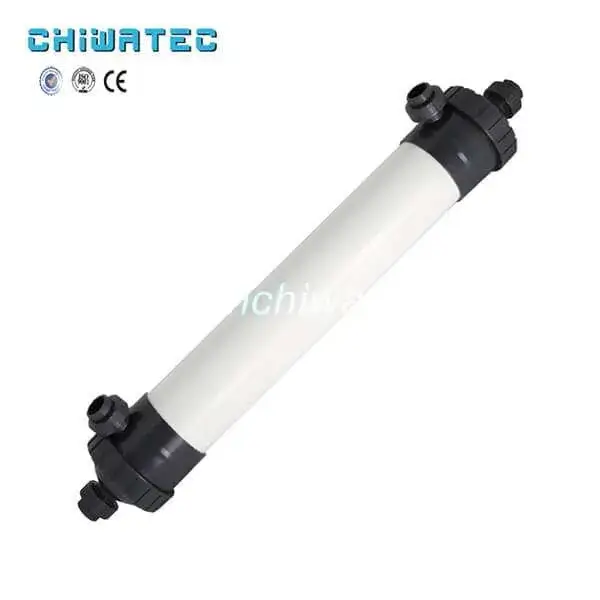
An membrana de ultrafiltración is a filtration medium operating between microfiltration and nanofiltration, representing a membrane separation technology specifically designed for material separation, concentration, and purification. UF membranes are generally characterized by their molecular weight cutoff (MWCO) in practical applications, and are primarily used to separate macromolecules, colloids, and particles in solution from small molecules such as solvents and dissolved salts.
MWCO and Separation Capabilities
During UF operation, macromolecules, colloids, and particles are trapped on the membrane surface while the concentrated solution is carried away by the circulating flow of feed material. This cross-flow configuration achieves the dual objectives of material separation and concentration. Typical UF membrane MWCO values range from 1,000 to 500,000 Daltons, with common specifications including 10,000, 30,000, 50,000, 100,000, and 150,000 Daltons.
Application Overview
The application fields of ultrafiltration primarily involve food and beverage processing, biomedicine and pharmaceuticals, fine chemical manufacturing, and industrial wastewater treatment and water reuse. UF technology has achieved a dominant position in juice clarification processes, where freshly squeezed juice containing pectin, pulp scraps, starch, protein, suspended solids, and microbial metabolites requires effective clarification. UF membranes consistently produce clear juice while retaining desirable flavor compounds and nutrients.
Key Factors Affecting Ultrafiltration Membrane Flux
The filtration rate (flux) of UF membranes is influenced by multiple interrelated factors that operators must understand and manage to achieve optimal system performance. The following parameters require careful consideration during system design and operation.
Solution Concentration
The filtration rate (flux) is inversely related to the concentration of the solution being processed. Higher feed concentrations increase osmotic pressure and viscosity, both of which reduce permeate flux. In industrial applications, the relationship between feed concentration and flux follows an approximately logarithmic decline – doubling the feed solids concentration can reduce flux by 30-50%, depending on the nature of the solute. For high-concentration applications, diafiltration (continuous dilution during processing) is often employed to maintain reasonable flux rates.
Molecular Weight and Shape
Solutes with smaller molecular weights are filtered more quickly through UF membranes, as they encounter less resistance within the membrane pore structure. Additionally, the molecular shape significantly affects transport through the membrane. Long-chain molecules pass through the membrane more easily than spherical molecules of equivalent molecular weight, because their linear configuration allows them to orient and pass through pores more readily. This shape-dependent behavior must be considered when estimating rejection rates for specific solutes, as standard MWCO ratings assume spherical molecular geometry.
Temperatura de funcionamiento
When the operating temperature increases, membrane flux increases due to reduced feed viscosity and enhanced diffusion rates. As a general rule, flux increases by approximately 2-3% per degree Celsius of temperature increase for most UF membranes. However, temperature cannot exceed the rated maximum for the membrane material. For polysulfone (PS) and polyethersulfone (PES) UF membranes, the maximum continuous operating temperature is typically 50 degrees C, while PVDF membranes can tolerate up to 70 degrees C. Operating above rated temperatures causes irreversible membrane compaction, pore collapse, and permanent flux loss.
Feed Flow Velocity
Higher feed flow velocity across the membrane surface generates greater shear forces that sweep away accumulated particles and reduce concentration polarization. The high flow rate of the feed liquid results in higher flux by maintaining a cleaner membrane surface. In tubular and hollow fiber UF systems, feed velocities of 2-5 m/s are typical, with higher velocities recommended for feeds with high fouling potential. The relationship between flow velocity and flux is nonlinear – doubling the cross-flow velocity typically increases flux by 15-30%, though the energy cost of pumping must be weighed against the flux improvement.
Operating Pressure (TMP)
For extremely dilute solutions such as clean water, increasing the transmembrane pressure (TMP) can increase flux proportionally. However, for most feed solutions, the relationship between pressure and flux follows a pressure-independent regime once concentration polarization is established. Beyond a certain pressure point (typically 2-4 bar for most UF systems), further pressure increases yield minimal flux improvement while accelerating membrane fouling and compaction. Operating pressure must remain below the membrane’s rated maximum pressure, which for polymeric UF membranes is typically 4-10 bar depending on the membrane configuration and manufacturer specifications.
pH and Isoelectric Point Effects
When the pH value of the feed solution approaches the isoelectric point (pI) of the solute, membrane flux decreases significantly. At the isoelectric point, solute molecules carry no net electrical charge, eliminating electrostatic repulsion between molecules and between solutes and the membrane surface. This allows solutes to aggregate and deposit more readily on the membrane, forming a dense fouling layer. Operating the system at a pH at least 1-2 units away from the solute’s isoelectric point can substantially improve flux through enhanced electrostatic repulsion. For protein-containing feeds, adjusting pH away from the protein’s pI (typically pH 4-6 for many proteins) can reduce fouling by 40-60%.
Concentration Polarization
In mixed solutions, macromolecular substances may form a concentrated boundary layer (concentration polarization) on the membrane surface, which significantly affects the passage of small molecular solutes and reduces overall flux. This phenomenon occurs because retained solutes accumulate at the membrane surface faster than they can diffuse back into the bulk solution. The concentration polarization layer creates additional hydraulic resistance and can lead to gel layer formation if not properly managed. Effective cross-flow velocity, periodic backwashing, and turbulent flow promotion are essential strategies for minimizing concentration polarization effects in UF systems.
Optimizing Ultrafiltration Membrane Performance
Achieving optimal UF membrane performance requires a systematic approach that balances flux, fouling control, and energy consumption. Key optimization strategies include maintaining appropriate pretreatment to remove gross contaminants before UF, selecting the optimal membrane MWCO for the target application (typically 3-5 times smaller than the smallest particle to be retained), implementing regular backwashing cycles (every 30-60 minutes for most applications), and performing periodic chemical cleaning based on flux decline trends rather than fixed schedules.
Automated control systems with real-time flux monitoring, temperature compensation, and pressure-adjusted operation can improve overall system efficiency by 15-25% while reducing chemical cleaning frequency. The integration of UF with upstream coagulation or flocculation processes has been shown to increase sustainable flux by 30-50% in surface water treatment applications by reducing the fouling load reaching the membrane surface.
Latest Trends in Ultrafiltration Membrane Technology (2024-2025)
The UF membrane industry continues to evolve with significant innovations. Low-fouling membrane surfaces incorporating hydrophilic polymer brush coatings and zwitterionic materials are achieving flux recovery rates above 95% after simple hydraulic cleaning, compared to 70-80% for conventional membranes. Ceramic UF membranes are gaining traction in challenging industrial applications, offering chemical resistance across the full pH range (0-14), temperatures up to 200 degrees C, and service lives exceeding 15 years – though at 2-4 times the capital cost of polymeric alternatives.
Smart UF systems with integrated sensors for real-time membrane integrity testing, automated backwash optimization using machine learning algorithms, and predictive maintenance scheduling are becoming standard in new municipal and industrial installations. The growing demand for decentralized water treatment solutions is driving development of compact, modular UF systems with reduced footprint and lower installation costs. Additionally, UF membrane bioreactors (MBRs) continue to expand into new applications, with the global MBR market projected to reach USD 7.8 billion by 2028 (Allied Market Research).
Conclusión
The performance of ultrafiltration membranes is governed by a complex interplay of operating parameters including solution concentration, molecular weight and shape of solutes, temperature, feed flow velocity, transmembrane pressure, pH conditions, and concentration polarization dynamics. Successful UF system operation requires careful management of these factors to maximize flux, minimize fouling, and extend membrane service life. By understanding these fundamental relationships and implementing appropriate control strategies, operators can achieve optimal UF membrane performance across diverse industrial applications.
Frequently Asked Questions (FAQ)
What factors most affect UF membrane flux?
The primary factors are feed concentration, operating temperature, cross-flow velocity, transmembrane pressure, pH relative to solute isoelectric point, and concentration polarization. Temperature has the most predictable effect (2-3% flux increase per degree C), while concentration polarization is the most common cause of unexpected flux decline.
What is the maximum operating temperature for UF membranes?
For polysulfone and PES membranes, the maximum continuous operating temperature is 50 degrees C. PVDF membranes can tolerate up to 70 degrees C. Ceramic UF membranes can operate at temperatures up to 200 degrees C. Operating above rated temperatures causes irreversible membrane damage.
How does pH affect UF membrane performance?
pH affects both membrane surface charge and solute charge. Operating near the solute’s isoelectric point (pI) reduces flux due to eliminated electrostatic repulsion and increased fouling. Maintaining pH 1-2 units away from the pI can improve flux by 40-60% for protein-containing feeds.
Why does higher cross-flow velocity improve UF flux?
Higher cross-flow velocity generates greater shear forces that sweep away accumulated particles from the membrane surface, reducing concentration polarization and maintaining a cleaner membrane. Typical UF cross-flow velocities range from 2-5 m/s depending on the membrane configuration.
What is the difference between MWCO and pore size in UF membranes?
MWCO (molecular weight cutoff) is the molecular weight at which 90% of solutes are retained, expressed in Daltons. Pore size is the physical diameter of membrane pores in microns or nanometers. For UF membranes, MWCO is more commonly used as it better predicts separation performance for different solute types.
How often should UF membranes be backwashed?
Typical backwash intervals range from 30-60 minutes for most UF applications, with backwash duration of 30-60 seconds. The frequency should be adjusted based on feed water quality and observed flux decline patterns.
Further Reading
For more information on ultrafiltration membrane technology and related topics, explore these resources:
Xi’an CHIWATEC Water Treatment Technology es una empresa de alta tecnología especializada en varios dispositivos de procesamiento de agua. Aparte de estos productos individuales, que cubren una serie de tipos y series, también podemos ayudar con proyectos de ingeniería integrales relacionados. Gracias a nuestro arduo trabajo y dedicación desde nuestra fundación, ahora somos uno de los fabricantes de equipos de tratamiento de agua de más rápido desarrollo en el oeste de China.
¿Tiene un proyecto de tratamiento de agua con el que podamos ayudar?
* Diseño, mecanizado, instalación, puesta en marcha, personalización y servicio integral






 Spanish
  English
  Portuguese




