Ion Exchange Resin Pretreatment: Complete Guide to Working Principle and Preparation Methods 2026
Installing new ion exchange resin without proper pretreatment? This critical step can reduce initial resin performance by up to 40% and shorten service life if skipped. Ion exchange resin pretreatment — the process of conditioning new resin through controlled acid-alkali soaking cycles — removes manufacturing residuals, stabilizes exchange capacity, and ensures consistent water quality from day one. CHIWATEC has engineered water softening and ion exchange systems for industrial applications worldwide, providing expert guidance on resin handling and preparation.
Working Principle of Ion Exchange Resin for Water Softening
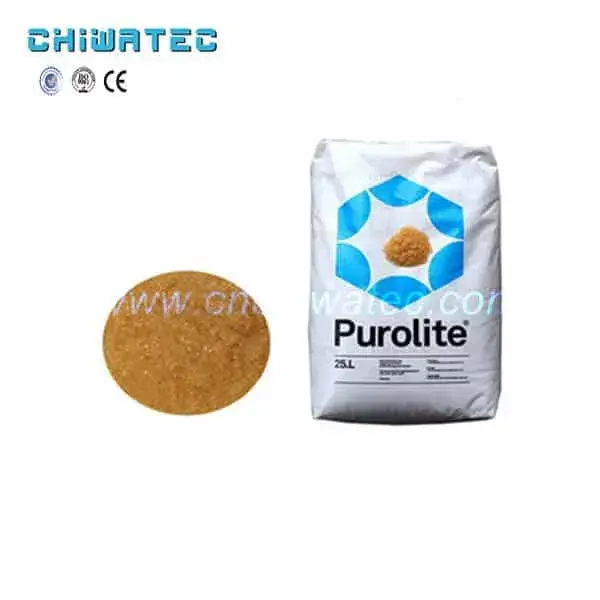
los ion exchange resin pretreatment process cannot be understood without first grasping how the resin functions in water treatment. Ion exchange resins are synthetic polymer beads containing functional groups that selectively bind ions from water. In water softening applications, strong acid cation (SAC) resin exchanges Na⁺ ions for Ca²⁺ and Mg²⁺ hardness ions. In deionization systems, cation resin (R-H) exchanges H⁺ for metal cations, while anion resin (R-OH) exchanges OH⁻ for anions like Cl⁻ and SO₄²⁻.
The fundamental exchange reactions are:
- Cation exchange: R-H + NaCl → R-Na + HCl (H⁺ replaces Na⁺)
- Anion exchange: R-OH + HCl → R-Cl + H₂O (OH⁻ replaces Cl⁻)
- Combined result: RH + ROH + NaCl → RNa + RCl + H₂O — the dissolved salt is replaced by water molecules
This reversible exchange process achieves salt removal efficiencies of 99%+ when the resin is properly conditioned through ion exchange resin pretreatment.
Why Ion Exchange Resin Pretreatment Is Essential
New ion exchange resin from the manufacturer contains residual monomers, cross-linking agents, and manufacturing byproducts embedded within the polymer matrix. Without proper pretreatment, these contaminants leach into the treated water during initial operation, causing:
- Water quality degradation: Effluent conductivity may exceed acceptable limits for weeks without pretreatment
- Reduced exchange capacity: Functional groups may be partially blocked by manufacturing residues, reducing effective capacity by 15-30%
- Shortened service life: Residual organic compounds can accelerate oxidative degradation of the polymer matrix
- Fouling of downstream equipment: Fine resin particles and leached organics can clog valves, pipelines, and downstream purification stages
- Inconsistent operation: Unpredictable initial performance makes system tuning difficult, extending commissioning time
Industry standards (including ASTM D2685 and GB/T 5476-2013 for Chinese standards) explicitly recommend pretreatment cycles for all new ion exchange resins before putting them into service.
Pretreatment of Cation Exchange Resin: Step-by-Step Process
Cation exchange resin, typically strong acid cation (SAC) type with sulfonic acid functional groups, requires a specific pretreatment sequence that begins with acid soaking to activate the H⁺ form. The método de intercambio de iones fundamentally depends on proper resin conditioning for optimal performance.
Step 1: Initial Rinsing
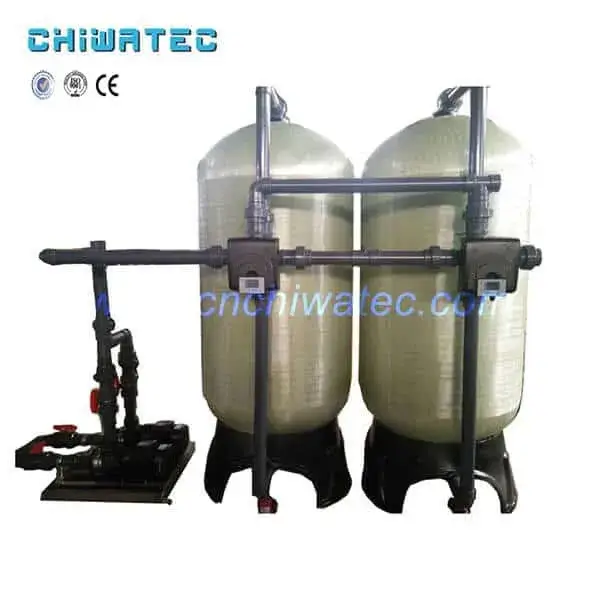
Place the resin in the exchange column (or a clean container for small batch processing). Rinse thoroughly with clean water (tap water or preferably deionized water) to remove fine particles, shipping debris, and surface dust. Continue rinsing until the effluent runs clear — typically requiring 3-5 bed volumes of rinse water.
Step 2: First Acid Soak (4-5% HCl)
Prepare a 4-5% hydrochloric acid (HCl) solution (approximately 1 part concentrated HCl to 8-10 parts water — always add acid to water, never the reverse). Soak the resin in this solution for 2-4 hours. The acid activates the sulfonic acid groups (-SO₃H) and removes iron, aluminum, and other metal contaminants that may have accumulated during manufacturing. Use 2 times the resin volume of acid solution.
Step 3: First Alkali Soak (4-5% NaOH)
After the acid soak, thoroughly rinse the resin bed with clean water until the effluent pH is close to neutral (pH 6-8). Then apply a 4-5% sodium hydroxide (NaOH) solution and soak for another 2-4 hours. The alkali treatment removes organic contaminants, humic substances, and microbial residues. Use 2 times the resin volume of alkali solution.
Step 4: Final Acid Treatment
Rinse again to neutral pH after the alkali soak, then perform a final treatment with 4-5% HCl solution. This restores the resin to the H⁺ form required for deionization. Drain the acid solution and rinse with clean water until the effluent pH reaches neutrality. The resin is now ready for service.
Pretreatment of Anion Exchange Resin: Step-by-Step Process
Anion exchange resin, typically strong base anion (SBA) type with quaternary ammonium functional groups, follows a similar but reversed sequence — beginning with alkali soaking to activate the OH⁻ form.
Step 1: Initial Rinsing
As with cation resin, begin by rinsing the new anion resin with clean water until the effluent runs clear. Remove floating particles and debris. Anion resin is more sensitive to chlorine damage than cation resin, so deionized or softened water is preferred for rinsing.
Step 2: First Alkali Soak (4-5% NaOH)
Prepare a 4-5% NaOH solution and soak the resin for 2-4 hours. For anion resin, the alkali treatment comes first to activate the quaternary ammonium groups to the OH⁻ form. Use 2 times the resin volume of alkali solution. This step also removes organic manufacturing residues effectively.
Step 3: First Acid Soak (4-5% HCl)
Rinse to neutral pH after alkali treatment, then soak with 4-5% HCl solution for 2-4 hours. The acid treatment removes metallic contaminants and stabilizes the resin matrix.
Step 4: Final Alkali Treatment
After rinsing the acid to neutral pH, perform a final 4-5% NaOH treatment to restore the resin to the OH⁻ form. Use the lye (spent alkali), rinse with water until neutral, and the resin is ready for use.
For both resin types, repeat the alternating acid-alkali cycle 2-3 times total for optimal conditioning. The entire resin regeneration and preservation process shares these chemical handling principles.
Key Differences Between Cation and Anion Resin Pretreatment
| Parámetro | Cation Resin (SAC) | Anion Resin (SBA) |
|---|---|---|
| First treatment step | Acid (4-5% HCl) | Alkali (4-5% NaOH) |
| Final treatment step | Acid (4-5% HCl) | Alkali (4-5% NaOH) |
| Target ionic form | H⁺ (hydrogen form) | OH⁻ (hydroxide form) |
| Chemical sensitivity | Resistant to chlorine | Sensitive to chlorine |
| Soak duration per step | 2-4 hours | 2-4 hours |
| Chemical consumption | 2x resin volume | 2x resin volume |
Common Mistakes in Resin Pretreatment and How to Avoid Them
Even experienced operators can make errors during ion exchange resin pretreatment that compromise resin performance. Here are the most common issues and their solutions.
- Insufficient rinsing between cycles: Residual acid or alkali from one step neutralizes the chemical in the next step, reducing effectiveness. Always rinse to pH 6-8 between steps.
- Wrong chemical sequence: Using acid-first for anion resin (or alkali-first for cation resin) can lock the resin in the wrong ionic form, requiring additional cycles to correct.
- Inadequate contact time: Soaking for less than 2 hours may not fully penetrate the resin bead interior. For large beads (1-2 mm diameter), longer soak times of 3-4 hours are recommended.
- Excessive chemical concentration: Using HCl or NaOH above 5% can damage the resin polymer structure — osmotic shock may cause bead cracking and capacity loss.
- Skipping pretreatment entirely: The most common mistake in field installations. Some operators assume “new resin is clean” — but manufacturing residuals always require conditioning.
Following the proper ion exchange soft water equipment installation and startup procedures ensures your resin operates at peak efficiency from the first service cycle.
Frequently Asked Questions
Q1: Can I use the same pretreatment procedure for all types of ion exchange resin?
No. Cation and anion resins require different sequences — cation resin starts with acid treatment, anion resin starts with alkali treatment. For chelating resins and special-purpose resins (e.g., nuclear-grade, food-grade), always refer to the manufacturer’s specific pretreatment instructions, as chemical concentrations and sequences may vary.
Q2: How long does the full pretreatment process take?
A complete 2-cycle pretreatment (2 acid-alkali repetitions for each resin type) typically takes 12-24 hours including rinse times between steps. For large industrial systems processing hundreds of liters of resin, plan for 1-2 full days of pretreatment work before the system can be commissioned.
Q3: What water quality should be used for rinsing during pretreatment?
Deionized water with conductivity below 10 μS/cm is ideal for rinsing. If DI water is not available, clean softened water can be used. Avoid raw tap water with high hardness or chlorine content, as these can partially foul the resin before it enters service. For mixed bed resin pretreatment, always use DI water for rinsing to maintain quality.
Q4: Can mixed bed resin be pretreated using the same method?
Mixed bed resin (a physical mixture of cation and anion resin in a single column) should undergo pretreatment before the resins are mixed. Cation and anion components must be separated (backwashed) and pretreated individually using their respective sequences, then re-mixed. Attempting to treat mixed resin as a single batch is ineffective because the two resin types have opposite chemical requirements.
Q5: How do I know when pretreatment is complete?
Pretreatment is complete when: (1) the final rinse effluent pH is stable at 6-8, (2) the effluent conductivity matches the influent water conductivity, (3) no visible discoloration or turbidity appears in the rinse water, and (4) the exchange capacity test (if performed) shows consistent results between consecutive cycles.
Conclusion and Call to Action
Proper ion exchange resin pretreatment is an essential step that directly impacts system performance, water quality, and resin longevity. By following the correct acid-alkali conditioning sequence — acid-first for cation resin and alkali-first for anion resin — operators can ensure maximum exchange capacity from the first service cycle and extend resin service life by 20-30%. Understanding the working principles behind each treatment step enables better decision-making and faster troubleshooting.
CHIWATEC provides comprehensive ion exchange resin systems, industrial water softening equipment, and technical support for resin selection, pretreatment, and maintenance. Contact us at [email protected] o [email protected] (WhatsApp available) for expert consultation on your water treatment requirements.
Related Resources and Further Reading
- Industrial Water Softening Equipment: Complete Technical Guide to Ion Exchange
- Ion Exchange Method in Water Softening: Principles and Technology
- Introduction to Resin Regeneration Methods and Resin Preservation Methods
- Ion Exchange Soft Water Equipment: Complete System Guide 2026
- Water Softening System Product Line
¿Tiene un proyecto de tratamiento de agua con el que podamos ayudar?
* Diseño, mecanizado, instalación, puesta en marcha, personalización y servicio integral
 Spanish
  English
  Portuguese