

Nanofiltration Membrane Technology 2026: Principles, Applications & Industry Trends
Nanofiltration (NF) membrane technology continues to advance as a critical water treatment solution in 2026. This comprehensive guide explores NF principles, industrial applications, and emerging trends shaping the future of membrane separation technology worldwide.
Key Takeaways:
- Global nanofiltration membrane market reaches $2.8 billion in 2025, projected to exceed $4.5 billion by 2030
- NF operates at 0.5-2.0 MPa, 30-50% lower pressure than reverse osmosis systems
- NF membranes achieve 95-99% rejection for multivalent ions and organics >200-1000 Da
- Energy consumption reduced to 0.5-1.5 kWh/m³ for brackish water NF applications
Introduction: Nanofiltration Technology in 2026
Membrane separation technology leverages selective permeation characteristics to separate, classify, purify, and enrich gas or liquid mixtures using external energy or chemical potential as the driving force. Nanofiltration (NF) occupies a unique position between reverse osmosis (RO) and ultrafiltration (UF), with membrane pore sizes at the nanometer level (approximately 1 nm).
According to 2025-2026 industry reports, the global nanofiltration membrane market continues robust expansion, valued at $2.8 billion USD and projected to reach $4.5 billion by 2030, growing at 9.8% CAGR. This growth reflects increasing adoption across water treatment, food & beverage, pharmaceutical, and chemical processing industries.
NF technology offers distinct advantages: lower operating pressure (0.5-2.0 MPa) compared to RO (1.5-5.0 MPa), high flux rates, excellent rejection of organics and multivalent ions, and the ability to operate under harsh conditions including high temperature, acidic, and alkaline environments.
Nanofiltration Principles and Characteristics
Separation Mechanism and Pore Structure
NF membranes feature pore sizes between 0.5-2 nm, making them suitable for separating dissolved components with molecular weights of 200-1000 Da and molecular dimensions around 1 nm. The separation mechanism combines:
- Size exclusion: Physical sieving based on molecular dimensions
- Donnan effect: Electrostatic repulsion of charged species
- Solution-diffusion: Preferential solubility and diffusivity through membrane material
The transmembrane pressure difference required for NF membrane separation is generally 0.5-2.0 MPa, which is 0.5-3 MPa lower than the pressure required for reverse osmosis to achieve similar permeation rates. This pressure advantage translates directly to energy savings of 30-50% in comparable applications.
Technical Advantages of NF Membranes
Nanofiltration membrane technology offers multiple advantages over conventional treatment methods:
- Selective separation: Intercepts organics and multivalent ions with molecular weight >100 Da while allowing small organics and monovalent ions to pass
- Harsh condition tolerance: Operates effectively under high temperature (up to 60°C), acidic (pH 2-3), and alkaline (pH 10-11) conditions
- Fouling resistance: Advanced surface modifications reduce organic and biological fouling
- Low operating pressure: Reduced energy consumption compared to RO systems
- High membrane flux: Typical flux rates of 20-80 L/m²·h at standard conditions
- Process integration: Combines effectively with other treatment processes for enhanced performance
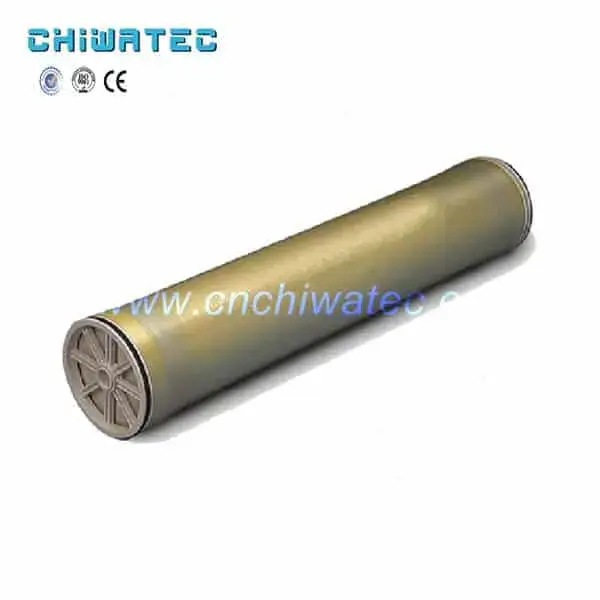
Industrial Applications of Nanofiltration Technology
(1) Daily Chemical Wastewater Treatment
Application research on nanofiltration membrane wastewater treatment for daily chemical products demonstrates excellent performance. NF membranes show acid and alkali resistance, superior rejection rates, effective heavy metal removal, and minimal membrane fouling issues.
2026 Performance Metrics:
- Heavy metal removal: >98% for cadmium, lead, mercury
- Organic compound rejection: >95% for molecular weight >500 Da
- Operating cost reduction: 30-40% compared to RO technology
- Market penetration: Estimated to cover >90% of daily chemical wastewater treatment applications
(2) Petroleum Industry Wastewater Treatment
Petroleum industry wastewater contains complex mixtures of inorganic salts and organic compounds from exploration and refining processes. NF technology, combined with other treatment methods, effectively treats wastewater while recovering valuable substances.
Key Applications:
- Crude oil wastewater separation: NF membranes separate oil-rich water phase from oil-free brine, enabling crude oil recovery and water reuse
- Phenol removal: NF achieves >95% phenol removal rate for phenolic wastewater containing phenol, methyl phenol, nitrophenol, and substituted phenols
- Heavy metal removal: Efficient removal of cadmium, nickel, mercury, titanium under lower pressure than RO
- Cost advantage: 40-60% lower operating costs compared to standalone RO systems
(3) Pesticide Wastewater Treatment
Conventional water treatment methods struggle to remove low-molecular organic pesticides from contaminated water. NF membrane technology provides effective solutions:
Rejection Performance:
- Non-phenolic pesticides: >96.7% rejection rate (except dichloride compounds)
- Phenolic pesticides: >94% rejection with proper membrane selection
- Adsorption capacity influenced by pesticide hydrophobicity
- Multi-pesticide removal in single treatment stage
(4) Chemical Fiber, Printing and Dyeing Wastewater
NF technology enables dye and auxiliary chemical removal and reuse in textile processing wastewater. Since most dye molecules have molecular weights of several hundred to several thousand Daltons, NF membranes effectively separate dyes from inorganic salts and small molecules.
Performance Metrics:
- Salt rejection rate: >98%
- Dye loss rate: <0.1%
- Dye enrichment: 5-10x concentration achievable
- High-temperature operation: Up to 60°C for thermophilic processes
- Water reuse rate: 70-85% in closed-loop systems
(5) Domestic Sewage Treatment
Integrating NF systems between biodegradation and chemical oxidation stages optimizes domestic sewage treatment. NF allows biodegradable small molecules (MW <100 Da) to pass while intercepting non-biodegradable organic macromolecules (MW >100 Da) for subsequent chemical oxidation.
Benefits:
- Reduced oxidant consumption: 30-50% savings
- Lower residue content: Minimized sludge production
- Enhanced biodegradation efficiency: Optimized substrate selection
- Activated carbon savings: Reduced adsorbent requirements
(6) Thermal Power Plant Wastewater Recycling
Secondary wastewater from thermal power plants originates from ash washing, dust removal, and cooling systems. This wastewater contains suspended solids, ash, high salinity, and organic matter. NF treatment enables industrial reuse:
Treatment Process:
- Microfiltration pretreatment: Removes all suspended particles, achieving 99% BOD, 98% COD, 73% total nitrogen, 17% total phosphorus removal
- Colony reduction: Total colony count reduced to 3-4 CFU/L
- pH adjustment: Acid addition lowers pH to remove CO₂
- NF desalination: Produces boiler-quality water
Case Study – Eraring Power Station (Australia):
- Capacity: 1,000-15,000 m³/day wastewater treatment
- Annual savings: $800,000 USD in operating costs
- Expansion plan: 5,000 m³/day by 2010 (historical reference for scale)
- 2026 modern equivalent: 20,000-50,000 m³/day systems common
(7) Pickling Waste Liquid Treatment
Steel plant pickling processes immerse steel in ~20% sulfuric acid solutions. As pickling progresses, sulfuric acid concentration decreases while ferrous sulfate increases. When acid concentration drops to 6-8% and ferrous sulfate exceeds 200-250 g/L, the solution requires replacement.
NF Process for Pickling Waste Recovery:
- Ferrous sulfate concentration: NF traps FeSO₄ in concentrate stream
- Crystallization: Concentrate sent to cooling crystallization for FeSO₄·7H₂O recovery
- Acid recovery: Second NF stage concentrates sulfuric acid to 20%
- Regenerated acid: Recycled back to pickling process
- Permeate: Discharged to waste acid station for further treatment
This process achieves sulfuric acid and ferrous sulfate recycling while enabling comprehensive utilization of pickling waste liquid.
(8) Papermaking Wastewater Treatment
NF membrane technology replaces traditional chemical treatments for more effective dark lignin removal. Chlorinated lignin from wood pulp bleaching is negatively charged and easily intercepted by negatively charged NF membranes without causing membrane fouling.
Advantages over RO:
- No strict cation (Na⁺) removal requirements
- Lower operating pressure and energy consumption
- UF/NF combination provides optimal treatment for kraft paper manufacturing wastewater
- Chemical savings: 40-60% reduction in coagulant usage
Conclusion: Future of Nanofiltration Membrane Technology
Nanofiltration membrane technology continues evolving as a versatile, energy-efficient separation solution. Key trends shaping the future include:
- Material innovation: Thin-film nanocomposite (TFN) membranes with enhanced selectivity and fouling resistance
- Energy efficiency: Further pressure reductions approaching 0.3-0.5 MPa for specific applications
- Hybrid systems: NF combined with RO, UF, or advanced oxidation for optimized performance
- Resource recovery: Selective separation enabling valuable material extraction from waste streams
- Digital monitoring: IoT sensors and AI-driven optimization for predictive maintenance
- Sustainability: Reduced chemical usage and lower carbon footprint compared to conventional treatment
As water scarcity intensifies and environmental regulations tighten globally, NF membrane technology will play increasingly critical roles across industrial, municipal, and resource recovery applications.
FAQ: Nanofiltration Membrane Technology
1. What is the difference between nanofiltration and reverse osmosis?
NF operates at lower pressure (0.5-2.0 MPa vs 1.5-5.0 MPa for RO), has larger pore sizes (0.5-2 nm vs 0.1-0.5 nm), and allows monovalent ions to pass while RO rejects nearly all dissolved solids. NF is ideal for selective separation; RO for complete demineralization.
2. What contaminants does nanofiltration remove?
NF effectively removes: organics with MW >200-1000 Da, multivalent ions (Ca²⁺, Mg²⁺, SO₄²⁻), heavy metals, pesticides, dyes, and hardness. Monovalent ions (Na⁺, Cl⁻) partially pass through depending on membrane charge and operating conditions.
3. How long do nanofiltration membranes last?
With proper maintenance and pretreatment, NF membranes typically last 3-7 years. Factors affecting lifespan include feedwater quality, operating conditions, cleaning frequency, and membrane material. Regular monitoring and preventive maintenance extend service life.
4. What is the energy consumption of NF systems?
NF energy consumption ranges from 0.5-1.5 kWh/m³ for brackish water applications, significantly lower than RO (1.5-4.0 kWh/m³ for seawater). Actual consumption depends on feedwater salinity, recovery rate, and system configuration.
5. Can NF membranes operate at high temperatures?
Yes, many NF membranes tolerate temperatures up to 45-60°C, higher than typical RO membranes (35-45°C). High-temperature operation increases flux but may affect membrane stability and rejection rates. Consult manufacturer specifications for temperature limits.
Further Reading
¿Tiene un proyecto de tratamiento de agua con el que podamos ayudar?
* Diseño, mecanizado, instalación, puesta en marcha, personalización y servicio integral






 Spanish
  English
  Portuguese




