Industrial Water Softening Technology: Complete Guide 2026
Introduction to Industrial Water Softening Systems
Water hardness caused by calcium and magnesium ions remains one of the most significant challenges in industrial water treatment in 2026. According to recent industry data, the global water softening system market is projected to reach USD 12.8 billion by 2028, growing at a CAGR of 8.2% from 2024 to 2028. This growth is driven by increasing awareness of water quality impacts on industrial equipment efficiency and operational costs.
A common misconception in water treatment is focusing solely on drinking water quality while neglecting other water usage aspects. In reality, water usage extends far beyond drinking to include bathing, washing, cleaning, and sanitation. Research indicates that approximately one-third of various substances in water are absorbed through the skin during bathing. For adults and infants alike, skin absorption of volatile organic compounds during a 15-minute daily bath can equal or exceed oral intake from drinking water.
Health Implications of Hard Water
Studies show that harmful substances in water enter the human body through three primary pathways: one-third through oral consumption, one-third through skin absorption during bathing and washing, and one-third through respiratory intake during showers. This comprehensive understanding has driven the adoption of industrial water softening technology across residential and commercial applications.
How Does Industrial Water Softening Work?
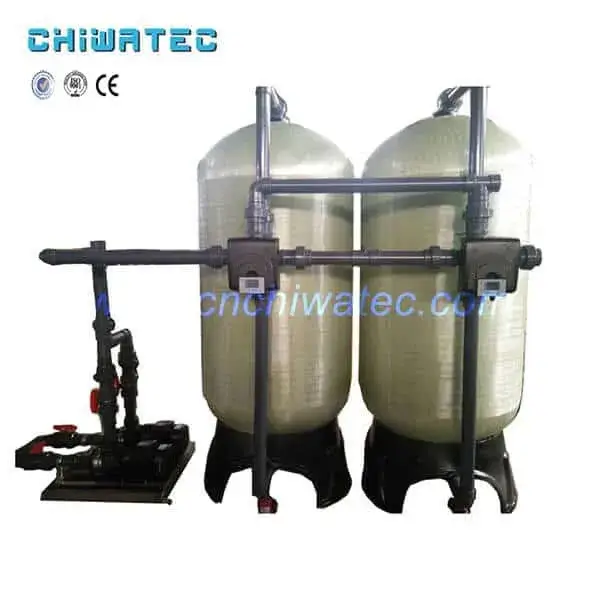
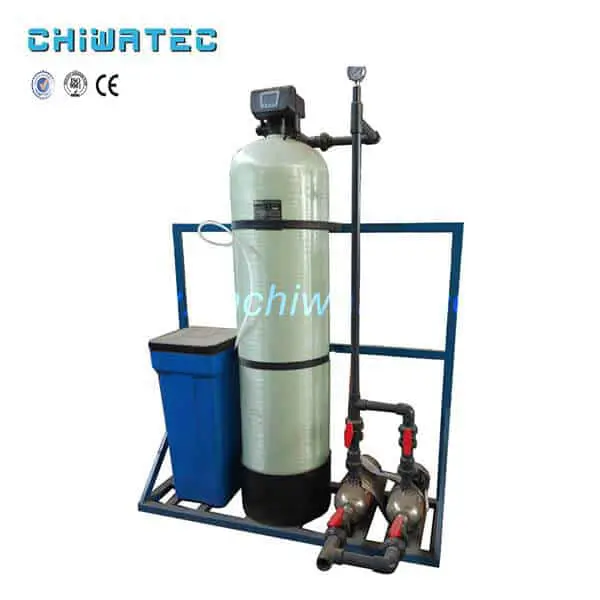
Industrial applications utilize water in numerous processes, each requiring specific treatment methods to meet quality standards. The most widely adopted method across industries is ion exchange water softening, a proven technology that effectively removes hardness-causing minerals.
Ion Exchange Water Treatment Process
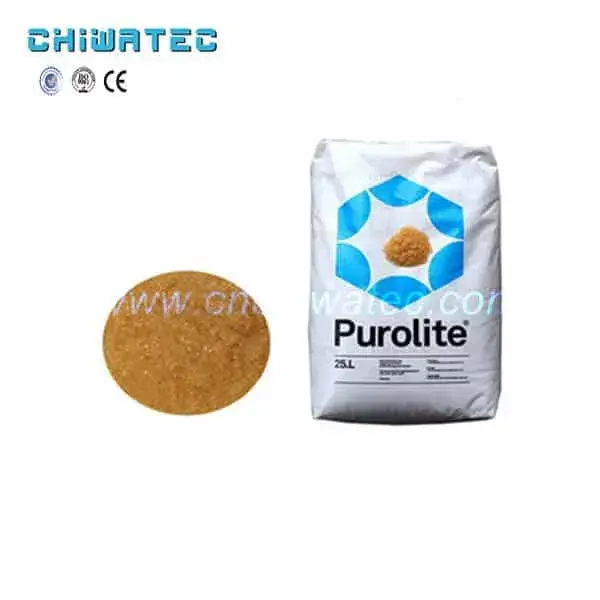
Ion exchange water treatment uses ion exchangers to facilitate reversible exchange between exchangeable ions in the exchanger and ions in aqueous solutions, improving water quality without substantially altering the exchanger structure. This process includes:
- Cation Exchange: Only cations participate in the exchange reaction
- Anion Exchange: Only anions participate in the exchange reaction
- Combined Cation-Anion Exchange: Both cation and anion exchange occurs simultaneously
When sodium ions (Na+) participate in the exchange reaction, the process is called sodium-type ion exchange, utilizing a sodium-type cation exchanger. Similarly, hydrogen-type (H+) ion exchange methods exist for specific applications requiring different water chemistry profiles.
2026 Industry Trends & Data
Market Growth Drivers
- Sustainability Regulations: Stricter environmental standards drive adoption of efficient water softening systems
- Energy Efficiency: Modern systems reduce energy consumption by 15-25% compared to 2020 models
- Smart Technology Integration: IoT-enabled monitoring and automated regeneration cycles optimize salt and water usage
- Industrial Expansion: Manufacturing sectors in Asia-Pacific show 12% annual growth in water treatment investments
Key Performance Metrics (2025-2026)
- Average resin lifespan: 5-7 years with proper maintenance
- Regeneration efficiency: 95-98% hardness removal rate
- Water savings: Up to 30% reduction in regeneration water consumption
- Salt efficiency: 2.5-3.5 lbs per 1000 grains hardness removed
Applications Across Industries
Primary Industrial Sectors
- Boiler Systems: Prevents scale formation, extends equipment life by 40%
- HVAC Systems: Improves heat transfer efficiency, reduces maintenance costs
- Food & Beverage: Ensures consistent product quality and taste
- Pharmaceuticals: Meets stringent water purity requirements
- Textile Manufacturing: Enhances dye absorption and fabric quality
- Commercial Buildings: Hotels, restaurants, offices, and residential complexes
Conclusión
Industrial water softening technology continues to evolve with advances in ion exchange materials, smart controls, and sustainability features. As we progress through 2026, businesses investing in modern water softening systems benefit from reduced operational costs, extended equipment lifespan, and improved water quality across all applications—not just drinking water. Understanding the comprehensive impact of water quality on health, equipment efficiency, and environmental sustainability is essential for making informed water treatment decisions.
Xi’an CHIWATEC Water Treatment Technology is a high-tech enterprise specialized in various water processing devices. We can also help with related comprehensive engineering projects. Thanks to our hard work and dedication, we are now one of the fastest-developing water treatment equipment manufacturers in Western China.
Further Reading
- The Role of Specialized Salt in Water Softening Equipment
- Technical Specifications and Installation Guide for Water Softeners
- Optimizing Parameters for Fully Automatic Water Softening Equipment
Frequently Asked Questions (FAQ)
What is the primary function of industrial water softening?
Industrial water softening removes calcium and magnesium ions from water through ion exchange, preventing scale formation in pipes, boilers, and equipment while improving operational efficiency.
How often does a water softening system need regeneration?
Regeneration frequency depends on water hardness, daily consumption, and system capacity. Typical systems regenerate every 3-7 days, using 15-30 gallons of water per cycle.
What are the benefits of softened water in industrial applications?
Benefits include reduced energy consumption (up to 25%), extended equipment lifespan, lower maintenance costs, improved soap efficiency, and better product quality in manufacturing processes.
Is softened water safe for drinking?
Yes, softened water is generally safe for drinking. However, individuals on sodium-restricted diets should consult healthcare providers, as the ion exchange process adds small amounts of sodium.
How long does ion exchange resin last?
High-quality ion exchange resin typically lasts 5-7 years with proper maintenance and regular regeneration using appropriate salt concentrations.
¿Tiene un proyecto de tratamiento de agua con el que podamos ayudar?
* Diseño, mecanizado, instalación, puesta en marcha, personalización y servicio integral
 Spanish
  English
  Portuguese