Industrial Circulating Water Side Stream Treatment Process: Fiber Filtration & Weak Acid Resin Softening
Meta Description: Comprehensive guide to industrial circulating water side stream treatment processes in 2026. Learn fiber filtration, controlled release dosing, and weak acid resin softening technologies for cooling water systems with cost analysis and efficiency data.
Introduction: Why Side Stream Treatment Matters in 2026
Industrial circulating cooling water systems face increasing pressure to optimize water usage, reduce chemical consumption, and meet stricter environmental regulations. Side stream treatment has emerged as a critical solution, processing 3-5% of total circulation flow to remove suspended solids, orthophosphate, and microbial sludge while maintaining system water quality.
According to 2026 industry data, facilities implementing side stream filtration report:
- 40-60% reduction in blowdown water volume
- 25-35% decrease in chemical treatment costs
- Concentration ratio improvement from 3-4 cycles to 6-8 cycles
- Heat transfer efficiency gains of 15-20% through reduced fouling
This guide examines two proven side stream treatment processes: the Fiber Filtration-Controlled Release Dosing Process and the Fiber Filtration-Weak Acid Resin Softening Process, with updated cost-benefit analysis for 2026 operations.
Process 1: Fiber Filtration—Controlled Release Dosing Process
Working Principle
The circulating cooling water is dosed with coagulant through a jet mixer, ensuring uniform distribution before entering the high-efficiency fiber filter. Within the reaction zone above the filter bed, micro-flocculation occurs: suspended matter forms flocculent particles that combine with microbial sludge and are retained by the fiber filter material.
Key Performance Metrics:
- Filtered water turbidity: <1 NTU
- Orthophosphate removal: 60-80% through adsorption on fiber media
- Suspended solids removal: 90-95%
- Filter cycle duration: 24-48 hours depending on load
As the side-flow cooling water passes through the dosing tank, the glassy “rusty dirt clean” water treatment agent dissolves at a controlled rate, releasing polyphosphate with corrosion and scale inhibition effects. This enables constant-rate dosing without complex metering pumps.
Advantages for Industrial Applications
- Simple flow design with minimal piping complexity
- Compact layout suitable for space-constrained facilities
- Flexible operation adaptable to varying water quality
- Simultaneous removal of suspended solids, orthophosphate, and microbial sludge
- Polyphosphate supplementation enhances corrosion and scale inhibition
2026 Cost and Benefit Analysis
Operating Costs (per m³):
- Coagulant + “rust scale net” agent: ¥0.20-0.25
- Electricity (inlet pump, backwash pump, roots blower): ¥0.15-0.20
- Total: ¥0.35-0.45/m³ (slightly lower than historical ¥0.50/m³ due to efficiency improvements)
Financial Benefits:
- Reduced water and sewage charges from lower blowdown volume
- Decreased water treatment chemical consumption: 20-30% savings
- Extended equipment lifespan through improved water stability
- Enhanced heat transfer efficiency reducing energy costs
- Reduced manual maintenance requirements
Best suited for: Small to medium circulating cooling water systems without dedicated technical staff, particularly in chemical processing, HVAC, and light manufacturing applications.
Process 2: Fiber Filtration-Weak Acid Resin Softening Process
Working Principle
This advanced configuration adds a softening reaction stage to the fiber filtration process. After dosing with precipitant and coagulant via jet mixing, the water enters the high-efficiency fiber filter where multiple reactions occur simultaneously:
- Micro-flocculation for suspended solids removal
- Softening reactions producing CaCO₃ and Mg(OH)₂ precipitates
- Deep filtration capturing all particulate matter
Treatment Performance:
- Hardness reduction: ~1 mmol/L (permanent hardness unaffected)
- Filtered water turbidity: <1 NTU
- Alkalinity: moderately increased
- pH elevation: to ~9.5
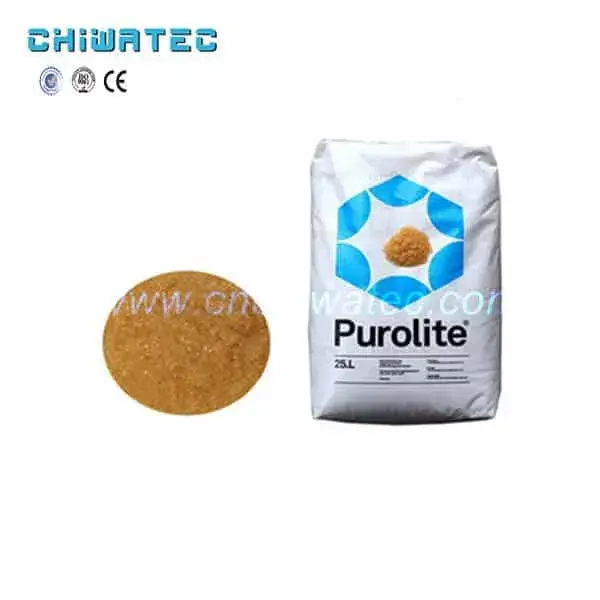
los weak acid (acrylic) cation exchange resin further reduces hardness and alkalinity to below 1 mmol/L, with effluent pH in the 3-6 range. After meeting supplemental water quality requirements, treated water returns to the cooling system while retaining >50% of water treatment agents.
2026 Cost and Benefit Analysis
Operating Costs (per m³):
- Precipitant + coagulant consumption: ¥0.40-0.45
- Weak acid resin regeneration (sulfuric acid): ¥0.18-0.22
- Electricity: ¥0.25-0.30
- Total: ¥0.83-0.97/m³ (remains competitive vs. reverse osmosis at ¥1.50-2.00/m³)
Financial Benefits:
- Water and sewage charge savings from reduced blowdown
- Chemical consumption reduction: 25-35%
- Equipment life extension through superior water stability
- Heat transfer efficiency improvements
- Lower membrane replacement costs compared to RO systems
Technical Features and Advantages
Equipment Configuration:
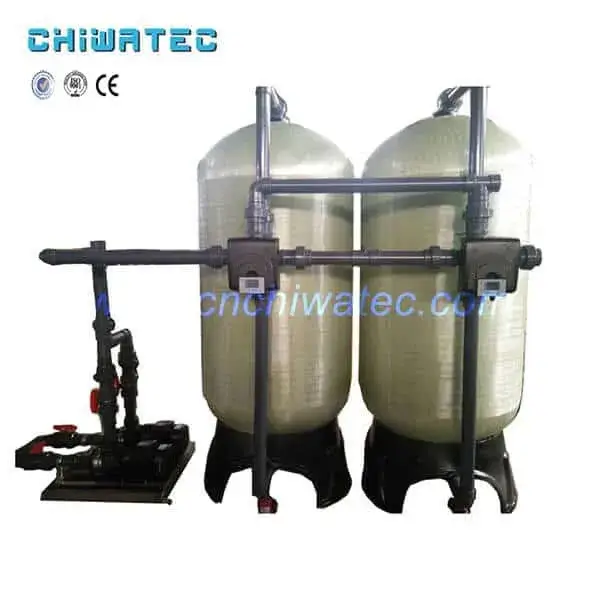
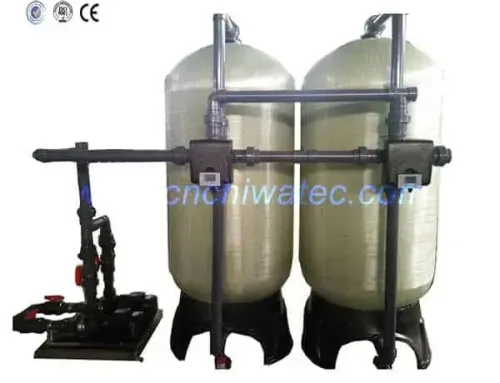
- High-efficiency fiber filter
- Weak acid cation exchanger
- Integrated “three-in-one” reactor-filter design
Key Advantages:
- Compact footprint – eliminates bulky reaction clarification tanks
- High filtration accuracy through deep fiber media filtration
- Extended operation cycles with large dirt holding capacity
- Economical resin regeneration – acid consumption only 1.1× theoretical value
- Flexible operation adjustable to water quality variations
- Low water consumption <10% for regeneration
Best suited for: Large-scale industrial circulating cooling water systems in power generation, petrochemical, steel manufacturing, and heavy industry applications.
Industry Trends and 2026 Updates
Regulatory Drivers
New environmental regulations in 2025-2026 have accelerated side stream treatment adoption:
- Zero Liquid Discharge (ZLD) requirements in water-scarce regions
- Stricter phosphorus discharge limits (≤0.5 mg/L in many jurisdictions)
- Mandatory water efficiency reporting for facilities >10,000 m³/day
- Carbon reduction targets driving energy-efficient treatment choices
Technology Advancements
- Smart monitoring systems with real-time turbidity and pH sensors
- Automated backwash controls optimizing water and energy use
- Enhanced fiber media with longer service life (5-7 years vs. 3-4 years)
- Hybrid configurations combining side stream with mainstream treatment
Comparison: Side Stream Treatment vs. Alternative Approaches
| Parámetro | Fiber Filtration + Dosing | Fiber Filtration + Resin | Osmosis inversa | No Side Stream |
|---|---|---|---|---|
| Operating Cost (¥/m³) | 0.35-0.45 | 0.83-0.97 | 1.50-2.00 | N/A |
| Hardness Removal | Minimal | ~1 mmol/L | >95% | None |
| SS Removal | 90-95% | 90-95% | >99% | Variable |
| Concentration Ratio | 5-6 cycles | 6-8 cycles | 8-10 cycles | 3-4 cycles |
| Best Application | Small-Medium Systems | Large Industrial | High Purity Needs | Low Risk Tolerance |
Conclusión
Industrial circulating water side stream treatment represents a cost-effective, proven technology for improving cooling water system performance in 2026. The choice between fiber filtration with controlled release dosing versus weak acid resin softening depends on:
- System size and complexity
- Calidad del agua de alimentación (hardness, alkalinity, suspended solids)
- Target concentration ratio
- Available budget for capital and operating costs
- Environmental compliance requirements
For small to medium systems prioritizing simplicity and low operating costs, the controlled release dosing process offers excellent value at ¥0.35-0.45/m³. Large industrial facilities with stringent water quality requirements benefit from the weak acid resin softening process, achieving superior hardness removal at ¥0.83-0.97/m³—still significantly more economical than reverse osmosis alternatives.
Both processes deliver measurable ROI through reduced water consumption, lower chemical costs, extended equipment life, and improved energy efficiency. As water scarcity and environmental regulations intensify, side stream treatment will remain essential for sustainable industrial water management.
FAQ: Industrial Circulating Water Side Stream Treatment
1. What percentage of circulation flow should be treated as side stream?
Typically 3-5% of total circulation flow is processed through side stream treatment. Higher percentages (up to 10%) may be required for systems with severe fouling or very high suspended solids loads.
2. How often does the fiber filter require backwashing?
Backwash frequency depends on influent quality and filter loading. Standard operation ranges from once every 24-48 hours, triggered by differential pressure (0.05-0.10 MPa) or timed intervals. Automated controls optimize backwash timing based on real-time conditions.
3. Can side stream treatment eliminate the need for chemical dosing?
No. Side stream treatment complements but does not replace mainstream chemical treatment. It reduces chemical consumption by 20-35% but residual dosing remains necessary for corrosion inhibition, scale prevention, and microbiological control throughout the full circulation system.
4. What is the expected service life of fiber filter media?
Modern fiber filter media typically lasts 5-7 years with proper operation and maintenance. Replacement is indicated when backwash efficiency declines significantly or effluent turbidity consistently exceeds 1 NTU despite normal backwash cycles.
5. How does side stream treatment impact concentration ratio?
Properly designed side stream treatment enables concentration ratios of 5-8 cycles compared to 3-4 cycles without treatment. This directly translates to 40-60% reduction in makeup water and blowdown volumes.
6. Is the weak acid resin process suitable for high-hardness water?
Yes, but with limitations. The process effectively reduces hardness by ~1 mmol/L per pass. For very high-hardness feed water (>5 mmol/L), multiple passes or alternative softening methods may be required to achieve target water quality.
Further Reading
- CHIWATEC Complete Guide to RO System Operation and Maintenance – Comprehensive operational procedures for reverse osmosis systems
- Advanced Water Purification System: Process Principles and Flow Diagram – Multi-stage treatment subsystems for industrial applications
- Drinking Water Treatment Process Flow: Comprehensive Guide – Complete water purification methodology from pretreatment to disinfection
¿Tiene un proyecto de tratamiento de agua con el que podamos ayudar?
* Diseño, mecanizado, instalación, puesta en marcha, personalización y servicio integral
 Spanish
  English
  Portuguese