

Hospital Catering Sewage Treatment: Process, Equipment, and Advantages 2026
Hospitals generate a complex mixture of wastewater that includes pathogens, organic matter, suspended solids, and in some cases radioactive pollutants — all of which require careful treatment before discharge. The sewage generated in the hospital’s catering process, while representing a relatively smaller volume compared to other hospital wastewater streams, contains high concentrations of organic matter, oils, and food residues that can elevate COD and BOD levels. Effective treatment of this catering wastewater requires biological processes capable of handling both the organic load and the unique disinfection requirements associated with healthcare facilities. CHIWATEC provides integrated hospital sewage treatment systems combining anaerobic hydrolysis, aerobic oxidation, and sedimentation technologies for reliable, compliant wastewater treatment.
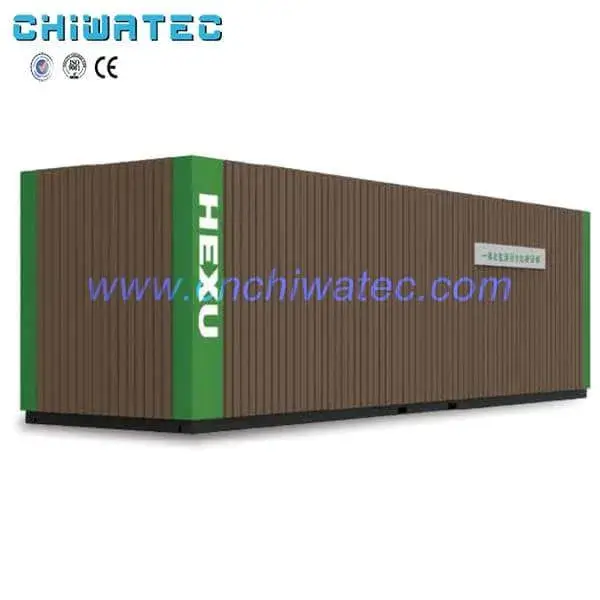
Understanding Sewage Generated in the Hospital’s Catering Process: Key Characteristics
Hospital catering wastewater differs from general domestic sewage in several important ways. While the volume is smaller compared to clinical wastewater streams, catering effluent contains elevated levels of cooking oils, food particles, detergents, and organic solids that contribute to high COD and BOD concentrations. When combined with the general hospital wastewater stream, catering sewage must be treated through a system capable of handling both organic loading and the pathogen reduction requirements specific to healthcare facilities. The sewage generated in the hospital’s catering process typically enters the main hospital wastewater collection system, where it is combined with other wastewater streams before undergoing comprehensive treatment through the process train described below.
| Parámetro | Hospital Catering Wastewater | Clinical Wastewater |
| Primary contaminants | Oils, food waste, detergents, organic solids | Pathogens, blood, pharmaceuticals, chemicals |
| COD/BOD level | Moderate to high (organic loading) | Variable (depends on clinical activity) |
| Pathogen content | Low to moderate | High (requires disinfection) |
| Volume contribution | Small (5-15% of total hospital sewage) | Larger (30-50% of total) |
Overview of the Hospital Sewage Treatment Process
The treatment system for sewage generated in the hospital’s catering process and general hospital wastewater follows a proven biological treatment train designed to meet discharge standards for organic content, nutrients, and pathogens. The complete process integrates four key stages — preliminary treatment, anaerobic hydrolysis, aerobic oxidation, and sedimentation with sludge handling — each performing a specific function in reducing pollutant levels to compliant concentrations. This section provides a step-by-step explanation of each treatment stage.
Process Principle of Hospital Sewage Treatment Equipment
Treating the sewage generated in the hospital’s catering process — along with the broader hospital wastewater stream — follows a multi-stage biological treatment process designed to reduce organic pollutants, nutrients, and pathogens to compliant discharge levels. The process integrates anaerobic hydrolysis, aerobic oxidation, and sedimentation in a compact treatment train suitable for on-site hospital wastewater management.
Step 1: Preliminary Treatment — Grille and Regulation Tank
Comprehensive hospital wastewater first flows through a mechanical grille or bar screen to remove suspended large particles — including food waste solids from catering operations — that could damage downstream equipment or clog pipes. The screened wastewater then flows into a regulation (equalization) tank where flow and composition are homogenized. A liquid level controller automatically activates a sewage lift pump to transfer the equalized wastewater to the hydrolysis tank at a controlled rate, ensuring stable hydraulic and organic loading for the biological treatment stages.
Step 2: Anaerobic Hydrolysis Tank
In the hydrolysis tank, anaerobic microorganisms degrade pollutants including nitrogen (N), phosphorus (P), COD, and BOD. The tank is equipped with elastic fiber composite fillers that provide a high surface area for microbial attachment, increasing the effective biomass concentration. A high concentration of sludge mixture and biofilm develops in the tank, where facultative bacteria break down organic matter, improving the overall biodegradability of the wastewater. Under anaerobic conditions, organic nitrogen and ammonia nitrogen are converted into N2 and NxO gases through the process of ammonification and denitrification, reducing nutrient levels before the aerobic stage.
Step 3: Aerobic Oxidation (Contact Oxidation) Tank
The effluent from the hydrolysis tank flows into the contact oxidation tank, where aerobic microorganisms attached to elastic fillers oxidize remaining organic pollutants. In this stage, NH4+ in the wastewater is converted to NO2- and NO3- through nitrification, reducing ammonia toxicity. The oxidative metabolism of the aerobic biofilm decomposes organic pollutants, substantially reducing BOD5, COD, and other pollutant indicators. The combination of anaerobic hydrolysis followed by aerobic oxidation achieves 85-95% COD removal and 90%+ BOD removal for hospital wastewater including catering contributions.
Step 4: Sedimentation Tank and Sludge Handling
The effluent from the contact oxidation tank flows into a sedimentation tank where biological solids settle by gravity. Settled sludge is periodically transferred to a sludge holding tank for aerobic or anaerobic digestion, which reduces sludge volume and stabilizes the organic content. After digestion, excess sludge is removed by sludge pump for off-site disposal, while the supernatant is returned to the hydrolysis tank for further denitrification treatment. The final clarified effluent meets discharge standards and can be directed to disinfection (chlorine or UV) before environmental release or reuse.
Advantages of Hospital Sewage Treatment Equipment
Modern hospital sewage treatment systems designed for catering and clinical wastewater offer several operational advantages that make them suitable for healthcare facility installations:
- Buried installation — The equipment is installed below ground level, allowing landscaping or parking lots above the treatment area. This preserves valuable hospital surface space for clinical, administrative, or parking use
- Minimal operator requirements — The fully automated system typically does not require dedicated operating personnel. Automated controls manage pump cycles, aeration, and sludge transfer based on level sensors and timers
- Compact footprint — The integrated treatment train occupies significantly less space than conventional municipal treatment systems. No separate buildings or structures are needed for equipment housing
- Environmental compatibility — Buried operation eliminates noise impact (below Class II area standards), odor release, and visual intrusion. Sludge production is minimal compared to conventional activated sludge systems
- Simple operation and maintenance — The hydrolysis-contact oxidation process is well-established technology with proven reliability, long service life, and straightforward maintenance requirements
- Flexible configuration — Equipment can be arranged in standard configurations or customized based on site terrain, available space, and specific treatment requirements
System Design and Configuration Options for Hospital Sewage Treatment
Hospital sewage treatment systems can be configured to meet specific site requirements, flow volumes, and discharge standards. Key design parameters include treatment capacity (typically 5-500 m3/day for hospital applications), influent quality variation, available installation space, and target effluent quality. Systems are available as standard packaged units or custom-engineered configurations, with the buried installation option being particularly popular for hospitals where surface space is at a premium. The hydrolytic-acidogenic process combined with contact oxidation remains the most widely adopted technology for hospital sewage treatment in China due to its proven reliability, simple operation, and cost-effectiveness for the 50-500 m3/day capacity range typical of mid-sized hospitals.
Applications Beyond Hospital Catering Sewage
While designed for the sewage generated in the hospital’s catering process and general hospital wastewater, the same hydrolysis-contact oxidation treatment technology is widely applicable to other wastewater treatment scenarios:
| Solicitud | Treatment Requirements | Suitable Configuration |
| Residential communities and villas | Domestic sewage with moderate organic loading | Standard buried treatment system |
| Hotels, office buildings, and commercial centers | Combined domestic and catering wastewater | Enhanced grease trap + biological treatment |
| Schools, military bases, and government facilities | Variable flow with peak meal-time loading | Larger equalization tank + standard process |
| Small and medium medical institutions | Hospital wastewater requiring disinfection | Biological treatment + UV or chlorine disinfection |
| Airports, stations, and tourist attractions | High seasonal variation in flow and loading | Modular treatment units with flexible operation |
The process’s ability to handle both organic and pathogen-containing wastewater makes it particularly suitable for healthcare settings, where the treatment system must address the combined challenges of catering waste, clinical effluent, and disinfection requirements.
Frequently Asked Questions
How does hospital catering sewage differ from regular domestic sewage?
Hospital catering sewage contains higher concentrations of cooking oils, food particles, and detergents compared to standard domestic sewage, contributing to elevated COD and BOD levels. However, when combined with the general hospital wastewater stream, it also requires treatment for pathogen reduction — a requirement not typically needed for domestic sewage treatment.
What treatment process is used for hospital catering sewage?
The standard treatment train includes: mechanical screening through a grille, flow equalization in a regulation tank, anaerobic hydrolysis (using elastic fiber fillers for biofilm attachment), aerobic contact oxidation, sedimentation, and final disinfection. This combined anaerobic-aerobic process achieves 85-95% COD removal and 90%+ BOD removal.
Can the treated water from hospital sewage systems be reused?
Yes. After biological treatment and disinfection, the effluent can be used for greenbelt irrigation, landscape watering, and dust suppression within the hospital grounds. Some systems incorporate tertiary filtration to achieve higher quality for additional reuse applications such as cooling tower makeup or vehicle washing.
What are the advantages of buried hospital sewage treatment equipment?
Buried installation preserves valuable surface space for parking, landscaping, or clinical use. It eliminates noise and odor concerns, requires no dedicated buildings, and operates automatically with minimal operator intervention. The system is environmentally compatible and meets Class II area noise standards.
How often does the sludge from hospital sewage treatment need to be removed?
Sludge accumulation depends on the organic loading rate and system design. In typical hospital sewage treatment systems with sludge digestion, excess sludge removal is required every 3-6 months. The sludge is pumped to a holding tank for digestion before periodic off-site disposal by licensed waste management contractors.
Conclusion and Call to Action
los sewage generated in the hospital’s catering process presents a unique wastewater treatment challenge — combining the organic loading of food service operations with the pathogen reduction requirements of healthcare facility discharge. The hydrolysis-contact oxidation biological treatment process provides an effective, reliable solution: anaerobic hydrolysis reduces organic strength and converts nitrogen compounds, aerobic oxidation polishes the effluent to discharge standards, and sedimentation clarifies the final treated water for disinfection and reuse. Modern hospital sewage treatment systems offer the additional advantages of buried installation, automated operation, compact footprint, and applicability to a wide range of small to medium wastewater treatment scenarios beyond hospital settings.
Xi’an CHIWATEC Water Treatment Technology is a high-tech enterprise specialized in designing and manufacturing complete water treatment systems, including integrated hospital sewage treatment equipment with hydrolysis, contact oxidation, sedimentation, and disinfection stages. Our engineering team provides one-stop service from wastewater analysis through system design, installation, commissioning, and ongoing support. For expert guidance on your hospital sewage treatment requirements, contact us at [email protected] o [email protected].
¿Tiene un proyecto de tratamiento de agua con el que podamos ayudar?
* Diseño, mecanizado, instalación, puesta en marcha, personalización y servicio integral






 Spanish
  English
  Portuguese




