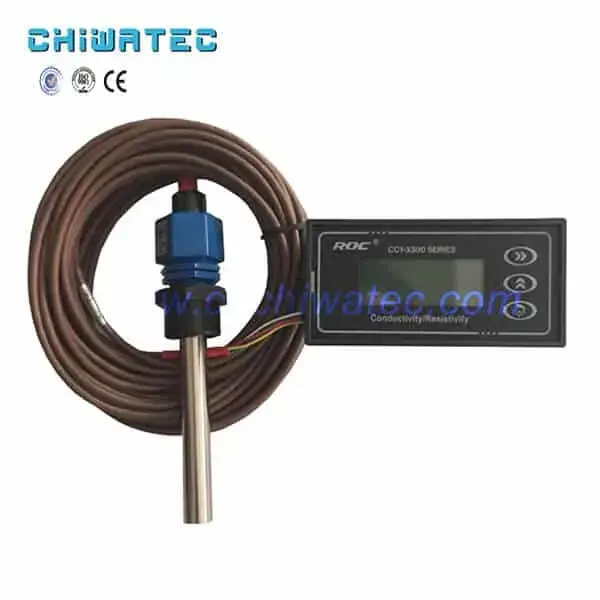
Household Softened Water Treatment Equipment: 2026 Complete Guide to Home Water Softening Systems
Is hard scale damaging your home appliances and leaving your skin dry and irritated? Hard water affects over 85% of households in many regions, causing scale buildup in pipes, water heaters, and appliances while reducing soap effectiveness and leaving spots on dishes. The direct answer is: installing household softened water treatment equipment — specifically an ion exchange water softener — can reduce water hardness from 200–500 mg/L to below 10 mg/L as CaCO3, extending appliance life by 30–50% and reducing energy consumption by 15–25%. The global residential water softener market was valued at USD 5.6 billion in 2024 and is projected to reach USD 9.8 billion by 2034 (Grand View Research), driven by increasing awareness of hard water damage and the growing demand for premium home water treatment solutions. CHIWATEC offers a full range of household softened water equipment designed for different home sizes and water quality conditions, ensuring every family can enjoy the benefits of soft water.
What Is Household Softened Water Treatment Equipment?
Household softened water treatment equipment is a residential water treatment system designed to remove hardness-causing minerals — primarily calcium (Ca²⁺) and magnesium (Mg²⁺) ions — from the home’s water supply through the ion exchange process:
- Principio de funcionamiento — The system contains a tank filled with strong acid cation (SAC) exchange resin beads. As hard water passes through the resin bed, calcium and magnesium ions are exchanged for sodium ions (Na⁺), effectively removing the hardness. The resin has a limited exchange capacity and must be periodically regenerated with a brine (salt) solution.
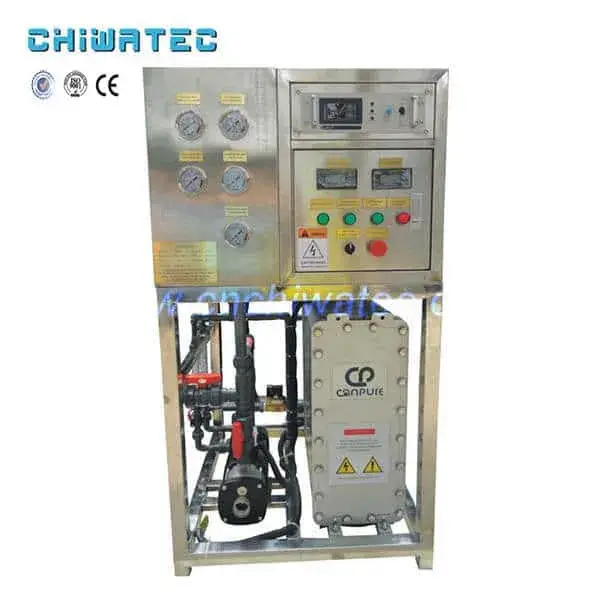
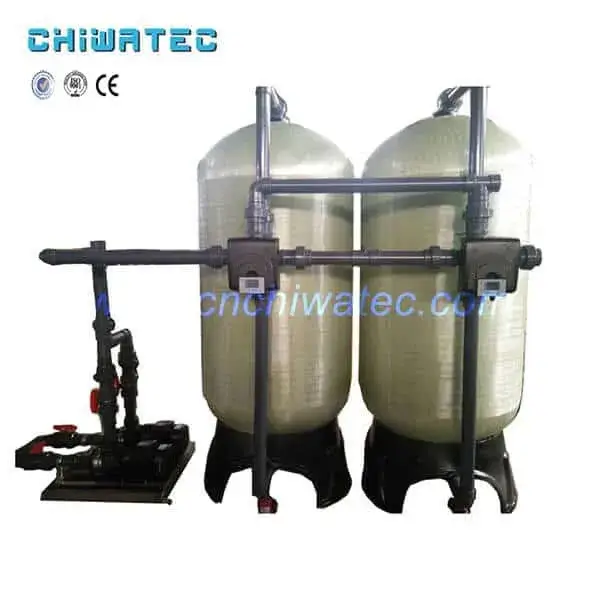
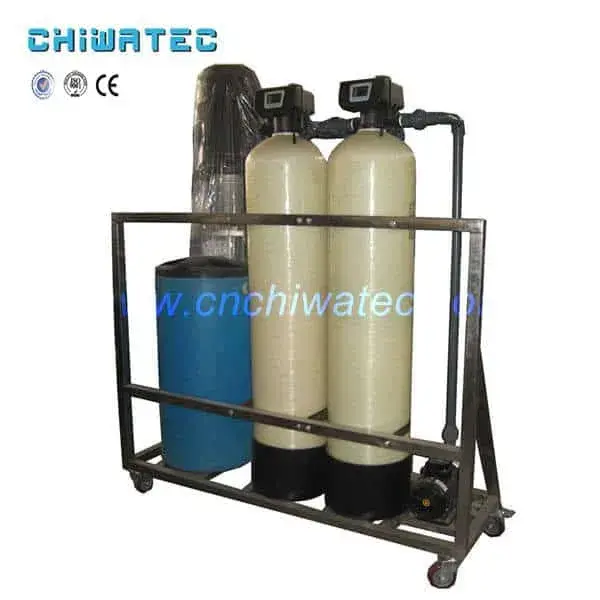
- System components — A typical household water softener consists of a resin tank (containing the ion exchange media), a brine tank (holding salt for regeneration), and a control valve that manages the service, backwash, brine draw, rinse, and refill cycles automatically.
- Installation point — Household softeners are typically installed at the point of entry (POE), treating all water entering the home. This protects the entire plumbing system, water heater, washing machine, dishwasher, and all faucets from hard water scale.
For a detailed comparison of softener options, see the comparison between traditional water softeners and fully automatic water softeners.
Why Your Home Needs Softened Water
Understanding the impact of hard water on your home helps justify the investment in household softened water treatment equipment:
| Area Affected | Hard Water Impact | Soft Water Benefit |
|---|---|---|
| Water heater | 1.5–2 mm scale reduces efficiency by 15–25% | Up to 25% energy savings, 50% longer life |
| Pipes & fixtures | Scale buildup reduces flow rate over time | No scale accumulation, consistent flow |
| Laundry | 30% more detergent needed, fabric wear | 50% less detergent, softer fabrics |
| Dishwashing | Spotting, film on glassware | Spot-free dishes with less detergent |
| Bathing | Dry skin, dull hair, soap scum | Smoother skin, shinier hair, less soap needed |
| Appliances | Scale shortens life of washer, dishwasher, coffee maker | Extended appliance life by 30–50% |
For a deeper understanding of how hard water affects daily life, see how hard water is converted into soft water and the science behind the softening process.
Key Components of Household Water Softening Systems
A complete household softened water treatment equipment system consists of several key components that work together to deliver consistent soft water:
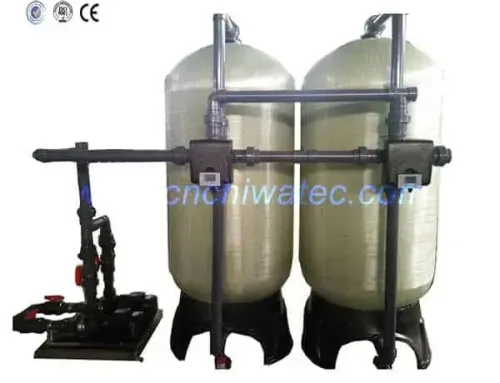
- Tanque de resina — The main vessel containing the ion exchange resin. Typically made of corrosion-resistant fiberglass reinforced plastic (FRP) or stainless steel. Standard residential sizes range from 200–600 mm diameter for flow rates of 10–40 L/min.
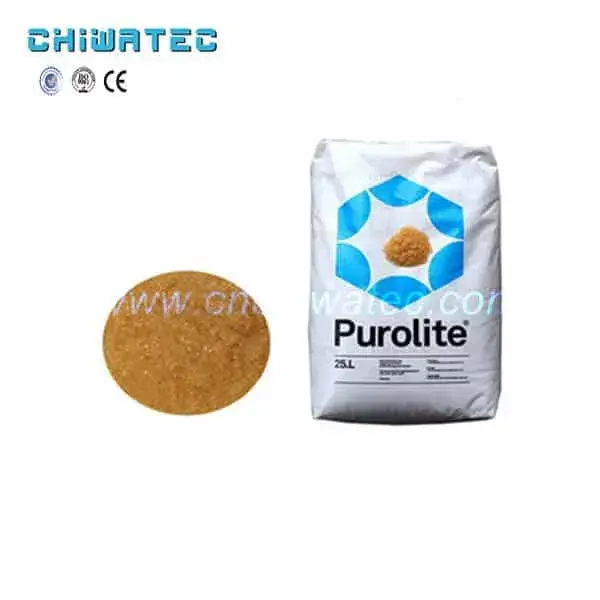
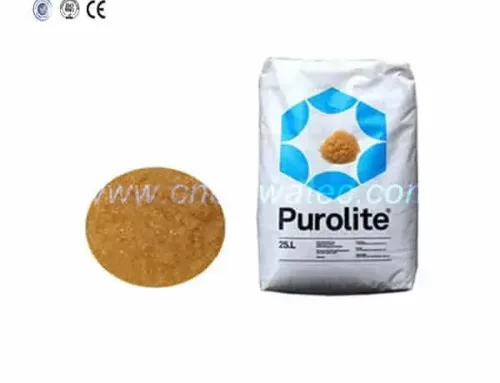
- Ion exchange resin — Strong acid cation (SAC) resin with 8% DVB cross-linkage is standard for household applications. Premium-grade resin with uniform bead size (0.6–0.8 mm) provides better performance and longer life. One cubic foot of resin can remove approximately 30,000 grains of hardness before requiring regeneration.
- Control valve — The automatic control valve manages all operational cycles. Modern electronic metered valves regenerate based on actual water usage rather than a fixed timer, saving up to 40% in salt and water consumption compared to time-clock models.
- Tanque de salmuera — Stores the salt (sodium chloride or potassium chloride) for regeneration. Standard 50–100 L tanks hold enough salt for 2–4 weeks between refills. Salt efficiency has improved significantly, with modern systems using only 3–5 kg of salt per cubic foot of resin per regeneration. For accessories and consumables, see softened water equipment accessories and consumables.
- Bypass valve — Allows the softener to be isolated for maintenance while still providing hard water to the home. Essential for landscaping irrigation (plants generally prefer hard water).
Standard Process Flow: Whole-House Water Treatment Configuration
In an ideal scenario with unlimited space and budget, a complete household water treatment system follows this recommended process flow:
- Sediment filtration (stage 1) — A media filter (typically quartz sand or multi-media) removes suspended solids, rust, and sediment from the incoming water. This protects downstream equipment from particle fouling.
- Water softening (stage 2) — The primary household softened water treatment equipment removes calcium and magnesium ions through ion exchange. The softened water is already clear and suitable for washing, bathing, and appliance protection.
- Optional polishing (stage 3) — For drinking water quality, an ultrafiltration (UF) membrane or reverse osmosis (RO) system can further treat a portion of the softened water for the kitchen tap. These technologies produce high-purity water for drinking and cooking.
This staged approach ensures that each treatment step addresses specific water quality issues without over-treating water that only needs basic conditioning. For detailed process specifications, see the standard work flow and performance characteristics of fully automatic water softening equipment.
Selecting the Right Household Water Softener
Choosing the appropriate household softened water treatment equipment requires matching system capacity to household needs:
- Grains capacity — Calculate daily softening requirement: (hardness in grains per gallon) × (daily water usage in gallons). Multiply by 7–10 days to determine the required capacity between regenerations. A typical family of 4 with 10 gpg hardness needs approximately 30,000–40,000 grains capacity.
- Tasa de flujo — Ensure the system can deliver adequate flow for simultaneous demands (shower + washing machine + toilet flush). A 1.0–1.5 cubic foot system typically delivers 10–15 GPM continuous flow, sufficient for most households.
- Salt efficiency — Modern high-efficiency softeners use 50–60% less salt than older models for the same water volume. Look for systems certified to NSF/ANSI 44 for efficiency.
- Size and footprint — Measure the available installation space. Standard softener footprints range from 250×500 mm (small) to 400×750 mm (large). For space-constrained homes, see where softened water equipment is most suitable for installation options.
When choosing a system, consider the ion exchange method in water softening: principles and technology to understand the core technology behind each option.
Installation and Maintenance Considerations
Proper installation and regular maintenance maximize the performance and lifespan of household softened water treatment equipment:
- Installation location — Install after the main water shut-off valve and before the water heater. Provide a drain connection for regeneration discharge and a dedicated electrical outlet for the control valve. The brine tank should be within 2 meters of the resin tank for brine line efficiency.
- Salt refilling — Check the brine tank monthly and refill when salt level falls below 1/3 full. Use clean solar or evaporated salt pellets — rock salt contains insoluble impurities that can foul the resin. Potassium chloride is an alternative for households on sodium-restricted diets.
- Resin care — Premium resin lasts 10–15 years with proper maintenance. Use resin cleaner annually if treating water with iron (above 0.3 mg/L) or manganese. Iron fouled resin shows brown discoloration and reduced capacity.
- Sanitization — Sanitize the system annually with 100–200 mL of unscented household bleach (5.25% sodium hypochlorite) added through the brine well to prevent bacterial growth in the resin bed.
- System performance check — Test softened water hardness monthly using a titration test kit. Treated water should show hardness below 1 gpg (17 mg/L as CaCO3). For additional resin maintenance information, see other supplementary knowledge about ion exchange resin.
Frequently Asked Questions (FAQ)
Is softened water safe to drink?
Yes, softened water is safe to drink for most people. The ion exchange process adds 20–50 mg/L of sodium (depending on initial hardness), which is well within the WHO guideline of 200 mg/L. For those on strict low-sodium diets, potassium chloride can be used instead of sodium chloride for regeneration, eliminating the sodium increase.
How much does a household water softener cost to operate?
Annual operating costs for a household water softener are USD 80–200, including salt (USD 50–120), electricity (USD 10–30), and maintenance (USD 20–50). This is far less than the cost of appliance repairs and replacements caused by hard water damage.
How long does a household water softener last?
A quality household water softener with proper maintenance has a service life of 10–15 years. The resin typically needs replacement every 10–15 years, while the control valve may require minor repairs (seals, pistons) every 5–8 years. For a performance overview of reliable systems, see the CHIWATEC softening system equipment performance introduction.
Can a water softener be installed outdoors?
Most household softeners are designed for indoor installation where temperatures stay above 4°C. Freezing can crack the resin tank and damage the control valve. If outdoor installation is necessary, use a weatherproof enclosure with freeze protection.
Do I still need a water filter if I have a water softener?
Yes. A water softener removes hardness minerals but does not remove sediment, chlorine, organic compounds, or microbiological contaminants. A complete household system should include sediment pre-filtration before the softener and optionally a post-softener RO or UF system for drinking water. See what problems should be paid attention to when choosing softened water equipment for a complete system configuration guide.
Conclusion & Call to Action
Equipo doméstico de tratamiento de agua ablandada is an essential investment for homes with hard water, delivering measurable benefits in energy savings, appliance protection, cleaning efficiency, and personal comfort. By understanding the system components, sizing requirements, installation factors, and maintenance needs, homeowners can select and operate a water softening system that provides consistent, cost-effective soft water for years.
For expert guidance on selecting and installing the right household softened water treatment system for your home, contact CHIWATEC today at [email protected] o [email protected].
Related Resources and Further Reading
¿Tiene un proyecto de tratamiento de agua con el que podamos ayudar?
* Diseño, mecanizado, instalación, puesta en marcha, personalización y servicio integral
 Spanish
  English
  Portuguese