Glossary of Reverse Osmosis Technology
Explore this comprehensive glossary of reverse osmosis technology covering essential terms such as hardness, pH, TDS, conductivity, desalination rate, and salt content. Understand key definitions used in RO water treatment systems to improve system operation, monitoring, and maintenance efficiency.
1. Introduction: Understanding Reverse Osmosis Terminology
In the field of reverse osmosis (RO) y membrane water treatment, accurate understanding of technical terms is essential for system design, operation, and troubleshooting.
This Glossary of Reverse Osmosis Technology provides clear definitions and explanations of commonly used parameters such as hardness, pH, TDS, conductivity, and desalination rate, helping engineers, operators, and maintenance personnel optimize system performance and water quality.
2. Key Terms in Reverse Osmosis Technology
(1) Hardness
Definition:
Hardness refers to the total concentration of calcium (Ca²⁺), magnesium (Mg²⁺), and other metal ions such as iron (Fe²⁺), manganese (Mn²⁺), and strontium (Sr²⁺) in water.
These ions form scale on membranes and equipment surfaces, reducing the efficiency of reverse osmosis systems.
Units:
- mg/L (milligrams per liter)
- Common conversion:
20 mg/L (Ca²⁺ + Mg²⁺) = 50 mg/L (CaCO₃) = 2.8 °dH (German degrees of hardness)
Importance:
High hardness causes membrane scaling, reduced flux, and shortened membrane lifespan. Pre-treatment with softening or antiscalant dosing is typically required.
(2) pH
Definition:
pH is the negative logarithm of hydrogen ion concentration in water, expressed as:
pH = -log [H⁺]
Measurement:
- Measured using a pH meter o pH test paper
- Scale: 0–14
- pH < 7: Acidic
- pH = 7: Neutral
- pH > 7: Alkaline
Importance in RO Systems:
- Optimal RO feedwater pH: 5.5–8.5
- Extremely high or low pH can damage membrane materials o affect ion exchange performance
(3) TDS (Total Dissolved Solids)
Definition:
TDS refers to the total concentration of dissolved inorganic and organic substances in water.
It represents the sum of all ions—such as salts, minerals, and metals—present in the solution.
Units:
- mg/L (milligrams per liter)
- ppm (parts per million)
Typical Ranges:
- Freshwater: < 500 mg/L
- Brackish water: 500–5,000 mg/L
- Seawater: > 35,000 mg/L
Importance:
TDS is a direct indicator of RO system efficiency y desalination performance. Lower TDS values after treatment mean better purification results.
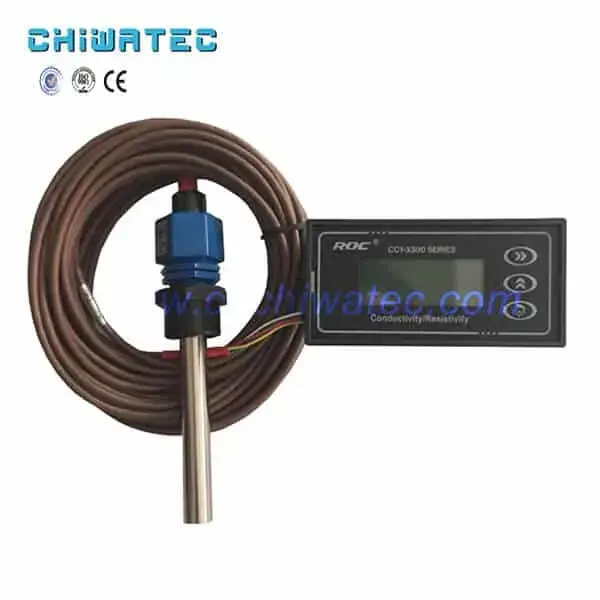
(4) Conductivity (κ)
Definition:
Conductivity measures the ability of water to conduct electricity, which depends on the concentration of ions (charged particles) in the solution.
Units:
- μS/cm (microsiemens per centimeter)
- Resistivity (inverse of conductivity): kΩ·cm
Relationship Between Conductivity and TDS:
TDS (mg/L)=Conductivity (μS/cm)×0.7\text = \text × 0.7
Measurement:
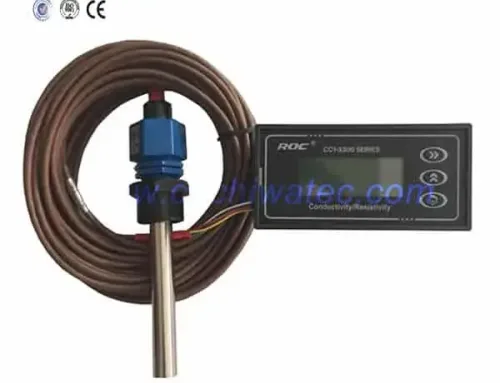
Easily measured using an electrical conductivity meter, making it a fast way to estimate salt content in water.
Importance:
Conductivity provides real-time data for RO membrane performance monitoring, leak detection, and water quality control.
(5) Desalination Rate
Definition:
los desalination rate (or salt rejection rate) indicates how effectively a reverse osmosis system removes dissolved salts from feedwater.
Formula:
(Inlet water conductivity-pure water conductivity) / Inlet water conductivity × 100%
Example:
If feedwater conductivity = 1,000 μS/cm and permeate conductivity = 10 μS/cm,
then desalination rate = 99%.
Importance:
High desalination rates (>98%) indicate excellent membrane performance. Declining rates suggest membrane fouling, scaling, or leakage in the RO system.
(6) Salt Content
Definition:
Salt content measures the total dissolved cations and anions (such as Na⁺, Cl⁻, SO₄²⁻, Ca²⁺, Mg²⁺) in water.
Units:
- mg/L (milligrams per liter) or ppm (parts per million)
Importance:
Salt concentration directly affects osmotic pressure, energy consumption, and system recovery rate in reverse osmosis design.
Monitoring salt content helps adjust operating parameters and prevent membrane damage due to excessive osmotic pressure.
3. Additional Common Parameters in Reverse Osmosis Systems
- Temperature:
Affects membrane permeability. Higher temperatures increase water flux but can damage membranes if above limits (usually 35°C). - Pressure:
The driving force of the RO process. Adequate pressure ensures water molecules pass through the semi-permeable membrane while salts are rejected. - Recovery Rate:
The ratio of permeate (product water) to feedwater, usually between 50–85% depending on system design. - Flujo:
The rate of water passing through the membrane, typically expressed in L/m²·h (liters per square meter per hour).
Conclusión
los Glossary of Reverse Osmosis Technology provides a foundational understanding of the essential terms that govern RO system design, operation, and maintenance.
By mastering these parameters—such as TDS, conductivity, hardness, and desalination rate—engineers and operators can:
- Optimize system performance
- Diagnose problems quickly
- Ensure consistent water quality
Clear understanding of these concepts is vital to achieving efficient desalination, longer membrane lifespan, and lower operational costs in any water treatment process.
Frequently Asked Questions (FAQ)
Q1: What is the difference between TDS and conductivity?
TDS measures the total amount of dissolved solids (in mg/L), while conductivity measures the ability of those ions to conduct electricity (in μS/cm). They are closely related by an approximate conversion: TDS ≈ Conductivity × 0.7.
Q2: Why is pH important in a reverse osmosis system?
pH affects membrane material stability. Water that is too acidic or alkaline can damage the membrane surface and reduce ion rejection performance.
Q3: What does a high hardness level indicate?
High hardness means there are excessive calcium and magnesium ions in the water, which can cause scaling and reduce membrane efficiency.
Q4: What is considered a good desalination rate for an RO system?
A well-functioning RO system typically achieves a desalination rate above 98%. Anything lower may indicate fouling or leakage.
Q5: How does temperature affect reverse osmosis performance?
Higher temperatures increase permeate flux but can damage membranes if limits are exceeded. Most membranes are designed to operate safely below 35°C.
Xian CHIWATEC Water Treatment Technology es una empresa de alta tecnología especializada en varios dispositivos de procesamiento de agua. Aparte de estos productos individuales, que cubren una serie de tipos y series, también podemos ayudar con proyectos de ingeniería integrales relacionados. Gracias a nuestro arduo trabajo y dedicación desde nuestra fundación, ahora somos uno de los fabricantes de equipos de tratamiento de agua de más rápido desarrollo en el oeste de China.
Otras lecturas:
- Fundamentos de la tecnología de ósmosis inversa
- Equipo de ósmosis inversa Chiwatec RO: Introducción a la tecnología de ósmosis inversa
- What is the importance of reverse osmosis technology
- Introducción del sistema de tratamiento de agua por ósmosis inversa: equipo de ósmosis inversa, tecnología de ósmosis inversa, sistema de agua pura por ósmosis inversa
SÍGANOS
¿Tiene un proyecto de tratamiento de agua con el que podamos ayudar?
* Diseño, mecanizado, instalación, puesta en marcha, personalización y servicio integral

 Spanish
  English
  Portuguese